Tag: WHA

  • Another Golden Era of Expansion?

    It’s a great time for the National Hockey League (ignoring the ongoing concussion lawsuit, poor officiating and [insert your favorite scandal from this season here]), but for league revenues there’s never been a greater time than now.

    The Vegas Golden Knights slashed all preconceptions regarding expansion teams and how they are expected to perform and have shown the strength of professional sports in North America– any city*, including Sin City, can support a professional franchise.

    *except for Québec City, apparently

    Though it’s not the 1990s, where expansion in the NHL saw seven teams (the San Jose Sharks, Ottawa Senators, Tampa Bay Lightning, Florida Panthers, Mighty Ducks of Anaheim, Nashville Predators and Atlanta Thrashers) enter the league from 1991 to 1999– and two more teams in 2000 (Columbus Blue Jackets and Minnesota Wild)– the league is prime for another era of expansion.

    The Golden Knights (2017) are just the first of who knows how many more teams to join the league in the 2010s and 2020s.

    Seattle is on the verge of landing a franchise ready to hit the ice in 2020 (with an expansion vote expected to take place this fall) and Houston looks viable, given Houston Rockets (NBA) owner, Tilman Fertitta’s, expressed desire to ascertain a franchise both publicly and in meeting with NHL commissioner, Gary Bettman.

    Fun fact, Houston is the largest North American market without an NHL team and looked like they would be part of a looming WHA-NHL merger in the 1970s, but the merger wasn’t finalized until 1979 and– after learning they would not be included in any form of a merger in 1978– the Houston Aeros folded at the conclusion of the WHA’s 1977-78 season.

    For some reason there’s a notion in North American sports that 30 is a nice, even, wholesome number for the total number of clubs in a league. Take a look at how big the big leagues were 20-30 years ago and you’ll soon realize that 30 is just a number.

    Only two of the four major professional sports leagues in North America have gone beyond 30 teams. The NHL is one of them.


    So you want to buy an expansion team…

    Well, for starters, you better have at least $650 million (U.S.) lying around, as Oak View Group is all but assured of bringing the league’s 32nd team to Seattle for that price tag. In sports, as in real estate, prices expansion fees only go up over time (so definitely have more than $650 million lying around after Seattle joins the league– assuming Seattle joins the league).

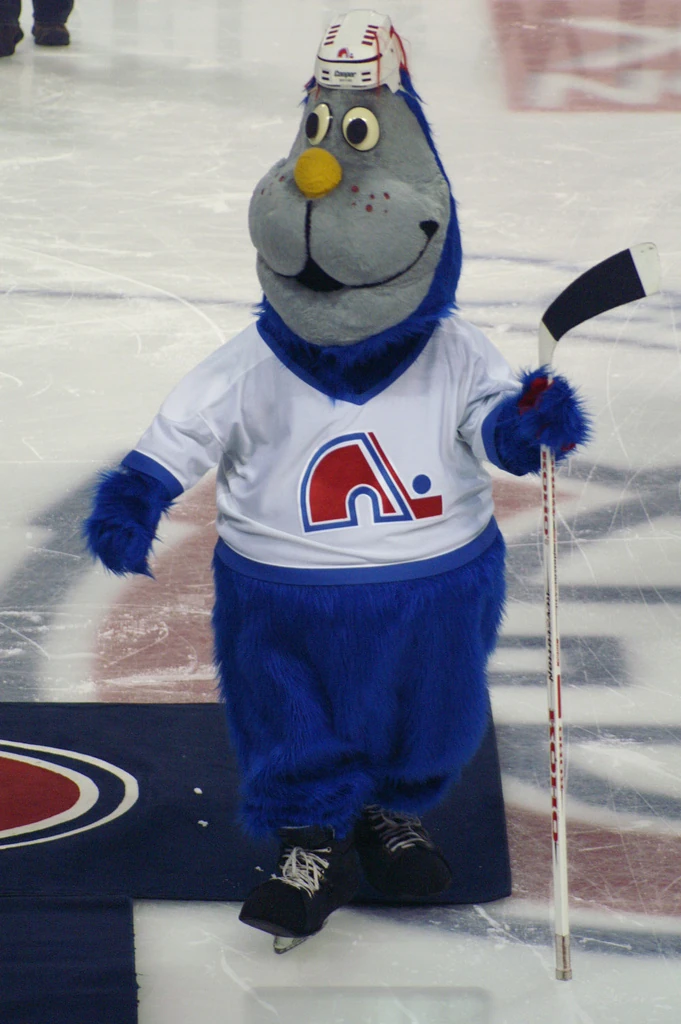
    Want to bring back the Québec Nordiques? Good luck.

    Québec City would be the league’s second smallest market and selling out 16,000 tickets doesn’t mean as much as it used to with media deals, corporate sponsorships, new markets and division balance (let alone conference balance) all at stake.

    Butts in seats only matter for momentum– not ad dollars on TV.

    Granted, people in seats laying eyes upon LED signage around the arena, now that’s still an investment and matters to an extent on the local level and/or organization itself for day-to-day operations.

    But this league sees the big picture– national level attention, reaching a broader scope, true globalization of their league as the best league– let alone growth of the game.

    Boston Bruins owner, Jeremy Jacobs, is also the chairman of the league’s board of governors. He’s also head of the league’s executive committee. Old guard owner jokes aside, Jacobs has the final say on most (if not all) league management decisions, despite the existence of league commissioner, Gary Bettman.

    Commissioners in all major North American professional sports work for the owners. Not the other way around.

    The commissioner is the collective voice of the board of governors– the face of the league– but ultimately is not the singular directive power.

    So at the Bruins season ending press conference, Jacobs was asked about the future of the league regarding the Golden Knights and potential expansion.

    Québec just isn’t happening right now.

    It’s been said time and time before and it’ll be said time and time again. And it was the main takeaway from Jacobs’s comments regarding further expansion on the near horizon.

    Houston was name-dropped. Whether it’s relocation or expansion (and it’s likely another expansion at this point), the league will find its way to Seattle and Houston.

    It’s hard to remember the journalistic duty of including the words “proposed”, “expected” or “just about soon to be announced at some point in the near or not so distant future” before mentioning Seattle, let alone Houston, given the known interest.

    Maybe the Arizona Coyotes will relocate, you ask?

    No. That’s not happening.

    If the Coyotes were going to move, they would have moved already. Arizona is committed to Arizona. While the City of Glendale might not see the Coyotes as suitable partners, the Coyotes see Arizona as their true love.

    Maybe the Florida Panthers are Québec’s last hope (or Houston’s best opportunity, if expansion fees are an issue) for relocation?

    Sure, but as an “in case of an emergency” plan. Remember how the Atlanta Thrashers relocation to Winnipeg played out? If not, keep reading, but also, Florida has an owner that’s committed to Florida.

    At least Patrick Roy will be back behind the bench for the Quebec Remparts (QMJHL) next season.

    Does market size matter if 16,000 season tickets are sold in a 700,000 population or 2,000,000-plus population?

    No, but the media deal that accompanies the market and how many televisions it reaches, that’s where it matters.

    Right about here is where things don’t stack up as well for Québec with other prospective expansion candidates, given the surrounding population outside Québec City and the conglomerate of Montreal Canadiens fans that dominate the province.

    At one point in time two teams made sense for the province, let alone two teams in one city (Montreal). Nowadays, the Habs have too much of a stronghold– too big of a monopoly of fans. Yes, even among old Nordiques fans and their families who swore they’d never root for their intra-province rivals.

    Bettman runs the league like the National Basketball Association, which, considering his background, sounds about right. The NHL’s profits have never been higher and Bettman deserves credit for the business side of the sport.

    And the NBA is eyeing expansion of their own, following renovations to KeyArena/Seattle Center, where Oak View Group looks to land an expansion NHL team for the 2020-21 season. In addition to Seattle, the NBA’s apparently eyeing Kansas City, lending some to believe we might be in another golden era of expansion across all major North American professional sports leagues as Major League Baseball commissioner, Rob Manfred, has indicated a desire for MLB to expand to 32 teams (with Montreal and Mexico as possibilities).

    As an aside, the author would like to let it be known of his desire for an MLB team in Charlotte, N.C.

    31 is the new 30 and 32, 33 and/or 34 is perhaps the near future for at least three out of four of the Big Four leagues (MLB, NBA, NFL and NHL).


    So about Seattle… (and other sports economics)

    It’s totally happening, it’s just a matter of time. Get ready to cut the check for $650 million, Oak View Group.

    And Houston?

    Once Seattle goes for $650 million, there’s no reason not to expect the expansion fee to go up once again for a 33rd NHL team. Seattle’s not expected to begin play until the 2020-21 season and even without any of the major renovation work that’s going on in the Emerald City, Houston isn’t fully move-in ready for an NHL franchise.

    That’s not to say Toyota Center isn’t a great fit, but rather that both Fertitta and the league aren’t presently talking and expansion to Houston would logically have to follow Seattle working with the current timeline of events (and ignoring what it would all mean for division realignment).

    So four or five years from now a $650 million expansion fee could quickly become upwards of $800 million for a brand new team. Perhaps it’d be $1 billion by then.

    And if Québec can afford a billion dollar (U.S.) pricetag by that point, then sure, they’ll be a shoo-in for the league’s 34th team. By then we might as well be talking 35th and/or 36th even.

    Four divisions of nine teams doesn’t sound terrible if you can find suitable locations (Seattle, Houston, Kansas City, Québec City and Atlanta, for example) to level off the Atlantic, Metropolitan, Central and Pacific Divisions.

    This is the economy of sports in the 21st century and Bettman’s dream– so long as the value of the majority of NHL franchises continue to climb and start to rival those of midpack/bottom NFL teams (the New York Rangers are valued at $1.5 billion according to Forbes– barely above the Toronto Maple Leafs $1.4 billion valuation)– and that’s ignoring how weak/strong the Canadian dollar is.

    Granted, the average NHL franchise is worth around $594 million.

    But as the NFL’s Carolina Panthers (a mid-pack team in terms of franchise value again according to Forbes) just sold for $2.2 billion to David Tepper, one would expect NHL franchise values to climb as the future of American football as we know it remains uncertain and the success of the Golden Knights impacts NHL revenues in the coming seasons.

    Again, sports franchises and real estate prices always climb. It’s only a matter of time.


    Okay, so just tell me where does that leave Québec exactly?

    Recall for a moment, if you will, May 2011 when the Atlanta Thrashers were purchased by True North Sports and Entertainment and the downfall of Atlanta Spirit, LLC. began (or more accurately, continued).

    Yes, Winnipeg got an NHL team back, but they had to essentially go through relegation to get back to the top.

    The Winnipeg model of “being sent down to the minors”  for almost 20 years witnessed near sellout crowds in the smallest NHL arena currently (15,321 seats) for AHL games.

    That’s great, but the Jets weren’t going to be the Jets again if there was a prospective local buyer in Atlanta interested in busting up Atlanta Spirit, LLC. seven years ago.

    There wasn’t, so True North Sports and Entertainment’s rainy day fund came in handy when the league needed a venue for a team immediately– regardless of the support and regardless of Québec, Hamilton or Kansas City’s moaning and groaning (from prospective owners and/or fans).

    Canadian fans and some American hockey traditionalists like to bring up “the success of the Québec Remparts” in their new arena (Vidéotron Centre, opened in 2015).

    Oh you mean the QMJHL team that plays in a 18,259 seat arena and has been having declining attendance since maxing out around 14,000 their first year there (2015-16) and now sits around 9,400 or less (like all other Junior teams). Please go on and tell everyone how QMJHL support alone will persuade NHL eyeballs.

    It would certainly help Québec’s cause for bringing back the Nordiques by landing an AHL team on top of their QMJHL club and continuously supporting the organization(s) a la Winnipeg circa 1997-2011.

    None of this rules out relocation, but it does make expansion look slightly more attractive, provided someone (Quebecor or another prospective owner) can fork up over half-a-billion U.S. dollars.


    Professional sports are a business of entertainment.

    Again, professional sports are a business.

    Hockey traditionalism would not profit as well as the league has been profitting today.

    Plain and simple as that.

    This is a league that does not have to contract– thanks to the salary cap, revenue sharing and constant work stoppages to renegotiate the number of dollars the league eats before dividing up for the players.

    This is a league that has shown the sport can be played in any environment.

    The State of Arizona produced Auston Matthews. The Arizona Coyotes have been in Arizona for a generation AND THEY ARE NOT MOVING. They’re committed to their fans and their hockey community, but they’re up against a local government that’s unwilling to work with them on even the most basic levels– private vs. public funding for a new arena aside.

    Tampa Bay, Nashville, Vegas, San Jose, Anaheim and yes, even Florida and Carolina have all been competitive and have diehard fans.

    Sure the Panthers and the Hurricanes haven’t gathered casual eyes since 1996 and 2006 respectively, but you can’t blame the Panthers for being the Cleveland Browns of the NHL in a way (in addition to their poor location in Sunrise, Florida– outside of Miami) and Tom Dundon for any Hurricanes wrongdoings yet (though this summer is all about Carolina and how they just might reinvent themselves– and of course, everyone likes to jump to conclusions after a new owner’s first offseason, right?).

    Plus, at least the Hurricanes won the Cup in 2006. Your move Panthers.

    But this league, like any major professional sports league, sees a game, entertainment and money to be made.

    Tradition is just a sweater, a pregame ritual or a superstition. It’s not a revenue stream for reinvention over time.

    Take it from NASCAR, where, coupled with changes back-and-forth in the rulebook every other week on top of overprotection of its traditional image (along with dried up ratings) have removed the basement from the very foundation of the sport– and possibly the sanctioning body as the France family mulls a sale of the entity itself.

    Like it or not, we are in an era of expansion– not just for the NHL, but potentially for all four major North American professional sports (and MLS, if you really want to extend the product here, as expansion is wicked hot in soccer currently).

    Should I mention we’re getting four more ads on the ice next season or have I already given everyone enough heart palpitations?

  • Down the Frozen River Podcast #106- We Recorded This Before Vegas Won (Unedited)

    Down the Frozen River Podcast #106- We Recorded This Before Vegas Won (Unedited)

    The Original Trio reunite for a special look at the Carolina Hurricanes, Buffalo Sabres, college coaches landing NHL jobs and Conference Finals takeaways. Also, we meant Andrei Svechnikov.

    Subscribe to the podcast on Apple Podcasts (iTunes) and/or on Stitcher.

  • DTFR Overtime: Seattle Shockwave

    Connor and I went long about why Seattle would be an exciting venture for the NHL on the most recent Down the Frozen River Podcast. I was going to write something like this before recording, until the league went ahead and spilled the beans a little earlier than expected (keep reading, you’ll see what I mean) and well… This is DTFR Overtime– go ahead and pour yourself a fresh cup before we dig in.


    Something’s brewing in Seattle and it ain’t just another cup of Starbucks.

    Last Monday, the Seattle City Council approved a deal for a $600 million renovation of KeyArena that just might put Seattle on the map of NHL cities– let alone mean that there’s hope for everyone wishing the NBA’s Seattle SuperSonics were a thing again.

    Los Angeles-based Oak View Group (OVG) expects to complete the renovations by October 2020, which would be just in time for a possible NHL team to take the ice for the 2020-21 season.

    Before anyone gets their hopes up, as per the proposal, OVG does not need a team in place to go through with KeyArena’s renovations and has pledged $40 million in a transportation fund for the city to address traffic and parking problems around the arena. An additional $20 million will go from OVG to local charities.

    Here’s the kicker out of The Seattle Times report: the NHL is expected to make an announcement by July (2018, for those of you who haven’t realized next year is almost here) regarding a franchise in Seattle via expansion or relocation.

    And by last Thursday, the league made an announcement. Seattle can begin the expansion process after formally receiving authorization to file for an application for an NHL expansion team.

    This time around, the expansion fee would be $650 million (up $150 million from when the Vegas Golden Knights went through the expansion process two years ago).

    Though every sign points to Seattle becoming part of the NHL’s brand, there’s no guarantee the league will expand to the Emerald City. Relocation could be an option (though league commissioner, Gary Bettman, denies that any current team will be moving) and the NHL still has a lot of homework left (feasibility studies and a season ticket drive– run by OVG– to gauge interest) before the final exam (expansion to Seattle).


    The NHL sees green (as in the other 31 teams see about $21 million in expansion fee payouts, not just the Emerald City):

    If you’re thinking, “would an NHL team in Seattle be a good idea?” the answer is yes. Don’t be stupid.

    Seattle is known for their boisterous Seahawks and Sounders fans (where you at in decibels Mariners fans), as well as their SuperSonics fan base that never died– despite the NBA franchise relocating to Oklahoma City in 2008– but the city’s played a larger part in hockey history than most people might know.

    The Seattle Metropolitans– not the New York Rangers– were the first American team to win the Stanley Cup. The Rangers, of course, can lay claim to the fact that they were the first American NHL club to win the Cup in 1928, but the Metropolitans were technically the first American hockey team to win it back in 1917. The Metropolitans were members of the Pacific Coast Hockey Association and appeared in three Stanley Cup finals (1917, 1919 and 1920).

    Seattle defeated the Montreal Canadiens, then members of the National Hockey Association, three-games-to-one in 1917. The 1919 Stanley Cup Final featured a rematch of the Metropolitans and the Canadiens– now members of the National Hockey League since its inaugural season of 1917-18– was cancelled after five games due to the outbreak of the Spanish Flu with the series tied, 2-2-1. In 1920, the Metropolitans were defeated in the Final in five games by the original Ottawa Senators.

    The feasibility of an NHL franchise sustaining itself in Seattle is very high, given the diehard fan base that already exists in all of the other major league sports in the city, let alone the historical significance of hockey in the region. Plus, who wouldn’t love a Pacific Northwest rivalry between neighbors, the Vancouver Canucks and whatever Seattle would be known as (it has to be the Metropolitans or else).

    Instead of “can a team last?” the better question would be “can a team move in while renovations are ongoing, a la how the Rangers dealt with Madison Square Garden’s improvements a few years ago?”

    The timeline (now through 2020) within the overarching timeline (2020 and beyond), if it even exists, might be crucial to navigating what the looming NHL announcement might be (relocation or expansion). Though given last Thursday’s league statement, it’s (probably) going to be expansion and the Seattle [TEAM TO BE NAMED] will begin play for the 2020-21 season.


    And now for something totally inspired by the works of Dave Lozo:

    How relocation would work for Seattle if a Western Conference team were on the move:

    There are two primary candidates for relocation to Seattle from the NHL’s Western Conference and both of them are already in the Pacific Division, which would negate the need for yet another division realignment this decade. And the candidates are… the Arizona Coyotes and the Calgary Flames.

    First up, the Coyotes.

    They’re an annual source of relocation rumors, their ownership group has met with people in Seattle before and they don’t have a lease deal in place (technically speaking) with Gila River Arena in Glendale, Arizona. The Coyotes aren’t wanted by the local government in Glendale and their ex (Phoenix) isn’t looking to get back together anytime soon; given the lack of a joint proposal for a new stadium downtown to be shared by the NBA’s Phoenix Suns and the NHL’s Coyotes.

    Would it be easiest to move Arizona to Seattle? Certainly, if you’re a hockey traditionalist who doesn’t think that the mere existence of the Coyotes in Arizona had anything to do with the fact that Auston Matthews is wearing a Toronto Maple Leafs sweater right now (and totally beating Connor McDavid in the McDavid vs. Matthews argument).

    Does it make sense to move the Coyotes? Yes. Out of Glendale at least. The league has been committed to the desert since the franchise jettisoned from Winnipeg in 1996. Even more so now with the existence of “local” rivals, the Vegas Golden Knights, also sharing that desert theme.

    So if you’re thinking the Arizona Coyotes could relocate, it’s not going to be to Seattle. Can Vegas be home to two teams? Just wondering.

    But what about the Calgary Flames?

    The City of Calgary and Calgary Sports and Entertainment are in a standoff over the use of public funds for a new arena to replace Scotiabank Saddledome. The city has made it clear that they won’t spend one penny on even a pile of dirt for a new home for the Flames, while the Flames have threatened to leave if they don’t get what they want.

    We’ve heard this before (hello, NFL’s Los Angeles Rams vs. their former home in St. Louis) and professional sports franchises have moved before because their owners don’t want to finance things privately.

    So it’s more than likely that if a team is coming from the Western Conference to Seattle that it’ll be the Flames, which, come to think of it, could make for a killer flaming “S” logo. Why waste the moniker that stuck with the team from Atlanta to Calgary in 1980? Just copy the “C” and paste it upside down and there you have it. I’ve already taken the liberty of creating the logo for you, Flames fans in Seattle.

    Screen Shot 2017-12-07 at 2.20.59 AM.png
    “To begin, draw an ‘S’ for ‘snake’ [or Seattle]” – Strong Bad
    Should Calgary lose their NHL team over a temper tantrum? No, but crazier things have happened. I mean, we’re talking about the city that hosts Calgary Stampede every year.

    How relocation would work for Seattle if an Eastern Conference team were on the move:

    Hear me out on this one. *It would have worked until the purchase agreement announced last Thursday included a seven-year stipulation that Carolina will not be relocated.*

    Peter Karmanos screws Hartford over one more time by giving them the finger while seated in a private jet as the Hurricanes fly over Connecticut’s capital en route to Québec’s capital city. *But we now know this part, at least, won’t be happening, since the purchase agreement calls for Dallas billionaire, Tom Dundon,– who’s buying a majority stake of the Hurricanes– to not relocate the team for seven years (conveniently the length of time remaining on Carolina’s PNC Arena lease. #Québec2024).*

    Thanks to the Houston Astros for finally putting the United States’s fourth most populated metropolitan area on the map with their World Series title this year, the Florida Panthers begin to wonder if they could actually win a Cup by moving to a real sports city– that sports city being the WHA hockey hotbed of Houston, of course.

    The Panthers relocate and replicate Major League Baseball’s outlook on the State of Texas, whereby Houston is part of the American League and would be part of the NHL’s Eastern Conference for no other reason than not to disturb the finally balanced conferences after Seattle joins as the 32nd team in the league (because that makes sense).

    Finally, the New York Islanders abandon all hope in the Big Apple when it becomes apparent that nobody’s loved them since the 1980s and John Tavares will lea[f]e them for the 6ix in the offseason.

    Because of their great relationship with Bridgeport, CT (home of the Islanders’s AHL affiliate, Bridgeport Sound Tigers) and now Worcester, MA (home of the Islanders’s ECHL affiliate, Worcester Railers HC), the Islanders choose to put themselves “between” their farm clubs and successfully bring back the Hartford Whalers (while also continuing to struggle for a new arena, but in Hartford now– shouts XL Center).

    Or consider this curveball *which, again, cannot happen as a result of the purchase agreement, pending Board of Governors approval of the final sale of the Carolina Hurricanes*:

    The Carolina Hurricanes relocate to Seattle and the NHL finally accepts the deferred expansion bid Quebecor submitted back in 2015 and welcomes Québec City as the 32nd team in the league (welcome back, Québec Nordiques). The conferences are kept in-tact this way and everybody’s happy because the Hurricanes really need to leave Raleigh for an ownership group that will actually love them (along with some fans).

    As for Florida and the Islanders, well, they’re on their own in this hypothetical curve.

  • Down the Frozen River Podcast #83- What’s Brewing In Seattle?

    Down the Frozen River Podcast #83- What’s Brewing In Seattle?

    Nick and Connor address the latest potential-expansion news regarding Seattle, recap the process thus far and speculate about many hypothetical relocation possibilities. Charlotte is better than Raleigh, another Subban was traded and— oh yeah— there’s games on the schedule this weekend.

    Subscribe to the podcast on Apple Podcasts (iTunes) and/or on Stitcher.

  • Down the Frozen River Podcast #82- Baby It’s Cole Outside

    Down the Frozen River Podcast #82- Baby It’s Cole Outside

    Nick and Connor analyze the Sami VatanenAdam Henrique trade between the Anaheim Ducks and New Jersey Devils, recap the standings at the end of November and talk what’s next for the Pittsburgh Penguins with Matt Murray out week-to-week. Connor also breaks down the potential scenarios for Ian Cole and the Penguins.

    Subscribe to the podcast on Apple Podcasts (iTunes) and/or on Stitcher.

  • DTFR Overtime: Just Killing Prime

    On the most recent episode of the Down the Frozen River Podcast, @connorzkeith expressed the sentiment that the Boston Bruins have been wasting the prime of their core group of players– not including David Pastrnak, or really anyone since the 2014 NHL Entry Draft currently on the roster.

    Rather, Connor suggested that the Bruins were once a dominant team of the early 2010s with a core group of Patrice Bergeron, Brad Marchand, David Krejci, Zdeno Chara and Tuukka Rask that’s still very much left intact from their 2011 Stanley Cup championship, but that they’ve been wasting the arc of the aforementioned players’s prime.

    Luckily, Down the Frozen River has an in-house Boston historian and I am here to set the record straight. This is DTFR Overtime and what I’ve thought about after recording the last podcast.


    Unknown-7

    Hockey is a game of inches and odd puck bounces. It’s a collective game of skill with an over-reliance on luck. Whatever you believe, you better believe in the Hockey Gods. It’s only fate, destiny and just a game at the end of the day, right?

    Wrong.

    The business of hockey has played a huge part in impacting the game of hockey as we know it– impacting teams and how rosters are constructed, directly through the introduction of a salary cap as of the last full-season lockout in 2004-2005 and indirectly, through many other external factors (family, injuries, et cetera).

    It was because of league expansion in the 1970s and because of the rival World Hockey Association (WHA) that Bobby Orr, Phil Esposito, Derek Sanderson and the Bruins didn’t nail down a dynasty. Of course, the Montreal Canadiens also played a part in it in 1971, 1977 and 1978, but the B’s lost star goaltender, Gerry Cheevers, to the Cleveland Crusaders of WHA from 1972 through 1976– right after winning the Cup in 1972 and during Boston’s appearance and subsequent loss to the Philadelphia Flyers in the 1974 Stanley Cup Final.

    Cheevers alone wasn’t the only difference maker in a Bruins uniform that left the black and gold for the higher paying WHA.

    Sanderson jettisoned Boston for the Philadelphia Blazers in the summer of ’72 for a $2.600 million contract that made him the highest paid athlete in the world at the time, though he went on to only play in eight games with the Blazers due to injury and returned to Boston after the WHA’s 1972-1973 season on a $1 million deal. From 1972 through 1974 with the Bruins, Sanderson only played 54 out of 156 games and was sent down to the Boston Braves of the American Hockey League before being traded to the New York Rangers in June 1974.

    John “Pie” McKenzie, a gifted point scorer known by his unconventional nickname left the Bruins for the WHA’s Blazers as a player-coach after the 1972 Stanley Cup Final and never returned to the NHL. McKenzie finished his playing days with the New England Whalers in 1979.

    In the 1980s and early 90s, injuries and the emergence of the Edmonton Oilers as a top team in the National Hockey League plagued the primes of Ray Bourque, Brad Park, Cam Neely and the Big Bad Bruins.

    Boston lost the 1988 and 1990 Stanley Cup Finals to the Oilers. Boston lost the 1991 and 1992 Eastern Conference Finals to the Pittsburgh Penguins. Boston Garden itself was closed in 1995– and then Boston missed the playoffs in 1997 for the first time in 30 years.

    Good teams aren’t meant to remain on top forever.

    There’s a reason why the Stanley Cup is the hardest trophy to win in all professional sports.

    Claude Julien, the winningest coach (419 wins) in Bruins franchise history– having surpassed Art Ross‘s 387 wins mark with the team during his tenure in Boston– led the black and gold to two appearances in the Stanley Cup Final and one President’s Trophy (just the second in franchise history during the 2013-2014 campaign).

    In 2011, the Bruins rode the backs of Nathan Horton, Marchand and Tim Thomas‘s insanity in goal. In 2013, a more experienced Boston team rallied from a 4-1 deficit in a Game 7 against the Toronto Maple Leafs in the first round and charged all the way to a six game series battle with the Chicago Blackhawks that ultimately ended in defeat.

    Thomas was no longer part of the story after 2012. Rask took over the reigns and never looked back. Jaromir Jagr came and went in a largely forgettable time in the spoked-B.

    But the Bruins could skate with the best. Until they missed the playoffs in 2015 and 2016.

    In the Salary Cap Era, teams are built up and ripped to shreds by massive longterm contracts and dollars being improperly allocated throughout the roster.

    Peter Chiarelli got the Bruins in a salary cap hell, what with their fourth line center, Chris Kelly, making $3.000 million in his final years as a Bruin. In the broad scope of things, that was the least of Chiarelli’s mismanagement that ultimately ended his time in Boston. Neither the Tyler Seguin trade nor the Johnny Boychuk trade alone could be what led to the Bruins going from a top team deep in every roster spot to a team outside the playoff picture looking in with some mediocre placeholders.

    Brett Connolly and Max Talbot didn’t yield the same results in Chiarelli’s last season with the Bruins– tangible or intangible– than any of the bottom-six forwards (Gregory Campbell, Shawn Thornton, Daniel Paille, Rich Peverley, Kelly and Michael Ryder) provided for the 2011.

    Just one year removed from a President’s Trophy season that ended with an early First Round exit to Montreal, the Bruins found themselves on the verge of an uncomfortable position that they hadn’t been in since missing the playoffs in 2006 and 2007. They went on to miss the playoffs in 2015 and 2016.

    So the Bruins did the only thing they’ve ever known. They reset themselves while still carrying a core group of players.

    In the 70s, Boston rebuilt themselves around Orr, Esposito and friends when Sanderson left (then returned and left again via trade), Cheevers departed and McKenzie stormed off to the WHA. They drafted Terry O’Reilly in 1971, Stan Johnathan in 1975 and acquired Peter McNab from the Buffalo Sabres after the 1975 Stanley Cup Final.

    The new identity Bruins flipped Esposito along with Carol Vadnais during the 1975-76 season to the New York Rangers for Brad Park, Jean Ratelle and Joe Zanussi and still had Orr until his departure via free agency in 1976.

    Boston still had Johnny Bucyk, Wayne Cashman, Ken Hodge and Don Marcotte as key aspects of their 70s rosters.

    They could have dismantled a team that won two Stanley Cups (and should have won more, if it weren’t for the WHA) after the franchise’s slow start in 1975. They didn’t.

    Hockey has never been kind to good teams with the right players at what seems like it’s the right time (just ask last year’s Washington Capitals). But that’s the nature of the sport. No matter how much of a powerhouse you build– with or without a salary cap, with or without expansion or injuries– you can’t control the way the puck bounces.

    Some players stick around in the league for long enough to become seasoned veterans of the NHL and never sniff a Stanley Cup Final appearance, let alone the postseason. It took Ron Hainsey until just last year with the Penguins to make his Stanley Cup Playoff debut and it took Bourque and Dave Andreychuk at least a couple of decades each to win it all.

    Just because Bergeron, Marchand, Krejci, Chara and Rask only have a 2011 Stanley Cup championship together doesn’t mean they’ve been wasting their time, killing the prime of their careers.

    For Boston, they ended a 39-year Stanley Cup-less drought.

    They’ve already won once more than thousands of others who were lucky enough to make it to the NHL.

    And they’ve forever cemented themselves in the history of the franchise, as well as the City of Boston as adopted sons and representatives of the Hub everywhere they go and in everything they do related to the sport or not.

    Fans want rings and that’s one thing, but to say they’ve wasted their primes is another. They’ve contributed so much on and off the ice for the youth movement once again creeping up on the Bruins. Pastrnak is destined for stardom. Charlie McAvoy is an apprentice to Chara as Bourque was to Park in 1979.

    Even Kevan Miller‘s found a bit of a resurgence in his offensive game, going end-to-end to throw the puck in front of the net to find Danton Heinen like Orr did with anyone.

    The torch gets passed on. We’re all in for the ride.

    And you pray to the Hockey Gods that they’ll let you win at least once.

  • April 9 -Day 172 – It all comes down to this

    It’s all come down to this: the last day of the 2016-’17 NHL regular season. Don’t cry that it’s leaving; instead smile and laugh at the memories.

    Oh yeah, and get amped for the Stanley Cup Playoffs!

    To close out the season, the league has scheduled 10 games for our viewing pleasure. A trio of them (New Jersey at Detroit [SN1], Buffalo at Tampa Bay and Ottawa at the New York Islanders [RDS2]) start at 5 p.m., followed by another pair (Colorado at St. Louis and Columbus at Toronto [SN/TVAS]) an hour later. The usual starting time of 7 p.m. marks the puck drop of three contests (Pittsburgh at the New York Rangers, Carolina at Philadelphia and Florida at Washington) and Los Angeles at Anaheim (SN1) waiting until 8:30 to get started. Finally, 9 p.m. brings with it the regular season nightcap: Vancouver at Edmonton (SN). All times eastern.

    Short list:

    • New Jersey at Detroit: The day many had hoped would never come. This is the final game to be played at Joe Louis Arena. I’ll forever consider the Wings a rival to my beloved Blues, but I hope Motown gives this incredible place one more victory for old times’ sake.
    • Columbus at Toronto: As long as the Leafs can avoid a regulation loss, they’ll win third place in the Atlantic Division and avoid the mighty Capitals.
    • Pittsburgh at New York: The last rematch of last season’s playoffs will be contested in Madison Square Garden.
    • Los Angeles at Anaheim: Though the Kings‘ season is complete after today, the Ducks still have something to play for: a Pacific Division banner.
    • Vancouver at Edmonton: As long as the Oilers don’t need a shootout to win, they can surpass Anaheim for the division title if it loses to Los Angeles.

    It’s such hard decision among the contests in Toronto, Anaheim and Edmonton, as all three could have a significant impact on how the postseason plays out. Since there’s so much at stake in the Pacific, I think we have to focus in on the Freeway Face-Off!


    I’ll start this article in a similar way I began yesterday’s:

    The 39-35-7 Kings enter this game in fifth place in the Pacific Division and 10th in the Western Conference, already eliminated from playoff contention. With Nashville’s regular-season campaign complete at 94 points, the best Los Angeles can do is finish seven points behind eighth place.

    This game is not about them (though they have more reasons to play spoiler than Pittsburgh did last night – more on that later).

    Instead, all eyes (specifically those in Southern California and Northern Alberta) are on 45-23-13 Anaheim, the club currently leading the Pacific Division with a day left of play.

    Notice the phrase currently leading. That is very intentional, as the Ducks have not ordered their division championship banner yet. The job tonight is simple: don’t lose in regulation. As long Anaheim earns at least one point, the second place Oilers cannot surpass them for the division title.

    Fortunately, the repercussions for not sealing the deal tonight aren’t too bad, at least immediately. If Edmonton could manage to surpass the Ducks for first in the division, Anaheim would host the third place Sharks in the first round instead of the wild card Flames.

    Either way, the Ducks retain home ice in the first round.

    Anaheim has definitely been trending upwards of late. In fact, the Ducks are tied with Washington for the best record in the NHL since March 12 with their 10-0-3 record.

    Just like its been all season, they’ve returned to winning ways by keeping the opposition off the board. Only 24 goals have been scored on the Ducks since mid-March, the fewest in the NHL in that time.

    Of course, that starts with the goaltending. Both 25-16-9 John Gibson and 20-7-4 Jonathan Bernier have been fantastic over this run, as both have save percentages and GAAs better than .93 and 2.0, respectively.

    Though Bernier was extremely impressive while filling in for Gibson during his injury, it seems the usual Number 1 has reclaimed his crease as Gibson has started the last two games. I expect the owner of the superior .96 save percentage and 1.32 GAA to take to the crease again tonight, as Gibson’s effort in his past three games has been third and second-best, respectively, among the 62 goalies who have played at least two games since mid-March.

    Much of the reason both goaltenders have found such success is they haven’t been overworked. Though the Ducks‘ blueline has been only slightly above-average at keeping pucks off the crease on the year (they average 29.8 shots allowed-per-game), the 395 they’ve allowed in their past 13 games is tied for fifth-fewest in the league.

    Both Hampus Lindholm and Sami Vatanen have been a big part of that play, as they co-lead the team with 21 shot blocks since March 12. Jakob Silfverberg has also been instrumental with his 11 takeaways in that time.

    On the season as a whole, only two clubs have been better than the Ducks when faced with a penalty kill situation. Gibson has played a major role in that effort all year, as his .909 season save percentage against the power play is the fourth-best mark in the league among the 48 goalies with at least 25 appearances on the year.

    Doing their best to play spoiler tonight will be the visiting Kings, Anaheim‘s greatest rival. Though the postseason is out of their grasp, there is probably nothing more they would like to do than harm the Ducks‘ Stanley Cup playoff chances by declining them the opportunity to outright win the Pacific Division.

    Unfortunately, it’s been an up-and-down effort of late for Los Angeles. Since March 16, the Kings have matched every win with a loss for a 6-6-0 record. In fact, every game since March 31 has alternated results. The 31st was a win, the 2nd was a loss. The 4th was a win… you get the idea. April 8 was a win, so…. well, things aren’t looking good for Los Angeles if this trend continues.

    Offense has been Los Angeles‘ biggest struggle not only during this stretch, but for the entire season overall. On they year, the Kings have averaged only 2.42 goals-per-game, the sixth-lowest average in the NHL. Since mid-March, that number is down to 2.25, including two shutouts.

    The brightest star on the Kings‘ offense of late is easily Anze Kopitar. With 10 points in a dozen games, he’s the only forward that has contributed more than seven tallies in the past three weeks. That being said, Jarome Iginla has also been decent with his team-leading four goals during this run.

    Though far from a dominant force throughout the season, Los Angeles‘ power play has been especially shoddy of late, converting only 16.7% of its 36 most recent opportunities. Just like he’s been on the entire offense, Kopitar has been the most impressive during this skid with his four power play points.

    If anything positive can be said about Los Angeles‘ power play, it’s that it’s unpredictable. All six tallies since March 16 have come off a different stick, and those scorers are evenly split between the power play units.

    If the season series is any indication, we’re in for a fantastic game tonight. Both clubs have won two of the four previous games between them this campaign for copied 2-2-0 records. Making things even more interesting, both teams have gone 1-1-0 on home ice.

    The last time they met up was February 25 at the Staples Center. Speaking of home ice, that is the game the Kings scored four goals (including two from Tyler Toffoli) to give Jonathan Quick a 4-1 victory in his first full game of the season. He saved 32 shots faced in his first game back from his groin injury.

    Some players to keep an eye on this evening include Anaheim‘s Ryan Getzlaf (55 assists [tied for third-most in the league]) and Gibson (2.22 GAA [fifth-best in the NHL] on a .924 save percentage [tied for fifth-best in the league], including six shutouts [sixth-most in the NHL]) & Los AngelesJeff Carter (32 goals for 66 points on 250 shots [all lead the team]) and Drew Doughty (+8 [leads the team]).

    The easy pick is obviously the Ducks, who have much more to play for, to win on home ice. The problem is you can never use such concrete logic when predicting a rivalry game of this magnitude. I’ll still take Anaheim to clinch the Pacific Division tonight, but I have no doubt in my mind that the Kings will make it as difficult as they possibly can.

    Hockey Birthday

    • Jimmy Roberts (1940-2015) – This skater spent most of his 15 seasons in Montréal, though he had a lengthy tenure with the Blues as well. He was a three-time All Star and, more importantly, has his name on the Stanley Cup five times as a player.
    • Michel Parizeau (1948-) – The Rangers selected this center 10th-overall in the 1965 NHL Amateur Draft, yet he never played a game with the Blueshirts. In fact, he spent only one season in the NHL, as he played most of his eight years with the Nordiques in the WHA.
    • Rick Tocchet (1964-) – Though a longtime Flyer – albeit in two stints – after being selected by Philadelphia in the sixth round of the 1983 NHL Entry Draft, this right wing won his lone Stanley Cup as a member of the 1992 Penguins.

    Three goals in the third period is exactly what the doctor ordered for Toronto, as it beat the Penguins 5-3 in yesterday’s DtFR Game of the Day to secure its spot in the 2017 Stanley Cup Playoffs.

    It was not the start the Maple Leafs wanted to this game, though. Former Leaf Phil Kessel (Matt Cullen and Tom Kuhnhackl) buried a snap shot only 6:11 into the contest to give Pittsburgh an early 1-0 lead. That advantage didn’t last long though, as James van Riemsdyk (Tyler Bozak and Roman Polak) leveled with a snapper of his own only 29 seconds later. The one-all score held into the first intermission.

    Only 1:29 after Tom Sestito‘s goaltender interference penalty, Bozak (William Nylander and Jake Gardiner) scored a power play snapper at the 3:30 mark of the second frame. This time, it was the Pens who had the answer, as Sidney Crosby (Jake Guentzel and Justin Schultz) leveled the match at two-all 4:25 later with a power play slap shot.

    Pittsburgh once again took a one-goal lead 6:51 into the third period courtesy of an unassisted Guenztel wrist shot, but that is what lit a fire under Toronto‘s belly. In all, the Maple Leafs fired a dozen shots on Marc-Andre Fleury‘s net in the final frame, and three got past him. Kasperi Kapanen (Matt Hunwick and Auston Matthews) leveled the game with 5:30 remaining in regulation with the first goal of his career, followed by Connor Brown‘s (Gardiner and Hunwick) game-winner 2:42 later. With four seconds remaining, Matthews scored his 40th goal of the season (only the fourth rookie under 20-years-old in NHL history to achieve that total) on an empty net to ensure the Leafs‘ victory.

    Curtis McElhinney earned the victory after saving 12-of-14 shots faced (85.7%). He replaced Frederik Andersen, who had saved three-of-four (75%), after the starter was struck in the head by Sestito. Fleury saved 25-of-29 (86.2%) in the loss.

    After 175 games in this 2016-’17 DtFR Game of the Day series, the 88-61-25 home teams have finally clinched the deciding victory in our featured series. The hosts have 201 points to their credit to create a five-point spread the visitors are incapable of surpassing.

  • Stuff from the week (so far): It’s on!

    Some of the biggest news and notes (and bad takes) from this week in hockey.

    Wednesday was full of surprises as most people probably were distracted by hockey games on TV or at their local rink on Tuesday night.

    First, if you didn’t see the news late Tuesday night, then you probably woke up delighted to hear that USA Hockey and the US women’s national team came to an agreement that will 1) pay women’s players more, 2) established a Women’s High Performance Advisory Group to help oversee and assist USA Hockey with fundraising and promoting girls and women’s hockey at all levels to help grow the game and 3) sends the original Team USA members to the 2017 IIHF Women’s World Championship being held in Plymouth, Michigan (which starts on Friday, by the way).

    To summarize, it’s a four-year contract that’s a step forward, but ultimately, probably still not enough to be perfectly ideal and equal. We’ll all keep working on that, right?

    I mean, let’s not forget the foolishness of USA Hockey to have contacted members of the U16 team to play against professionals before this agreement was made. Absurd!

    US games will be carried on NHL Network and streamed on NHL.com, so check your local listings for times and more– I’ll be busy watching USA vs Canada on Friday night, thank you very much.

    Charlie McAvoy joined the Providence Bruins (AHL) on an ATO for the rest of the season, thereby forgoing his remaining career at Boston University, much to the dismay of Terriers fans (okay, maybe not). Boston Bruins general manager, Don Sweeney, was smart not to burn a year off an entry level contract while trying to get McAvoy up to speed in the professional game.

    In fact, this is something most general managers have been doing at this point of the season, with the exception of University of North Dakota product and Colorado Avalanche prospect, Tyson Jost’s signing with the Avalanche. Colorado GM Joe Sakic indicated that Jost will be inserted immediately in the lineup– for the remainder of the regular season– in the midst of a season to forget for the Av’s.

    As noted by Mike Kelly (NHL Network, TSN, LeafsTV), the Avalanche are really, really bad. Like, really, really, really bad this year.

    In other news, Los Angeles Kings forward, Jarome Iginla picked up the game winning goal (his 100th of his career) and the Gordie Howe Hat Trick in a 4-1 victory over the Calgary Flames on Wednesday night.

    Good for him, though I’m sure Flames fans felt uneasy for their favorite adopted son knowing that their team is probably going to make the Stanley Cup Playoffs instead of the Kings. Just like everyone predicted back in October.

    Not so long after everyone was gleaming about the US national women’s team agreement with USA Hockey, University of North Dakota cut their women’s hockey program on Wednesday.

    In addition to women’s ice hockey, UND also got rid of their swimming and diving team (both men’s and women’s). SB Nation’s Joe Barbito (per The Ice Garden), reported that the team was already on the ice preparing for next season as news about the program’s demise began circulating. Even a recruit was on campus for an official visit, only to find out about the disappointing news from one of the most competitive programs in the country.

    Several former UND hockey players have spoken out and expressed their displeasure with the university.

    Also making waves on Wednesday was the miracle that nobody expected from a league otherwise known for secrecy.

    The NHL announced that the Expansion Draft lists for protected and available players for the Vegas Golden Knights’s choosing will be made available to the public around June 18th. This is good. This is what fans like. Fans also like salary cap information and stuff like CapFriendly, but we’ll see if the league will ever make more of a shift towards being more open and informative than what’s already surprised many with the Expansion Draft lists announcement.

    Wednesday’s surprise announcement wasn’t the only thing from the league, as NHL Commissioner, Gary Bettman was on hand along with members from the Los Angeles Kings and Vancouver Canucks for the official announcement of the 2017 NHL China Games presented by O.R.G. Packaging that will be played at Mercedes-Benz Arena and the Huaxi LIVE Wukesong’s Le Sports Center in Shanghai on September 21st and September 23rd, respectively.

    Expanding the game, good. The whole Kings and Canucks matchup, not as good. I mean, Vancouver is destined for a turnaround, but it just seems like they won’t be competitive enough for Los Angeles, even for preseason games. Then again, the Canucks are quietly gaining ground (on a developmental level).

    Last week the league announced the 2017 SAP Global Series matchup between the Colorado Avalanche and the Ottawa Senators to take place in Stockholm, Sweden in November. Those regular season games make sense, as long as the Avalanche don’t trade Gabriel Landeskog before then.

    But if anything, think of the huge draw for Erik Karlsson fans in his homeland alone.

    Both global preseason and regular season games will be the first of their kind since the last regular season games played in Europe in 2011.

    And so far through Thursday, looking past matchups and injuries, we’ve been reminded that on this day 38 years ago, the NHL voted on the merger of four World Hockey Association (WHA) teams to begin play in the league for the 1979-1980 season.

    Only the playoff bound-for-the-first-time-since 2006, Edmonton Oilers remain in the same location since the merger, as the Winnipeg Jets jettisoned for Arizona, Québec Nordiques left for Colorado and the Hartford Whalers became the Carolina Hurricanes 20 years ago.

  • Numbers Game: Ranking the mascots of the NHL (25-21)

    Numbers Game: Ranking the mascots of the NHL (25-21)

    By: Nick Lanciani

    The following is a continuation of the ranking of all of the mascots in the NHL, based on the list of NHL mascots Wikipedia page.

    sparky-twitter-avatar-400.jpg
    Why, just why? Sparky the Dragon’s on Twitter kids (@SparkyNYI).

    25. Sparky the Dragon- New York Islanders

    Sparky the Dragon double-dipped as the mascot of the Islanders, wearing blue and orange during Islanders games, and pink, red and black for the New York Dragons (Arena Football) team until 2009. This mascot made sense for the Dragons, considering, hello, Sparky the Dragon is a dragon. But unfortunately for minority Isles owner, Charles Wang (who also owned the New York Dragons), you can’t always get what you want from applying one thing to satisfy two needs.

    What was so wrong about the Gorton’s fisherman era Islanders? Honestly, just take that concept and make it a walking thing that creeps on people– I mean, takes pictures with fans and ensures everyone is having a good time at Barclays Center. Plus, the 90s are cool again and most likely every hipster in Brooklyn would flock to an arena that’s ill-fitted for hockey to 1) learn who the Islanders are and 2) dig the on fleek colors of the fisherman (is that what they say now?).

    rdqu8amd.jpg
    Come to think of it, what’s with mascots on Twitter anyway? Photo via @NordyWild on Twitter (Nordy’s Official Account)

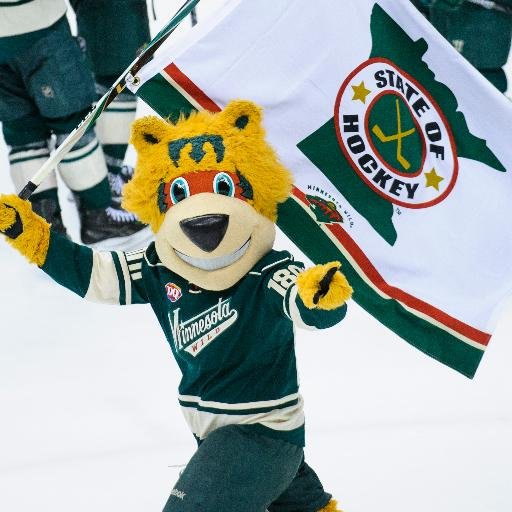
    24. Nordy- Minnesota Wild

    Everyone says Nordy looks like Alex from Madagascar and while I won’t disagree, I will say that Nordy looks pretty bad. It doesn’t help that the Wild applied their bear logo across his face, for starters. Plus his mane is a bit unkempt.

    Come to think of it, I don’t really know what really makes Nordy quite an unattractive mascot. Maybe it’s his number. I mean, 18,001 is a bit much to fit on a jersey. Plus his smile just screams “help me”, “get me out of here” or something along those lines. Minnesota made an attempt. That’s good. He is a lot less creepy than some mascots in the MLB (looking at you– actually, all of the MLB mascots except for Wally the Green Monster). But for NHL mascots, Nordy doesn’t rank quite as well.

    03-27-edm-huntersupplied-copy.jpg.size.xxlarge.promo.jpg
    “Go stand next to him! He won’t bite– actually, Billy, I’m not sure if he bites,” me if I was a parent. (Photo via Andy Delvin/ Oilers Entertainment Group)

    23. Hunter- Edmonton Oilers

    Shouts to the Edmonton Oilers for finally introducing a mascot to their organization for their first time in franchise history this season. Hunter’s namesake comes from the original owner of the then Alberta Oilers of the World Hockey Association, Bill Hunter.

    But that’s about it for cutesy comments about this sure to devour anyone in its path looking mascot. Look, Hunter’s a great name for the Oilers considering it pays homage to the aforementioned Bill Hunter, but it’s probably not a great name for a lynx that for sure is a carnivore and hunts things. I don’t know, maybe it’s just me or something. Regardless, Edmonton, you tried. Am I glad you finally have a mascot, yes. It’s just a little… creepy.

    Bernie in the Stands145428727_std.jpg
    Bernie’s eyes will haunt you in your sleep. (Photo via Colorado Avalanche)

    22. Bernie the St. Bernard- Colorado Avalanche

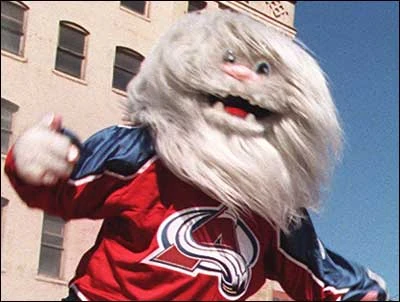
    The Colorado Avalanche have been feeling the Bern since they switched up their mascot from Howler the Yeti to Bernie the St. Bernard in 2009. For the first few years of Bernie’s existence, I could live with the change.

    Yet, as I grow older, I become more nostalgic and cranky towards change. Howler the Yeti was better. Even in the franchise’s days as the Québec Nordiques, whatever this thing was that was the Nordiques mascot was better than this alien-looking dog (look at Bernie’s eyes and tell me he’s not something from Area 51, speaking of which, there’s an idea for you, Vegas Golden Knights, give us an alien). And what’s with the barrel, Bernie? What are you hiding from us and how did you get that past security?

    Minnesota+Wild+v+Arizona+Coyotes+pklC9SRKyo3l.jpg
    Could be worse. (Photo via Christian Petersen/ Getty Images North America)

    21. Howler- Arizona Coyotes

    Howler isn’t all that bad, just not that great. He’s average. The kind of mascot that you can be proud of, but wish could do more. Put him in a kachina jersey all year and he’d probably jump up 20 spots in my rankings.

    Other than that, I really don’t have any reason why Howler fits in at 21st overall. He just does. Maybe it’s his face. Yeah, come to think of it, his face kind of bothers me. It’s almost too perfect and kind of oddly angled to a point for a nose. That thing’s probably sharp and could poke out someone’s eye. Minus 10 points for safety.

  • Numbers Game: Look to the Rafters- Boston Bruins

    Numbers Game: Look to the Rafters- Boston Bruins

    By: Nick Lanciani

    I continue to explore an important element of the game and what retired numbers around the league may look like in the future. While there’s only a finite set of numbers to utilize on the back of a jersey, many teams choose to retire (or honor) some numbers based on extraordinary circumstances, dedication to the organization, or legendary status.

    Many thoughts went through my head in each and every consideration. Feel free to agree or disagree- I want to know what you, the fans, consider worthy when evaluating a player, their career, and whether or not their number should be retired by a franchise. I am interested in seeing what you have to say, assuming you are actually a fan of the team and/or player that you argue for or against. Drop us a line in the comments or tweet to @DtFrozenRiver using #DTFRNumbersGame.

    For each team, I thought of former and current players that should have their numbers retired now or once they hang up the skates.

    UnknownBoston Bruins

    Current Retired Numbers- 2 Eddie Shore, 3 Lionel Hitchman, 4 Bobby Orr, 5 Dit Clapper, 7 Phil Esposito, 8 Cam Neely, 9 John Bucyk, 15 Milt Schmidt, 24 Terry O’Reilly, 77 Ray Bourque

    Recommended Numbers to Retire-

    16 Derek Sanderson

    Honestly, there’s got to be somebody out there wondering why the Bruins haven’t retired Sanderson’s number 16 yet, despite his short tenure with the Bruins (and overall short NHL career). If anything, his off the ice story is the ultimate combination of tragic and inspirational- and the work he does now is remarkable. Wouldn’t it be great to say one day to your kids at the TD Garden “and there’s number 16, which was worn by Derek Sanderson, a man who overcame many things, just like how you can overcome anything and make your dreams come true if you work hard enough and never give up hope.”

    Sanderson was sensational on the ice, having won two Stanley Cups with the Bruins in 1970 and 1972. He won the Calder Memorial Trophy in 1968 and had a career high 146 penalty minutes in his 2nd season with Boston in the 1968-1969 season as the ultimate definition of tough in the spoked-B.

    His fast track to success was marred by his equally fast track to nearly destroying his life. If it weren’t for his new found faith and good friend Bobby Orr, Sanderson would be a distant memory in a tragic loss of superstar talent.

    Since he turned his life around, Sanderson has become a financial advisor and a mentor to many young athletes in the sport as well as an immortal legend in Boston for his time spent with NESN alongside Fred Cusick in the mid ’80s to the mid ’90s.

    It’s time the Bruins truly honored Sanderson for the remarkable man that he’s become off the ice. Sanderson and Orr defined not only a decade in hockey, but an entire era and playing style. It’s only fitting that they are equally honored by Boston.

    37 Patrice Bergeron

    Bergeron just turned 30- hard to believe- and has already spent a little over a decade in the league. It’s looking like Bergeron will be another legendary player in the category of “spent all of his time with one organization,” so it will be deserving of the current definition of what it means to be a Bruin.

    Patrice Bergeron is the current definition of what it means to be a Bruin and what it means to be part of Boston sports lore. (Getty Images)
    Patrice Bergeron is the current definition of what it means to be a Bruin and what it means to be part of Boston sports lore. (Getty Images)

    While he’s not Milt Schmidt, Bergeron could share the “Mr. Bruin” nickname with Schmidt by the end of his career.

    Bergeron became the 25th member of the Triple Gold Club, having completed the trifecta in 2011 after having won the Stanley Cup with the Bruins. He’s won three Selke Trophies, a King Clancy Memorial Trophy, and the NHL Foundation Player Award in his career thus far.

    The two-time member of Team Canada in the Winter Olympics has also won two gold medals in 2010 and 2014. The only question for Bergeron someday will be, what hasn’t he done or been a part of?

    Bergeron is adored by Boston fans for every little thing he does in what could otherwise be best summed up as perfection.

    The perfect leader, the perfect teammate, the perfect two-way center, and even the perfect well respected rival- when it comes to facing the Montreal Canadiens. His impact on the franchise is insurmountable, considering he was barely penciled in on the roster, at 18 years old, for the 2003-2004 season.

    33 Zdeno Chara

    Zdeno Chara should see his number 33 raised to the rafters of the TD Garden as one of the best defensemen and leaders in the locker room in franchise history. (AP Photo/Julie Jacobson)
    Zdeno Chara should see his number 33 raised to the rafters of the TD Garden as one of the best defensemen and leaders in Boston’s locker room in franchise history. (AP Photo/Julie Jacobson)

    Chara often gets a bad rap for no reason from some Boston fans. The fact of the matter is that Chara is one of the best defensemen in the league. He’s a six-time Norris Trophy Finalist (2004, 2008, 2009, 2011, 2012, 2014) having won in 2009.

    If it weren’t for Niklas Lidstrom’s swan song season, Chara would have at least another Norris Trophy. Do I need to mention he’s the current record holder of the Hardest Shot competition with a blistering 108.8 mph slap shot?

    Aside from being able to speak seven languages and sell real estate in the State of Massachusetts, Chara was the first player born inside the Iron Curtain to captain his team to a Stanley Cup championship in 2011.

    Without a doubt, there is no question surrounding his leadership off the ice and in the locker room. On the ice he’s well respected by league officials, perhaps supplemented by his 6’9” (7’0” on skates), 255-pound, stature.

    He’s aging, yes, but what player doesn’t age after every season? He’s still insanely fit and athletic and capable of holding his own as a top-2 defenseman for the Boston Bruins. While it might take some convincing of Boston fans currently, Zdeno Chara absolutely deserves to have his number retired by the Bruins someday. He remains an influential piece to their turnaround and run to the Cup from 2006 to 2011 and leadership in their current roster and front office transition.

    Tim Thomas will be best remembered for chasing a dream and reaching its mountaintop. (Photo by Elsa/Getty Images)
    Tim Thomas will be best remembered for chasing a dream and reaching its mountaintop. (Photo by Elsa/Getty Images)
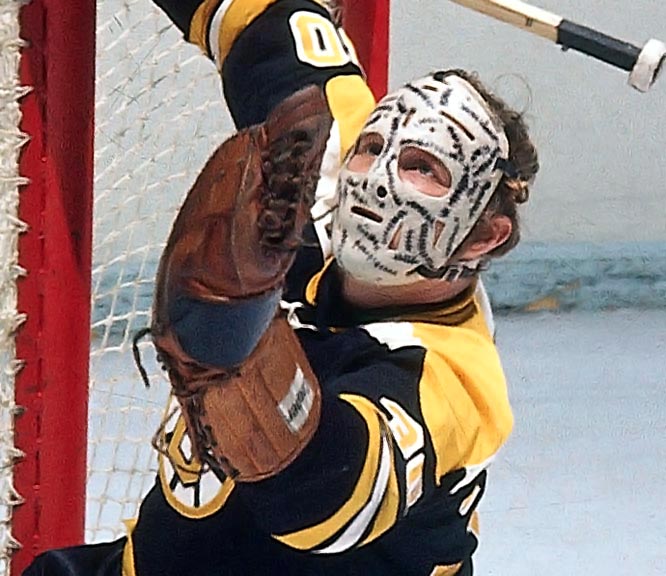
    Gerry Cheevers backstopped some legendary teams in Boston and had the mask to match their toughness. Photo: Denis Brodeur/NHLI via Getty Images
    Gerry Cheevers backstopped some legendary teams in Boston and had the mask to match their toughness. (Photo: Denis Brodeur/NHLI via Getty Images)

    Honorable Mention

    30 Gerry Cheevers/Tim Thomas

    By this point, it’s probably a long shot for the Bruins to retire number 30 out of respect for Gerry Cheevers. He played remarkably well for a dominate Boston team in the 1970s and if it weren’t for the World Hockey Association having diluted the NHL’s talent pool, probably would’ve led the Bruins to some more greatness.

    Likewise, Tim Thomas overcame a lot of doubt to be at the top of the NHL mountain as the Conn Smythe Trophy winner and 2011 Stanley Cup champion. It would certainly be a classy move by the organization, but one that likely will never happen for either (or both) former sensational Boston goaltenders.

    Other Notes

    Personally, I wouldn’t be opposed to setting aside Mark Recchi’s number 28. Not necessarily retiring it, but only using it for special players, which I guess is kind of the reason why nobody has been assigned number 28 on the Bruins since Recchi retired. Same goes with Marc Savard’s number 91.

    It’s a shame that good players don’t always get to have extravagant careers. Players like Savard or Norm Léveillé will always be remembered for how they played on the ice by diehard Boston fans.