Tag: Videotron Centre

  • Another Golden Era of Expansion?

    It’s a great time for the National Hockey League (ignoring the ongoing concussion lawsuit, poor officiating and [insert your favorite scandal from this season here]), but for league revenues there’s never been a greater time than now.

    The Vegas Golden Knights slashed all preconceptions regarding expansion teams and how they are expected to perform and have shown the strength of professional sports in North America– any city*, including Sin City, can support a professional franchise.

    *except for Québec City, apparently

    Though it’s not the 1990s, where expansion in the NHL saw seven teams (the San Jose Sharks, Ottawa Senators, Tampa Bay Lightning, Florida Panthers, Mighty Ducks of Anaheim, Nashville Predators and Atlanta Thrashers) enter the league from 1991 to 1999– and two more teams in 2000 (Columbus Blue Jackets and Minnesota Wild)– the league is prime for another era of expansion.

    The Golden Knights (2017) are just the first of who knows how many more teams to join the league in the 2010s and 2020s.

    Seattle is on the verge of landing a franchise ready to hit the ice in 2020 (with an expansion vote expected to take place this fall) and Houston looks viable, given Houston Rockets (NBA) owner, Tilman Fertitta’s, expressed desire to ascertain a franchise both publicly and in meeting with NHL commissioner, Gary Bettman.

    Fun fact, Houston is the largest North American market without an NHL team and looked like they would be part of a looming WHA-NHL merger in the 1970s, but the merger wasn’t finalized until 1979 and– after learning they would not be included in any form of a merger in 1978– the Houston Aeros folded at the conclusion of the WHA’s 1977-78 season.

    For some reason there’s a notion in North American sports that 30 is a nice, even, wholesome number for the total number of clubs in a league. Take a look at how big the big leagues were 20-30 years ago and you’ll soon realize that 30 is just a number.

    Only two of the four major professional sports leagues in North America have gone beyond 30 teams. The NHL is one of them.


    So you want to buy an expansion team…

    Well, for starters, you better have at least $650 million (U.S.) lying around, as Oak View Group is all but assured of bringing the league’s 32nd team to Seattle for that price tag. In sports, as in real estate, prices expansion fees only go up over time (so definitely have more than $650 million lying around after Seattle joins the league– assuming Seattle joins the league).

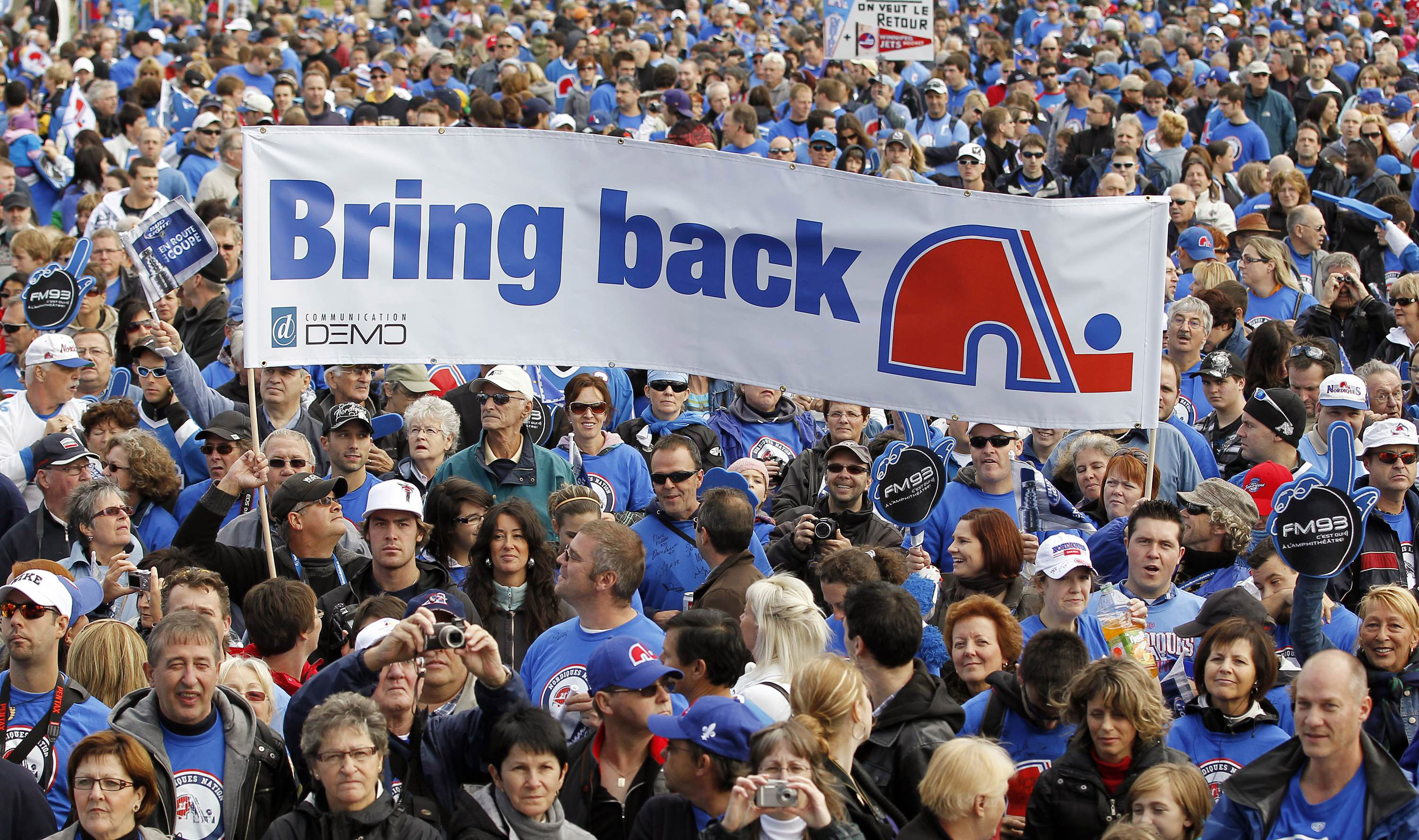
    Want to bring back the Québec Nordiques? Good luck.

    Québec City would be the league’s second smallest market and selling out 16,000 tickets doesn’t mean as much as it used to with media deals, corporate sponsorships, new markets and division balance (let alone conference balance) all at stake.

    Butts in seats only matter for momentum– not ad dollars on TV.

    Granted, people in seats laying eyes upon LED signage around the arena, now that’s still an investment and matters to an extent on the local level and/or organization itself for day-to-day operations.

    But this league sees the big picture– national level attention, reaching a broader scope, true globalization of their league as the best league– let alone growth of the game.

    Boston Bruins owner, Jeremy Jacobs, is also the chairman of the league’s board of governors. He’s also head of the league’s executive committee. Old guard owner jokes aside, Jacobs has the final say on most (if not all) league management decisions, despite the existence of league commissioner, Gary Bettman.

    Commissioners in all major North American professional sports work for the owners. Not the other way around.

    The commissioner is the collective voice of the board of governors– the face of the league– but ultimately is not the singular directive power.

    So at the Bruins season ending press conference, Jacobs was asked about the future of the league regarding the Golden Knights and potential expansion.

    Québec just isn’t happening right now.

    It’s been said time and time before and it’ll be said time and time again. And it was the main takeaway from Jacobs’s comments regarding further expansion on the near horizon.

    Houston was name-dropped. Whether it’s relocation or expansion (and it’s likely another expansion at this point), the league will find its way to Seattle and Houston.

    It’s hard to remember the journalistic duty of including the words “proposed”, “expected” or “just about soon to be announced at some point in the near or not so distant future” before mentioning Seattle, let alone Houston, given the known interest.

    Maybe the Arizona Coyotes will relocate, you ask?

    No. That’s not happening.

    If the Coyotes were going to move, they would have moved already. Arizona is committed to Arizona. While the City of Glendale might not see the Coyotes as suitable partners, the Coyotes see Arizona as their true love.

    Maybe the Florida Panthers are Québec’s last hope (or Houston’s best opportunity, if expansion fees are an issue) for relocation?

    Sure, but as an “in case of an emergency” plan. Remember how the Atlanta Thrashers relocation to Winnipeg played out? If not, keep reading, but also, Florida has an owner that’s committed to Florida.

    At least Patrick Roy will be back behind the bench for the Quebec Remparts (QMJHL) next season.

    Does market size matter if 16,000 season tickets are sold in a 700,000 population or 2,000,000-plus population?

    No, but the media deal that accompanies the market and how many televisions it reaches, that’s where it matters.

    Right about here is where things don’t stack up as well for Québec with other prospective expansion candidates, given the surrounding population outside Québec City and the conglomerate of Montreal Canadiens fans that dominate the province.

    At one point in time two teams made sense for the province, let alone two teams in one city (Montreal). Nowadays, the Habs have too much of a stronghold– too big of a monopoly of fans. Yes, even among old Nordiques fans and their families who swore they’d never root for their intra-province rivals.

    Bettman runs the league like the National Basketball Association, which, considering his background, sounds about right. The NHL’s profits have never been higher and Bettman deserves credit for the business side of the sport.

    And the NBA is eyeing expansion of their own, following renovations to KeyArena/Seattle Center, where Oak View Group looks to land an expansion NHL team for the 2020-21 season. In addition to Seattle, the NBA’s apparently eyeing Kansas City, lending some to believe we might be in another golden era of expansion across all major North American professional sports leagues as Major League Baseball commissioner, Rob Manfred, has indicated a desire for MLB to expand to 32 teams (with Montreal and Mexico as possibilities).

    As an aside, the author would like to let it be known of his desire for an MLB team in Charlotte, N.C.

    31 is the new 30 and 32, 33 and/or 34 is perhaps the near future for at least three out of four of the Big Four leagues (MLB, NBA, NFL and NHL).


    So about Seattle… (and other sports economics)

    It’s totally happening, it’s just a matter of time. Get ready to cut the check for $650 million, Oak View Group.

    And Houston?

    Once Seattle goes for $650 million, there’s no reason not to expect the expansion fee to go up once again for a 33rd NHL team. Seattle’s not expected to begin play until the 2020-21 season and even without any of the major renovation work that’s going on in the Emerald City, Houston isn’t fully move-in ready for an NHL franchise.

    That’s not to say Toyota Center isn’t a great fit, but rather that both Fertitta and the league aren’t presently talking and expansion to Houston would logically have to follow Seattle working with the current timeline of events (and ignoring what it would all mean for division realignment).

    So four or five years from now a $650 million expansion fee could quickly become upwards of $800 million for a brand new team. Perhaps it’d be $1 billion by then.

    And if Québec can afford a billion dollar (U.S.) pricetag by that point, then sure, they’ll be a shoo-in for the league’s 34th team. By then we might as well be talking 35th and/or 36th even.

    Four divisions of nine teams doesn’t sound terrible if you can find suitable locations (Seattle, Houston, Kansas City, Québec City and Atlanta, for example) to level off the Atlantic, Metropolitan, Central and Pacific Divisions.

    This is the economy of sports in the 21st century and Bettman’s dream– so long as the value of the majority of NHL franchises continue to climb and start to rival those of midpack/bottom NFL teams (the New York Rangers are valued at $1.5 billion according to Forbes– barely above the Toronto Maple Leafs $1.4 billion valuation)– and that’s ignoring how weak/strong the Canadian dollar is.

    Granted, the average NHL franchise is worth around $594 million.

    But as the NFL’s Carolina Panthers (a mid-pack team in terms of franchise value again according to Forbes) just sold for $2.2 billion to David Tepper, one would expect NHL franchise values to climb as the future of American football as we know it remains uncertain and the success of the Golden Knights impacts NHL revenues in the coming seasons.

    Again, sports franchises and real estate prices always climb. It’s only a matter of time.


    Okay, so just tell me where does that leave Québec exactly?

    Recall for a moment, if you will, May 2011 when the Atlanta Thrashers were purchased by True North Sports and Entertainment and the downfall of Atlanta Spirit, LLC. began (or more accurately, continued).

    Yes, Winnipeg got an NHL team back, but they had to essentially go through relegation to get back to the top.

    The Winnipeg model of “being sent down to the minors”  for almost 20 years witnessed near sellout crowds in the smallest NHL arena currently (15,321 seats) for AHL games.

    That’s great, but the Jets weren’t going to be the Jets again if there was a prospective local buyer in Atlanta interested in busting up Atlanta Spirit, LLC. seven years ago.

    There wasn’t, so True North Sports and Entertainment’s rainy day fund came in handy when the league needed a venue for a team immediately– regardless of the support and regardless of Québec, Hamilton or Kansas City’s moaning and groaning (from prospective owners and/or fans).

    Canadian fans and some American hockey traditionalists like to bring up “the success of the Québec Remparts” in their new arena (Vidéotron Centre, opened in 2015).

    Oh you mean the QMJHL team that plays in a 18,259 seat arena and has been having declining attendance since maxing out around 14,000 their first year there (2015-16) and now sits around 9,400 or less (like all other Junior teams). Please go on and tell everyone how QMJHL support alone will persuade NHL eyeballs.

    It would certainly help Québec’s cause for bringing back the Nordiques by landing an AHL team on top of their QMJHL club and continuously supporting the organization(s) a la Winnipeg circa 1997-2011.

    None of this rules out relocation, but it does make expansion look slightly more attractive, provided someone (Quebecor or another prospective owner) can fork up over half-a-billion U.S. dollars.


    Professional sports are a business of entertainment.

    Again, professional sports are a business.

    Hockey traditionalism would not profit as well as the league has been profitting today.

    Plain and simple as that.

    This is a league that does not have to contract– thanks to the salary cap, revenue sharing and constant work stoppages to renegotiate the number of dollars the league eats before dividing up for the players.

    This is a league that has shown the sport can be played in any environment.

    The State of Arizona produced Auston Matthews. The Arizona Coyotes have been in Arizona for a generation AND THEY ARE NOT MOVING. They’re committed to their fans and their hockey community, but they’re up against a local government that’s unwilling to work with them on even the most basic levels– private vs. public funding for a new arena aside.

    Tampa Bay, Nashville, Vegas, San Jose, Anaheim and yes, even Florida and Carolina have all been competitive and have diehard fans.

    Sure the Panthers and the Hurricanes haven’t gathered casual eyes since 1996 and 2006 respectively, but you can’t blame the Panthers for being the Cleveland Browns of the NHL in a way (in addition to their poor location in Sunrise, Florida– outside of Miami) and Tom Dundon for any Hurricanes wrongdoings yet (though this summer is all about Carolina and how they just might reinvent themselves– and of course, everyone likes to jump to conclusions after a new owner’s first offseason, right?).

    Plus, at least the Hurricanes won the Cup in 2006. Your move Panthers.

    But this league, like any major professional sports league, sees a game, entertainment and money to be made.

    Tradition is just a sweater, a pregame ritual or a superstition. It’s not a revenue stream for reinvention over time.

    Take it from NASCAR, where, coupled with changes back-and-forth in the rulebook every other week on top of overprotection of its traditional image (along with dried up ratings) have removed the basement from the very foundation of the sport– and possibly the sanctioning body as the France family mulls a sale of the entity itself.

    Like it or not, we are in an era of expansion– not just for the NHL, but potentially for all four major North American professional sports (and MLS, if you really want to extend the product here, as expansion is wicked hot in soccer currently).

    Should I mention we’re getting four more ads on the ice next season or have I already given everyone enough heart palpitations?

  • A few Monday afternoon thoughts

    By: Nick Lanciani

    In light of the Florida Panthers new look, Peter Karmanos Jr.’s latest debacle and all the expansion talk, I’m here to try to put a few thoughts on the same page.

    Florida_Panthers_logo_2016.pngCarolina Hurricanes Logo


    Some thoughts on Florida’s rebrand…

    First, there’s the Florida Panthers rebrand. Am I allowed to say the new logo is growing on me? The answer to that rhetorical question is obviously yes, because this is my site, but also because it’s the truth. Look, I’m not obsessed with the new look for the Panthers, but I can respect this shield design as a new, modern, hockey crest. It’s clean and respectful of the organization’s history, now over 20 years old, and really ties itself into the Southern Florida sports scene. While it might look better as a third jersey logo— at least when you put it on their new home sweater, which, by the way has a bit too much going on for my liking— it was time for a change in Sunrise.

    Give it a few years and I’m sure the Panthers will figure out how to tweak things to satisfy their entire fanbase, while honoring the 101st Airborne in their humble homage with their fresh look.

    Bottom line, not everyone can be like the Dallas Stars latest rebrand a few seasons ago. I mean, just look at the Carolina Hurricanes. They redesigned their image the same offseason as the Stars and, well, it just hasn’t caught on as much as anyone had hoped in the hockey world. While another rebrand would certainly help, the Hurricanes have much bigger issues on their plate, whether anyone’s willing to admit them or not. Which brings me to my second point…

    …on Carolina chaos…

    (How’s that for a transition?)

    Carolina owner, Peter Karmanos Jr., the man responsible for moving the Hartford Whalers back in 1997, has been looking for a dancing partner for a couple of years now to help cover the costs of owning  and operating the Hurricanes, albeit while retaining all the power and control that he brought with the Whalers to Raleigh as an odd precondition.

    But now it appears as though the focus of that dancing partner might now be in the form of a lawyer, as Karmanos deals with a little over $105 million lawsuit from three of his sons.

    Without getting into too much detail, this should be raising red flags (not the hurricane warning kind) despite whatever anyone from the league or Hurricanes organization says. We’ve known for a few seasons now that Carolina is in shambles when it comes to attendance and likewise, that the franchise is not as financially stable at its foundation as the NHL would hope.

    Karmanos continues to insist that there is no need to relocate the franchise to a more desirable location (at least from a fanbase perspective), such as Québec City or Las Vegas.

    There’s no better chance than now for Karmanos to make a move, whatever that may be, but as the legal battles within his family play out, he might be forced to sell the franchise to an owner in a potential expansion location and get the organization out of Carolina, if there continues to be no immense local interest among potential owners.

    What the NHL won’t tell you, and I’m sure, is that they really don’t want to have another Phoenix Coyotes disaster circa 2009. You know, the one with bankruptcy, lawsuits, the league eventually owning the team, Wayne Gretzky as a coach (wait that had nothing to do with it), and that Canadian millionaire that wanted to move them to Hamilton, Ontario?

    But alas, my third thought, we’re more than likely on the verge of expansion in the NHL. Like it or not.

    …and finally, on expansion.

    Las Vegas may surely be coming in the next couple of seasons, but what might be more intriguing is the thought that no news might be good news for Québec City.

    Of course, there’s a few holdups with a team potentially venturing to Vidéotron Centre that’s not just a preseason matchup between the Boston Bruins and the Montréal Canadiens next season.

    The struggle of the Canadian dollar could scamper the hopes of Nordiques fans once again and the ongoing Carolina catastrophe could scatter current expansion plans. But then again, who knows what relocation talks might be circulating and/or among whom (if any).

    What’s next for the league is to decide once and for all whether to delay expansion, accept one or both expansion bids, or nullify any chance of expansion at this time. That announcement is expected June 22nd, conveniently at the NHL’s annual Awards Ceremony in where else? Las Vegas.

    Basically, it’s a yes, no, maybe scenario.

    While some, like Brian Mulroney, are adamant that the league will look over Québec this time around for expansion, others in the rumor mill are more hopeful that as long as everyone’s distracted with the squabble about a team in the Sin City, then there’s a good chance we’ll see a return of the Québec Nordiques as a delightful surprise.

    The league is more than ready to make a go at both locations, regardless of conference alignment atrocities in the eyes of some fans. But your conference woes might see some ease if the Hurricanes situation yields a relocation resolution. And maybe that is the reason, after all, that there’s not much chatter out of Québec on the state of their expansion plans.

    A relocation fee is certainly less expensive than a $500 million expansion fee. And since Quebecor is more than willing to dish out $500 million U.S. for an NHL team that would generate all of its revenue in Canadian dollars, then there’s a good chance they could easily find the funds to come up with purchasing and relocating Carolina.

    The only issue would be getting Peter Karmanos out of the picture.

    That’s no easy feat, as exhibited by the Whalers forceful removal from Hartford and Karmanos’s dedication to Raleigh, which, although hasn’t been tremendous in growing the sport in the community (i.e. building rinks in North Carolina), nor providing the franchise with an adequate practice facility, has certainly been enough to keep the team around this long and with a 2006 Stanley Cup championship at hand.

    That was ten years ago. This is now.

    Whatever announcement is forthcoming on June 22nd, whether it’s no expansion at this time, yes to expansion or further delaying the thought of expansion, it appears as though the league is more than ready to make a go at both locations. Las Vegas for the first time, Québec City for a homecoming of the sorts.

    So while you’re worried about which of your favorite players might get poached by an expansion draft in a year or two, this offseason is sure to have more to it than first expected, as always. And there’s plenty of hurdles to still get over before you can start dreaming about what a team in Las Vegas might look like or seeing what kind of a response the Colorado Avalanche might get in their first regular season game back in Québec.

  • It’s Time for a Second Look

    It’s Time for a Second Look

    By: Nick Lanciani

    It’s mind boggling that the NHL wouldn’t want to continue being a leader in sports and entertain the notion of having more than 30 teams in a league, for once, in North American sports. Okay, the NFL has 32 teams, I get that- but there’s this fascination for some odd reason that a successful sports league can only max out around 30 teams, given how the NHL, NBA, and MLB all have 30 teams in their leagues. Quite frankly, that’s a load of bull. The National Hockey League is old enough to still be young and reinventing itself, as was the case after the 2004-2005 lockout with the addition of new rules (the trapezoid) and the removal of old ones (two line passing).

    What I mean is, the NHL is not Major League Baseball, which beats the “heritage” card to extinction year after year as to lamely explain why the MLB doesn’t change. While the MLB would never consider entertaining a franchise in Las Vegas (which would be a first in professional sports), the NHL could be a front-runner for professional sports of the future in North America. At least, given the eye of the young fan base that’s been keeping track of the league for the last few years, there’s a chance to really make a splash. Major League Soccer and the NHL’s interest in Las Vegas and other markets are good for their leagues and sports in general.

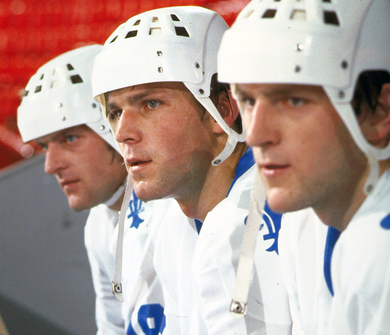
    Peter Stastny center, flanked by brothers Marian (left) and Anton. All three played for the Quebec Nordiques in the 80s. Photos: HHoF
    The Stastny brothers (from left to right, Marian, Peter, and Anton) were some of the first European superstars in the NHL back in the 80s. Photo: HHoF

    While the MLS is adding a team in Atlanta in 2017, the NHL will likely stay away from Atlanta for eternity after two failed attempts at a hockey presence in Georgia. However, given the recent rate of expansion in the MLS, there’s a good chance that they too, will end up having 30 teams at some point. Soccer’s popularity in the United States is on the rise and it’s backed by the recent viewership of the 2015 Women’s World Cup, beating some traditional hockey markets, like Philadelphia, while a 2015 Stanley Cup Final game was being shown on TV at the same time. The two leagues are innovative and should work together as both sports gain popularity. As it is, hockey is becoming more mainstream by removing some of the importance once stressed on fighting, resulting in just as entertaining games as ever before.

    Soccer is a sport best played with many teams and some form of relegation, like in Europe. While that model would not translate well with hockey, at some point the MLS is going to have to absorb many of the popular teams in developmental leagues, in order to make their game more exciting. The NHL should consider something similar when it comes to the minor league markets that are untapped, or have worked in the past. Expansion and relocation fees aside, both leagues should go for breaking the 30-team barrier.

    The NHL as it exists right now, would be on the verge of going for it much sooner than the MLS and could act as an example of what to do and how to go about things. I’m in favor of 34 teams in 2017, the NHL’s 100th season. But first, let’s get back to Quebec (and the basics).

    (Denis Brodeur/Getty)
    Joe Sakic in his Quebec days, before the Nordiques moved to Denver (Denis Brodeur/Getty Images).

    If the league is intent on adding franchises, a return to Quebec City, the inevitable Las Vegas team, an expansion to Seattle, and whatever else may come their way is exactly what the NHL needs. After watching the Winnipeg Jets play in their first playoff game at home since the original Winnipeg Jets left for Arizona 19 years ago, I cannot help but think that the NHL needs to return to another small market, where hockey has already worked, and everyone loves the game. There’s a place that is more readily equipped for a National Hockey League return- Quebec City.

    Whereas a former member of the NHL, Hartford, doesn’t have an adequate arena to play in and potential spotty ownership, Quebec City has the 18,482 seat Videotron Centre- set to open this September. The brand new arena will have all the top-notch amenities and will be NHL move-in ready, should the league wish to expand or a team relocate, such as the Coyotes in their dreaded current state. Fear not, Arizona and Gary Bettman nay-sayers, the league’s experiment is just starting to see results in the growth of the game in the Southwestern region of the United States.

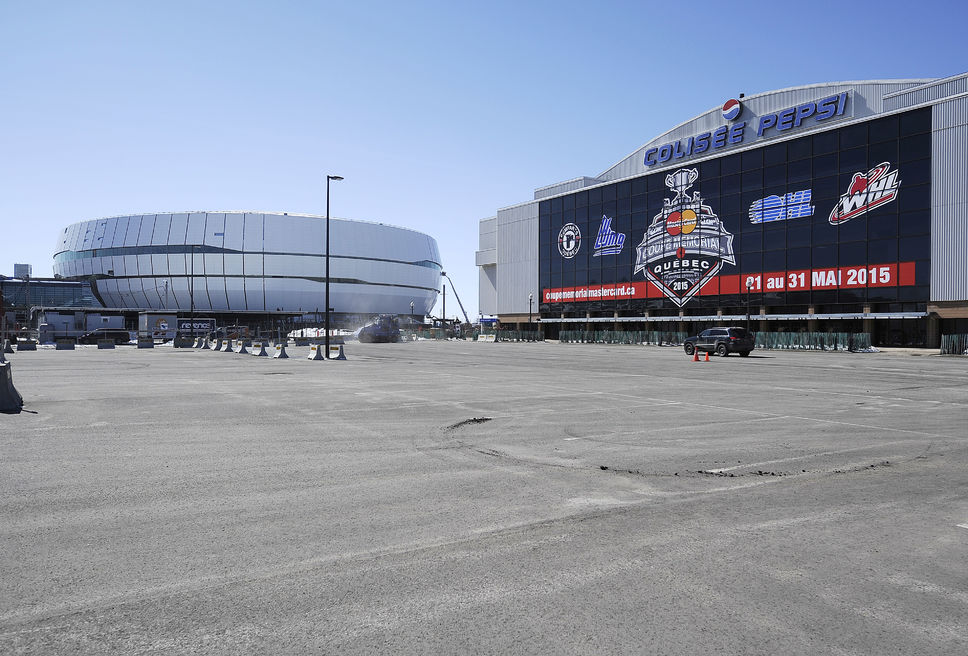
    The Videotron Centre (Centre Vidéotron) sits in the background of the Pepsi Coliseum (Colisée Pepsi). DIDIER DEBUSSCHERE/JOURNAL DE QUEBEC/AGENCE QMI
    The Videotron Centre (Centre Vidéotron) sits in the background of the Pepsi Coliseum (Colisée Pepsi). DIDIER DEBUSSCHERE/JOURNAL DE QUEBEC/AGENCE QMI

    And don’t get me wrong, Connecticut, you guys love hockey and still love the Whalers to this day. It’s not realistic in Hartford’s current state, for an NHL return anytime soon. Yet, I’ll still be one of the first to help you demand a return and shout, “Bring back the Whalers!” should there be a more immediate and reasonable plan. But there’s a place that is more readily equipped for a National Hockey League return- Quebec City.

    But what’s holding everyone back? Canada is able to sustain at least eight franchises, if not more, and hockey is Canada’s game after all. The league made the best of a hurtful breakup in its return to Winnipeg back in 2011, surely NHL Commissioner Gary Bettman and crew can make due on Quebec’s aching heart since 1995 when the original Quebec Nordiques fled the struggling Canadian dollar and the lack of a locally interested owner and went west to become the Colorado Avalanche. Perhaps the league will find enough heart to forgive the Nordiques from almost rebranding with awful looking 90s teal on an otherwise decent looking jersey.

    I mean, if the league is serious about adding a team in Las Vegas, which might not carry longevity, then why not look for a place with more staying power than whatever Vegas would become. The original Nordiques survived in the league from 1979 to 1995. Despite some down years, Quebec was on an impressive turnaround at the end of the 1994-1995 season. The team that moved wound up winning the Stanley Cup in their first season in Colorado.

    The whiteout was in full force in Winnipeg in the 2015 Stanley Cup Playoffs. Photo By: Jonathan Kozub/NHLI via Getty Images
    The whiteout was in full force in Winnipeg in the 2015 Stanley Cup Playoffs. Photo By: Jonathan Kozub/NHLI via Getty Images

    Among teams that no longer exist, Quebec Nordiques merchandise ranks second to the Hartford Whalers in sales. Still not convinced about the staying power of a new Quebec Nordiques franchise? Look at the return of the Winnipeg Jets in Winnipeg, Manitoba. It’s a small hockey market, but they sell out every seat in the 15,004 seating capacity MTS Centre for every home game, despite missing the playoffs from the 2011-2012 season to last season. In their first game back to the postseason, the MTS Centre was rocking at 124 dB from time to time as reported by Sportsnet.

    Imagine how loud it would be in the Videotron Centre for the Nordiques return or their first provincial rivalry regular season meet-up with the Montreal Canadiens since 1995- in any case, it’d be awesome. As an aside, Boston Bruins fans would gladly welcome another team that despises the Habs. They’ll even forgive Ron Tugnutt for his extraordinary 70 save performance on 73 shots on goal en route to the Nordiques 3-3 tie against the Bruins on March 21, 1991, even though some of their modern day fans were not even alive then.

    The NHL obviously has issues with adding another team to the Eastern Conference before adding anything to the Western Conference due to its current imbalance with 16 teams in the East and 14 in the West. The easiest way to solve the original realignment problem created when the Atlanta Thrashers moved to Winnipeg four years ago would have been to simply swap the Jets with the Nashville Predators in their respective divisions. Winnipeg would have gone to the Central, while Nashville would have gone to the Southeast in a geographically sensible maneuver.

    However, the league decided to consolidate the divisions from six to four and swapped Winnipeg for Detroit and Columbus. In the process, each conference makes geographic sense, with a focus on cutting travel expenses and reducing a carbon footprint league-wide. Yet, while the Central and Pacific Divisions are perfect, the Atlantic and Metropolitan Divisions are somewhat flawed. Yes, with all of the teams from the old Northeast Division, plus Detroit, somehow the Atlantic Division also has the Florida Panthers and the Tampa Bay Lightning. Meanwhile, the Metropolitan Division has both the New York Islanders and the New York Rangers.

    It’d make sense to swap both New York City teams with both Florida teams, citing the exact same reasons the NHL came up with in the first place, but for whatever reason, that is frowned upon. It’s not like it wouldn’t saturate the market or anything, because as it is, New York already has three teams (four if you count the New Jersey Devils in Newark, New Jersey). While, yes, the Buffalo Sabres and both the Rangers and Islanders have a little distance between them, it’s nothing compared to Florida and Tampa.

    And speaking of the Florida Panthers, it’s only a matter of time- no matter how good the product on the ice may get- before they have to relocate. The Panthers and Sunrise, Florida may find themselves at odds much like how Glendale, Arizona is in legal upheavals with the Arizona Coyotes. A hockey team in the suburbs of a non-traditional market isn’t proven to profit. But where should the Panthers end up without causing much fuss over realignment?

    REUTERS/Mathieu Belanger
    REUTERS/Mathieu Belanger

    You guessed it- Quebec City. They’re already in the Atlantic Division, so absolutely nothing would have to be changed except for all franchise trademarks and whatnot regarding the transition from the Panthers to the, newly returned, Nordiques. In foresight, it’s not hard to fall in love with the furthest north professional sports franchise after all of the neglect it saw in one of the most southern nontraditional hockey markets.

    Oh and if New Jersey had to move for whatever reason, given their recent downturn and less than stellar attendance, then Quebec is a prime destination. Realignment would still be simple, swap Quebec with one of the Florida teams and maybe then the NHL would have to realize it should kick the other Florida team to the Metropolitan Division and insert the New York Rangers (or Islanders) into the Atlantic Division. Then again, relocation of either the Panthers or the Devils could just mean that the league would send them west to Seattle or Las Vegas and call it a day, having a balanced fifteen teams in both conferences, but that wouldn’t be any fun, wouldn’t it?

    Look, I’m all for a team in Seattle, so here’s what you do. Add an expansion franchise to Seattle and force Detroit back to the Western Conference; because we all know two matchups a year between longstanding rivals, the Detroit Red Wings and the Chicago Blackhawks, really aren’t enough. Then add a team in Quebec City to make it a nice thirty-two-team league with sixteen teams in each conference. Besides, who wouldn’t want to see a reincarnation of the Nordiques after the beautifully aesthetic appeal of the current Jets installment?

    That’s right, I’m saying that when the NHL goes back to Quebec City, it’s not a bad idea to modernize the franchise. The igloo with a hockey stick that somewhat formed the shape of an “n” with its tricolor scheme and fleur-de-lis all over the jerseys was great- timeless even, a classic for traditionalist vintage hockey fans- but there are some great concepts on the Internet for glorious designs in the event of a rebirth of the Nordiques.

    This is my favorite of all the Quebec concepts on Icethetics.
    This is my favorite of all the Quebec concepts on Icethetics.

    I think a darker shade of navy blue would suffice, with maybe a snowy owl and the city skyline or something that is distinctive of Quebec City, and of course sharp looking fleur-de-lis prominently featured on the bottom half of the sweater and along the pants. If you have the time, go check out some great designs on Icethetics.co, some great concept artists have really gone all out on creating the perfect symbol for what should be a return to the true north strong and free- Quebec City.

    In this day and age, with the billion dollar industry that is the sports world, it shouldn’t be hard to find an owner and work with the largely French speaking fan base. Back in the days of the original Nordiques, English speaking fans flocked to the Quebec City team over the much more hardcore French speaking franchise over in Montreal. Obviously it must have been the warm and inviting ­fleur-de-lis calling them to the light side of The Force in the battle of Quebec. Either that or it was because of the great players that once graced the ice at Colisée Pepsi, such as the Stastny brothers, Mats Sundin, Guy Lafleur, Owen Nolan, Peter Forsberg, and my favorite- Joe Sakic.

    The bottom line, folks, Quebec City has an important mark on the history of hockey. It was once home to the Quebec Bulldogs who spent one season in the NHL (1919-1920) before moving to Hamilton, Ontario to become the Hamilton Tigers and it was once home to the 1977 Avco World Trophy champions as the World Hockey Association’s top team before joining the NHL in the WHA-NHL merger in 1979- the Quebec Nordiques. Isn’t it time that someone brought the game back where it belongs for all of us to enjoy? Even in the face of the uncertainty of the salary cap situation currently and the issues that are once again surrounding the Canadian dollar, I mean, hockey is for everyone, after all.