Tag: Toronto Maple Leafs

  • Lightning repeat as Stanley Cup champions in Game 5 shutout

    Lightning repeat as Stanley Cup champions in Game 5 shutout

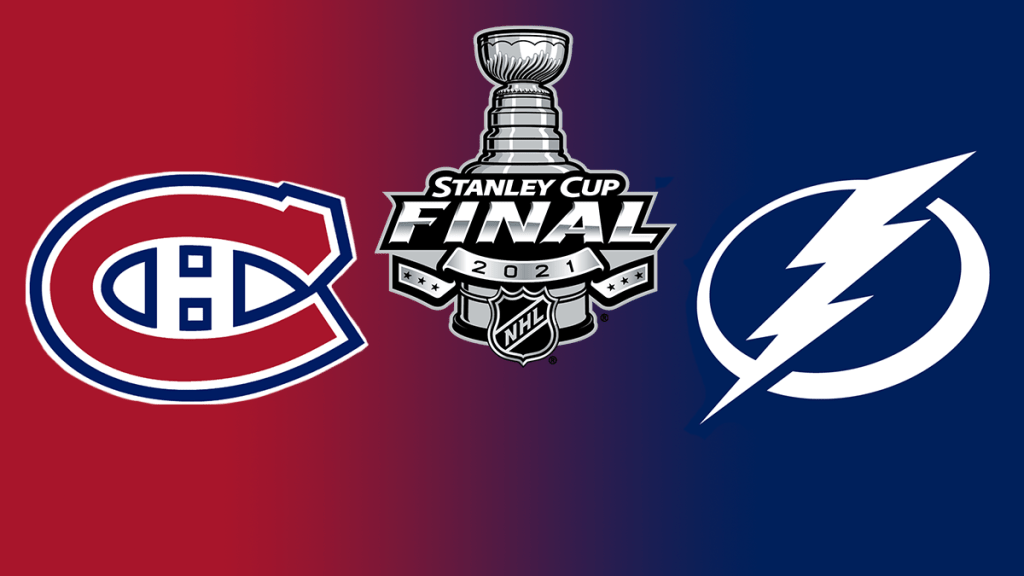
    Ross Colton’s goal was more than enough to seal the deal on the Tampa Bay Lightning’s third Stanley Cup championship in franchise history Wednesday night at Amalie Arena in Game 5 of the 2021 Stanley Cup Final.

    Andrei Vasilevskiy made 22 saves in a, 1-0, shutout victory on home ice over the Montréal Canadiens as he became the first goaltender since legendary Canadiens goaltender, Ken Dryden, to play in every playoff game en route to winning back-to-back Stanley Cup rings.

    It was also the 5th shutout (6th of his postseason career) for Vasilevskiy this postseason as the Lightning goaltender became the first in league history to win all four series clinching games in a shutout.

    He’s also won his last five consecutive playoff series’ in shutout fashion as Tampa shutout the Dallas Stars, 2-0, in Game 6 of the 2020 Stanley Cup Final before going on their 2021 run by shutting out the Florida Panthers, 4-0, in Game 6 of Tampa’s 2021 First Round matchup, eliminating the Carolina Hurricanes, 2-0, in Game 5 in the 2021 Second Round and beating the New York Islanders and Canadiens, 1-0, in Game 7 of the 2021 Stanley Cup Semifinals and Game 5 of the 2021 Stanley Cup Final, respectively.

    Colton was also the fourth rookie to score a Stanley Cup clinching goal since 1927, in Wednesday night’s effort.

    The Bolts are back-to-back Stanley Cup champions, having won the Cup in 2020 and 2021, as the first repeat champions since the Pittsburgh Penguins did so in 2016 and 2017.

    Tampa also did so in a span of about 10 months, since the ongoing global pandemic altered the National Hockey League’s postseason calendar for 2020, and shortened the 2020-21 league calendar to 56 games in the regular season, followed by a postseason that began in May and ended in the first week of July.

    Last year, the Lightning raised the Cup as the designated road team at Rogers Place in Edmonton, Alberta at a neutral site as the NHL played through the COVID-19 pandemic in a bubble in the 2020 Stanley Cup Playoffs.

    This year, for the first time in 17 years, the Bolts raised the Cup in front of their home fans as 2004 Stanley Cup champion with Tampa, Dave Andreychuk, watched along in attendance to cap the 2020-21 Lightning’s run.

    In 2004, NHL on ESPN and NHL on ABC coverage had come to an end with the conclusion of Tampa’s Game 7 victory over the Calgary Flames in the Stanley Cup Final.

    The 2004-05 season-long lockout that ultimately canceled all NHL action for the year meant that ESPN could punt their broadcasting rights to the 2005-06 season or opt out altogether.

    They chose the latter.

    That’s when NBC stepped in and the NHL had games on Outdoor Life Network, then Versus, NBC Sports Network (which shortly rebranded as NBCSN), as well as on NBC.

    In 2021, NHL on NBC signed off for the final time as the league shifts its focus back to ESPN/Disney and Turner Sports for the next seven seasons in the United States starting with the 2021-22 season (the 2021 Seattle Kraken Expansion Draft and first round of the 2021 NHL Draft will be on ESPN2 this month, if you’re wondering).

    Back at Amalie Arena on Wednesday night, Vasilevskiy (16-7, 1.90 goals-against average, .937 save percentage in 23 games played) made 22 saves on 22 shots against en route to winning the Conn Smythe Trophy as the 2021 Stanley Cup Playoffs’ Most Valuable Player.

    Montréal goaltender, Carey Price (13-9, 2.28 goals-against average, .924 save percentage in 22 games) stopped 29 out of 30 shots faced in the loss.

    Lightning head coach, Jon Cooper, improved to 9-0 all time in a series when leading 2-0, while the Bolts became the first team to raise the Cup on home ice since Chicago did so in 2015.

    Pat Maroon, meanwhile, also became the first player (and fourth overall) since Ed Litzenberger to win three consecutive Cups with two different teams as Litzenberger won with Chicago in 1961, as well as Toronto from 1962-64.

    Neither Habs head coach, Dominique Ducharme, nor Cooper, made a change to their lineups for Game 5 on Wednesday.

    Alex Killorn remained out of the lineup for the Lightning for fourth game in-a-row after blocking a shot in Game 1. He told reporters after the game that he suffered a broken left fibula in Game 1 and wanted to suit up again if he could play.

    Corey Perry kicked things off in Game 5 with a hooking infraction as Perry impeded Mathieu Joseph’s play and presented the Lightning with the game’s first power play at 3:21 of the first period.

    Tampa couldn’t convert on the ensuing skater advantage, however.

    Moments later, the Canadiens got their first chance on the power play as Jan Rutta cross checked Artturi Lehkonen at 7:19.

    Montréal’s time on the advantage was unchanged as Erik Cernak earned an interference minor and Perry was assessed an embellishment infraction almost a minute after Rutta cut a rut to the penalty box at 8:15.

    About 30 seconds after Cernak and Perry went to the sin bin, though, Josh Anderson hooked Blake Coleman and joined his teammates in Montréal’s box at 8:43 of the opening frame.

    The two teams skated at 4-on-4 for 37 seconds before Tampa had an abbreviated power play thereafter.

    Just past the midpoint of the first period, the Bolts were outshooting the Habs, 11-2, with 9:53 remaining in the opening period– reminiscent of how the Lightning outshot the Canadiens, 11-1, through the first half of the first period in Game 4.

    Entering the first intermission, the score was still tied, 0-0, despite Tampa outshooting Montréal, 13-4.

    The Bolts also held the advantage in blocked shots (3-0), takeaways (2-1) and hits (25-16), while the Habs led in faceoff win percentage (52-48) after one period.

    Both teams had three giveaways each while the Canadiens were 0/1 and the Lightning were 0/2 on the power play heading into the middle frame.

    David Savard sent an errant puck over the glass and out of play and received an automatic minor 21 seconds into the second period, but the Habs couldn’t score on the resulting power play.

    Almost midway through the second frame, Mikhail Sergachev tripped up Nick Suzuki and presented the Canadiens with another power play that went by the wayside at 8:32.

    Moments later in Tampa’s attacking zone, Ryan McDonagh made a lateral pass along the blue line to Savard, who promptly crashed the slot and slid a shot pass towards the crease for Colton (4) to redirect into the twine.

    Savard (5) and McDonagh (8) had the assists on Colton’s goal as the Lightning took a, 1-0, lead at 13:27 of the second period.

    Keeping in the trend with the rest of the series– the team that scored first in each game won the game.

    Late in the period, Ben Chiarot yanked Brayden Point down on a breakaway, yielding a power play to the Bolts as a result as Chiarot was assessed with a holding infraction at 19:22.

    Though the ensuing skater advantage spanned the end of the second period and the start of the final frame of regulation, the Bolts couldn’t find a way to solve Montréal’s penalty kill.

    After 40 minutes of action at Amalie Arena on Wednesday night, the Lightning lead the Canadiens, 1-0, on the scoreboard and were outshooting the Habs, 19-14, despite Montréal holding a, 10-6, advantage in shots on goal in the second period alone.

    Tampa held the lead in blocked shots (4-3), takeaways (7-3), giveaways (10-3) and hits (44-35), while the Canadiens led in faceoff win% (54-46).

    Both teams were 0/3 on the power play heading into the final period.

    Early in the third period, Nikita Kucherov had a great chance to score, but Price stood tall and shut him down while losing his stick and making desperation saves.

    Montréal responded with a breakaway as Anderson burst into the zone with tremendous speed, was denied by Vasilevskiy and ultimately crashed back-first into the post and briefly went down the tunnel before returning for the rest of the game.

    With 1:51 remaining in the third period, Ducharme pulled Price for an extra attacker, but after a stoppage resulted in neutral zone faceoff, the Habs sent Price back into the crease for a few seconds to ensure a little security between the pipes if they lost the draw.

    Montréal won the ensuing faceoff as Price once again sprinted for the bench with 1:36 remaining, but Tampa’s defense was too much for the Canadiens– though the Lightning’s offense couldn’t put an exclamation point on the game with an empty net goal.

    The Habs used their timeout with 1:24 remaining as assistant coach, Alex Burrows, tried to rally his players for one last push.

    At the final horn, Vasilevskiy and the Bolts earned a, 1-0, shutout in Game 5 and clinched their second-straight Stanley Cup ring in as many years.

    Wednesday night marked the third time that Tampa won the Cup in franchise history.

    The Bolts also improved to 17-3 all time when scoring first in series-clinching games.

    Tampa finished Game 5 leading in shots on goal, 30-22, including an, 11-8, advantage in the third period alone.

    The Lightning dominated in just about everything else at the end of the night, leading in giveaways (11-6), hits (56-48) and faceoff win% (52-48), while both teams had nine blocked shots each.

    Montréal exited the building 0/3 on the power play, but then again, Tampa also struggled on the skater advantage in the action– going 0/3 on Wednesday night as well.

    Tampa finished the 2021 postseason 16-7 overall, while the Habs went 13-9.

  • Tampa repeats in preview of 2021 Stanley Cup Final

    Tampa repeats in preview of 2021 Stanley Cup Final

    For 29 (soon to be 30) franchises, the calendar’s already flipped from 2020-21 to 2021-22, but for two teams remaining in the 2021 Stanley Cup Playoffs there’s still one goal– winning the 2021 Stanley Cup Final.

    At one end of the rink, the Tampa Bay Lightning are looking to become the first team to win back-to-back Stanley Cups since the Pittsburgh Penguins did it in 2016 and 2017.

    Lightning forward, Pat Maroon, is seeking to become the first player in the Expansion Era (since 1967) to win three consecutive Cup rings in as many seasons among two different franchises, having won his first with the St. Louis Blues in 2019, and his second last year with Tampa.

    Maroon can also be the first player to win the Cup in three consecutive seasons in general since a bunch of players on the New York Islanders did so during the Isles’ dynasty from 1980-83.

    At the other end of the rink, the Montréal Canadiens are seeking to win their first Stanley Cup– and 25th in franchise history– since 1993, which also happens to be the last time a Canadian club won the Cup.

    The Habs were the last team to clinch a spot in the 2021 Stanley Cup Playoffs and yet, here they are.

    Corey Perry lost to the Lightning as a member of the Dallas Stars in six games in the 2020 Stanley Cup Final and has made it back to the Final for the third time in his career, while Eric Staal is back in Cup contention for the first time since 2006, when he won it all as a member of the Carolina Hurricanes.

    Perry won his first Stanley Cup ring with the Anaheim Ducks in 2007.

    Meanwhile, Carey Price is making his Stanley Cup Final debut as the greatest goaltender in Canadiens history since some guy named Patrick Roy won it all three years before demanding a trade out of Montréal.

    It all comes down to this– four more wins and one team will be crowned as this year’s Stanley Cup champion.

    For the first time since 2009, all games in the Stanley Cup Final will be played in the Eastern Time Zone. It’ll also be the first time that Stanley Cup Final games are held in July, much like how last year marked the first time the Final was held in September due to the ongoing COVID-19 pandemic.

    It’s also the first Stanley Cup Final since 1980, to feature teams that are normally in the same conference.

    As a result of the ongoing pandemic, the league temporarily realigned to four divisions and no conferences for a 56-game regular season schedule, featuring the top-four teams in each division qualifying for the postseason and no international travel between the United States and Canada until the Semifinals round– which was held in place of the usual Conference Finals round.

    Monday night at Amalie Arena in Tampa, Florida, the 2021 Stanley Cup Final gets underway. Here’s a quick review and more on how each team got here since the dawn of the 2021 Stanley Cup Playoffs.

    (3) Tampa Bay Lightning (40-14-2, 82 points) vs (4) Montréal Canadiens (24-21-11, 59 points)

    Tampa: 56 games played, .670 points percentage, 29 regulation wins.

    Montréal: 56 games played, .527 points percentage, 20 regulation wins.

    The defending Stanley Cup champion Tampa Bay Lightning are looking to go back-to-back as they defeated the Florida Panthers in six games (4-2) in the First Round, eliminated the Carolina Hurricanes in five games (4-1) in the Second Round and finished off the New York Islanders in seven games (4-3) in the Semifinals before reaching their second-straight appearance in the Stanley Cup Final.

    Led by Brayden Point in regular season scoring with 23-35–48 totals in 56 games, teammates Ondrej Palat (15-31-46 totals in 55 games) and Victor Hedman (9-36–45 totals in 54 games) rounded out the top-three in Bolts scoring for 2020-21, while Nikita Kucherov spent the entire regular season on long term injured reserve.

    It’s a legal loophole in the salary cap, whether it was exploited or not, Kucherov’s hip needed the time off while the Lightning stockpiled in unlimited playoff salary as the cap ceiling gets turned off when the postseason starts.

    Kucherov’s play hasn’t skipped a beat as he leads Tampa with 27 points (five goals, 22 assists) in 18 games thus far in the 2021 Stanley Cup Playoffs.

    Point trails Kucherov with 20 points (14 goals, six assists) in 18 games, followed by Alex Killorn (8-9–17 totals in 18 games), Steven Stamkos (7-10–17 totals in 18 games) and Hedman (1-15–16 totals in 18 games) to round out the top-five in team postseason scoring.

    The Lightning can strike more than twice per game– in fact, they’re scoring about 3.22 goals for per game thus far, trailing only the eliminated Colorado Avalanche (3.80) for the most goals for per game this postseason.

    Tampa trails the Toronto Maple Leafs– who were ousted in the First Round by Montréal in seven games– for the fewest goals against per game. The Bolts have allowed 2.06 goals against per game in 18 contests, while the Leafs had 2.00 in their seven-game postseason stretch.

    In net, Andrei Vasilevskiy served as the Lightning’s starting goaltender in both the regular season and playoffs– amassing a 31-10-1 record in 42 games played (42 starts), as well as a 2.21 goals-against average, a .925 save percentage and five shutouts in that span.

    A Vezina Trophy Finalist for 2020-21, Vasilevskiy has previously won the award for his 2018-19 season performance.

    Curtis McElhinney served as Tampa’s primary backup this season and went 4-6-2 in 12 games (12 starts) with a 3.09 goals-against average, an .875 save percentage and one shutout in that span.

    Meanwhile, Christopher Gibson played in two games (two starts) for the Bolts in the regular season and went 1-1-0 with a 2.65 goals-against average and an .875 save percentage.

    Entering the 2021 Stanley Cup Final, Vasilevskiy is 12-6 in 18 games (18 starts), has four shutouts and has a 1.99 goals-against average, as well as a .936 save percentage so far.

    He earned his first career postseason shutout in Tampa’s, 2-0, victory over the Dallas Stars in Game 6 of the 2020 Stanley Cup Final– clinching the franchise’s second Stanley Cup ring in the process– and has since become the first goaltender in NHL history to record three shutouts in three series clinching games in one postseason in the Lightning’s ongoing quest for a 2021 Stanley Cup ring.

    The Montréal Canadiens overcame a 3-1 series deficit to defeat the Toronto Maple Leafs in seven games (4-3) in the First Round, then swept the Winnipeg Jets in four games (4-0) in the Second Round before upsetting the Vegas Golden Knights in six games (4-2) in the Semifinals to make their 37th appearance in the Stanley Cup Final (including their days before the NHL’s existence).

    Tyler Toffoli led the way for the Habs in the regular season in scoring with 28 goals and 16 assists (44 points) in 52 games, while Jeff Petry (12-30–42 totals in 55 games) and Nick Suzuki (15-26–41 totals in 56 games) rounded out the top-three in points on the roster for 2020-21.

    Leading up to the trade deadline, Montréal added some depth and veteran experience that’s paid off with some clutch goals in their 2021 postseason run thus far.

    Toffoli leads the Canadiens in playoff scoring with 5-9–14 totals in 17 games thus far, while Suzuki (5-8–13 totals in 17 games), Cole Caufield (4-5–9 totals in 15 games), Perry (3-6–9 totals in 17 games), Joel Armia (5-3–8 totals in 17 games) and Staal (2-6–8 totals in 16 games) round out the top-five in points on Montréal’s playoff roster.

    In the crease, Jake Allen actually had more playing time than Carey Price in the regular season due to Price having battled a couple of injuries throughout the season.

    Allen went 11-12-5 in 29 games (27 starts), amassing a 2.68 goals-against average and a .907 save percentage in the process as the expected backup for the Canadiens, while Price produced a 12-7-5 record in 25 games (25 starts), as well as one shutout, a 2.64 goals-against average and a .901 save percentage in the regular season.

    Cayden Primeau appeared in four games (four starts) for the Habs and went 1-2-1 in that span, recording a 4.16 goals-against average and an .849 save percentage in the process.

    Since the start of the 2021 Stanley Cup Playoffs, Price has not come out of Montréal’s crease to be replaced by another goaltender and has been lights out for the Canadiens in their run to the Final.

    Price has a 12-5 record in 17 games (17 starts) thus far and has recorded one shutout, as well as a 2.02 goals-against average and a .934 save percentage in that span.


    The Canadiens have had no problem upsetting teams thus far in the 2021 Stanley Cup Playoffs and– as long as they survive the first 10 minutes of each game and are able to get a lead– have been able to steal pivotal games and suck the life out of their opponents.

    The Lightning have thundered their way back to the Final after winning it all last year and are capable of completely dominating games on the scoreboard and stifling the other team’s offensive production– limiting shots on goal and shot attempts in the process.

    Due to the ongoing global pandemic, Monday night will be the first time these two teams have seen each other in the league’s 2020-21 calendar year.

    It’ll also be the 64th unique Stanley Cup Final in league history.

    Lightning head coach, Jon Cooper, is in search of solidifying his place as the greatest at his job behind the bench in Tampa’s history, while Dominique Ducharme is trying to nail down the title as Montréal’s next official head coach– despite the fact that he won’t be back until Game 3 after testing positive for COVID-19 during the last series against Vegas.

    Luke Richardson’s waited things out in the American Hockey League for several years and already served well as an assistant coach for the Canadiens, but continues to make a well-rounded argument for staking a claim to the Habs’ coaching job on his own.

    Montréal won’t only be without Ducharme for the start of the series, however, as Armia also tested positive ahead of Game 1 for the Final and may not be available while the Canadiens are in Tampa.

    UPDATE: Armia cleared COVID protocol on Monday and was en route to Tampa via a private jet and will be a game time decision for Game 1.

    Not that it’s a big advantage for the Lightning, since the two teams are of great contrast in playing style thus far.

    Tampa can out skate, out hit and out score their opponent.

    Montréal can defend, latch on and if they’re able to withhold the sustained pressure from the Bolts (and not take any penalties) they’ll get the necessary goaltending out of Price.

    That said, Vasilevskiy is equally, if not more so, locked in right now.

    Both goaltenders have won the Vezina before and will be the first pair of Vezina Trophy winners to square off in the Final since the days of Dominik Hasek and Ed Belfour in, what, 1999?

    The Canadiens have been on a Cinderella run, but they’re running into the Lightning– the Lightning— of all teams now.

    They might have stood a chance against the Islanders, but Tampa is on another level.

    That said, my recent predictions have been the wrong team, but the right number of games, so it looks like the Habs would have to be taking it all right now in five games.

    But the Bolts are just too good. It’s their time to shine– as it has been for the last season already. They might not be dynasty material, but they’re pretty close to it and going back-to-back is within reach.

    If they lose, it’ll be their own fault.

    Tampa has something else on their side and it’s the fact that their Semifinals round lasted one game longer against New York than Montréal’s six-game series against the Golden Knights.

    In recent years, the team that’s played more hockey in the round leading up to the Final has won the Final more often than not.

    Just going back to 2015, both Chicago and Tampa won their Conference Finals rounds in seven games (Chicago won the Cup). In 2016, Pittsburgh advance in seven, while the San Jose Sharks won in six– the Penguins went on to win the Cup.

    In 2017, it was more of the same– the Pens in seven, the Nashville Predators won in six games, but Pittsburgh won the Cup.

    In 2018, the Golden Knights beat the Jets in five games, while the Washington Capitals defeated the Lightning in seven games before going on to win the Cup.

    In 2019, the St. Louis Blues advanced in six games, while the Boston Bruins swept the Hurricanes. The Blues went on to win the Cup.

    And in 2020, the Stars won in five games, but the Bolts advanced in six games and went on to beat Dallas in the Final.

    It’s just science.

    Besides, the Lightning are 2-1 in all time playoff series’ against the Canadiens, sweeping the Habs in the 2004 Eastern Conference Semifinal, losing to Montréal in four games in the 2014 First Round and beating Montréal in six games in the 2015 Second Round.

    Tampa is repeating as your Stanley Cup champion in 2020 and 2021, and this time they’ll do it in five games.

    Schedule:

    6/28- Game 1 MTL @ TBL 8 PM ET on NBCSN, CBC, SN, TVAS

    6/30- Game 2 MTL @ TBL 8 PM ET on NBCSN, CBC, SN, TVAS

    7/2- Game 3 TBL @ MTL 8 PM ET on NBC, CBC, SN, TVAS

    7/5- Game 4 TBL @ MTL 8 PM ET on NBC, CBC, SN, TVAS

    7/7- Game 5 MTL @ TBL 8 PM ET on NBC, CBC, SN, TVAS*

    7/9- Game 6 TBL @ MTL 8 PM ET on NBC, CBC, SN, TVAS*

    7/11- Game 7 MTL @ TBL 7 PM ET on NBC, CBC, SN, TVAS*

    *If necessary

  • Pacioretty or Suzuki, hope you made the right choice in 2018

    Pacioretty or Suzuki, hope you made the right choice in 2018

    There are four teams remaining in the 2021 Stanley Cup Playoffs and for the first time since 1981, there are no Conference Finals going on.

    Due to the ongoing global pandemic, the National Hockey League was forced to temporarily realign the divisions and get rid of conferences for a season as the league and it’s players’ union did what they could to get an abbreviated 56-game regular season schedule and a full Stanley Cup Playoffs experience in the history books.

    In May, ESPN‘s Greg Wyshynski reported that the league would not award the Prince of Wales Trophy and the Clarence S. Campbell Bowl to the victors of the equivalent third round, but after the Vegas Golden Knights eliminated the Colorado Avalanche in six games to conclude the Second Round of this year’s postseason last Thursday, the league apparently changed its mind.

    With a regular all-Eastern Conference matchup between the Tampa Bay Lightning and New York Islanders, as well as 50% of the teams representing the Western Conference in the other Semifinal series, both trophies will be awarded to the third round series winners after all.

    The winner of the Lightning and Islanders series will take home the Prince of Wales Trophy, while either the Golden Knights or the Montréal Canadiens will win the Clarence S. Campbell Bowl.

    Montréal can join a short list of teams to have won both trophies in franchise history, as only the Detroit Red Wings, Philadelphia Flyers, Chicago Blackhawks and Islanders have won each before.

    How is this possible, you ask?

    Well, for starters, the Clarence S. Campbell Bowl was introduced in the 1967-68 season and awarded to the team that finished with the best regular season record in the West Division (the precursor to the Western Conference in the modern era), while the Prince of Wales Trophy dates back to the 1925-26 season and, you guessed it, eventually became the East Division (pre-Eastern Conference days) equivalent.

    Ahead of the 1981-82 season, however, the league changed its postseason to include a Conference Finals round, thus involving these trophies in the playoffs and eventually leading to the creation of the Presidents’ Trophy for the team with the best regular season record since the 1985-86 season.

    So anyway, the teams mentioned above that won both have changed conferences and divisions over time.

    Now let’s talk about the other half of the Semifinal matchups– the Golden Knights and the Canadiens.

    (1) Vegas Golden Knights (40-14-2, 82 points) vs (4) Montréal Canadiens (24-21-11, 59 points)

    Vegas: 56 games played, .732 points percentage, 30 regulation wins.

    Montréal: 56 games played, .527 points percentage, 20 regulation wins.

    The Vegas Golden Knights eliminated the Minnesota Wild in seven games (4-3) in the First Round before ousting the 2020-21 Presidents’ Trophy winning, Colorado Avalanche, in six games (4-2) in the Second Round to advance to the 2021 Stanley Cup Semifinals as the representative club from the Honda NHL West Division.

    Vegas is making their second appearance in the third round of the playoffs– their first since 2018– and is in search of the franchise’s first Stanley Cup ring in just their fourth season of existence.

    Mark Stone (21-40–61 totals in 55 games) lead the Golden Knights in team scoring in the regular season and was named a finalist for the Frank J. Selke Trophy, while Max Pacioretty (24-27–51 totals in 48 games) and Jonathan Marchessault (18-26–44 totals in 55 games) rounded out the top-three in scoring on the roster.

    Through 13 postseason games thus far, William Karlsson leads the Golden Knights in playoff scoring with 11 points (four goals, seven assists) in that span.

    Marchessault, Stone, Pacioretty and Alex Pietrangelo are tied for the second-most points in the playoffs for Vegas so far with eight points each in 13 games (except for Pacioretty, who has eight points in seven games).

    Alex Tuch, Mattias Janmark and Reilly Smith are tied for the sixth-most points on the roster in postseason scoring with seven points each.

    In the crease, Marc-Andre Fleury led the way with a 26-10-0 record in 36 games played (36 starts) in the regular season, as well as a 1.98 goals-against average, a .928 save percentage and six shutouts in that span.

    Meanwhile, Robin Lehner amassed a 13-4-2 record in 19 games (19 starts) to go with a 2.29 goals-against average, a .913 save percentage and one shutout.

    Oscar Dansk even made an appearance with a 1-0-0 record in one game (one start), as well as a 3.93 goals-against average and an .862 save percentage, while Logan Thompson made a relief appearance in one game, earned no decision and had a 1.000 save percentage as a result.

    Fleury’s gone on to have an 8-4 record in 12 games (12 stars) this postseason, as well as a 1.91 goals-against average, a .923 save percentage and one shutout entering the Semifinals.

    Meanwhile, Lehner made one appearance (one start) thus far in the playoffs and went 0-1 with a 7.03 goals-against average and an .811 save percentage.

    At the other end of the rink, the Montréal Canadiens were the winners of the Scotia NHL North Division, having overcome a 3-1 series deficit in seven games (4-3) against the Toronto Maple Leafs in the First Round prior to sweeping the Winnipeg Jets (4-0) in the Second Round to advance to the 2021 Stanley Cup Semifinals.

    Poised as Canada’s team, the Habs have not won the Cup since 1993, and were last in the third round in the 2014 Eastern Conference Final– losing to the New York Rangers in six games (4-2) in the process.

    The Canadiens haven’t even been back to the Stanley Cup Final since 1993, when they defeated Wayne Gretzky and the Los Angeles Kings in five games (4-1).

    Tyler Toffoli (28-16–44 totals in 52 games) led the way for Montréal in team scoring this season in a prolific display of offensive prowess over a shorter than normal regular season schedule.

    Jeff Petry chipped in 42 points (12 goals, 30 assists) from the defense in 55 games and Nick Suzuki (15-26–41 totals in 56 games) rounded out the top-three in Canadiens scoring in 2020-21.

    Thus far in the 2021 Stanley Cup Playoffs, Toffoli’s continued to lead his teammates with 4-6–10 totals in 11 games, while Suzuki has eight points (four goals, four assists) in that span.

    Joel Armia and Eric Staal are each tied for the third-most points on the Habs’ postseason roster, notching seven points through 11 games for Armia and 10 games for Staal.

    In the crease, Jake Allen actually played in more games than Carey Price as Price dealt with injuries throughout the season.

    Allen amassed an 11-12-5 record in 29 games (27 starts) and had a 2.68 goals-against average, as well as a .907 save percentage in the process, while Price managed to put up a 12-7-5 record in 25 games (25 starts) and had a 2.64 goals-against average, a .901 save percentage and one shutout in that span.

    Cayden Primeau also had some action in the crease for Montréal this season, recording a 1-2-1 record in four games (four starts), as well as a 4.16 goals-against average and an .849 save percentage.

    Thus far in the playoffs, it’s been all Price for Montréal as the Canadiens longtime starter has an 8-3 record in 11 games (11 starts), a 1.97 goals-against average, a .935 save percentage and one shutout in that span.


    These two teams– the oldest in the league that predates the NHL (Montréal) and the new kids on the block (Vegas) at least until the Seattle Kraken pick players for their team next month in the 2021 Expansion Draft– are meeting for the first time in a playoff series in what is sure to be more than just an incredible experience.

    They also didn’t get to play each other in the regular season because of the league’s temporary realignment, let alone the fact that the United States and Canadian border was closed.

    It’ll be the first international matchup in the league this season with the Canadian government providing an exemption for games at Bell Centre.

    Now, for starters, there’s the obvious “this would never happen regularly at least until the Stanley Cup Final” factor, but there’s also a shared history that has these clubs intertwined– the Max Pacioretty trade.

    On Sept. 10, 2018, the Golden Knights made a splash by trading their second-highest drafted player in franchise history– Nick Suzuki at 13th overall in 2017– along with Tomas Tatar and a 2019 2nd round pick originally belonging to the Columbus Blue Jackets to the Canadiens for Pacioretty.

    Vegas may have stumbled into “win now” mode to the average eye, but Golden Knights owner, Bill Foley, has long intended to replicate– if not beat– the Philadelphia Flyers’ emergence on the Stanley Cup scene.

    Foley cried out for his team’s first Cup ring within three years of existence and something had to be done to spruce up their top-six forward group.

    Enter Pacioretty, the longtime Canadien and former captain in Montréal in a bit of a disagreement regarding whether or not he and Habs General Manager, Marc Bergevin, could ever reach terms of a deal on an extension.

    So Bergevin got bold.

    He dealt Montréal’s most recognizable skater (not goaltender named “Price”, mind you) to Vegas for a high-caliber prospect, Tatar and a second round pick that he later flipped.

    At the time, the Golden Knights claimed victory in the trade– acquiring the biggest star in the here and now, though they’re still searching for that elusive first Cup– while Canadiens fans lamented the loss of their prolific scorer in Pacioretty, but remained hopeful for the future with Suzuki coming into the fold as the team had just drafted Jesperi Kotkaniemi 3rd overall in the 2018 Draft in June.

    Three years later, the Habs are a Cinderella team, while Vegas is right where they expected to be– except neither expected to play each other before the Stanley Cup Final, which only amplifies the magnitude of the Pacioretty trade even more.

    Oh, then there’s the battle of Fleury and Price in net too, which by now, is worth pointing out that we haven’t even gotten into how each team could win the series.

    For the Golden Knights, it’s their potent offense that’s generated throughout the lineup.

    Vegas head coach, Peter DeBoer, rolls four lines and three defensive pairings and any and all players on the ice can find a way to wire a puck into the twine one way or another.

    For the Canadiens, it all comes down to Price as the team’s offense has mostly relied upon a top-heavy approach.

    That’s not to say that Corey Perry or Staal can’t be a determining factor in the clutch, but rather that in a standard “which team has the better offense, better defense and/or better goaltending” checklist, well, Vegas has scored 40 goals this postseason to Montréal’s 28 goals for.

    Price should help the Canadiens steal a game or two in the series, but unless their miracle run finds a way to continue, the Golden Knights should wrap things up in six games.

    Schedule:

    6/14- Game 1 MTL @ VGK 9 PM ET on NBCSN, CBC, SN, TVAS

    6/16- Game 2 MTL @ VGK 9 PM ET on NBCSN, CBC, SN, TVAS

    6/18- Game 3 VGK @ MTL 8 PM ET on USA, CBC, SN, TVAS

    6/20- Game 4 VGK @ MTL 8 PM ET on NBCSN, CBC, SN, TVAS

    6/22- Game 5 MTL @ VGK 9 PM ET on NBCSN, SN, TVAS*

    6/24- Game 6 VGK @ MTL 8 PM ET on USA, CBC, SN, TVAS*

    6/26- Game 7 MTL @ VGK 8 PM ET on NBCSN, CBC, SN, TVAS*

    *If necessary

  • Habs upset Leafs in Game 7: Three reasons why

    Habs upset Leafs in Game 7: Three reasons why

    For just the second time in the 104-year-old history of the Toronto Maple Leafs franchise, the club squared off with the Montréal Canadiens in a Game 7.

    Back in 1964, the Leafs came out on top, 3-1, at the Montreal Forum. Monday night at Scotiabank Arena, history repeated itself. Almost.

    Though the final score was the same, 3-1, it was Montréal that found a way to steal the victory on the road this time around– becoming just the second team in National Hockey League history to win a Game 7 in Toronto, joining the 1993 Los Angeles Kings in doing so.

    Brendan Gallagher opened the scoring in the second period for the Habs before Corey Perry’s power-play goal went on to become eventual game-winner later in that same middle frame.

    Tyler Toffoli completed the run of three unanswered goals for the Canadiens late in the third period with an empty net goal before William Nylander ended Carey Price’s bid for a shutout about a minute later.

    But enough about the game itself, since it’s been a couple of days now– let’s get into some reasons why Montréal won, why Toronto didn’t and where the Leafs can go from here, if it’s even possible to still win with this core.

    Why Montréal won

    The Price is right: Carey Price managed to amass a 2.24 goals-against average and a .932 save percentage in the seven games against the Maple Leafs, which is a pleasant surprise given Price’s bleaker regular season numbers in an injury plagued 2020-21 season (2.64 goals-against average, .901 save percentage in 25 games).

    Price’s career 2.50 goals-against average in 707 games from the 2007-08 season through 2020-21 is better than Patrick Roy’s 2.78 goals-against average in Roy’s 551-game tenure with the Habs, fun fact.

    Consistency: Tyler Toffoli led the Canadiens in scoring in the regular season with 28-16–44 totals in 52 games, while Nick Suzuki was third in team scoring with 41 points (15 goals, 26 assists) in 56 games.

    Corey Perry chipped in 9-12–21 totals in 49 games and even Jesperi Kotkaniemi, despite a slow start, managed to amass 20 points (five goals, 15 assists) in 56 games.

    In the First Round, Toffoli led the Habs with 2-3–5 totals in seven games, Perry, Suzuki, Joel Armia and Eric Staal managed to score four points and Kotkaniemi had three goals in six games after serving as a healthy scratch in Game 1.

    The Habs played their game– the long game– throughout the series, built on wearing down their opponent on the forecheck in the attacking zone and really just keeping things as simple as they come.

    It doesn’t always work, but in this case it did! Good for them.

    Seconds: At one point, Montréal had a minus-seven goal differential in the second period alone in the series. That was entering Game 5, when the Maple Leafs held a 3-1 series lead.

    They brought it up to a minus-five by the end of the series, which, albeit still leaves more to be desired from their effort in the middle frame as they approach the Second Round against the Winnipeg Jets, but goes to show that in low-scoring affairs, goal scoring is paramount in a 60-minute effort.

    Kind of obvious, right?

    The Canadiens scored more than three goals in a game just once in the series when they won, 4-3, in overtime in Game 5.

    Why Toronto lost and what now

    Lineups: Losing John Tavares in Game 1 limited Maple Leafs head coach, Sheldon Keefe, in his options when it came time to try something new to get anything going, but it still should’ve been explored.

    How many times did Toronto go back to the well with Auston Matthews and Mitchell Marner on the same line?

    Between the two players, the Leafs had 1-8–9 totals combined.

    Assists are nice because it means that at least somebody scored for your team, but if given the chance, Toronto probably should’ve bumped Marner down to the second line while giving William Nylander more of a chance to shine on the first line– at least for a period, if not just to spark Matthews’ play at 5-on-5.

    If anything, Tavares’ injury revealed a desperate need for the Maple Leafs in the offseason– a third line center.

    Marner musings: Alright, before everyone starts arguing over whether or not to trade the best playmaker in Toronto not named “Joe Thornton”, let’s assess the feasibility of moving a guy with a $10.903 million cap hit through the 2024-25 season in a flat cap due to the ongoing COVID-19 pandemic.

    Marner was on pace for about 98 points in an 82-game season, had 2020-21 not been condensed into a 56-game schedule.

    That said, he still managed to equal his scoring output from last season in fewer games– 67 points in 55 games this season, 67 points in 59 games last season while battling injury.

    For the third time in his career, Marner had at least 20 goals in a season and he has 358 points (103 goals, 255 assists) in 355 career games.

    If Matthews (the goal scorer) and Marner (the playmaker) are to Toronto what Patrick Kane (a goal scorer) and Jonathan Toews (a playmaker) are to the Chicago Blackhawks, then Marner is doing pretty fine.

    Toews had 144-180–324 totals in his first five seasons (361 games).

    But– and it’s a pretty big one– Kane and Toews won the Stanley Cup twice before signing matching extensions worth $10.500 million per season through 2022-23, that, at the time of their signing on July 9, 2014, didn’t go into effect until the 2015-16 season, so… after the duo ended up winning their third Cup ring with Chicago in 2015.

    Sure, Chicago hasn’t won a playoff series since then, but they did end their longest drought before (over)paying their core– and at the very least, they made sure to commit to no more than two players at that rate.

    Maple Leafs General Manager, Kyle Dubas, has spent about half of his salary cap on Matthews, Marner, Tavares and Nylander alone.

    Trading Marner would probably mean parting with a high value draft pick or prospect if there’s no salary retained in the transaction and moving Matthews or Tavares wouldn’t make sense because Toronto needs a first and second line center to remain central to their core.

    If Dubas is confident in Marner being able to find that elusive second-gear in the postseason– along with Matthews– then the team’s in the odd position of moving someone like Nylander, who’s shown an ability to produce in the second-half of the season, as well as the playoffs, instead.

    The intangibles: Yes, having the veteran leadership of guys like Joe Thornton, Jason Spezza and more is good in keeping the day-to-day vibe nice and relaxed as a long, grueling, regular season goes on, but did anyone do their research on past postseason performances or… …lack thereof from guys like Spezza, Thornton, Nick Folingo and others?

    Foligno was hampered by injury, which gets somewhat of a pass, Spezza finished tied for third in team scoring in the playoffs with three goals and two assists (five points) in seven games from the fourth line, while Thornton managed to score a goal in the 2021 Stanley Cup Playoffs.

    Alex Galchenyuk is not a long term solution, but a quick bandage for larger problems.

    Wayne Simmonds’ offensive production was almost nowhere to be found and if you’re using Simmonds solely for the energy that he can provide, then adding Foligno at the cost spent in April does not merit enough of a return on investment for one, if not both, of essentially the same player.

    Especially when you’re left trying to rotate Simmonds, Foligno, Thornton, Spezza and guys like, Riley Nash (another deadline acquisition), on the fourth line on any given night, while trying to balance some youth and speed in ongoing projects in Pierre Engvall and Ilya Mikheyev.

    And that’s not to mention wherever Alexander Kerfoot fits in on all of this when Tavares isn’t injured.

    Sometimes it’s not about buying in bulk, but buying the right component at a discount or on the clearance rack to solidify, well, mostly that third line.

    It’s fine to have three, four or five guys that are expendable and being rotated on the fourth line throughout the season, then narrowed down for situations in the postseason.

    It’s not necessarily recommended to have seven, eight or nine players vying for the same roles in the bottom-six– with tryouts lingering into the playoffs and results mixed as though the team had two fourth lines instead.

  • Pastrnak scores hat trick as Boston opens Second Round with a, 5-2, win

    Pastrnak scores hat trick as Boston opens Second Round with a, 5-2, win

    David Pastrnak joined the likes of Phil Esposito, Cam Neely, Johnny Bucyk and David Krejci as one of five players to record two or more postseason hat tricks in a Boston Bruins uniform in Saturday night’s, 5-2, victory over the New York Islanders in Game 1.

    17,400 fans were in attendance at TD Garden to watch as the Bruins took a 1-0 series lead in their 2021 Stanley Cup Playoffs Second Round matchup with the Islanders as the Commonwealth of Massachusetts lifted all COVID-19 restrictions in the state on Saturday.

    Tuukka Rask (5-1, 1.84 goals-against average, .937 save percentage in six games played) made 20 saves on 22 shots against in the win for Boston.

    New York netminder, Ilya Sorokin (4-1, 2.33 goals-against average, .934 save percentage in five games played) stopped 35 out of 39 shots against in the loss for the Islanders.

    The Bruins were without the services of Ondrej Kase (upper body), Kevan Miller (upper body) and John Moore (hip) on Saturday, while Jeremy Lauzon returned to the lineup from an upper body injury.

    Lauzon replaced Jarred Tinordi on the third defensive pairing and was slotted alongside Connor Clifton, while B’s head coach, Bruce Cassidy, made no other changes to his lineup.

    Boston’s long list of healthy scratches included Nick Wolff, Trent Frederic, Greg McKegg, Zach Senyhsyn, Jack Studnicka, Moore, Kase, Jaroslav Halak, Steven Kampfer, Cameron Hughes, Jack Ahcan, Urho Vaakanainen, Oskar Steen, Jakub Zboril, Callum Booth, Dan Vladar, Anton Blidh, Karson Kuhlman, Tinordi and Miller.

    Notable New York forward and captain, Anders Lee, is out for the postseason with a knee injury.

    Midway through the opening frame, Charlie McAvoy hooked Brock Nelson and cut a rut to the penalty box as a result, yielding the game’s first power play to the Islanders at 11:02 of the first period.

    It didn’t take New York that much time to capitalize on the skater advantage as Anthony Beauvillier (4) deflected a shot through Rask underneath the blocker to give the Isles the night’s first lead, 1-0.

    Noah Dobson (3) and Jordan Eberle (2) tallied the assists on Beauvillier’s power-play goal at 11:48 of the first period.

    Late in the period, Andy Greene caught Charlie Coyle with a high stick and presented the Bruins with their first power play of the night at 19:27 of the first period.

    Special teams were wild as Pastrnak (3) picked up a rebound, held the puck for a second while Sorokin kept sliding across the crease, then buried the rubber biscuit on the far side over the glove.

    Krejci (3) and Patrice Bergeron (2) notched the assists on Pastrnak’s power-play goal as Boston tied the game, 1-1, at 19:36.

    Entering the first intermission, the scoreboard was even at, 1-1, while the Bruins led in shots on goal, 18-8.

    Boston also held the advantage in giveaways (8-4) and faceoff win percentage (53-47), while New York led in blocked shots (4-2), takeaways (7-2) and hits (21-13).

    Both teams were 1/1 on the power play heading into the middle frame.

    Nick Ritchie hooked Travis Zajac at 2:37 of the second period, but the Islanders weren’t able to score on the ensuing power play.

    Midway through the middle frame, Pastrnak (4) sent a shot off of Islanders defender, Ryan Pulock, and over Sorokin’s blocker to give Boston their first lead of the night, 2-1.

    Bergeron (3) and Brad Marchand (1) notched the assists on Pastrnak’s second goal of the night at 11:08 of the second period.

    The Bruins did not hold their first lead of the night for long, however, as Adam Pelech (1) knotted things up, 2-2, with a one-timer over Rask’s glove– bar down– from downtown at the point at 12:34.

    Through 40 minutes of action, the Bruins and Islanders were tied, 2-2, on the scoreboard, despite Boston leading in shots on goal, 30-12, including a, 12-4, advantage in the second period alone.

    The B’s also led in giveaways (11-6) and faceoff win% (54-46), while the Isles led in blocked shots (7-4), takeaways (9-3) and hits (36-28) after two periods.

    New York was 1/2 and Boston remained 1/1 on the power play heading into the final frame.

    Boston botched a line change early in the third period, resulting in a bench minor for too many skaters on the ice at 4:02.

    The Bruins managed to kill off the infraction and capitalized on a surge in momentum in the vulnerable minute thereafter as McAvoy (1) blasted a shot from the point– about where Pelech had scored his goal for the Islanders– and gave Boston a, 3-2, lead as a result.

    Sean Kuraly and Ritchie worked the forecheck, while Krejci setup McAvoy for the one-timer while Ritchie screened Sorokin on the doorstep as the Bruins pulled ahead and never looked back at 6:20 of the third period.

    Krejci (4) had the only assist on McAvoy’s goal, however.

    Moments later, the Bruins tweeted that Craig Smith (lower body) would not return to the game, while Cassidy had already begun rotating wingers on the second line with Krejci and Taylor Hall.

    Late in the period, Pastrnak (5) completed his hat trick on an individual effort as the Islanders turned the puck over in the neutral zone– leading No. 88 in black and gold to deke past a New York skater, cut to the middle and sent his shot over the blocker while Hall crashed the net as a screen.

    The Bruins led, 4-2, as a result at 15:50 of the third period as Pastrnak notched his first hat trick in the postseason since amassing a six-point night in a, 7-3, victory in Game 2 of Boston’s 2018 First Round matchup with the Toronto Maple Leafs on April 14, 2018.

    With about 3:50 remaining in the action, Islanders head coach, Barry Trotz, pulled his goaltender for an extra attacker.

    Shortly thereafter, Mathew Barzal tripped Clifton and cut a rut to the sin bin as a result at 16:43.

    In the dying seconds of the ensuing power play, Hall (3) buried the puck into the empty net at 18:35 for a power-play goal to seal the deal on Boston’s, 5-2, victory in Game 1.

    Krejci (5) and Mike Reilly (3) tallied the assists as Hall didn’t give up on the play– giving Krejci three assists on the night in the process.

    At the final horn, Boston had won, 5-2, and taken a 1-0 series lead as a result.

    The Bruins finished Saturday night leading in shots on goal, 40-22, despite both teams managing to fire 10 shots on net each in the third period.

    New York wrapped up the night’s action leading in blocked shots (9-7) and hits (49-42), while Boston led in giveaways (14-11) and faceoff win% (52-48).

    The Isles went 1/3 and the B’s went 2/2 on the power play on Saturday.

    Having won Game 1, the Bruins lead the series 1-0 and look to go up 2-0 in the series in Game 2 on Monday night at TD Garden. Puck drop is set for 7:30 p.m. ET and viewers in the United States can catch the action on NBCSN, while those in Canada can tune to SN1 or TVAS.

  • Habs force first Game 7 with Toronto in 57 years

    Habs force first Game 7 with Toronto in 57 years

    For the first time since 1964, there will be a Game 7 between the Toronto Maple Leafs and the Montréal Canadiens as the Habs defeated the Leafs, 3-2, in overtime thanks to a game-winning goal from Jesperi Kotkaniemi late in the extra frame.

    After taking a, 2-0, lead in the third period, Montréal gave up a pair of unanswered goals before Travis Dermott turned the puck over in the Canadiens’ attacking zone and Paul Byron worked the puck to Kotkaniemi for the goal.

    Montréal’s Game 6 win tied the series 3-3 in front of about 2,500 fans at Bell Centre on Saturday night.

    It was the first National Hockey League game in Canada to feature fans in attendance since March 10, 2020– one day prior to when the World Health Organization declared that COVID-19 was a global pandemic over a year ago.

    Monday night will be just the second time in league history (104 years) that the Maple Leafs and Canadiens are set to square off in a Game 7.

    Toronto defeated Montréal in seven games in the 1964 Semifinal, while the Habs swept the Leafs in four games in their most recent postseason series matchup in the 1979 Quarterfinal.

    Carey Price (3-3, 2.45 goals-against average, .926 save percentage in six games) stopped 41 out of 43 shots faced in the win for the Canadiens.

    Jack Campbell (3-3, 1.77 goals-against average, .937 save percentage in six games played) made 28 saves on 31 shots against in the Maple Leafs’ loss.

    Entering Game 7, Toronto has not won a playoff series since 2004, while Montréal has yet to win a round since 2015.

    Nick Foligno returned to the lineup for the Leafs in Game 6, while Jon Merrill and Tomas Tatar were out of the lineup for the Habs. Jake Evans, however, was reinserted among the forwards for the Canadiens.

    Josh Anderson tripped William Nylander and presented the Leafs with the first power play of the night at 1:57 of the first period. Toronto did not convert on the ensuing skater advantage, however.

    Moments later, Alexander Kerfoot caught Jeff Petry with a high stick and presented the Canadiens with their first chance on the power play at 7:24, but Montréal was not able to capitalize on their resulting advantage.

    Through one period of play, the game was still tied, 0-0, as the Habs outshot the Maple Leafs, 15-9.

    Montréal also held the advantage in blocked shots (6-5), giveaways (9-3) and faceoff win percentage (67-33), while Toronto held the lead in takeaways (3-2) and hits (14-13).

    Both teams were 0/1 on the power play heading into the first intermission.

    There were no goals and only one penalty in the second period as Shea Weber sent the puck over the glass and out of play for an automatic delay of game minor at 3:53.

    The Maple Leafs did not convert on the ensuing power play.

    Through 40 minutes of play, the game remained tied, 0-0, as the Canadiens outshot the Leafs, 21-15, despite both teams managing to amass six shots on net each in the second period alone.

    The Habs led in giveaways (20-9), hits (29-18) and faceoff win% (55-45), while Toronto held the advantage in blocked shots (13-10) after two periods. Both teams had three takeaways each entering the second intermission.

    The Leafs were 0/2 and the Canadiens were 0/1 on the power play heading into the final frame of regulation.

    Phillip Danault was caught holding Auston Matthews’ stick and assessed a minor infraction as a result at 2:18 of the third period, but the Maple Leafs couldn’t convert on the ensuing advantage.

    A few minutes later, Nylander collided with Price and yielded a goaltender interference penalty, presenting Montréal with a power play at 5:16 of the third period.

    It didn’t take the Habs long to convert on the resulting 5-on-4 action as Corey Perry (1) buried a loose puck from the doorstep while everyone scrambled as Campbell was out of the crease.

    Perry’s individual effort made it, 1-0, for the Canadiens as the Habs struck first on the power play at 5:26 of the third period.

    Maple Leafs head coach, Sheldon Keefe, used a coach’s challenge on the argument that Campbell had been interfered with, but a quick review determined that the call on the ice was confirmed– no Montréal skater had impeded in Campbell’s ability to bring himself back into the crease.

    He was out of position of his own volition.

    As a result of the failed challenge, Toronto was assessed a bench minor for delay of game– served by Nylander– at 5:26.

    Seconds later, Mitchell Marner sent the puck over the glass and received an automatic delay of game minor at 5:45, presenting the Canadiens with a decent sized 5-on-3 opportunity.

    About a minute later, Tyler Toffoli (1) buried one from the doorstep to give Montréal a two-goal lead with another power-play goal at 6:43.

    Nick Suzuki (1) and Petry (1) had the assists on Toffoli’s goal as the Canadiens took a, 2-0, lead early in the third period.

    Ben Chiarot slashed Marner moments later, yielding a power play to Toronto at 8:25.

    Though the Maple Leafs didn’t manage to convert on the ensuing power play, Toronto caught Montréal in the vulnerable minute after special teams action as Jason Spezza (3) cut the Canadiens’ lead in half, 2-1, at 11:35.

    Kerfoot (5) had the only assist on Spezza’s goal as the Leafs grabbed momentum midway through the third.

    Late in the period, as the minutes started to wind down, the Habs turned the puck over in their own zone, leaving Pierre Engvall with a chance to slide a pass back to T.J. Brodie (1) for a catch and release slap shot off of Petry and underneath Price’s blocker through the seven-hole to tie the game, 2-2, at 16:49.

    Engvall (1) tallied the only assist on Brodie’s goal as the Leafs forced overtime.

    After regulation, the score was tied, 2-2, though Toronto led in shots on goal, 30-29, including a, 15-8, advantage in the third period alone.

    As there were no penalties called in the extra frame, the Maple Leafs finished Saturday night 0/4 on the power play, while Montréal went 2/4 on the skater advantage.

    Toronto dominated the overtime period, so naturally, on their second shot of the extra frame, Kotkaniemi (3) gave the Canadiens the victory with the game-winning goal– glove side on Campbell.

    Byron (1) had the only assist after Dermott turned the puck over to the Montréal forward.

    Kotkaniemi’s goal ended it for Montréal, 3-2, at 15:15 of the overtime period, while Toronto finished the night leading in shots on goal, 43-31, including a, 13-2, advantage in the extra frame alone.

    The Maple Leafs finished Saturday night’s action leading in blocked shots (22-21) and faceoff win% (52-48), while the Canadiens wrapped up the night leading in giveaways (38-16) and hits (44-27).

    Montréal became the first team in NHL history to surrender multi-goal leads in the third period in consecutive games and win each of them when facing elimination.

    As a result of the Habs’ victory in Game 6 and the series tied 3-3 as a result, the Canadiens have forced a Game 7 back in Toronto on Monday night. Puck drop is scheduled for 7 p.m. ET and viewers in the United States can catch the action on CNBC, while those in Canada can tune to CBC, SN or TVAS for coverage.

    The winner will advance to the Second Round of the 2021 Stanley Cup Playoffs and face the Winnipeg Jets in the next series.

  • 2021 Stanley Cup Playoffs Second Round Preview: MassMutual NHL East Division

    2021 Stanley Cup Playoffs Second Round Preview: MassMutual NHL East Division

    Nobody’s perfect.

    Both in First Round prediction outcomes and in trying (and failing) to deliver predictions for each First Round series ahead of time.

    The short excuse is that the overlap of the 2020-21 regular season and the 2021 Stanley Cup Playoffs made it difficult to finish compiling stats, writing game recaps and subsequently writing previews for each series that hadn’t already started.

    Then it’s a matter of catching up.

    Plus there’s a few other projects being worked on right now that you’ll hopefully get to see soon.

    Granted, there’s a good chance that if you’re reading this it’s because 1) you’re somehow an oddly dedicated fan of my random musings, 2) you’ve accidentally stumbled upon this blog or 3) you’re a potential employer trying to get a read on if this guy is actually desirable.

    Anyway, the First Round of the 2021 Stanley Cup Playoffs is mostly over as only the Toronto Maple Leafs and Montréal Canadiens have yet to sort out who will be taking on the Winnipeg Jets in the Second Round of Scotia NHL North Division action.

    For now, let’s just keep it simple with the MassMutual NHL East Division on the docket for Saturday and the Discover NHL Central Division and Honda NHL West Division on the calendar for Sunday, then we’ll go from there.

    (3) Boston Bruins (33-16-7, 73 points) vs (4) New York Islanders (32-17-7, 71 points)

    Boston: 56 games played, .652 points percentage, 25 regulation wins.

    N.Y. Islanders: 56 games played, .634 points percentage, 24 regulation wins.

    The Boston Bruins eliminated the Washington Capitals in five games (4-1) in the First Round and are poised to be in command of home ice advantage in their Second Round series matchup with the New York Islanders by virtue of being the higher seed as both MassMutual NHL East Division First Round matchups technically resulted in upset victories by the “underdogs”.

    Sure, Boston has had a bit of recent playoff success riding the momentum of their last four consecutive seasons with at least one playoff series victory and New York improved to 5-1 all time against the Pittsburgh Penguins in a Stanley Cup Playoff series, but that’s besides the point.

    The Bruins won the Presidents’ Trophy in 2019-20, having recorded the league’s best regular season record at the time of the ongoing COVID-19 pandemic, well, officially being declared a pandemic and cutting last year’s regular season short.

    They entered 2020-21 as favorites to not only lead their division at season’s end, but contend for the Presidents’ Trophy in back-to-back seasons for the first time in franchise history.

    That… didn’t pan out, but it might actually be a benefit to the current roster to not be seen as the clear cut favorites on paper.

    To remind everyone that didn’t read the First Round preview for Boston, the Bruins were led by Brad Marchand (29-40–69 totals in 53 games played) in the regular season, with Patrice Bergeron (23-25–48 totals in 54 games) and David Pastrnak (20-28–48 totals in 48 games) rounding out the top-three scorers on the team.

    Through five games this postseason, the B’s look like they could be on the verge of something special as a plausible last hurrah for their current core with David Krejci and Tuukka Rask set to become unrestricted free agents at season’s end and Father Time™️ eventually going to become a factor and catch up with the ageless wonders that are Bergeron and Marchand.

    It’s likely that Rask will be back for another season or two to serve as a mentor for current backup goaltender, Jeremy Swayman, like how Tim Thomas played that role for the franchise’s all-time winningest goaltender in the regular season and playoffs.

    Or if you’re from outside the Boston market– think like what Pekka Rinne just did for the last two seasons in Nashville as Juuse Saros gradually took over as the starter for the Predators.

    Krejci, on the other hand, has a bit more of a clouded future.

    Bruins president, Cam Neely, told reporters earlier in the week that the organization has shelved talks of extensions with Rask and Krejci for after the postseason (a standard for the industry, especially with an expansion draft looming for the Seattle Kraken), but Neely was open to the idea of the two “one team” players spending their entire NHL careers in Boston.

    That said, there’s always the possibility for retirement for Krejci or that he might go spend a few seasons in Czech Republic while winding down the twilight of his professional playing days.

    None of that is relevant for the here and now, however.

    Right now, the Bruins are focused on getting past the Islanders in the Second Round– a team that’s given them a bit of an inconsistent ride to say the least this season.

    Boston dropped the first five games against New York, but won the last three meetings between the two clubs in the regular season.

    That doesn’t actually say as much as one would think, since the Capitals had more recent success as the season progressed against Boston.

    But then again, Washington did lose.

    It’s also not like the B’s didn’t get better as the season went on– especially since they added Taylor Hall, Curtis Lazar and Mike Reilly ahead of the trade deadline in April.

    Boston has a legitimate top-six forward group and interchangeable components that can get the job done in the bottom-six, as well as a defense that has a mix of youth and experience– sans Kevan Miller for Game 1, at least, as Miller is out with an upper body injury, though Jarred Tinordi did fine for a bottom-pairing role in Game 5 against Washington.

    Rask’s save percentage has gone up in each of his first five postseason games so far.

    Through five games in the 2021 postseason, Pastrnak leads the team in scoring with six points (two goals, four assists), while bona fide stallion , Charlie McAvoy, has five assists and Bergeron (3-1–4 totals in five games) round out the top-three in postseason production thus far.

    In the regular season, Rask led the way in the crease for the B’s with a 15-5-2 record in 24 games (24 starts), a 2.28 goals-against average and a .913 save percentage, as well as a pair of shutouts in that span.

    Jaroslav Halak started the season as Boston’s backup, but ended it as the third string netminder with a 9-6-4 record in 19 games (17 starts) for the Bruins with a 2.53 goals-against average, .905 save percentage and two shutouts in 2020-21.

    Swayman emerged as Rask and Halak spent time out of the lineup due to injury, as well as an extended stay in COVID protocol for the latter goaltender (perhaps affecting Halak’s performance as a result).

    But before Swayman amassed a 7-3-0 record in 10 games (10 starts), as well as a 1.50 goals-against average, a .945 save percentage and two shutouts, Dan Vladar made five appearances (all starts) and earned a 2-2-2-1 record to go along with a 3.40 goals-against average and an .886 save percentage.

    Don’t let Vladar’s numbers fool you, however, as one desperate start on the second night of a back-to-back against the Capitals sank otherwise decent stats for the projected backup to Swayman someday on Boston’s depth chart.

    In the postseason, Rask has put up a 4-1 record in five games with a 1.81 goals-against average and a .941 save percentage.

    So in other words, it’s midseason form for No. 40 for the black and gold.

    Gerry Cheevers has faith in Rask.

    At the other end of the rink, the Islanders utilized head coach, Barry Trotz’s, patented trap to stupefy Pittsburgh’s potent offense in Sidney Crosby and Evgeni Malkin, while also appearing to not really have to do that much to beat Tristan Jarry in the crease in six games (4-2).

    This time we mean it. Nassau Live at Nassau Veterans Memorial Coliseum is on its last legs.

    Next season, the Isles will be opening up their new home at UBS Arena in Elmont, New York– making the “long” trek from Uniondale, New York to their new address.

    Both TD Garden and the Coliseum are expected to have near full capacity crowds for the entirety of the series, so if you already couldn’t stand Boston and Long Island enough for some reason, expect the crowds to be as loud and as obnoxious as ever.

    That said, we could all use a good laugh and some release from the last year and a half of pain, grief and suffering. Hopefully the cheers and jeers do not veer into the distasteful.

    It is, after all, just a game.

    Anyway, the Islanders were led by Mathew Barzal (17-28–45 totals in 55 games) this season, while Josh Bailey (8-27–35 totals in 54 games), Brock Nelson (18-15–33 totals in 56 games) and Jordan Eberle (16-17–33 totals in 56 games) rounded out the top-three in team scoring in 2020-21.

    In the crease, Semyon Varlamov led the way with a 19-11-4 record in 36 games (35 starts), as well as a 2.04 goals-against average, a .929 save percentage and seven shutouts in the regular season.

    Ilya Sorokin was the backup netminder for New York and amassed a 13-6-3 record in 22 games (21 starts) and had a 2.17 goals-against average, a .918 save percentage and three shutouts in the process.

    Through six postseason games, Anthony Beauvillier (3-4–7 totals) and Jean-Gabriel Pageau (1-6–7 totals) are tied for the team lead in playoff scoring, while Bailey and Nelson rank tied for third on the roster with six points (three goals, three assists for each player).

    Varlamov’s gone 0-2 in two games (two starts) and has a 3.61 goals-against average, as well as a .903 save percentage, while Sorokin has taken over with the hot hands in net– amassing a 4-0 record in four games (four starts) and an equally impressive goal against average (1.95) and save percentage (.943) as Rask’s numbers for Boston thus far in the playoffs.

    Meanwhile, Isles captain Anders Lee remains out of the lineup with a lower body injury that ended his season after 27 games in 2020-21.


    These two teams are meeting for the third time in a series, with the Islanders holding a 2-0 all time record, having defeated the Bruins in five games (4-1) in the 1980 Quarterfinal and in six games (4-2) in the 1983 Wales Conference Final.

    Both times that New York defeated Boston, the Isles went on to win the Stanley Cup.

    In the 2020-21 regular season, however, the Bruins went 3-3-2 in eight games against New York, while the Islanders went 5-2-1 against Boston.

    New York outscored Boston, 21-18, in that span, though the Bruins held the advantage in total shots on goal over the course of their regular season series, 269-216.

    Stellar goaltending has been a constant for both teams, outside of the odd, 7-2, win for the Islanders on Feb. 25th against the B’s.

    The Bruins have Hall, the Islanders have Kyle Palmieri.

    Depth scoring is paramount, especially if New York’s trap can get to Boston’s first line as effective as they were against Pittsburgh’s first line.

    Bruins head coach, Bruce Cassidy, is a dynamic coach, however, while Trotz might continue to go back to the well even if it’s starting to run dry– simply out of the comfort and ease of familiarity.

    This series has all the makings of being a long, grueling battle that could see Boston victorious over the Islanders for the first time in the postseason in seven games when all is said and done.

    Regular season outcomes:

    1-0 NYI at Nassau Veterans Memorial Coliseum on Jan. 18th

    4-2 NYI at Nassau Veterans Memorial Coliseum on Feb. 13th

    7-2 NYI at Nassau Veterans Memorial Coliseum on Feb. 25th

    2-1 F/SO NYI at Nassau Veterans Memorial Coliseum on March 9th

    4-3 F/OT NYI at TD Garden on March 25th

    4-1 BOS at TD Garden on April 15th

    3-0 BOS at TD Garden on April 16th

    3-2 F/OT BOS at TD Garden on May 10th

    Schedule:

    5/29- Game 1 NYI @ BOS 8 PM ET on NBC, SN360, TVAS2

    5/31- Game 2 NYI @ BOS 7:30 PM ET on NBCSN, SN1, TVAS

    Games 3 and 4, as well as 5 through 7 (if necessary) have yet to be announced by the league at the time of this writing.

  • Battle of the behemoths in the West set after Vegas downs Wild, 6-2, in Game 7

    Battle of the behemoths in the West set after Vegas downs Wild, 6-2, in Game 7

    For the first time in Las Vegas, T-Mobile Arena played host to a Game 7 in the Stanley Cup Playoffs and the 2021 First Round matchup between the Vegas Golden Knights and Minnesota Wild did not disappoint.

    Both teams swapped chances early and often before the Golden Knights pulled ahead in the second period and did not look back in their, 6-2, victory over the Wild to clinch the series 4-3 and advance to a Second Round matchup with the 2020-21 Presidents’ Trophy winning Colorado Avalanche.

    Trade deadline acquisition, Mattias Janmark, notched a hat trick in the series clinching game, while Marc-Andre Fleury (4-3, 1.71 goals-against average, .931 save percentage in seven games played) made 18 saves on 20 shots against in the win for the Golden Knights.

    Cam Talbot (3-4, 2.45 goals-against average, .923 save percentage in seven games played) stopped 28 out of 33 shots faced in the loss for the Wild.

    Vegas was without Brayden McNabb (COVID protocol) on Friday, while Max Pacioretty made his series debut after missing some time due to injury.

    The Golden Knights improved to 2-1 all time in Game 7s, while the Wild fell to 3-1 overall in Game 7s. Minnesota has never hosted a Game 7 on home ice.

    Vegas head coach, Peter DeBoer, improved to 6-0 in Game 7s in his National Hockey League career behind the bench.

    Friday night also marked the first Game 7 of the 2021 Stanley Cup Playoffs with the Toronto Maple Leafs and Montréal Canadiens heading to a Game 6 in the only remaining First Round series, leaving the door open for another Game 7 on Monday if the Canadiens can beat Toronto in Montréal on Saturday.

    Midway through the opening frame Janmark (1) got a breakaway and drove to the net with two-hands corralling a forehand wrap around Talbot reminiscent of “the Forsberg” if Peter Forsberg had used both hands on the stick and stuck with his dominant shot instead of his backhand.

    Nicolas Roy (1) and Nick Holden (4) tallied the assists on Janmark’s first goal of the night as the Golden Knights grabbed a, 1-0, lead at 5:09 of the first period.

    Moments later, Roy checked Jonas Brodin along the wall and sidelined the Wild defender for the rest of the night in the process with an undisclosed injury.

    Midway through the opening frame, William Karlsson was sent to the box for boarding against Jared Spurgeon at 10:32.

    Minnesota did not convert on the ensuing power play– their first skater advantage of the night on Friday.

    Moments later, Zach Parise (2) sent a no-look backhand shot between his legs and through Fleury’s five-hole to tie the game, 1-1, at 16:49 of the first period.

    Joel Eriksson Ek (1) and Ryan Suter (1) had the assists on Parise’s goal.

    Entering the first intermission, the score was tied, 1-1, despite Minnesota leading in shots on goal, 10-8.

    The Wild also held the advantage in blocked shots (9-6), giveaways (2-1) and faceoff win percentage (56-44), while the Golden Knights led in takeaways (5-2) and hits (24-21).

    Minnesota was 0/1 on the power play, while Vegas had yet to see time on the skater advantage heading into the middle frame.

    Nicolas Hague (1) sent a shot from the point through traffic– beating Talbot clean on the short side over the blocker– off of an attacking zone faceoff to put Vegas ahed, 2-1, at 2:05 of the second period.

    Karlsson (3) had the only assist on Hague’s first career Stanley Cup Playoff goal.

    A couple minutes later, Ryan Reaves cut a rut to the sin bin for interference after he sent Suter face first into his own crossbar at 4:22 of the second period.

    It didn’t take the Wild long to capitalize on the resulting power play as Kirill Kaprizov (2) sent a one-timer past Fleury while crashing the net as Mats Zuccarello fed the Minnesota rookie with a pass while skating through “Gretzky’s office” (no, not TNT) behind the net in the trapezoid.

    Zuccarello (3) and Spurgeon (3) recorded the assists on Kaprizov’s power-play goal as Minnesota tied things up, 2-2, at 4:35 of the second period.

    About a few minutes later, Pacioretty (1) put the Golden Knights in front for good– scoring the eventual game-winner on a one-timer from the slot after Shea Theodore sent the puck around the boards on a dump-in before Chandler Stephenson worked it to No. 67 in a Vegas uniform.

    Stephenson (4) and Theodore (1) had the assists on Pacioretty’s goal as the Golden Knights took a, 3-2, lead at 7:44.

    Midway through the middle frame, Ian Cole was penalized for interference, presenting Vegas with their first and only skater advantage of the night at 10:32.

    Though the Golden Knights didn’t score on the power play, they did happen to catch the Wild in the vulnerable minute after special teams action as Zach Whitecloud (1) sent a catch and release shot over Talbot’s blocker on the far side from the faceoff dot to the left of the Minnesota netminder at 13:38.

    Theodore (2) and Stephenson (5) notched the assists on Whitecloud’s goal as the Golden Knights extended their lead to, 4-2.

    Moments later, Hague and Nick Bjugstad got tangled up and exchanged pleasantries, resulting in coincidental minor infractions for roughing at 17:09 of the second period and two minutes of ensuing 4-on-4 action to close off the first 40 minutes of action.

    Through two periods of play, Vegas led, 4-2, on the scoreboard and, 25-16, in shots on goal, including a, 17-6, advantage in second period shots alone.

    The Golden Knights led in takeaways (10-6), giveaways (5-3), hits (38-34) and faceoff win% (63-37), while the Wild led in blocked shots (17-12) entering the second intermission.

    As there were no penalties that resulting in any skater advantages in the final frame, Minnesota finished the night 1/2 on the power play, while Vegas went 0/1.

    Eriksson Ek, Jordan Greenway, Reilly Smith and Jonathan Marchessault got involved in a bit of a scrum and each received matching roughing minors at 6:00 of the third period.

    The four penalties were the final calls of the night and resulted in no skater advantages for either club.

    Midway through the third, Janmark (2) redirected his second goal of the game past Talbot as Roy’s forecheck on Suter freed the puck for Vegas, leading to the goal.

    Roy (2) had the only assist on the marker as the Golden Knights took a, 5-2, lead at 12:36.

    With less than five minutes remaining in regulation, Wild head coach, Dean Evason, pulled Talbot for an extra attacker.

    It did not go as planned for Minnesota.

    Janmark (3) casually swiped at the puck with a one-handed backhand stroke while diving for possession and buried it into the empty net to give Vegas a, 6-2, lead at 16:53 of the third period– sealing the deal on a Game 7 win, as well as the series victory.

    Alex Tuch (2) and Alex Pietrangelo (3) had the assists on Janmark’s hat trick goal– the first career postseason hat trick for Janmark, as well as the first hat trick in a Stanley Cup Playoff game in Golden Knights franchise history.

    At the final horn, Vegas had won, 6-2, and eliminated the Wild in seven games, clinching the series 4-3 in the process.

    Vegas also became the third franchise to win a playoff series in three of their first four seasons, joining the New York Rangers and St. Louis Blues in the NHL history books.

    The Golden Knights finished Friday night’s action leading in shots on goal, 34-20, including a, 9-4, advantage in the third period alone.

    Minnesota finished the night leading in blocked shots (20-18) and hits (53-49), while Vegas led in giveaways (10-5) and faceoff win% (66-34).

    The Golden Knights are now 2-1 in all time Game 7s after defeating the Wild on Friday and advanced to the Second Round of the 2021 Stanley Cup Playoffs as a result.

    Vegas will face the Colorado Avalanche in the next round with Game 1 scheduled for Sunday night at Ball Arena in Denver, Colorado.

  • Habs force Game 6 to be played at home in front of limited capacity crowd

    Habs force Game 6 to be played at home in front of limited capacity crowd

    The Montréal Canadiens struck fast and early, led by three goals, nearly blew it and struck fast and early again in their, 4-3, overtime victory over the Toronto Maple Leafs on Thursday in Game 5 of their 2021 Stanley Cup Playoffs First Round matchup.

    Nick Suzuki capitalized on a 2-on-0 opportunity– scoring the game-winning goal about a minute into overtime– after the Leafs turned the puck over at the other end of the rink, sending an empty Scotiabank Arena home even quieter than they weren’t allowed to enter as the Canadiens forced a Game 6 in front of a limited capacity crowd at Bell Centre on Saturday.

    The Habs will have about 2,000 fans at their next game– marking a first for Canadian teams this season with the ongoing pandemic.

    Despite this, Toronto carries a 3-2 series lead into Montréal with the chance to eliminate the Canadiens on the road.

    Carey Price (2-3, 2.66 goals-against average, .919 save percentage in five games played) stopped 32 out of 35 shots faced in the win for the Habs.

    Leafs netminder, Jack Campbell (3-2, 1.61 goals-against average, .944 save percentage in five games played), made 26 saves on 30 shots against in the loss.

    Nick Foligno remained out of the lineup for Toronto, while Maple Leafs head coach, Sheldon Keefe, replaced Travis Dermott with Rasmus Sandin on defense.

    Toronto captain, John Tavares– sidelined by a concussion and a lower body injury– was in the building and watching his teammates from the press box.

    He also resumed skating earlier in the day, though is still considered “week-to-week” at this point.

    The Maple Leafs have not won a playoff series since 2004, and last beat Montréal in a playoff series in six games in the 1967 Stanley Cup Final (4-2).

    Joel Armia (1) gave Montréal a, 1-0, lead at 5:13 of the first period as Corey Perry’s forecheck in the attacking zone produced a turnover, leading to Armia scooping up the loose puck and elevating a shot over Campbell’s glove side for the game’s first goal.

    The Canadiens surged as a result of Wayne Simmonds ringing the crossbar about a minute prior in their own end and Armia’s first goal of the game subsequently.

    A few minutes later, Armia (2) had his second goal of the game while Campbell was lying on his back to extend the Habs’ lead to two-goals.

    Montréal worked the puck “D-to-D” along the point before sending a shot towards the slot where Eric Staal generated a rebound and Perry got a quick touch on an indirect short pass to Armia for the goal.

    Armia slid the rubber biscuit under Campbell’s leg as the Habs made it a, 2-0, game at 8:18 of the opening frame.

    Perry (2) and Staal (2) tallied the assists on the goal.

    After one period of action in Toronto, Montréal led, 2-0, on the scoreboard and, 14-8, in shots on goal.

    The Maple Leafs held the advantage in takeaways (5-3), while the Canadiens led in hits (20-15) and faceoff win percentage (62-39). Both teams had four blocked shots each and six giveaways aside.

    Neither team had seen any action on the power play entering the first intermission.

    Jesperi Kotkaniemi (2) made it, 3-0, for the Habs on an individual effort early in the middle frame after flipping the puck into the corner and taking it away from Sandin before stuffing the rubber biscuit around Campbell at 4:52 of the second period.

    Less than two minutes later, Zach Hyman (1) inadvertently tipped a shot past Price to cut Montréal’s lead from three goals to two.

    Mitchell Marner got Price to overcommit and flop out of position like a fish out of water outside the crease before banking the puck off of Tyler Toffoli before it wobbled and got a piece of Hyman for the goal as a mad scramble in front of the crease to bail out the Canadiens netminder swarmed.

    Marner (4) and Auston Matthews (3) had the assists on Hyman’s goal as the Maple Leafs trailed, 3-1, at 6:32 of the second period.

    Hyman later tripped Suzuki and presented the Habs with their first power play of the night on the first penalty of the game at 13:39.

    Montréal did not convert on the ensuing skater advantage, however.

    Through 40 minutes in Toronto, the Canadiens led, 3-1, on the scoreboard and, 23-19, in shots on goal, despite the Leafs holding an, 11-9, advantage in shots on net in the second period alone.

    The Maple Leafs also led in blocked shots (8-7), takeaways (9-4), giveaways (11-10) and faceoff win% (51-49), while the Habs held the advantage in hits (33-29).

    As Montréal had the only power play through two periods and failed to convert on the advantage, the Habs were 0/1, while the Leafs were still awaiting their first skater advantage.

    Brendan Gallagher cut a rut to the penalty box for interference at 4:41 of the third period and presented the Maple Leafs with their first power play of the night as a result.

    Though Toronto did not score on the skater advantage, they did take advantage of the vulnerable minute after special teams action as Jake Muzzin (1) sent a shot off the post and in from the point as net front traffic diminished Price’s vision of the shooter.

    Simmonds (1) and William Nylander (2) were credited with the assists on Muzzin’s first goal of the game as the Leafs pulled to within one and trailed Montréal, 3-2, at 6:52 of the third period.

    Midway through the final frame of regulation, the Maple Leafs tied it, 3-3, on another goal from Muzzin (2)– this time on a redirection through Price’s five-hole thanks to an initial shot pass from Alex Galchenyuk at 11:54.

    Galchenyuk (3) and Nylander (3) had the assists on Muzzin’s second goal of the night as Toronto answered Montréal’s three-goal lead with three unanswered goals of their own.

    After regulation, the score was tied, 3-3, and the Maple Leafs had a, 35-29, advantage in shots on goal, including a, 16-6, advantage in the third period alone.

    Toronto also held the advantage in blocked shots (12-9), takeaways (11-8) and giveaways (14-12), while Montréal led in hits (44-38) and faceoff win% (51-49).

    As there were no penalties called in overtime, both teams went 0/1 on the power play in Game 5.

    Less than a minute into the extra frame Galchenyuk turned the puck over in the attacking zone, leading to a fast breakout the other way for the Canadiens, whereby Suzuki and Cole Caufield ended up on a 2-on-0 entering Montréal’s attacking zone.

    Suzuki (2) passed the puck to Caufield for a quick give-and-go before one-timing the puck past Campbell for the game-winning goal 59 seconds into overtime.

    Caufield (1) recorded the only assist– his first career Stanley Cup Playoff point– on Suzuki’s goal as the Habs defeated the Maple Leafs, 4-3, in overtime in Game 5.

    The Canadiens finished the night with the advantage in shots on goal in overtime alone, 1-0, as well as the lead in hits (44-38) and faceoff win% (52-48), while Toronto wrapped up Thursday night leading in shots on goal (35-30), blocked shots (12-10) and giveaways (15-12).

    The Habs trail in the series 3-2 heading back home for Game 6 at Bell Centre in Montréal. Puck drop is scheduled for Saturday night at 7:30 p.m. ET and viewers in the United States can catch the action on NBCSN, while those in Canada can choose from CBC, SN or TVAS.

  • First Postseason Shutout for Campbell, Where Is Montreal’s Offense?

    First Postseason Shutout for Campbell, Where Is Montreal’s Offense?

    Jack Campbell earned his first career postseason shutout with 32 saves in Toronto’s 4-0 win over Montreal. 

    The first frame was quiet but clearly the Toronto Maple Leafs were waiting to show off during the second. 

    Alex Galchenyuk had assists on goals from William Nylander and Jason Spezza. Nylander still leads his team in scoring and points through the series. Auston Matthews main appearances have only come when being taken down by a Canadiens player. It was a missed tripping call on Alex Kerfoot that led to a Jumbo Joe goal. Yes, Spezza and Thorton scored tonight. No, you have not entered a new dimension. Frustrations only built for the Habs are they could not get one behind Jack Campbell. The Leafs were outshooting Montreal 24-18 after 40. Insert your favorite quote about shooting the puck if you must. The final frame was a little less entertaining. However, there was an empty net goal provided by Alex Galchenyuk. Big night for Gally. 

    Carey Price was left out to dry once again. His team couldn’t show up and put in the slightest effort to score goals.Tyler Toffoli has not had any luck in this series. The 29 year old had 28 goals this season in Montreal. Of all the players you would expect to see more out of him.  Brendan Gallagher’s frustration boiled over after the third goal, slamming his stick on the boards. Someone mentioned Price going on to be Seattle’s Marc-Andre Fleury. That’s probably a long shot but we can always dream of a fairytale ending. 

    What is the point of making the Montreal Canadiens go out there for a game five? I’m just happy that there aren’t any Habs fans wasting money to be in the stands for this. I don’t know how you can look at this series and say they still have a chance. Nylander has more goals than the entire Canadiens team has scored. The Leafs are about to advance out of the first round of the playoffs for the first time since 2004. 2004. The Red Sox hadn’t even won their first World Series in 86 years. Some of you might not have even been born. All it took was avoiding the Boston Bruins in the beloved first round.

    Toronto looks to close out the series on Thursday. If they advance, they’ll move on to Winnipeg who could give them a real run for their money with goaltending and offense.