What will retired numbers look like around the league in the future? While there’s only a finite set of numbers to utilize on the back of a jersey, many teams choose to retire (or honor) some numbers based on extraordinary circumstances, dedication to the organization, or legendary status.
With that in mind, I explore what each team around the NHL might do in the coming seasons. Feel free to speak your mind and drop us a line in the comments or tweet to @DtFrozenRiver using #DTFRNumbersGame.
For each team, I thought of former and current players that should have their numbers retired now or once they hang up the skates.
Philadelphia Flyers
Current Retired Numbers- 1 Bernie Parent, 2 Mark Howe, 4 Barry Ashbee, 7 Bill Barber, 16 Bobby Clarke
Recommended Numbers to Retire
10 John LeClair
The Philadelphia Flyers really have some catching up to do when it comes to their retired numbers. For starters there’s the Legion of Doom line left winger, John LeClair, who spent ten years of his career with the Flyers, which included two consecutive 97-point seasons from 1995-1996 to 1996-1997. LeClair would reach the 90 point plateau for the third time in four seasons in the 1998-1999 season.
So, umm, yeah, why exactly haven’t you sent his number to the rafters, Philadelphia? I’ll speak from a completely biased perspective for a moment- John LeClair was one of my favorite players to try to emulate while growing up and playing street hockey in my neighborhood.
88 Eric Lindros
The center from the famous Legion of Doom line, Eric Lindros is well known for having been oft injured and the reason why the Québec Nordiques/Colorado Avalanche had one of the greatest Swedish forwards of the game. But in his time well spent in Philadelphia, one season in particular, stands out for Lindros- his 115 point season in 1995-1996. Lindros only broke the 90-point plateau three times in his career, all as a member of the Flyers.
He only barely missed never having a season in Philadelphia with less than 60 points total, but in 1999-2000, Lindros came up just short, with 59 points, after only having played in 55 games due to injury. So again, why haven’t the Flyers done anything to immortalize his career with Philadelphia?
8 Mark Recchi
Recchi had two very successful stints with the Flyers over his 22-year career. In the 1992-1993 season, Recchi had 53-70-123 totals in 84 games played. From a scoring point, that was his best year ever in his career, but his success didn’t end there.
Although he won a Cup with Pittsburgh in 1991, before joining the inner state rival, Philadelphia Flyers, and went on to win a second Cup with Carolina in 2006, and his third with Boston in 2011, Mark Recchi will- rest assured- always be one of the greatest Philadelphia wingers in franchise history. Recchi was a centerpiece in the trade with Montreal that brought LeClair to the City of Brotherly Love and he was one of the reasons why playing with the Flyers in NHL 2001 was so great, for the record.
Again I must ask the question, why haven’t you done anything yet, Philadelphia Flyers organization?
12 Simon Gagné
Gagné spent eleven years of his remarkable career with the Flyers and scored some of the biggest goals in franchise history, including the one in 2010 that completed the seven game series comeback from being down in a 3-0 hole to the Boston Bruins in the Eastern Conference Semifinals. Whether he is able to make a return to play since taking a personal leave of absence 23 games into his short tenure with the Bruins, or whether he’s forced to retire, the Flyers should do the right thing with his jersey number and send it to the rafters of the Wells Fargo Center.
28 Claude Giroux
Giroux is the best player on the Flyers roster currently and will likely spend the majority of his career in Philadelphia black, white, and orange. After his career is over, the Flyers will no doubt bestow him the greatest honor from an organization and remove number 28 from circulation on the back of any Flyers jersey.
93 Jakub Voracek
The Flyers will need at least another eight years of Voracek to really determine if retiring his number is worthy of consideration one day, but we might as well include him in the conversation for the future.
I continue to explore an important element of the game and what retired numbers around the league may look like in the future. While there’s only a finite set of numbers to utilize on the back of a jersey, many teams choose to retire (or honor) some numbers based on extraordinary circumstances, dedication to the organization, or legendary status.
Many thoughts went through my head in each and every consideration. Feel free to agree or disagree- I want to know what you, the fans, consider worthy when evaluating a player, their career, and whether or not their number should be retired by a franchise. I am interested in seeing what you have to say, assuming you are actually a fan of the team and/or player that you argue for or against. Drop us a line in the comments or tweet to @DtFrozenRiver using #DTFRNumbersGame.
For each team, I thought of former and current players that should have their numbers retired now or once they hang up the skates.
Colorado Avalanche
Current Retired Numbers- 19 Joe Sakic, 21 Peter Forsberg, 33 Patrick Roy, 52 Adam Foote, 77 Ray Bourque
Recommended Numbers to Retire
23 Milan Hejduk
How could you not retire the record holder for the most career games as an Avalanche player’s number? Aside from having phenomenal scoring totals for the Avalanche, Hejduk played an instrumental role in the locker room, as well, alongside superstars like Joe Sakic and Peter Forsberg. So again, how could you not retire his number? Sometimes fan favorites and guys that are loyal to the organization, even if they weren’t the superstar attracting fans to games every night deserve credit for all they’ve done.
26 Peter Stastny
Much like how the Hurricanes should retire at least Goride Howe’s number 9 from his Whalers days, the Avalanche should set aside number 26 now that Paul Stastny, the son of Peter Stastny, is no longer on the team.
The Stastny brothers were pioneers and instrumental in attracting European talent, especially from behind the Iron Curtain, to the NHL- isn’t it time that Colorado nods recognition to their history as the Québec Nordiques? At the very least, retire Stastny’s number and we can let Michel Goulet’s number 16 (which was retired in Québec) slide for now.
Other Notes
Some day, I’m sure, we’ll see numbers 9 (Matt Duchene), 29 (Nathan MacKinnon), and 92 (Gabriel Landeskog) raised to the rafters of the Pepsi Center, but that’s still roughly ten or twelve- or fifteen- years out.
It’s been a busy offseason around the NHL- and by that I mean it’s been a rather unusual offseason around the NHL.
The Ryan O’Reilly saga finally ended in Colorado and began in Buffalo, but took a side trip into the side of a Tim Horton’s somewhere in Ontario. While the Sabres could use his offense, they could do without his legal offenses (moral of the story, everyone, don’t drink and drive- have a designated driver, be responsible- use common sense).
Mikhail Grigorenko’s been reunited with Patrick Roy in Colorado, although sadly the rest of the 2011-2012 and 2012-2013 Quebec Remparts will not be joining the party in Denver.
T.J. Oshie, Brandon Saad, Milan Lucic, Dougie Hamilton, Patrick Sharp, Cam Talbot, Phil Kessel, and others have all been on the move as the result of blockbuster trades.
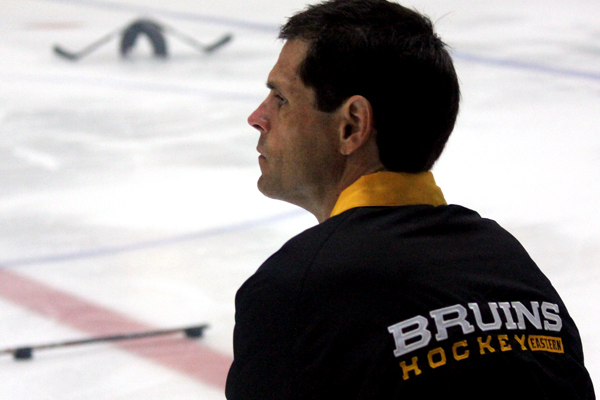
Boston Bruins general manager, Don Sweeney (pictured), has been wheeling and dealing this offseason- in stark contrast of his predecessor, Peter Chiarelli (bruins.nhl.com).
Don Sweeney’s been on a rampage (more on that later), Peter Chiarelli’s turned around the Edmonton Oilers in one offseason (at least on paper), and the Toronto Maple Leafs front office might be the smartest guys in the game for the first time in a longtime. Wait, what did I just say?
That’s right, on Thursday, 72-year-old hockey front office legend, Lou Lamoriello, resigned as president of the New Jersey Devils only to join the Toronto Maple Leafs (announced on Twitter a mere two minutes apart) as their 16th general manager in franchise history.
Fun fact: Back in 1987, Lamoriello drafted now fellow colleague, Brendan Shanahan, 2nd overall in his first season as the president and general manager of the Devils.
Now, Lamoriello joins Shanahan in Toronto’s front office. Things certainly are weird right now in New Jersey, in the meantime, by the way- where Ray Shero is currently their GM and Marty Brodeur is, well, among the front office of the St. Louis Blues. Yep, it’s safe to say nobody would have predicted that both Brodeur and Lamoriello would move on from the Devils.
In 2009, Lamoriello praised Shanahan after Shanahan attempted one final go in the NHL, with the Devils, only to decide he would not continue his career and thus stepped aside from playing, retiring before the 2009-2010 season. Lamoriello expressed so much praise, in fact, that he blatantly stated that should Shanahan want a job in the Devils front office, Lamoriello would go out of his way to make it happen.
But here we are in 2015, where Shanahan recently transitioned to the helm of the Maple Leafs front office and instead of going to his former boss for a position, he brought in his former boss.
Brendan Shanahan (left) introduces Lou Lamoniello (right) as the new general manager of the Toronto Maple Leafs. (Galit Rodan/The Canadian Press via AP)
Lamoriello spent 28 years with the New Jersey Devils organization, but now he’s about to embark on his first season with a different organization- just his second as a general manager- the Toronto Maple Leafs.
The Maple Leafs, if you recall, hired Mike Babcock this offseason as their latest head coach, by the way. Babcock too, left an organization he spent a lot of time with for the Maple Leafs this summer. Babcock spent the last 10 years with the Detroit Red Wings before joining Toronto.
Both Lamoriello and Babcock have something in common, they both left teams that used red as a primary color for a team that wears a blue maple leaf proudly displayed prominently on their jersey (it’s a bit slow right now in the offseason, cut me some slack).
In other news, the National Hockey League began the formal expansion process this summer, having accepted expansion applications up until Monday.
Two cities formally submitted a bid before the deadline- Las Vegas, Nevada and Quebec City, Quebec.
Las Vegas billionaire, Bill Foley, continues to headman the construction of an arena in Las Vegas as well as a drive for season tickets while aiming to land an expansion team. Meanwhile, Montreal-based media conglomerate, Quebecor, aims to bring the NHL back to Quebec City.
One of Canada’s hockey gods, Don Cherry, has already provided his blessing for a return to Quebec City.
This is the first time the league has formally gone through the expansion process since the late 1990s when the league quickly grew in size adding the Nashville Predators, the Atlanta Thrashers, the Minnesota Wild, and the Columbus Blue Jackets between 1998 and 2000 to become the 30 team league that we all know and love today (with the minor relocation of the Thrashers to Winnipeg having occurred prior to the 2011-2012 season, of course).
Since the Thrashers relocation to Winnipeg, the NHL has continued to take a firm stance against having to move another team for a while. Prior to the formal announcement of the expansion process being officially explored, the Arizona Coyotes and the City of Glendale, Arizona were at odds with one another.
Despite IceArizona’s firm commitment to the State of Arizona, many thought the Coyotes would be on their way out of Glendale this offseason. Given how a short move back to Phoenix in such a short period of time would not be feasible, speculation led to the Coyotes packing their bags and moving to an NHL ready arena.
Downtown Phoenix does not have an appropriate sporting arena for hockey currently, thereby handing the Coyotes a double whammy when their Gila River Arena lease agreement with Glendale was pulled out from under them by the city.
After threatening substantial legal action, IceArizona and the City of Glendale came to terms on amending their agreement- eliminating an outclause from its initial version and adjusting some revenue sharing between the hockey club and the city (the team will now get a larger share, with the city footing less of the bill).
Again, the Coyotes are staying put. No escape route to Seattle, no move from one desert to another desert (Las Vegas), and no move to Quebec City that would further imbalance the conferences in the league.
But then again, the amended lease agreement is only for two years, so the Coyotes aren’t fully out of the woods yet.
There remains so much yet to be seen concerning the Arizona Coyotes and their strained relations with the City of Glendale. While a short-term deal is necessary for their immediate survival in the market, their ultimate situation is not comforting. Things still could get quite ugly in a couple of years, yet the two sides have something to work with right now and can always chip away at improving viability of the franchise in Glendale.
The Arizona Coyotes will be debuting new jerseys this season, but their future in Arizona, despite glimmers of hope, is still uncertain in the long run (coyotes.nhl.com).
If not, perhaps the next two years is all the time the Coyotes need to convince Phoenix, Arizona and the NBA’s Phoenix Suns to construct a new- joint- arena that would be suitable for hockey in the desert and a return to downtown Phoenix for the Coyotes franchise. Otherwise, it could be enough for Seattle to scrap together some plans for a NHL-ready arena and sway the Coyotes into relocation.
Or there’s always Quebec City or Las Vegas, that, should either location not see the expansion process include them in the more immediate future of the league, could always have a stronger say in relocation. Both cities have strong interest from potential ownership groups and physical arena’s that are state of the art and nearing completion.
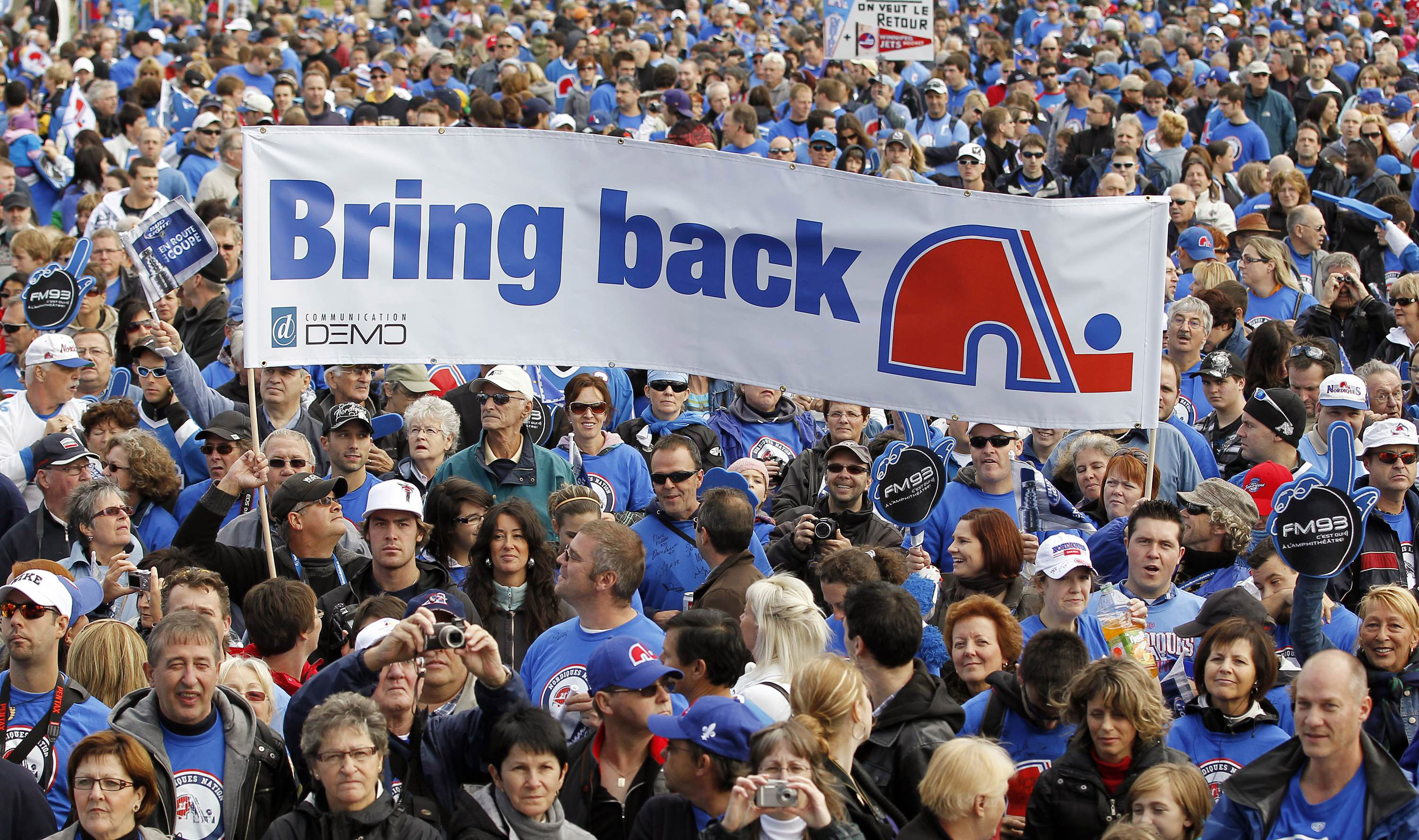
Speaking of Quebec City and Las Vegas, now is the perfect time to reach into these markets. A return of the Nordiques to the hockey crazed Ville de Québec would be a golden opportunity for the league to return the game to where it belongs and can further drive marketability.
For those that are opposed to adding another team in the Eastern Conference, kindly show yourself to the door. Realignment is never a fun topic, but I think we can all agree that sending the Detroit Red Wings and the Columbus Blue Jackets back to the Western Conference would be a good thing. As fans, we’d see a return of more Detroit and Chicago matchups, providing more fuel to the fire- built into the regular season schedule- when it comes to that longstanding rivalry.
And with the addition of a team in Las Vegas, well, it’s the same old, same old. It’s a never before seen market in all of professional sports and it would balance the conferences under the aforementioned scenario.
REUTERS/Mathieu Belanger
So at the end of the day, why disappoint the good people of Quebec City once again, NHL?
Then again, balanced conferences are overrated, aren’t they?
Come to think of it, the European model for professional sports isn’t too bad when it comes to league structure. Yet, the North American model of conferences, divisions, and such makes for a much more exciting game. We’ll never see the NHL switch to a relegation model based upon Premier League association football, but maybe we’ll see the NHL become more at ease with unbalanced conferences.
Hey if the game works in a market, why ruin it by taking it away from that market just to satisfy conference structure? If the owners are going to squabble over that then they really aren’t looking out for the best interest of the league are they? Management’s number one goal is to profit from growing the game.
Without an interest, there aren’t any fans. Without any fans, there aren’t any marketing opportunities from potential sponsors looking to reach fans. Without any cash flow, there is no game. If there’s an economically viable market or situation, go for it.
Last, but not least, the Boston Bruins have been a busy team this offseason. One can only think that the B’s will make another move or two before training camp in September. Don Sweeney and the Big Bad Bruins front office are in on trying to sign defensemen, Cody Franson, or Christian Ehrhoff.
The Boston fanbase continues to grumble and gripe about the presence of Chris Kelly and Dennis Seidenberg on the Bruins roster. One of the two could be moved before the puck drops in October.
And while we’re still at it, the Bruins still need a backup goaltender. While Peter Budaj or Jonas Gustavsson may not be the first names that come to mind when it comes to free agent backup goalies that are still available and could be dispensable for the Bruins, well, one of them might be all that the Bruins need.
Of course, Ray Emery and Ron Zepp are always still out there, granted Emery is a proven goaltender in the league (well mostly- he could be a backup for Tuukka Rask, but he’s past his number of chances of ever being a number one goalie in the NHL) and Zepp parallels Tim Thomas thus far in his career (minus the two Vezina Trophies, a Conn Smythe, and a Stanley Cup championship).
Matt Beleskey (airborne) has found a new landing spot with the Boston Bruins this offseason. Stephen Dunn/Getty Images
I’ll go more into detail about the Boston Bruins offseason conundrum in another post prior to the season. Quite frankly, I’m still trying to piece together what their plan might be. For now it looks as though Patrice Bergeron could be set with (a recently spotted dancing in Montreal) Brad Marchand and David Pastrnak, with Matt Beleskey-David Krejci-Jimmy Hayes, Loui Eriksson-Ryan Spooner-Brett Connolly, Zac Rinaldo-Chris Kelly-Max Talbot filling out the forward lines.
Their blue line still needs work, but can be corrected within a few seasons. What’s more important right now is that the Bruins sign a top four defenseman and obtain a backup goaltender (or at least, implement a plan for a successful backup goaltender). While not necessarily a problem with an elite starting goaltender of Rask’s quality, the revolving door of backup goalies the Bruins have had the last few seasons is something they must work on for the remainder of Rask’s dominance in net.
Anyway, this ends my stream of consciousness. I’ll go back to waiting for Cody Franson to make up his mind and sign somewhere now.
It’s mind boggling that the NHL wouldn’t want to continue being a leader in sports and entertain the notion of having more than 30 teams in a league, for once, in North American sports. Okay, the NFL has 32 teams, I get that- but there’s this fascination for some odd reason that a successful sports league can only max out around 30 teams, given how the NHL, NBA, and MLB all have 30 teams in their leagues. Quite frankly, that’s a load of bull. The National Hockey League is old enough to still be young and reinventing itself, as was the case after the 2004-2005 lockout with the addition of new rules (the trapezoid) and the removal of old ones (two line passing).
What I mean is, the NHL is not Major League Baseball, which beats the “heritage” card to extinction year after year as to lamely explain why the MLB doesn’t change. While the MLB would never consider entertaining a franchise in Las Vegas (which would be a first in professional sports), the NHL could be a front-runner for professional sports of the future in North America. At least, given the eye of the young fan base that’s been keeping track of the league for the last few years, there’s a chance to really make a splash. Major League Soccer and the NHL’s interest in Las Vegas and other markets are good for their leagues and sports in general.
The Stastny brothers (from left to right, Marian, Peter, and Anton) were some of the first European superstars in the NHL back in the 80s. Photo: HHoF
While the MLS is adding a team in Atlanta in 2017, the NHL will likely stay away from Atlanta for eternity after two failed attempts at a hockey presence in Georgia. However, given the recent rate of expansion in the MLS, there’s a good chance that they too, will end up having 30 teams at some point. Soccer’s popularity in the United States is on the rise and it’s backed by the recent viewership of the 2015 Women’s World Cup, beating some traditional hockey markets, like Philadelphia, while a 2015 Stanley Cup Final game was being shown on TV at the same time. The two leagues are innovative and should work together as both sports gain popularity. As it is, hockey is becoming more mainstream by removing some of the importance once stressed on fighting, resulting in just as entertaining games as ever before.
Soccer is a sport best played with many teams and some form of relegation, like in Europe. While that model would not translate well with hockey, at some point the MLS is going to have to absorb many of the popular teams in developmental leagues, in order to make their game more exciting. The NHL should consider something similar when it comes to the minor league markets that are untapped, or have worked in the past. Expansion and relocation fees aside, both leagues should go for breaking the 30-team barrier.
The NHL as it exists right now, would be on the verge of going for it much sooner than the MLS and could act as an example of what to do and how to go about things. I’m in favor of 34 teams in 2017, the NHL’s 100th season. But first, let’s get back to Quebec (and the basics).
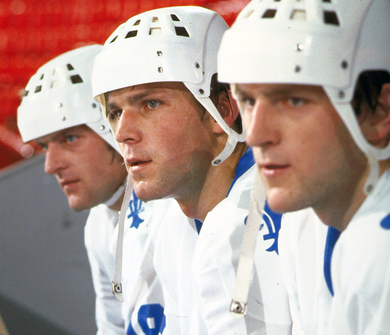
Joe Sakic in his Quebec days, before the Nordiques moved to Denver (Denis Brodeur/Getty Images).
If the league is intent on adding franchises, a return to Quebec City, the inevitable Las Vegas team, an expansion to Seattle, and whatever else may come their way is exactly what the NHL needs. After watching the Winnipeg Jets play in their first playoff game at home since the original Winnipeg Jets left for Arizona 19 years ago, I cannot help but think that the NHL needs to return to another small market, where hockey has already worked, and everyone loves the game. There’s a place that is more readily equipped for a National Hockey League return- Quebec City.
Whereas a former member of the NHL, Hartford, doesn’t have an adequate arena to play in and potential spotty ownership, Quebec City has the 18,482 seat Videotron Centre- set to open this September. The brand new arena will have all the top-notch amenities and will be NHL move-in ready, should the league wish to expand or a team relocate, such as the Coyotes in their dreaded current state. Fear not, Arizona and Gary Bettman nay-sayers, the league’s experiment is just starting to see results in the growth of the game in the Southwestern region of the United States.
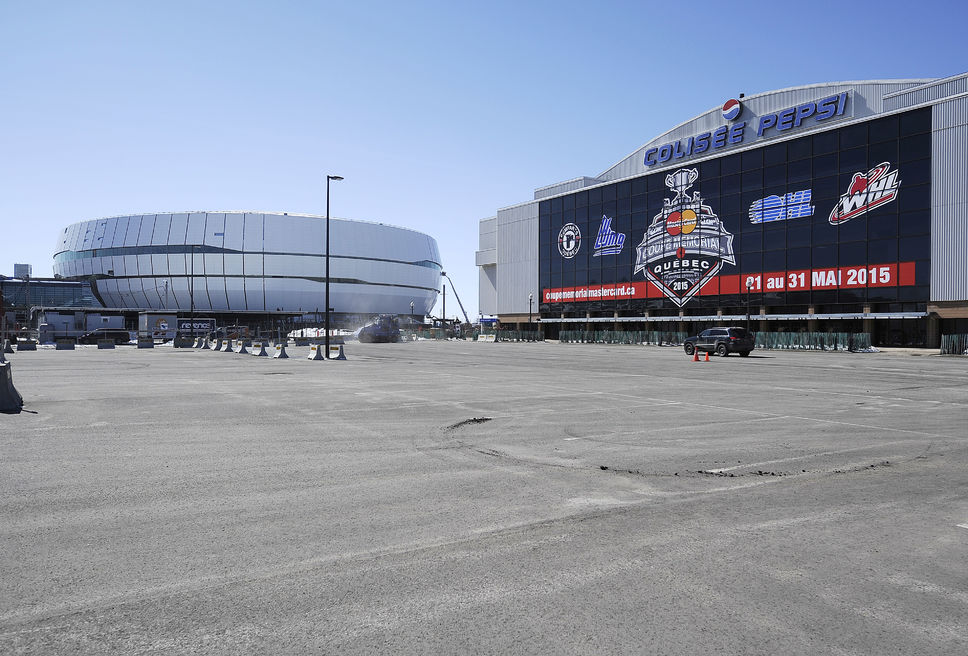
The Videotron Centre (Centre Vidéotron) sits in the background of the Pepsi Coliseum (Colisée Pepsi). DIDIER DEBUSSCHERE/JOURNAL DE QUEBEC/AGENCE QMI
And don’t get me wrong, Connecticut, you guys love hockey and still love the Whalers to this day. It’s not realistic in Hartford’s current state, for an NHL return anytime soon. Yet, I’ll still be one of the first to help you demand a return and shout, “Bring back the Whalers!” should there be a more immediate and reasonable plan. But there’s a place that is more readily equipped for a National Hockey League return- Quebec City.
But what’s holding everyone back? Canada is able to sustain at least eight franchises, if not more, and hockey is Canada’s game after all. The league made the best of a hurtful breakup in its return to Winnipeg back in 2011, surely NHL Commissioner Gary Bettman and crew can make due on Quebec’s aching heart since 1995 when the original Quebec Nordiques fled the struggling Canadian dollar and the lack of a locally interested owner and went west to become the Colorado Avalanche. Perhaps the league will find enough heart to forgive the Nordiques from almost rebranding with awful looking 90s teal on an otherwise decent looking jersey.
I mean, if the league is serious about adding a team in Las Vegas, which might not carry longevity, then why not look for a place with more staying power than whatever Vegas would become. The original Nordiques survived in the league from 1979 to 1995. Despite some down years, Quebec was on an impressive turnaround at the end of the 1994-1995 season. The team that moved wound up winning the Stanley Cup in their first season in Colorado.
The whiteout was in full force in Winnipeg in the 2015 Stanley Cup Playoffs. Photo By: Jonathan Kozub/NHLI via Getty Images
Among teams that no longer exist, Quebec Nordiques merchandise ranks second to the Hartford Whalers in sales. Still not convinced about the staying power of a new Quebec Nordiques franchise? Look at the return of the Winnipeg Jets in Winnipeg, Manitoba. It’s a small hockey market, but they sell out every seat in the 15,004 seating capacity MTS Centre for every home game, despite missing the playoffs from the 2011-2012 season to last season. In their first game back to the postseason, the MTS Centre was rocking at 124 dB from time to time as reported by Sportsnet.
Imagine how loud it would be in the Videotron Centre for the Nordiques return or their first provincial rivalry regular season meet-up with the Montreal Canadiens since 1995- in any case, it’d be awesome. As an aside, Boston Bruins fans would gladly welcome another team that despises the Habs. They’ll even forgive Ron Tugnutt for his extraordinary 70 save performance on 73 shots on goal en route to the Nordiques 3-3 tie against the Bruins on March 21, 1991, even though some of their modern day fans were not even alive then.
The NHL obviously has issues with adding another team to the Eastern Conference before adding anything to the Western Conference due to its current imbalance with 16 teams in the East and 14 in the West. The easiest way to solve the original realignment problem created when the Atlanta Thrashers moved to Winnipeg four years ago would have been to simply swap the Jets with the Nashville Predators in their respective divisions. Winnipeg would have gone to the Central, while Nashville would have gone to the Southeast in a geographically sensible maneuver.
However, the league decided to consolidate the divisions from six to four and swapped Winnipeg for Detroit and Columbus. In the process, each conference makes geographic sense, with a focus on cutting travel expenses and reducing a carbon footprint league-wide. Yet, while the Central and Pacific Divisions are perfect, the Atlantic and Metropolitan Divisions are somewhat flawed. Yes, with all of the teams from the old Northeast Division, plus Detroit, somehow the Atlantic Division also has the Florida Panthers and the Tampa Bay Lightning. Meanwhile, the Metropolitan Division has both the New York Islanders and the New York Rangers.
It’d make sense to swap both New York City teams with both Florida teams, citing the exact same reasons the NHL came up with in the first place, but for whatever reason, that is frowned upon. It’s not like it wouldn’t saturate the market or anything, because as it is, New York already has three teams (four if you count the New Jersey Devils in Newark, New Jersey). While, yes, the Buffalo Sabres and both the Rangers and Islanders have a little distance between them, it’s nothing compared to Florida and Tampa.
And speaking of the Florida Panthers, it’s only a matter of time- no matter how good the product on the ice may get- before they have to relocate. The Panthers and Sunrise, Florida may find themselves at odds much like how Glendale, Arizona is in legal upheavals with the Arizona Coyotes. A hockey team in the suburbs of a non-traditional market isn’t proven to profit. But where should the Panthers end up without causing much fuss over realignment?
REUTERS/Mathieu Belanger
You guessed it- Quebec City. They’re already in the Atlantic Division, so absolutely nothing would have to be changed except for all franchise trademarks and whatnot regarding the transition from the Panthers to the, newly returned, Nordiques. In foresight, it’s not hard to fall in love with the furthest north professional sports franchise after all of the neglect it saw in one of the most southern nontraditional hockey markets.
Oh and if New Jersey had to move for whatever reason, given their recent downturn and less than stellar attendance, then Quebec is a prime destination. Realignment would still be simple, swap Quebec with one of the Florida teams and maybe then the NHL would have to realize it should kick the other Florida team to the Metropolitan Division and insert the New York Rangers (or Islanders) into the Atlantic Division. Then again, relocation of either the Panthers or the Devils could just mean that the league would send them west to Seattle or Las Vegas and call it a day, having a balanced fifteen teams in both conferences, but that wouldn’t be any fun, wouldn’t it?
Look, I’m all for a team in Seattle, so here’s what you do. Add an expansion franchise to Seattle and force Detroit back to the Western Conference; because we all know two matchups a year between longstanding rivals, the Detroit Red Wings and the Chicago Blackhawks, really aren’t enough. Then add a team in Quebec City to make it a nice thirty-two-team league with sixteen teams in each conference. Besides, who wouldn’t want to see a reincarnation of the Nordiques after the beautifully aesthetic appeal of the current Jets installment?
That’s right, I’m saying that when the NHL goes back to Quebec City, it’s not a bad idea to modernize the franchise. The igloo with a hockey stick that somewhat formed the shape of an “n” with its tricolor scheme and fleur-de-lis all over the jerseys was great- timeless even, a classic for traditionalist vintage hockey fans- but there are some great concepts on the Internet for glorious designs in the event of a rebirth of the Nordiques.
This is my favorite of all the Quebec concepts on Icethetics.
I think a darker shade of navy blue would suffice, with maybe a snowy owl and the city skyline or something that is distinctive of Quebec City, and of course sharp looking fleur-de-lis prominently featured on the bottom half of the sweater and along the pants. If you have the time, go check out some great designs on Icethetics.co, some great concept artists have really gone all out on creating the perfect symbol for what should be a return to the true north strong and free- Quebec City.
In this day and age, with the billion dollar industry that is the sports world, it shouldn’t be hard to find an owner and work with the largely French speaking fan base. Back in the days of the original Nordiques, English speaking fans flocked to the Quebec City team over the much more hardcore French speaking franchise over in Montreal. Obviously it must have been the warm and inviting fleur-de-lis calling them to the light side of The Force in the battle of Quebec. Either that or it was because of the great players that once graced the ice at Colisée Pepsi, such as the Stastny brothers, Mats Sundin, Guy Lafleur, Owen Nolan, Peter Forsberg, and my favorite- Joe Sakic.
The bottom line, folks, Quebec City has an important mark on the history of hockey. It was once home to the Quebec Bulldogs who spent one season in the NHL (1919-1920) before moving to Hamilton, Ontario to become the Hamilton Tigers and it was once home to the 1977 Avco World Trophy champions as the World Hockey Association’s top team before joining the NHL in the WHA-NHL merger in 1979- the Quebec Nordiques. Isn’t it time that someone brought the game back where it belongs for all of us to enjoy? Even in the face of the uncertainty of the salary cap situation currently and the issues that are once again surrounding the Canadian dollar, I mean, hockey is for everyone, after all.
As the dawn of the New Year begins to fade, I conclude the exploration of the possibilities of relocation and expansion. In this excessively informal post, I’ve taken a look at what some of the best concept jerseys are for a team that needs to be revived! In each case, I’ve looked at numerous designs, courtesy of Icethetics.co and the forums over at Chris Creamer’s Sportslogos.net, and highlighted the ones that I would pick if I were the owner of a new franchise looking to establish its identity.
QUEBEC NORDIQUES
Quebec City, once a city that was the northern most city in all North American professional sports, gracefully became widely known as a great hockey market with it’s WHA’s presence that then turned more mainstream in it’s welcoming into the NHL. Hartford Whalers and Quebec Nordiques paraphernalia continue to be top selling merchandise among hockey fans, despite the fact that both teams have long since relocated to their current markets in North Carolina and Colorado, respectively.
If I were going to be the owner of a new inception of the Quebec Nordiques, I would emulate a move by the current Winnipeg Jets in that I would design a new logo and a new set of uniforms, effectively replacing the old franchise. I would instead seek a design that incorporates the old franchise and even incorporates Quebec City’s history in the NHL, with the Quebec Bulldogs.
With that said, I would also have the hardest time picking the best jerseys out of a long list of concept jerseys. In any case, I’d want the right combination of the traditional, light blue, Quebec Nordiques and a return to the initial darker blue days of the WHA Quebec Nordiques with a modernized logo that better defines the region.
This set of jerseys provides just the right combination of old and new. A logo reminiscent of landmarks of Quebec City, the snowy owl, a symbol of the people of the North, and the timeless fleur-de-lis that was ever so perfectly encompassing of the province of Quebec and its relation to the Quebec Nordiques of yore.
There were a couple of alternate jerseys to consider, the first of which, I’d use for at least a couple of seasons (or simply for an outdoor game). The first alternate jersey combines stylish elements reminiscent of the Quebec Bulldogs era with the original Quebec Nordiques on a slimming, modern jersey design. .
The second fits better with the home and road jerseys and is actually something from the same artist as the home and road sweaters.
With these jerseys in mind as the representation of the franchise, I sorted through these other ones that just didn’t have quite enough of what I was looking for.
First, a look at some of the other designs the winning artist created that just didn’t resonate with me.
Here we have too much of a blend among the colors. Nothing really separates these jerseys out from one another. On the plus side, however, the alternate uniform in this set does look spectacular.
In this design, the artist approaches the right combination of colors, but lacks the ever important fleur-de-lis in the actual jersey (although placing them on the side of the pants is catchy).
Moving on from that artist we have a set that I seriously considered to be the chosen one. However, a bit too bright blue for regular use in the NHL in this day and age, these would probably see time as a specialty or future set of alternates. Heck, a current minor league team should really take this look and run with it.
This jersey has potential as an alternate, but the nameplate font is what ruins its chances in its current form. Remember kids, just say “no” to lowercase letters in a player nameplate unless it is part of their name. Even then, if your font looks better without specialization, then don’t implement specialization. Other than that, I love the number styling of this uniform.
Here’s what you get when you combine the Winnipeg Jets with the Ottawa Senators!
This looks plain and blue. Nice use of the old logo. I appreciate the attempt to modernize a classic, but it just doesn’t work for me. Perhaps a different number stylization would set things in a better tone, instead of something that says “we’re still the Arizona Coyotes, but instead of red we used blue and changed our logos for this set of practice uniforms.”
But hey, at least we’ve moved on from the early days of RBK Edge jerseys, right? Ew. It’s the Quebec Islanders, everyone!
All in all, a classy look is appealing, but in the interest of preserving hockey history, I think it’s best to retire the igloo- no matter how awesome these modernized jerseys might look on the ice.
Especially if you’re teetering on the border of old school Winnipeg Jets territory.
And so ends this chapter of the journey, “New Year, New Beginnings” has officially come to an end. We’ll move forward with new content coming in February, with a look back at reality, more analysis is on the way, created by fans for the fans.
Thank you for enjoying this series, I had a great time delving into everything about it. – NL
With the dawn of the New Year upon us I decided to explore the possibilities of relocation and expansion. In this excessively informal post, I’ve taken a look at what some of the best concept jerseys are for teams that no longer exist, but should (or possible expansion teams). In each case, I’ve looked at numerous designs, courtesy of Icethetics.co and the forums over at Chris Creamer’s Sportslogos.net, and highlighted the ones that I would pick if I were the owner of a new franchise looking to establish its identity.
By now if you haven’t read Parts 1, 2, 3, and 4- I’m just going to make you search the site for them.
HARTFORD WHALERS
There is no sense in even trying to modernize the genius H&W logo of the Hartford Whalers. However, there would be a great need for the right version of a modern uniform to be implemented. None of this blue home jersey stuff. Only a green jersey at home should do, with a white road jersey and perhaps a blue or grey third jersey (if done the right way). The uniforms that I have selected for the Hartford Whalers are the equivalent of the Minnesota Wild done right. Look, the Wild’s uniforms lack uniformity. These Whalers uniforms utilize a similar- trendy- shoulder yoke as the Minnesota Wild, yet keep it consistent on both the home and road sweaters. Everything about these brings the modern-retro look to the ice and gives the old school “W” and Pucky a facelift by enclosing them within circular shoulder patches. I’m just saying, these would look rather sexy on the ice, okay. The league could use a little more green.
For an alternate jersey, I would venture into something a little uncanny. It was probably inevitable before the Whalers moved to North Carolina that a grey third jersey would be implemented. I mean, hey, if the Los Angeles Kings can do it in the Stadium Series this year, then why not? So to bridge the gap between the days of yore and now, I think these would look cool on the ice for a few years.
Among the other designs considered… This set- while a bit bland- offers a great script logo for the Whalers.
This set looks like something the Vancouver Canucks considered.
And these speak too much Detroit (although classy looking).
But hey, sometimes a return to the franchises roots isn’t always a bad thing. The colors work well for these jerseys.
With that, Part 5 is complete. The final portion of the series is coming up this week. And you guessed it, it’ll be about reviving the Quebec Nordiques.
 Philadelphia Flyers








 Especially if you’re teetering on the border of old school Winnipeg Jets territory.


 Down the Frozen River
You must be logged in to post a comment.