Tag: Peter Forsberg

  • Stanley Cup Playoffs: First Round– April 17

    For at least the first round of the 2017 Stanley Cup Playoffs, the authors at Down the Frozen River present a rapid recap of all of the night’s action. Tonight’s featured writers are Connor Keith and Nick Lanciani.


    Unknown-6Unknown-7

    Ottawa Senators at Boston Bruins— Game 3

    The Ottawa Senators held off a charging effort from a thrilling comeback that just wasn’t meant to be for the Boston Bruins in a thrilling 4-3 victory in overtime on road ice at TD Garden on Monday night.

    Bobby Ryan’s game winning goal on the power play came just five minutes, 43 seconds into overtime, sending Boston fans home unhappy on perhaps one of the happiest days of the year in the city— Patriot’s Day.

    Ottawa goaltender, Craig Anderson made 17 saves on 20 shots faced for an .850 save percentage in 65:43 time on ice for the win, while Boston’s Tuukka Rask made 28 saves on 32 shots against for an .875 SV% in the loss.

    Senators forward, Mike Hoffman (1) kicked off scoring 7:15 into the 1st period with a nifty move (shades of Peter Forsberg) on a breakaway pass from Erik Karlsson that beat Rask. Karlsson (3) and Zach Smith (1) had the primary and secondary assists on what it sure to be a highlight reel goal in Ottawa’s promotional videos for a little while, at least.

    Derick Brassard (2) quickly made it 2-0 with a one-timer from the low slot 35 seconds after Hoffman made it 1-0. Ryan (2) and Viktor Stalberg (1) contributed on Brassard’s goal that all but sucked the life out of the building.

    With Kevan Miller in the box for interference, the Bruins’s already lackluster penalty kill from a rash of injuries on the blue line suffered even more. Hoffman (2) found the twine for his 2nd goal of the night just 3:42 into the 2nd period and made it a 3-0 lead. Chris Wideman (1) and Brassard (2) tallied assists on Hoffman’s power play goal.

    A three goal deficit looked insurmountable for Boston, considering their lack of offensive prowess thus far into the game.

    But Noel Acciari (1) redirected his first career Stanley Cup Playoff goal at 6:05 of the 2nd period to put the Bruins on the scoreboard and cut the lead to two. John-Michael Liles (1) and Riley Nash (2) had the assists on the goal that made it a 3-1 game.

    Just 42 seconds later, David Backes (1) had his turn to score on the breakaway— and he did, beating Anderson on the low side with help from Liles (2) and Tommy Cross (1). The Providence Bruins (AHL) captain, Cross notched his first career point in a Stanley Cup Playoff game in just his first appearance in a NHL playoff game.

    Boston was right back into the swing of things, trailing 3-2.

    David Pastrnak (1) unleashed a cannon of a shot on a power play goal for his first career Stanley Cup Playoffs goal in just his third career NHL playoffs appearance at 13:51 of the 2nd. The assists on Pastrnak’s goal went to Charlie McAvoy (1) and Ryan Spooner (2). As a result, McAvoy picked up his first career Stanley Cup Playoff point in his third career NHL playoff game— he’s yet to debut in the regular season, mind you.

    Both teams swapped chances until regulation alone could not decide the outcome of the game.

    Ryan (2) continued his recent streak of timely contributions with a power play goal at 5:43 of overtime. Ryan’s goal did not come without controversy, however. No, it was not because of an offsides review, but rather, the fact that it appeared as though Ryan had gotten away with a right elbow on Bruins forward, Riley Nash, before Nash retaliated and was subsequently penalized.

    Regardless of the right call/wrong call argument, Kyle Turris (1) and Karlsson (4) notched the assists on the game winning goal and the Senators now have a 2-1 series lead.

    Game 4 is scheduled for Wednesday night at TD Garden with puck drop set for 7:30 p.m. ET. The game can be seen on USA in the United States and on Sportsnet and TVA Sports in Canada.
    Washington Capitals LogoUnknown

    Washington Capitals at Toronto Maple Leafs— Game 3

    By: Connor Keith

    As has become custom with this series, Toronto needed overtime to beat the Capitals 4-3 Monday at the Air Canada Centre and earn a one-game lead in its Eastern Conference Quarterfinal.

    Game 3’s overtime hero is none other than longtime Leaf and First Star of the Game Tyler Bozak, but the game-winning play actually started before regulation even ended. Not only did Toronto outshoot the Capitals 9-3 in the third period, but they also earned a man-advantage. With 16 seconds remaining before the end of regulation, Lars Eller earned himself a seat in the penalty box for hi-sticking Zach Hyman. Hyman had already gotten under Washington’s skin earlier in the period, as he and Game 1’s winner, Tom Wilson, both earned negating roughing penalties with 2:32 remaining in regulation.

    Washington was only seven seconds from killing off Toronto’s third power play of the game, but Bozak had other intentions. After Bozak won possession behind Braden Holtby’s net, Morgan Rielly got ahold of the puck at the blue line to reset the play. He dished to Nazem Kadri at the far face-off circle, who quickly fired a wrist shot towards the crease. It was intentionally off target, a set play the Leafs have been working on that allowed Bozak to redirect the puck to the near post past Holtby’s blocker for the lone man-advantage goal of the contest.

    To make matters worse for the Caps, they are just another chapter in what seems to be the most popular sports meme of the past year: Washington joins the Cleveland Indians and Golden State Warriors in blowing a 3-1 lead.*

    Washington’s first line was on fire to start this matchup. After only 4:49 of play, Third Star Nicklas Backstrom (Nate Schmidt and T.J. Oshie) and Alex Ovechkin (Backstrom and Oshie) had both found the back of the net for an early 2-0 lead. If not for Second Star Auston Matthews’ (Rielly) tally with 5:52 remaining in the first period, Evgeny Kuznetsov’s (Marcus Johansson and Justin Williams) goal 5:39into the second frame would have been three-straight goals before the midway point.

    But as swift as the Capitals’ offense was to start the first period, the Maple Leafs were just as fast to close the second. In a span of only4:07, Kadri (Leo Komarov) and William Nylander (Matthews and Hyman) scored a tip-in and a wrister, respectively, to level the game at three-all.

    Perhaps the most exciting play of the game belonged to Holtby, but it wasn’t anything he did in his crease. He stopped any chance of a Leafs breakaway opportunity at the tail end of a Washington five-on-three advantage in the second period. As Mitch Marner was screaming up the far end of the ice, he emerged from his crease to beyond the face-off circle to force the puck off of the rookie’s stick.

    *Honorary Mention: the Atlanta Falcons blew a 28-3 lead.

    imgresUnknown

    Chicago Blackhawks at Nashville Predators— Game 3

    By: Connor Keith

    With a 3-2 overtime victory at Bridgestone Arena Monday, Nashville has taken a three-game lead in its Western Conference Quarterfinals matchup against the Blackhawks.

    Pick your overtime goal-scorer from the Predators’ roster: Viktor Arvidsson? Second Star of the Game Filip Forsberg? Ryan Johansen? James Neal?

    No, nope, nada and that was the closest guess, but still wrong. It was actually rookie Kevin Fiala, who took First Star honors with only his second tally of the postseason.

    The play actually started as a simple dump along the far boards into the offensive zone by Calle Jarnkrok to give Nashville a defensive line change due to a poor pass from Neal at the blue line. To make up for his mistake, Neal meets the puck along the near boards and begins advancing it towards Corey Crawford’s net by using the eventual goal-scorer as a screen. Once Fiala reached the top of the crease, Neal dished the puck to him for an easy backhanded winner.

    An overtime winner is far from how the Preds started Game 3. It seems the Blackhawks’ offense was taking a vacation and catching some tunes at the Grand Ole Opry in the first two games of this series. Now that it is reconnected with the club, it’s all Chicago could seem to do. Only 65 seconds into the second period, Dennis Rasmussen (Marcus Kruger and Richard Panik) scored the Hawks’ first goal of the series, followed 10:10 later by Patrick Kane’s (Duncan Keith and Jonathan Toews) first goal since March 27. Chicago took a 2-0 lead into the second intermission and looked to be righting the ship.

    My how things changed in a hurry, but Joel Quenneville is going to have some questions for the league on his day off Tuesday, as he is probably of the opinion that neither of the Predators’ regulation goals should have counted.

    The first is less of a discussion point. Arvidsson fired the original wrist shot, but overshot the crossbar and sent the puck flying towards the glass. …Or, at least that’s what Crawford expected. But instead of finding glass, Arvidsson’s misfire banked off one of Bridgestone Arena’s golden stanchions that connect the panes of glass, causing a wild ricochet that ended up landing right in front of an unknowing Crawford. Forsberg discovered the puck first, and he finished the play with a wrist shot only 4:24 into the third period.

    The reason for doubt with this goal is no camera angle – at least not one that CNBC had access to – could tell if the puck continued travelling up the glass after hitting the stanchion and touched the netting. If it did, the puck that landed in Crawford’s crease should have been ruled dead, meaning the goal would not have counted.

    The second though, that is the one that had the entire Windy City screaming at its televisions. After receiving a feed from Johansen, Ryan Ellis fired a strong slap shot from the point. His aim was pure, but Crawford was able to deflect, but not contain the puck. Forsberg took advantage, as he collected the rebound by crossing the crease and puts it far post to level the game at two-all.

    Forsberg’s collection (or his board, as basketball fans would say) is where things get a little hairy. As he traverses the crease, he makes contact with Crawford – who is technically outside his crease, but has established his position – and knocks the goaltender off-balance. Though the Blackhawks challenged the play, the replay official in Toronto upheld the goal with no goaltender interference.

    Probably something about no conclusive evidence. That’s what every official ever says from the replay booth.

    A third period battle that was especially exciting to watch was contested between P.K. Subban and Toews. Near the midway point of the third period, the golden-clad defenseman effectively, though legally, tripped the Hawks’ captain. Of course, Toews didn’t like that too much and landed a forceful slash on the back of Subban’s legs – one of the few places a skater has no padding. But what really made this battle so interesting – be it between Subban and Toews or any other plays – is the level of respect exhibited by both sides. No matter what happened while the clock was running, the physical play stopped almost immediately after the whistle was blown.

    Unknown-1Unknown-4

    Anaheim Ducks at Calgary Flames— Game 3

    Speaking of blown leads (look at Connor’s WSH @ TOR recap for reference), the Calgary Flames blew a 4-1 lead in Game 3 of their First Round matchup with the Anaheim Ducks and succumbed to a 5-4 overtime loss Monday night on home ice at Scotiabank Saddledome

    Anaheim goaltender, John Gibson made 12 saves on 16 shots against before being replaced by Jonathan Bernier, who went on to stop all 16 shots he faced in the remaining 32:57 of the game for the win. Flames goalie, Brian Elliott made 22 saves out of 27 shots faced for an .815 save percentage in the loss.

    Sean Monahan (3) kicked off scoring early into the 1st period for Calgary with a power play goal. Troy Brouwer (1) and Johnny Gaudreau (2) were credited with the helpers as the Flames took a 1-0 lead just 2:10 into the game.

    Kris Versteeg (1) followed suit with a power play goal of his own and his first goal of the 2017 Stanley Cup Playoffs a little over seven minutes later to put Calgary up 2-0. Monahan (1) and T.J. Brodie (3) had the helpers on Versteeg’s first postseason goal in a Flames uniform.

    Before the first period was out, there were some signs of life from the Ducks, as Nick Ritchie (1) notched his first of the 2017 postseason behind Elliott. Antoine Vermette (1) and Hampus Lindholm (1) assisted on Ritchie’s goal which cut the lead in half heading into the first intermission. 

    Things were looking up for the Flames as their February acquisition from the Arizona Coyotes, defenseman Michael Stone (1), scored his first of the playoffs 4:34 into the second frame. Stone’s goal was assisted by Brodie (4) and Mikael Backlund (1) and added some insurance to their lead at 3-1.

    Sam Bennett (2) added to a hot night for the Flames power play unit with a goal at 8:33 of the 2nd period. Calgary captain, Mark Giordano (1) and Backlund (2) picked up the assists as the lead grew to 4-1.

    But Shea Theodore (1) wouldn’t let the Flames or their fans become complacent just yet, firing his first of the postseason into the twine with 49 seconds left in the 2nd period to make it a 4-2 game. Rickard Rakell (1) and Kevin Bieksa (3) assisted on Theodore’s goal.

    If you thought the Flames were in the clear past halfway in the 3rd period, you were wrong.

    Nate Thompson (1) tipped in his first of the playoffs on a goal that was reviewed for a potential high stick 11:14 into the final frame of regulation. Lindholm (2) fired the original shot and Corey Perry (1) sent the initial pass to Lindholm for the primary and secondary assists on Thompson’s goal.

    Theodore (2) struck for the 2nd time on the night with Bieksa (4) and Thompson (1) collecting the helpers on the game tying goal at 15:39 of the 3rd period.

    In a little over four minutes the Ducks had tied the game, 4-4, and forced overtime.

    Sudden death overtime didn’t last too long, however, as Perry (1) wired one past Calgary’s net minder 90 seconds into the overtime period. Rakell (2) and Thompson (2) had the assists on what became a three point night for Nate Thompson (one goal, two assists). Anaheim had completed the comeback and stolen a win on road ice.

    Perry’s goal marked the first time in franchise history for the Ducks to have overcome a three-goal deficit and win in a postseason game. Monday night also marked the third time in Stanley Cup Playoffs history that all four games scheduled on the same night required overtime.

    Anaheim now leads Calgary 3-0 in the series with Game 4 scheduled for Wednesday night at 10 p.m. ET. Wednesday’s action can be viewed nationwide in the United States on USA and in Canada on CBC and TVA Sports.


  • 2016 Mock Draft: Picks 1-14

    By: Nick Lanciani

    Unknown-1.jpeg

    In the (dis)interest of the offseason for some teams and fans, I’ve completed my mock draft for the first fourteen picks of the first round of the 2016 NHL Entry Draft that will be held in Buffalo, New York on June 24th. Rounds 2-7 will be held on June 25th. As we near the end of the Stanley Cup Final, I’ll be adding picks 15-30 and adjusting the rest of my mock draft accordingly. So take a look, tell me I’m on the right track or that I’m an idiot for thinking that [SOME TEAM] is going to pick [SOME PLAYER] over [SOME DIFFERENT PLAYER]. Let us know your thoughts–> tweet to @DTFrozenRiver or drop us a line on our Facebook page.

    Unknown.png

    1) Toronto Maple Leafs–> C Auston Matthews, Zurich (SUI)

    Aside from the Raptors— finally! There’s hope in Toronto and its name is Auston Matthews. The 6’1”, 210-pound center is a two-way player reminiscent of the likes of Anze Kopitar in Los Angeles or Patrice Bergeron in Boston. His 24-22-46 totals in 36 games with Zurich this season earned him the Rising Star Award and 2nd in voting for the MVP of the National League A in Switzerland. Matthews is the franchise center that the Maple Leafs have been waiting for since the days of Mats Sundin. He led the United States to the bronze with 7-4-11 totals at the 2016 IIHF World Junior Championship.

    Unknown-4.png

    2) Winnipeg Jets–> RW Patrik Laine, Tappara (FIN)

    Everyone keeps saying that Patrik Laine is one of the next best things and they might be right. The 6’4”, 206-pound right-winger, could easily fill the hole left behind by Andrew Ladd’s departure around the trade deadline. His size and skill combined with his maturity provide much strength for the increasingly young and talented Jets lineup. Laine had 10 goals in 18 playoff games with Tappara en route to being named postseason MVP and winning the championship in Liiga (Finland’s top professional league).

    He had 17-16-33 totals in 46 games during the regular season and led all Liiga rookies in scoring. As well, Laine tied Auston Matthews in goals at the 2016 IIHF World Junior Championship while helping Finland win gold.

    Columbus Blue Jackets Logo

    3) Columbus Blue Jackets–> RW Jesse Puljujarvi, Karpat (FIN)

    With the 3rd overall pick the Columbus Blue Jackets select the next best overall skater at the 2016 NHL Entry Draft behind Auston Matthews and Patrik Laine. Puljujarvi is talented and has enough hockey sense to drive an offense. He’s best on the wing and would help continue the youth movement in Columbus as the Blue Jackets look to get back into competitive form and out of the basement of the NHL.

    The 6’3”, 203-pound forward had 13-15-28 totals in 50 games played for Karpat in Liiga as a 17-year-old. In addition, Puljujarvi was one point shy of Jaromir Jagr’s record for U-18 players at the World Junior Championship level, having scored 17 points in seven games en route to winning gold with Finland this year at the 2016 IIHF World Juniors.

    Unknown-5.png

    4) Edmonton Oilers–> D Jakob Chychrun, Sarnia (OHL)

    If the Edmonton Oilers keep the 4th overall pick, Chychrun is a no brainer. If Edmonton trades the 4th overall pick, Chychrun is a no brainer. Any questions? Good. The 6’2”, 214-pound, Boca Raton, Florida native is a two-way NHL ready defenseman and a surefire top-5 draft pick. While some may argue there is no clear cut number one defenseman in the draft (there’s three or four top defensemen), Chychrun is a cut above the rest based on his size and familiarity with the North American style of the game.

    His physicality and awareness combined with his skating, should help any team strengthen their blue line. He had 11 goals and 49 points in 62 games, while amassing a plus-23 plus/minus, this season with the Sarnia Sting.

    Unknown.jpeg

    5) Vancouver Canucks–> LW Matthew Tkachuk, London (OHL)

    Tkachuk is a skillful forward with grit at 6’1”, 195-pounds. He tied Auston Matthews in scoring for the United States at the 2016 IIHF World Junior Championship with 11 points and had 30-77-107 totals in 57 games with the London Knights this season. Of note, 42 of those points came on the power play.

    The way the Canucks have been heading in the last few seasons, finding someone who can play alongside Bo Horvat or Jared McCann is a priority. Offense can be groomed and defense can be brought in through trades and free agency. GM Jim Benning should keep that in mind as Vancouver heads into the offseason.

    Unknown-4

    6) Calgary Flames–> LW Pierre-Luc Dubois, Cape Breton (QMJHL)

    The Flames have done a solid job with building youth from the ground up in recent years, despite making draft selections that have surprised just about every analyst. While Calgary is yet another team that needs to replace some parts on the blue line, taking a defenseman at the Draft is not an option for them this year. Instead, Pierre-Luc Dubois is a smart and versatile forward that can add some flexibility to their lineup.

    At 6’2”, 201-pounds, Dubois packs a punch with a playing style that’s on edge and includes great hands. He led the Cape Breton Screaming Eagles with 57 assists and 99 points in 62 games this season and was a plus-40 rating. Dubois also finished the season in the top-six in the QMJHL in goals and points.

    Unknown-3.png

    7) Arizona Coyotes–> D Olli Juolevi, London (OHL)  

    It’s always hard to predict where a defenseman will go in the Draft, let alone where anyone will go after about the first five picks usually. Juolevi is arguably as good as, if not better than, Chychrun depending on who you ask. Given how some teams are leary on taking a blue liner so high up, Juolevi slides to the seventh spot where the Arizona Coyotes see no problem in calling him one of their own.

    While the Keith Yandle deal from the spring of 2015 paid in dividends for the Coyotes with the addition of Anthony Duclair, they still lost a defenseman that they put a lot of time and effort into forging. Juolevi comes ready made at 6’2”, 182-pounds and provides some solidarity should the Coyotes part with Oliver Ekman-Larsson in any fashion in the coming years. Juolevi had nine goals and 42 points for the London Knights this season with a plus-38 rating. He also won gold with Finland at the 2016 World Juniors and transitioned from Finland to the OHL with ease.

    Unknown-2.png

    8) Buffalo Sabres–> D Charles McAvoy, Boston University (Hockey East)

    This one might be a stretch, but then again, maybe I’ll be right and prove anyone that’s doubting me wrong. The logic of the Sabres’ 8th overall selection is that they’re quite familiar with Boston University over the last couple of seasons, having taken Jack Eichel 2nd overall last year and signed Eichel’s BU linemate, Evan Rodrigues, in free agency. While Buffalo is set on offense, GM Tim Murray needs to set his sights on patching up their defense in the next couple of seasons.

    McAvoy might not be NHL ready immediately, but he is an excellent 6’0”, 208-pound right shot defenseman that should turn into an NHL regular. He had three goals and 25 points in his freshman season with BU this season. In 37 games played, he had 39 blocked shots and was a plus-10. McAvoy also had a plus-5 rating with the bronze medal-winning United States at the 2016 IIHF World Junior Championship.

    Unknown-1.png

    9) Montreal Canadiens–> RW Alexander Nylander, Mississauga (OHL)

    Nylander had four goals, five assists and nine points for the Swedes at the 2016 World Junior Championship. The 6’0”, 180-poung brother of Maple Leafs forward,William Nylander, Alexander Nylander is built for NHL stardom one day having led the Mississauga Steelheads with 28 goals and 75 points in 57 games in his first OHL season. The dynamic skater also had nine power play goals and can separate himself from other skaters on the ice with ease.

    He’s going to be picked by a rival of the Toronto Maple Leafs. The question is which one?

    Unknown-1

    10) Colorado Avalanche–> C Logan Brown, Windsor (OHL)

    Brown is a big— 6’6”, 222-pound— skilled center with speed and puck handling skills that will definitely come in handy for a team looking for a playmaker that could become like some of the best two-way players in the NHL. It’s hard to find someone like him with his size at his position (a la Joe Thornton), but the Avalanche could utilize his strengths given the uncertainty of their relationship with Matt Duchene.

    Brown had 21 goals and 74 points in 59 games with the Windsor Spitfires this season. He also had 29 points on the power play and won 53% of his faceoffs, which is a big plus for a team like Colorado that is looking for their next Joe Sakic or Peter Forsberg.

    New Jersey Devils Logo

    11) New Jersey Devils–> D Jake Bean, Calgary (WHL)

    The Devils could use a young defenseman to pair with their existing protégé, Adam Larsson, especially considering the offensive upside of Jake Bean. The 6’0”, 173-pound offensive defenseman is an excellent skater that makes smart passes and carries his own weight. Given some time to strengthen up a bit, Bean could use his stick, body and talent to be a force on the blue line in New Jersey alongside the likes of Larsson. The Devils need to improve their offense, but they also need a more immediate plan for their defense to take some of the load off of the often-underrated Cory Schneider in goal.

    Unknown-6.png

    12) Ottawa Senators–> D Mikhail Sergachev, Windsor (OHL)

    Sergachev is a big 6’2”, 208-pound defenseman that brings an offensive side to his game as the best defenseman in the OHL in his first season in North America. His two-way presence along the blue line should be enough to make the Senators happy to see the likes of another potential Erik Karlsson on their team. Sergachev plays with confidence and speed and had 17 goals and 57 points in 67 games with the Windsor Spitfires in his rookie season.

    He also had 31 points on the power play this season. In the wake of the Dion Phaneuf trade, one would think that the last thing Ottawa needs is another temporarily unreliable defenseman, however, Sergachev brings the total package that Phaneuf may not be able to produce on the regular and adds some much needed balance to their youthful blue line.

    Carolina Hurricanes Logo

    13) Carolina Hurricanes–> C Clayton Keller, USA U-18 (USHL)

    Keller is a smart, skilled and speedy 5’9”, 168-pound center with a left-shot that could lead him to the NHL. He led the USA’s U-18 program with 70 assists and 107 points in 62 games and had four goals and 10 points in seven games at the 2016 IIHF World U-18 Championship en route to a bronze medal.

    In the post-Eric Staal era (unless they bring him back in free agency), the Hurricanes need to rebuild down the middle. Keller is committed to Boston University in 2016-2017 and was also selected in the second round (40th overall) of the 2014 OHL Draft by the Windsor Spitfires. In either case, he’s got a chance of developing quite nicely as Carolina doesn’t need to rush things, despite lacking immediate depth at center.

    Unknown-7.png

    14) Boston Bruins–> RW Julien Gauthier, Val-d’Or (QMJHL)

    The Bruins are trying to find their next Milan Lucic. Either that or they’re picking someone who will give Jimmy Hayes a run for his money. Gauthier is a 6’3”, 225-pound power forward that can skate and score. His 41-11-57 totals in 54 games for Val-d’Or are impressive enough to make him a tactical selection by Boston. Of note, he was the only 2016 NHL Draft-eligible player to play for Canada at the 2016 IIHF World Junior Championship where he had two assists in five games played.

  • Numbers Game: Look to the Rafters- Colorado Avalanche

    Numbers Game: Look to the Rafters- Colorado Avalanche

    By: Nick Lanciani

    I continue to explore an important element of the game and what retired numbers around the league may look like in the future. While there’s only a finite set of numbers to utilize on the back of a jersey, many teams choose to retire (or honor) some numbers based on extraordinary circumstances, dedication to the organization, or legendary status.

    Many thoughts went through my head in each and every consideration. Feel free to agree or disagree- I want to know what you, the fans, consider worthy when evaluating a player, their career, and whether or not their number should be retired by a franchise. I am interested in seeing what you have to say, assuming you are actually a fan of the team and/or player that you argue for or against. Drop us a line in the comments or tweet to @DtFrozenRiver using #DTFRNumbersGame.

    For each team, I thought of former and current players that should have their numbers retired now or once they hang up the skates.

    Colorado Avalanche LogoColorado Avalanche

    Current Retired Numbers- 19 Joe Sakic, 21 Peter Forsberg, 33 Patrick Roy, 52 Adam Foote, 77 Ray Bourque

    Recommended Numbers to Retire

    23 Milan Hejduk

    How could you not retire the record holder for the most career games as an Avalanche player’s number? Aside from having phenomenal scoring totals for the Avalanche, Hejduk played an instrumental role in the locker room, as well, alongside superstars like Joe Sakic and Peter Forsberg. So again, how could you not retire his number? Sometimes fan favorites and guys that are loyal to the organization, even if they weren’t the superstar attracting fans to games every night deserve credit for all they’ve done.

    26 Peter Stastny

    Much like how the Hurricanes should retire at least Goride Howe’s number 9 from his Whalers days, the Avalanche should set aside number 26 now that Paul Stastny, the son of Peter Stastny, is no longer on the team.

    The Stastny brothers were pioneers and instrumental in attracting European talent, especially from behind the Iron Curtain, to the NHL- isn’t it time that Colorado nods recognition to their history as the Québec Nordiques? At the very least, retire Stastny’s number and we can let Michel Goulet’s number 16 (which was retired in Québec) slide for now.

    Other Notes

    Some day, I’m sure, we’ll see numbers 9 (Matt Duchene), 29 (Nathan MacKinnon), and 92 (Gabriel Landeskog) raised to the rafters of the Pepsi Center, but that’s still roughly ten or twelve- or fifteen- years out.

  • It’s Time for a Second Look

    It’s Time for a Second Look

    By: Nick Lanciani

    It’s mind boggling that the NHL wouldn’t want to continue being a leader in sports and entertain the notion of having more than 30 teams in a league, for once, in North American sports. Okay, the NFL has 32 teams, I get that- but there’s this fascination for some odd reason that a successful sports league can only max out around 30 teams, given how the NHL, NBA, and MLB all have 30 teams in their leagues. Quite frankly, that’s a load of bull. The National Hockey League is old enough to still be young and reinventing itself, as was the case after the 2004-2005 lockout with the addition of new rules (the trapezoid) and the removal of old ones (two line passing).

    What I mean is, the NHL is not Major League Baseball, which beats the “heritage” card to extinction year after year as to lamely explain why the MLB doesn’t change. While the MLB would never consider entertaining a franchise in Las Vegas (which would be a first in professional sports), the NHL could be a front-runner for professional sports of the future in North America. At least, given the eye of the young fan base that’s been keeping track of the league for the last few years, there’s a chance to really make a splash. Major League Soccer and the NHL’s interest in Las Vegas and other markets are good for their leagues and sports in general.

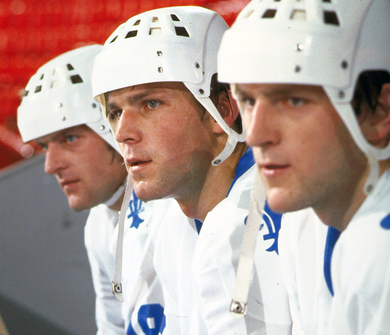
    Peter Stastny center, flanked by brothers Marian (left) and Anton. All three played for the Quebec Nordiques in the 80s. Photos: HHoF
    The Stastny brothers (from left to right, Marian, Peter, and Anton) were some of the first European superstars in the NHL back in the 80s. Photo: HHoF

    While the MLS is adding a team in Atlanta in 2017, the NHL will likely stay away from Atlanta for eternity after two failed attempts at a hockey presence in Georgia. However, given the recent rate of expansion in the MLS, there’s a good chance that they too, will end up having 30 teams at some point. Soccer’s popularity in the United States is on the rise and it’s backed by the recent viewership of the 2015 Women’s World Cup, beating some traditional hockey markets, like Philadelphia, while a 2015 Stanley Cup Final game was being shown on TV at the same time. The two leagues are innovative and should work together as both sports gain popularity. As it is, hockey is becoming more mainstream by removing some of the importance once stressed on fighting, resulting in just as entertaining games as ever before.

    Soccer is a sport best played with many teams and some form of relegation, like in Europe. While that model would not translate well with hockey, at some point the MLS is going to have to absorb many of the popular teams in developmental leagues, in order to make their game more exciting. The NHL should consider something similar when it comes to the minor league markets that are untapped, or have worked in the past. Expansion and relocation fees aside, both leagues should go for breaking the 30-team barrier.

    The NHL as it exists right now, would be on the verge of going for it much sooner than the MLS and could act as an example of what to do and how to go about things. I’m in favor of 34 teams in 2017, the NHL’s 100th season. But first, let’s get back to Quebec (and the basics).

    (Denis Brodeur/Getty)
    Joe Sakic in his Quebec days, before the Nordiques moved to Denver (Denis Brodeur/Getty Images).

    If the league is intent on adding franchises, a return to Quebec City, the inevitable Las Vegas team, an expansion to Seattle, and whatever else may come their way is exactly what the NHL needs. After watching the Winnipeg Jets play in their first playoff game at home since the original Winnipeg Jets left for Arizona 19 years ago, I cannot help but think that the NHL needs to return to another small market, where hockey has already worked, and everyone loves the game. There’s a place that is more readily equipped for a National Hockey League return- Quebec City.

    Whereas a former member of the NHL, Hartford, doesn’t have an adequate arena to play in and potential spotty ownership, Quebec City has the 18,482 seat Videotron Centre- set to open this September. The brand new arena will have all the top-notch amenities and will be NHL move-in ready, should the league wish to expand or a team relocate, such as the Coyotes in their dreaded current state. Fear not, Arizona and Gary Bettman nay-sayers, the league’s experiment is just starting to see results in the growth of the game in the Southwestern region of the United States.

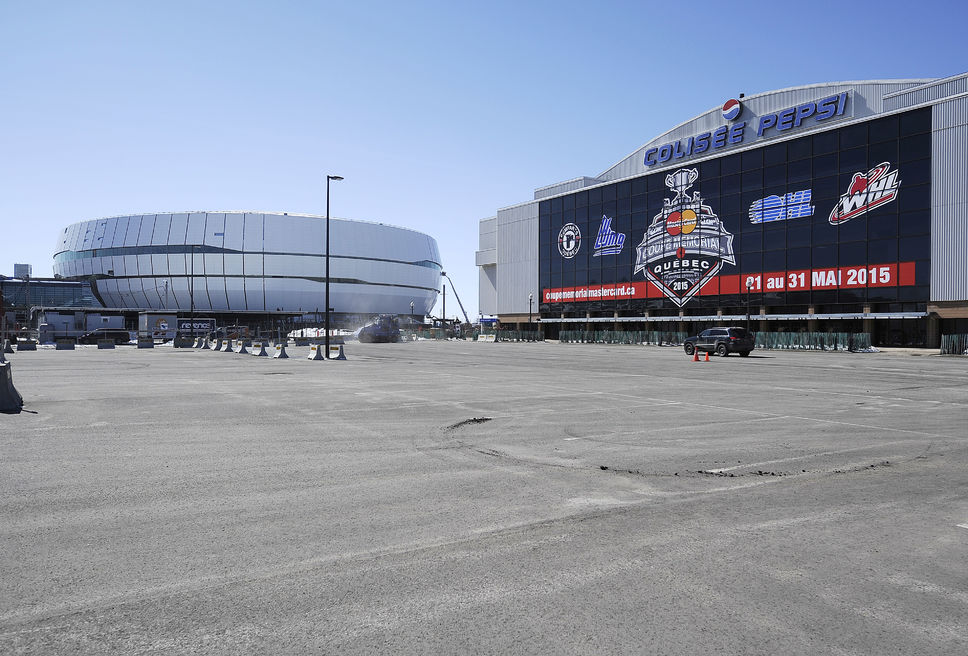
    The Videotron Centre (Centre Vidéotron) sits in the background of the Pepsi Coliseum (Colisée Pepsi). DIDIER DEBUSSCHERE/JOURNAL DE QUEBEC/AGENCE QMI
    The Videotron Centre (Centre Vidéotron) sits in the background of the Pepsi Coliseum (Colisée Pepsi). DIDIER DEBUSSCHERE/JOURNAL DE QUEBEC/AGENCE QMI

    And don’t get me wrong, Connecticut, you guys love hockey and still love the Whalers to this day. It’s not realistic in Hartford’s current state, for an NHL return anytime soon. Yet, I’ll still be one of the first to help you demand a return and shout, “Bring back the Whalers!” should there be a more immediate and reasonable plan. But there’s a place that is more readily equipped for a National Hockey League return- Quebec City.

    But what’s holding everyone back? Canada is able to sustain at least eight franchises, if not more, and hockey is Canada’s game after all. The league made the best of a hurtful breakup in its return to Winnipeg back in 2011, surely NHL Commissioner Gary Bettman and crew can make due on Quebec’s aching heart since 1995 when the original Quebec Nordiques fled the struggling Canadian dollar and the lack of a locally interested owner and went west to become the Colorado Avalanche. Perhaps the league will find enough heart to forgive the Nordiques from almost rebranding with awful looking 90s teal on an otherwise decent looking jersey.

    I mean, if the league is serious about adding a team in Las Vegas, which might not carry longevity, then why not look for a place with more staying power than whatever Vegas would become. The original Nordiques survived in the league from 1979 to 1995. Despite some down years, Quebec was on an impressive turnaround at the end of the 1994-1995 season. The team that moved wound up winning the Stanley Cup in their first season in Colorado.

    The whiteout was in full force in Winnipeg in the 2015 Stanley Cup Playoffs. Photo By: Jonathan Kozub/NHLI via Getty Images
    The whiteout was in full force in Winnipeg in the 2015 Stanley Cup Playoffs. Photo By: Jonathan Kozub/NHLI via Getty Images

    Among teams that no longer exist, Quebec Nordiques merchandise ranks second to the Hartford Whalers in sales. Still not convinced about the staying power of a new Quebec Nordiques franchise? Look at the return of the Winnipeg Jets in Winnipeg, Manitoba. It’s a small hockey market, but they sell out every seat in the 15,004 seating capacity MTS Centre for every home game, despite missing the playoffs from the 2011-2012 season to last season. In their first game back to the postseason, the MTS Centre was rocking at 124 dB from time to time as reported by Sportsnet.

    Imagine how loud it would be in the Videotron Centre for the Nordiques return or their first provincial rivalry regular season meet-up with the Montreal Canadiens since 1995- in any case, it’d be awesome. As an aside, Boston Bruins fans would gladly welcome another team that despises the Habs. They’ll even forgive Ron Tugnutt for his extraordinary 70 save performance on 73 shots on goal en route to the Nordiques 3-3 tie against the Bruins on March 21, 1991, even though some of their modern day fans were not even alive then.

    The NHL obviously has issues with adding another team to the Eastern Conference before adding anything to the Western Conference due to its current imbalance with 16 teams in the East and 14 in the West. The easiest way to solve the original realignment problem created when the Atlanta Thrashers moved to Winnipeg four years ago would have been to simply swap the Jets with the Nashville Predators in their respective divisions. Winnipeg would have gone to the Central, while Nashville would have gone to the Southeast in a geographically sensible maneuver.

    However, the league decided to consolidate the divisions from six to four and swapped Winnipeg for Detroit and Columbus. In the process, each conference makes geographic sense, with a focus on cutting travel expenses and reducing a carbon footprint league-wide. Yet, while the Central and Pacific Divisions are perfect, the Atlantic and Metropolitan Divisions are somewhat flawed. Yes, with all of the teams from the old Northeast Division, plus Detroit, somehow the Atlantic Division also has the Florida Panthers and the Tampa Bay Lightning. Meanwhile, the Metropolitan Division has both the New York Islanders and the New York Rangers.

    It’d make sense to swap both New York City teams with both Florida teams, citing the exact same reasons the NHL came up with in the first place, but for whatever reason, that is frowned upon. It’s not like it wouldn’t saturate the market or anything, because as it is, New York already has three teams (four if you count the New Jersey Devils in Newark, New Jersey). While, yes, the Buffalo Sabres and both the Rangers and Islanders have a little distance between them, it’s nothing compared to Florida and Tampa.

    And speaking of the Florida Panthers, it’s only a matter of time- no matter how good the product on the ice may get- before they have to relocate. The Panthers and Sunrise, Florida may find themselves at odds much like how Glendale, Arizona is in legal upheavals with the Arizona Coyotes. A hockey team in the suburbs of a non-traditional market isn’t proven to profit. But where should the Panthers end up without causing much fuss over realignment?

    REUTERS/Mathieu Belanger
    REUTERS/Mathieu Belanger

    You guessed it- Quebec City. They’re already in the Atlantic Division, so absolutely nothing would have to be changed except for all franchise trademarks and whatnot regarding the transition from the Panthers to the, newly returned, Nordiques. In foresight, it’s not hard to fall in love with the furthest north professional sports franchise after all of the neglect it saw in one of the most southern nontraditional hockey markets.

    Oh and if New Jersey had to move for whatever reason, given their recent downturn and less than stellar attendance, then Quebec is a prime destination. Realignment would still be simple, swap Quebec with one of the Florida teams and maybe then the NHL would have to realize it should kick the other Florida team to the Metropolitan Division and insert the New York Rangers (or Islanders) into the Atlantic Division. Then again, relocation of either the Panthers or the Devils could just mean that the league would send them west to Seattle or Las Vegas and call it a day, having a balanced fifteen teams in both conferences, but that wouldn’t be any fun, wouldn’t it?

    Look, I’m all for a team in Seattle, so here’s what you do. Add an expansion franchise to Seattle and force Detroit back to the Western Conference; because we all know two matchups a year between longstanding rivals, the Detroit Red Wings and the Chicago Blackhawks, really aren’t enough. Then add a team in Quebec City to make it a nice thirty-two-team league with sixteen teams in each conference. Besides, who wouldn’t want to see a reincarnation of the Nordiques after the beautifully aesthetic appeal of the current Jets installment?

    That’s right, I’m saying that when the NHL goes back to Quebec City, it’s not a bad idea to modernize the franchise. The igloo with a hockey stick that somewhat formed the shape of an “n” with its tricolor scheme and fleur-de-lis all over the jerseys was great- timeless even, a classic for traditionalist vintage hockey fans- but there are some great concepts on the Internet for glorious designs in the event of a rebirth of the Nordiques.

    This is my favorite of all the Quebec concepts on Icethetics.
    This is my favorite of all the Quebec concepts on Icethetics.

    I think a darker shade of navy blue would suffice, with maybe a snowy owl and the city skyline or something that is distinctive of Quebec City, and of course sharp looking fleur-de-lis prominently featured on the bottom half of the sweater and along the pants. If you have the time, go check out some great designs on Icethetics.co, some great concept artists have really gone all out on creating the perfect symbol for what should be a return to the true north strong and free- Quebec City.

    In this day and age, with the billion dollar industry that is the sports world, it shouldn’t be hard to find an owner and work with the largely French speaking fan base. Back in the days of the original Nordiques, English speaking fans flocked to the Quebec City team over the much more hardcore French speaking franchise over in Montreal. Obviously it must have been the warm and inviting ­fleur-de-lis calling them to the light side of The Force in the battle of Quebec. Either that or it was because of the great players that once graced the ice at Colisée Pepsi, such as the Stastny brothers, Mats Sundin, Guy Lafleur, Owen Nolan, Peter Forsberg, and my favorite- Joe Sakic.

    The bottom line, folks, Quebec City has an important mark on the history of hockey. It was once home to the Quebec Bulldogs who spent one season in the NHL (1919-1920) before moving to Hamilton, Ontario to become the Hamilton Tigers and it was once home to the 1977 Avco World Trophy champions as the World Hockey Association’s top team before joining the NHL in the WHA-NHL merger in 1979- the Quebec Nordiques. Isn’t it time that someone brought the game back where it belongs for all of us to enjoy? Even in the face of the uncertainty of the salary cap situation currently and the issues that are once again surrounding the Canadian dollar, I mean, hockey is for everyone, after all.