Additions: F Frédérick Gaudreau, F Dominic Turgeon, D Jordie Benn, D Kevin Czuczman, D Alex Goligoski, D Joe Hicketts, D Dmitry Kulikov, D Jon Lizotte, D Jon Merrill
Subtractions: F Nick Bonino (signed with SJS), F Gabriel Dumont (signed with TBL), F Marcus Johansson (signed with SEA), F Luke Johnson (signed with WPG), F Gerald Mayhew (signed with PHI), F Zach Parise (buyout, signed with NYI), F Dmitry Sokolov (NMHL), D Matt Bartkowski (signed to a PTO with PIT), D Louie Belpedio (signed with MTL), D Ian Cole (signed with CAR), D Brad Hunt (signed with VAN), D Brennan Menell (traded to TOR), D Carson Soucy (expansion, SEA), D Ryan Suter (buyout, signed with DAL)
Still Unsigned: D Ian McCoshen
Re-signed: F Will Bitten, F Nick Bjugstad, F Joseph Cramarossa, F Brandon Duhaime, F Joel Eriksson Ek, F Kevin Fiala, F Kirill Kaprizov, F Kyle Rau, F Mason Shaw, D Dakota Mermis, G Andrew Hammond
Offseason Analysis: It took all summer, but it didn’t linger into the fall as Wild General Manager, Bill Guerin, and forward, Kirill Kaprizov, were able to hammer out a five-year extension worth $9.000 million per season– forcing this entire offseason recap/season preview to be re-written.
Going into Tuesday, Minnesota was bound to receive a letter grade in the “D” range for failing to secure Kaprizov before training camp, despite a few other moves that have actually been pretty good for them– salary cap penalties via buyouts aside.
Late Tuesday, Kaprizov re-signed and all is just about forgiven for the Wild.
Since joining the league as an expansion team in 2000, Minnesota has rarely had a competitive team that can make a deep run into the postseason. They’ve consistently been good, but never good enough.
Marian Gaborik came and went, Mikko Koivu stayed loyal until he joined the Columbus Blue Jackets for a brief stint last season prior to retiring less than a month into the 2020-21 schedule and then the dawn of the Kaprizov Era began.
After spending time in the Kontinental Hockey League for his early development, Kaprizov amassed 27-24–51 totals in 55 games in his debut season with Minnesota as a 24-year-old left wing.
He’s the real deal and the Wild are leaning into it.
Though Nick Bonino, Marcus Johansson and others weren’t re-signed as part of Minnesota’s depth that got them all the way to a Game 7 at T-Mobile Arena against the Vegas Golden Knights in the 2021 First Round, Guerin held things down where it counts– the core.
Joel Eriksson Ek signed an eight-year extension worth $5.250 million per season after a breakout season with 30 points (19 goals, 11 assists) in 56 games last season after amassing 8-21–29 totals in 62 games in 2019-20.
If the last two seasons are an indication of what’s to come, then the Wild have a steal of a deal in Eriksson Ek’s cap hit as the 24-year-old emerges in his prime.
Guerin brought back Kevin Fiala on a one-year extension worth $5.100 million– retaining restricted-free agency status over the 25-year-old forward heading into next offseason– after putting up 101 points (46 goals, 55 assists) in 133 games with the Wild in parts of three seasons since he was acquired on Feb. 25, 2019.
In parts of five seasons with the Nashville Predators from 2014-15 through 2018-19, Fiala had 45-52–97 totals in 204 games.
Don’t fix what isn’t broken, because clearly something is clicking in Minnesota and the Wild are reaping the benefits.
Alex Goligoski and Jon Merrill are fine additions to the defense, though as for how efficient they’ll be compared to the loss of Ryan Suter remains to be seen.
Guerin bought out the remainder of Zach Parise and Suter’s matching contracts on July 13, 2021, and in doing so saved Minnesota some valuable cap space to sign Kaprizov and build off of the new core.
That said, Parise and Suter will cost the Wild about $4.744 million in dead cap space for 2021-22, then $12.744 million in dead cap space in 2022-23, before the buyout penalties reach a crescendo with a combined $14.744 million in dead cap money from 2023-24 through 2024-25 before Parise and Suter’s penalties taper off with a combined cost of $1.667 million in 2025-26, as well as 2026-27.
This offseason might have been a breeze, but next offseason is a different story– especially as building and maintaining contender status gets difficult in the next few seasons too.
Ultimately, the cost of buying out Parise and Suter may or may not even be a headache for Guerin to deal with. It all depends on how the team performs between now and a couple of seasons from now.
For now, Guerin has about $3.215 million in cap space to play with for the 2021-22 season.
Over the summer, the Seattle Kraken formed their first roster and did Minnesota a favor without asking.
Seattle could’ve selected Kaapo Kähkönen, since the Wild protected Cam Talbot, but the Kraken went in a different direction and snagged Carson Soucy from Minnesota’s depth on the blue line.
Offseason Grade: B+
Though it took a little longer than both sides had probably hoped– and with more frustration than expected– Guerin re-signed his No. 1 priority in Kaprizov before the start of training camp.
The biggest challenge for Minnesota– other than improving on last season’s success before a First Round exit– is finding a way to keep the band together next offseason, when Fiala, Jordan Greenway and Kähkönen are on the short list of important pending-restricted free agents.
Meanwhile, guys like Victor Rask, Nick Bjugstad, Kyle Rau, Nico Sturm, Goligoski, Jordie Benn and Merrill have a little more flexibility to come and go as they please– assuming there’s enough cap space in face of the Parise and Suter buyout penalty crunch on top of what might still be a flat cap for the 2022-23 season due to the ongoing pandemic.
At the very least, 2023-24 should be a bit more optimistic with the latest U.S. broadcasting rights deals for ESPN and Turner Sports inflating league revenue all-around and likely bumping up the salary cap as a result.
For now, Minnesota’s transition continues, but for once there’s a sense of stability given their best players are 25 and under and enjoy being in a Wild uniform.
Though they didn’t bring the alleged “State of Hockey” a Stanley Cup championship in their tenure, Parise and Suter made playing for Minnesota cool as the franchise found its footing now entering its second generation.
Additions: F Samuel Asselin, F Steven Fogarty, F Nick Foligno, F Jesper Frödén, F Erik Haula, F Tomas Nosek, D Derek Forbort, D James Greenway (acquired from TOR), D Tyler Lewington, G Troy Grosenick, G Linus Ullmark
Subtractions: F Paul Carey (SHL), F Sean Kuraly (signed with CBJ), F David Krejci (ELH), F Robert Lantosi (SHL), F Greg McKegg (signed with NYR), F Ondrej Kase (signed with TOR), F Nick Ritchie (signed with TOR), D Steven Kampfer (KHL), D Jeremy Lauzon (expansion, SEA), D Kevan Miller (retired), D Jarred Tinordi (signed with NYR), G Jaroslav Halak (signed with VAN), G Dan Vladar (traded to CGY)
Still Unsigned: F Alex Khokhlachev (KHL, BOS reserve list), G Tuukka Rask
Re-signed: F Anton Blidh, F Trent Frederic, F Taylor Hall, F Cameron Hughes, F Joona Koppanen, F Zach Senyshyn, D Brandon Carlo, D Mike Reilly, D Nick Wolff, G Callum Booth
Offseason Analysis: The Bruins are in a period of transition. Stop calling them favorites.
They might still be playoff contenders, but they’ll have to focus on even making the postseason first to begin with shortly– if not already– this upcoming season.
Boston’s General Manager, Don Sweeney, had his work cut out for him this summer and managed it pretty well– all things considered.
Sure, the B’s don’t have David Krejci and we’ll get into that, but instead of signing one or two free agents and calling it a day, then talking about needing to fill a hole that he’s left empty for years or created going into the new season, Sweeney signed five key players and then some for depth.
It’s a transition, not a purposeful tank to rebuild– yet, anyway.
As long as Patrice Bergeron is under contract, Boston has assured him they’ll do whatever he and Brad Marchand say the dressing room needs.
Speaking of Bergeron, though, he’s put off contract extension talks until the 2021-22 season is over, so for any Bruins fans that have gone through the pain of watching Zdeno Chara play in a different uniform last season with the Washington Capitals and again this upcoming season with the New York Islanders, as well as watching Krejci return to Czechia this year, well… …it happens. Time waits for no one.
All good things must come to an end and a new era dawns. Just hope it’s a good one.
Oh, and, Tuukka Rask is currently unsigned after offseason hip surgery, though the 34-year-old goaltender has expressed a desire to only play for the Bruins if he’s healthy enough to go for the 2021-22 season by the time December rolls around.
He’ll even sign for league minimum and “tons of Bud Lights”, which a certain podcast would love, even if it isn’t their preferred light beer (shameless plug for some Twitter pals).
Anyway, Sweeney’s saved about $1.089 million in cap space to sign Rask to a low, one-year, deal if he’s good enough to return to action, which wouldn’t complicate matters in the crease with the arrival of Linus Ullmark via free agency and the development of Jeremy Swayman.
Rask and Swayman were always going to share the spotlight as Swayman comes into his own. Rask’s injury, however, slightly changes matters in the handoff.
Ullmark joins the Bruins on a four-year contract worth $5.000 million per season through 2024-25. He was the winningest goaltender for the Buffalo Sabres last season with a 9-6-3 record in 20 games, a 2.63 goals-against average and a .917 save percentage in that span.
Given the workload that he faced in Buffalo compared to Boston’s more structured defense, Ullmark’s numbers should improve as he’s had moments of brilliance in his short spurts thus far– only really coming into the league as a starter or backup goaltender in the last two seasons.
At 28-years-old, he’s right on track for goaltender development and if things head south, the Bruins can use 2021-22 as a write off, plus 2022-23 as a means of giving Swayman full-time starter duties at the earliest.
Swayman, at 22-years-old, has already played 10 National Hockey League games and amassed a 7-3-0 record with a 1.50 goals-against average, a .945 save percentage and two shutouts, but that kind of luck is unheard of for a goaltender.
Eventually, given his unconventional style, his stats will come back to Earth and you don’t want to let reality cut down a goaltender’s confidence so soon while they’re young (see, Philadelphia Flyers goaltender, Carter Hart’s 2020-21 season, for example).
It’s nice to have Swayman as a future ace, but that’s just it– the future. Though the future is now in transition, it’s not quite the time to make the jump in the crease– especially while there’s more pressing matters like replacing Krejci.
Charlie Coyle is, ideally, Boston’s second line center entering this season, but if things go south with Coyle centering Taylor Hall and Craig Smith, then that’s where Nick Foligno or Erik Haula come in handy, if Jack Studnicka can’t make the jump from the Providence Bruins (AHL) to Boston.
Krejci finally could’ve had wingers in Hall and Smith for a full season, but the 35-year-old has always wanted to play in front of his parents and brother in the Czech Republic– especially after leaving for North America in his teens to play hockey for a living.
It’ll also help introduce his kids to his Czech native tongue, so they’ll be able to communicate with their grandparents.
Having spent his entire career with Boston through 962 regular season games since breaking into the league in the 2006-07 season, he’s earned every right to do as he pleases.
He might be back for the 2022-23 season, but absolutely do not hold him to it.
Hall, meanwhile, signed a four-year extension worth $6.000 million per season in the offseason, so Boston at least still only has one hole to fill on the second line if Coyle can’t return to form.
Foligno signed a two-year deal with a $3.800 million cap hit and Haula signed a two-year deal worth $2.375 million per season.
In 957 career NHL games, Foligno’s had 203-283–486 totals for the Ottawa Senators, Columbus Blue Jackets and Toronto Maple Leafs. He had been Columbus’ captain until the deadline when he was dealt to Toronto to add some punch to their lineup, only to blow a 3-1 series lead over the Montréal Canadiens in the 2021 First Round.
Foligno had 7-13–20 totals in 49 games with the Blue Jackets and Maple Leafs in 2020-21.
If nothing else, Foligno adds valuable leadership in the absence of Krejci and should hold things over as someone that gives it their all on a night-to-night basis. Bruins fans should warm up to him quickly if they haven’t already.
Haula, on the other hand, spent last season with the Nashville Predators, where he had 9-12–21 totals in 51 games last season, which was about the same production he had with the Carolina Hurricanes and Florida Panthers in 2019-20.
He hasn’t been able to find his breakout scoring touch that he had with the Vegas Golden Knights in 2017-18, when he had 55 points (29 goals, 26 assists) in 76 games, but he should be fine as a third liner flanked by Jake DeBrusk and Foligno.
Boston needs to get a consistent offense going and they at least seem to have the right level of talent for each line this season.
As long as everyone stays healthy it’s a good thing with an overhauled defense due to the Seattle Kraken taking Jeremy Lauzon in the 2021 NHL Expansion Draft, Kevan Miller retiring and the uneasiness of delegating more time to Jakub Zboril after his– at times– lackluster 2020-21 season.
Speaking of the revamped bottom-six, however, Tomas Nosek is new in town on a two-year deal worth $1.750 million per season, joining Trent Frederic– fresh off of an extension this offseason for two years and a $1.050 million cap hit– and Chris Wagner on the fourth line.
He’s been a fun player to watch come into his own with the Golden Knights since Vegas took him from the Detroit Red Wings in their expansion draft in 2017, and just had a career-year with 8-10–18 totals in 38 games last season.
Anything at or above 15 points from a fourth line center is a job well done for less than a $2.000 million cap hit.
Sean Kuraly’s gone home to Columbus, but after dropping from 23 points (six goals, 17 assists) in 69 games in 2019-20, to just nine points (four goals, five assists) in 47 games last season, needing a change of scenery was a welcome excuse for Boston to let him go.
Meanwhile, Ondrej Kase and Nick Ritchie also departed in the offseason for Toronto, though Kase’s future is shrouded by the ever-looming cloud of concussions and Ritchie outperformed expectations last season in the first half of the season before regressing to his ways.
Jaroslav Halak also left for the Vancouver Canucks, though that was inevitable with the long line for Boston’s backup goaltender being cut by Swayman’s emergence.
Even Dan Vladar was traded to the Calgary Flames for a 2022 3rd round pick as a result.
A couple of days prior, on July 26th, Boston acquired the rights to James Greenway from the Maple Leafs for future considerations. He’ll need a little more time in the system, for now.
With Miller retired, Steven Kampfer off to the Kontinental Hockey League (KHL) in Russia and Jarred Tinordi gone to the New York Rangers in free agency, Sweeney signed Derek Forbort to a three-year contract worth $3.000 million per season.
Mike Reilly also played well enough after being acquired at the trade deadline to earn a three-year extension with a $3.000 million cap hit as well.
Additionally, Brandon Carlo signed a six-year extension worth $4.100 million per season, so the Bruins have a defensive core with Carlo, Forbort, Matt Grzelcyk and Reilly under contract after 2021-22.
Charlie McAvoy, meanwhile is a pending-restricted free agent by the time July 1, 2022, rolls around (unless he’s signed to an extension before then).
Forbort, meanwhile, joins Boston after spending last season with the Winnipeg Jets where he had 2-10–12 totals in 56 games from the blue line. At 6-foot-4, 219-pounds, he adds much needed size to Boston’s defense.
In the meantime, John Moore, remains under contract and likely on the long term injured reserve to start the season, leaving his $2.750 million cap hit mostly off the books until the Bruins come to some sort of a resolution on that one.
Time will tell if the B’s will sink or swim, but you can’t say they didn’t try to put something together on paper this offseason.
Offseason Grade:B
In Boston, you either like or hate Sweeney. There’s no such thing as love unless you win championship rings these days.
While Sweeney’s made some blunders along the way, his overall approach as the Bruins’ GM has established a foundation of being in the room– being in consideration and among the conversation from year-to-year for attracting talent and making trades.
Sometimes it’s panned out, like the acquisition of Hall. Sometimes it’s fallen short, like when Sweeney paid a hefty price for Rick Nash (though only Ryan Lindgren remains a threat on the Rangers and Nash’s career-ending concussion couldn’t have been accounted for at the time of the trade).
Boston was stuck in the mud when he replaced Peter Chiarelli and Sweeney’s hands were tied in 2015, but he’s always been an active general manager and is tactical in his approach of replacing expendable assets.
At the same time, that very process irks Bruins fans because it comes across as overthinking or not trying hard enough to sign the player instead of a (better fit be damned) player.
Well, that and every guy these days isn’t Tim Thomas or Bobby Orr.
Additions: F Michael Eyssimont, F Luke Johnson, F Riley Nash, F Austin Poganski, D Brenden Dillon (acquired from WSH), D Nate Schmidt (acquired from VAN)
Subtractions: F Mason Appleton (expansion, SEA), F Marko Dano (ELH), F Trevor Lewis (signed with CGY), F Skyler McKenzie (HockeyAllsvenskan), F Mathieu Perreault (signed with MTL), F Nate Thompson (signed with PHI), D Jordie Benn (signed with MIN), D Derek Forbort (signed with BOS), D Tucker Poolman (signed with VAN), G Laurent Brossoit (signed with VGK)
Still Unsigned: D Luke Green, G Cole Kehler
Re-signed: F Andrew Copp, F Paul Stastny, F Dominic Toninato, D Jonathan Kovacevic, D Neal Pionk, D Logan Stanley, G Eric Comrie
Offseason Analysis: After sweeping the Edmonton Oilers in the First Round to the surprise of, well, the Oilers themselves, the Jets were promptly swept by the Montréal Canadiens in the Second Round to the surprise of everyone that thought the Montréal vs. Winnipeg matchup would be a little more competitive.
The Jets, however, beat Edmonton by one-goal in three out of their four games in the First Round– with the latter two in comeback fashion and all three one-goal victories needing at least one overtime period (the series finale, in fact, needed three overtime periods).
Winnipeg bet the Oilers, 4-1, in Game 1, 1-0 (OT), in Game 2, 5-4 (OT) in Game 3 and, 4-3 (3OT) in Game 4, then played Montréal about a week-and-a-half after eliminating Edmonton.
The Canadiens beat the Jets, 5-3, in Game 1, 1-0, in Game 2, 5-1, in Game 3 and, 3-2 (OT), in Game 4 while Mark Scheifele sat on the sidelines for the majority of the series– serving a four-game suspension for his Game 1 charge that left Jake Evans with a concussion.
In addition to playing Connor Hellebuyck less and giving Eric Comrie more responsibility as the backup goaltender, Winnipeg could solve some of their problems by simply having a defense.
Whether or not head coach, Paul Maurice, has overextended his stay behind the bench with the Jets (he has), it’s getting closer and closer to “win-now or rebuild” time in Winnipeg.
Jets General Manager, Kevin Cheveldayoff, kept most of his forwards together– signing Andrew Copp and Paul Stastny to one-year extensions worth $3.640 million and $3.750 million, respectively– while adding Riley Nash and Austin Poganski to the mix on matching one-year $750,000 contracts.
Nash reached a career-high 41 points in 76 games with the Boston Bruins in 2017-18, before signing a three-year deal with the Columbus Blue Jackets where his production dropped to 12 points in 78 games in his first season with the Blue Jackets in 2018-19, then 14 points (five goals, nine assists) in 64 games and seven points (two goals, five assists) in 37 games last season prior to being traded to the Toronto Maple Leafs at the deadline while injured.
The 32-year-old forward was drafted in the 1st round (21st overall) by the Oilers in 2007, and made his league debut with the Carolina Hurricanes in the 2011-12 season.
Nash is a low-risk, high-reward signing for bottom-six depth– especially if he can reach about 20 points in a full 82-game season with the Jets, but he’s not winning the Maurice “Rocket” Richard Trophy in 2021-22 (or anytime soon, for that matter).
Copp had a breakout year last season with 15-24–39 totals in 55 games, which was good news for the Jets in the wake of trading Patrik Laine and Jack Roslovic to Columbus for Pierre-Luc Dubois early in the 2020-21 season.
Though Copp may be a late bloomer, at 27-years-old, he is still in the midst of his prime and can only have an upward projection over the course of a regular 82-game schedule.
Dubois managed 20 points in 41 games with Winnipeg last season after scoring one goal in five games with the Blue Jackets prior to the trade.
Compared to Laine’s 12-12–24 totals in 46 games with Winnipeg and Columbus last season, the trade didn’t really spark either player in fresh change of scenery.
Roslovic, meanwhile, produced his best results– 34 points (12 goals, 22 assists)– in 48 games with the Blue Jackets, versus his 12-17–29 totals in 71 games with the Jets in 2019-20.
There shouldn’t be any distractions entering the season or disruptions during the season for Dubois to get back on track, however.
As for Stastny, the 35-year-old center is still in search of his first Stanley Cup ring after passing 1,000 career games in 2020-21.
In 1,001 career NHL games with the Colorado Avalanche, St. Louis Blues, Jets, Vegas Golden Knights and Jets again, Stastny has 263-492–755 totals, including 29 points (13 goals, 16 assists) in 56 games last season in his first year back in his second stint with Winnipeg.
He’s usually good enough for about 40 points every season, so that should help solidify the Jets’ center depth as long as he’s healthy.
Despite a plus-16 goal differential in the regular season, when it mattered most, Winnipeg couldn’t keep the puck out of their own net in the Second Round.
That’s not just something for Hellebuyck to work on by himself, but rather a defensive strategy issue in and of itself.
Luckily for the Jets, they worked the phones to acquire Brenden Dillon from the Washington Capitals and Nate Schmidt from the Vancouver Canucks in separate trades a day after one another in July.
On July 26th, Winnipeg sent a 2022 2nd round pick and a 2023 2nd round pick to Washington for Dillon and on July 27th, the Jets dealt a 2022 3rd round pick to Vancouver for Schmidt.
Dillon had a quietly productive season as a top-four defender with 2-17–19 totals in 56 games with the Capitals, while Schmidt’s production dropped from 31 points (seven goals, 24 assists) in 59 games in 2019-20 with Vegas to 15 points (five goals, 10 assists) in 54 games with the Canucks.
It’s a risk, but the Jets are hoping that Schmidt can bounce back to being a 30-point scoring defender in the mix with with Neal Pionk and Josh Morrissey, as well as Dillon.
Speaking of Pionk, he signed a four-year extension worth $5.875 million per season this offseason after amassing 3-29–32 totals in 54 games in 2020-21.
It seems like a fair deal all around for a productive defender that plays a leading role as a power play specialist at only 26-years-old.
Offseason Grade:B-
The Jets addressed a need (improving their defense), but weren’t able to be as aggressive in either the free agent or trade market, despite remaining a piece or two away from being able to be a Stanley Cup contender.
At the very least, Winnipeg could see forward progress in the postseason with better asset management, but the problem remains the same from year-to-year– over-reliance on Hellebuyck and an unwillingness to move on from Maurice’s system.
If Cheveldayoff isn’t getting frustrated by the same results over the years, then True North Sports & Entertainment better start putting the pressure on the Jets’ front office to succeed or face the consequences of insanity (trying the same thing and expecting different results).
They’re in better shape than other teams in the Central Division, but are they as good as the Avalanche or Golden Knights on paper if they’re able to get to the Western Conference Final and have to play one of the league’s more dominant teams?
Additions: F Pavel Buchnevich (acquired from NYR), F Matthew Peca, F Brandon Saad, F Nathan Todd, D Tommy Cross, D Calle Rosén, G Charlie Lindgren
Subtractions: F Sammy Blais (traded to NYR), F Mike Hoffman (signed with MTL), F Curtis McKenzie (signed with Texas Stars, AHL), F Jaden Schwartz (signed with SEA), F Alexander Steen (retired), D Vince Dunn (expansion, SEA), D Carl Gunnarsson (retired), D Petteri Lindbohm (KHL)
Still Unsigned: F Robert Thomas (RFA), G Jon Gillies
Re-signed: F Ivan Barbashev, F Tyler Bozak, F Dakota Joshua, F Tanner Kaspick, F Jordan Kyrou, F Zach Sanford, F Nolan Stevens, F Nathan Walker
Offseason Analysis: Winning the Cup comes with a blessing and a curse. It’s a blessing to win it (especially as the Blues had never won prior to 2019, since their inception in 1967) and it’s a curse because it sets an expectation for success.
St. Louis might have had a short window to win their second Cup in franchise history.
After being swept by the Colorado Avalanche in the First Round of the 2021 Stanley Cup Playoffs, their face of the franchise before Ryan O’Reilly’s arrival, Vladimir Tarasenko, requested a trade.
Blues General Manager, Doug Armstrong, has yet to fulfill that request and has indicated that he’s in no rush to do so– after all, he’s in control of the cards at hand and like when Avs General Manager, Joe Sakic, ultimately traded Matt Duchene, Armstrong can command a steep price for Tarasenko if he’s patient enough.
Injuries have limited Tarasenko to 34 games in the last two seasons, including 3-7–10 totals in 10 games in 2019-20 and 4-10–14 totals in 24 games in 2020-21.
From 2014-15 through the 2018-19 season Tarasenko recorded five consecutive seasons with at least 65 points– including his career-high 75 points in 82 games in 2016-17, as well as a 40-goal season in 80 games in 2015-16.
Tarasenko’s situation isn’t the only concern in St. Louis, however, as the depth of the Blues that made them Cup contenders turned champions in 2019, has withered away– leaving Armstrong with the difficult task of overhauling both the top-six forward group and experimenting with the right mixture of replacement players.
Jake Allen, Sammy Blais, Jay Bouwmeester, Vince Dunn, Joel Edmundson, Robby Fabbri, Carl Gunnarsson, Patrick Maroon, Alex Pietrangelo, Jaden Schwartz and Alexander Steen have all left one way or another since winning the Cup in St. Louis.
In their place, guys like Ivan Barbashev, Klim Kostin, Jordan Kyrou and Mackenzie MacEachern have climbed the development ladder, while Torey Krug, Justin Faulk and Marco Scandella were acquired by other means.
Some will rise and exceed expectations. Others will be gifted contracts through their prime– though their use may be time limited and the chemistry pulled apart.
At the very least, Barbashev and Kyrou’s extensions this summer lead the youth movement for the Blues in an ever-changing league.
Meanwhile, the introduction of Brandon Saad on a five-year deal worth $4.500 million per season– only a smidge more than what Mike Hoffman was making on a one-year contract that wasn’t renewed– and Pavel Buchnevich via trade and subsequent four-year, $23.200 million extension has solidified St. Louis’ top-six forward group for the foreseeable future.
Saad spent last season with the Avalanche and had 15-9–24 totals in 44 regular season games before coming up clutch in the postseason– albeit at times the only goal scorer, it seemed, for Colorado– with 7-1–8 totals in 10 games.
At 28-years-old, the Blues should have him for what’s left of his prime in what’s been a respectable career thus far with 371 points (184 goals, 187 assists) in 632 career games since making his league debut in the 2011-12 season with Chicago, winning two Stanley Cup rings with the organization in 2013 and 2015, then spending time with the Columbus Blue Jackets, Chicago again and Colorado.
Armstrong acquired Buchnevich from the New York Rangers in exchange for Blais and a 2022 2nd round pick on July 23rd in the only trade that involved roster players for St. Louis this offseason.
Blais leaves the Blues after breaking into the league in the 2017-18 season and amassing 17-18–35 totals in 119 games with St. Louis, including 8-7–15 totals in 36 games last season.
Buchnevich joins the Blues riding a productive season with the Rangers– notching 48 points (20 goals, 28 assists) in 54 games in 2020-21, as well as 79-116–195 totals in 301 career games with New York since making his league debut in the 2016-17 season.
After nine loyal seasons with the Toronto Maple Leafs, Tyler Bozak won the Cup in his first season with St. Louis in 2018-19.
Through three seasons with the Blues, Bozak’s amassed 31-53–84 totals in 170 games– despite injuries that kept him to 31 games out of the 56-game schedule in 2020-21.
At 35-years-old and in love with the St. Louis uniform, Bozak is ready to be part of the transitional plans from 2019 Stanley Cup champions to getting back to Cup contention for the Blues– signing a one-year extension worth $750,000 against the cap.
He’ll either be back to full health as a low-risk, high-reward gamble to hang onto or he’ll be trade bait for another team looking to add a touch of experience at the deadline.
It might have been a blessing in disguise for the Blues to have kept Bozak and lost Schwartz this offseason.
Schwartz’s five-year contract worth $5.500 million per season with the Seattle Kraken contains a no-movement clause in the first three seasons for a player that’s suffered from a recent decline in production at 29-years-old.
Contrasted with Phillip Danault’s two-way style that ultimately went to the Los Angeles Kings with an additional sixth-year in his contract– albeit their similar scoring totals– the Blues were never going to be able to afford to keep Schwartz and account for patching a couple of holes at the same time.
After skyrocketing to the top of the league standings and winning the Cup in 2019, Jordan Binnington’s looking to reinvent himself as a surefire starter in the National Hockey League.
On the wings of a six-year extension worth $6.000 million per season, he better prove it.
A 30-13-7 record in 50 games played with a 2.56 goals-against average, a .912 save percentage and three shutouts in that span in 2019-20, was followed by an 18-14-8 record in 42 games played with a 2.65 goals-against average and a .910 save percentage.
That doesn’t exactly scream long-term option in net if it worsens.
In five postseason games in 2020, Binnington went 0-5 and had a 4.72 goals-against average, as well as an .851 save percentage.
In 2021, he went 0-4 with a 3.59 goals-against average and an .899 save percentage. While that is better than his 2020 performance, it also means that the two postseason wins since winning the Cup in 2019, were recorded by a goaltender not named “Binnington” (they were, in fact, recorded by current Montréal Canadiens backup and former Blues netminder, Jake Allen).
If St. Louis can’t get things tamed in the crease, then they might have even more issues to resolve than already planned.
Offseason Grade:C
While Saad and Buchnevich are quality pickups for the Blues, most teams in playoff contention make one or two moves and otherwise stand pat.
St. Louis got an upgrade over Hoffman’s departure, sure, but they are limited in spending power with about $782,000 left in cap space and burdened by lengthy contracts that haven’t really gone one way or another yet.
Armstrong knows how to build a team up over a period of time, but hasn’t encountered what it means to sustain that success over the years in the postseason, as well as through the course of developing a system to supplement it while talent comes and goes in the ebbs and flows of the salary cap era.
Whereas the Blues once mastered building the foundation for a team that could contend for a decade or more, it seems as though there are cracks starting to form and if they’re not careful, serious structural damage could affect their core.
Cam Davis joins the show as a new co-host and previews the Atlantic Division for the 2021-22 season. There’s also a lot of talk about Jeremy Swayman, because of course.
Missed the postseason for the first time since 2020
Additions: F Luke Glendening, F Michael Raffl, D Jani Hakanpää, D Alexander Petrovic, D Ryan Suter, G Braden Holtby
Subtractions: F Andrew Cogliano (signed with SJS), F Jason Dickinson (traded to VAN), F Matej Stansky (NL), D Taylor Fedun (signed with PIT), D Julius Honka (SHL), D Stephen Johns (retired), D Jamie Oleksiak (expansion, SEA), D Mark Pysyk (signed with BUF), G Landon Bow (ELH)
Still Unsigned: F Adam Mascherin (SHL, DAL reserve list), D Sami Vatanen
Re-signed: F Nick Caamano, F Blake Comeau, F Rhett Gardner, F Tanner Kero, F Joel Kiviranta, D Joseph Cecconi, D Ben Gleason, D Miro Heiskanen, D Jerad Rosburg, G Colton Point
Offseason Analysis: When the Minnesota Wild decided to buyout Zach Parise and Ryan Suter, the Stars saw a chance to make one of the best low-risk, high-reward moves of the offseason in signing Suter to a four-year contract worth $3.650 million per season.
Though there is a slight concern the 36-year-old defender will not be able to maintain his pace of play as the years go by in the deal, signing Suter to a cap hit under $4 million makes him easy to move in the later years and gives you the flexibility to keep guys like Miro Heiskanen and John Klingberg on your roster at the same time.
At least for the 2021-22 season before Dallas General Manager, Jim Nill, gets to deal with the headache that is possibly signing the 29-year-old pending-unrestricted free agent, Klingberg, to an extension.
With Heiskanen earning an eight-year extension with an $8.450 million cap hit, it’s hard to imagine that Klingberg’s asking price won’t be at least $9.000 million per season.
At least the Stars are projected to have about $23.300 million in cap space next offseason, whereas there’s no wiggle room now that the 2021-22 roster is full with not even a penny to spend towards the ceiling.
Anyway, since the 2011-12 season, Suter has only missed the 40-point plateau from the blue line three times.
In 2012-13, Suter had 32 points in a 48-game lockout shortened season. In 2014-15, he had 38 points in 77 games.
But when the ongoing COVID-19 pandemic cut short the 2019-20 regular season, Suter had already amassed 48 points in 69 games for Minnesota.
He had 19 points in 56 games with the Wild last season, however.
Nevertheless, the Stars overhauled their defense in the offseason, so Suter should slide in as a top-four shutdown guy with years of experience having amassed 93-514–607 totals in 1,198 career games with the Nashville Predators and Wild since breaking into the league in the 2005-06 season after Nashville drafted him in the 1st round (7th overall) of the 2003 NHL Entry Draft.
Veteran depth and replacement-level players were Nill’s primary focus this offseason as he extended younger guys like Heiskanen, Tanner Kero, Rhett Gardner, Nick Caamano and Joel Kiviranta.
Kiviranta had 6-5–11 totals in 26 games while battling a lower body injury in what otherwise would’ve likely been his first full season glance in a Stars uniform.
As a result, he’s on a two-year bridge deal worth $1.050 million per season having been a pleasant surprise for Dallas as a clutch-role player in the top-nine.
With Heiskanen’s cap hit set at $8.450 million per season on his eight-year extension and the 2021 NHL Expansion Draft in mind as the Seattle Kraken were four days away from taking a player from the Stars for nothing after Heiskanen signed his new deal on July 17th, Nill knew there’d be little he could do to keep Jamie Oleksiak around.
Dallas could’ve tried to convince Seattle to not select Oleksiak in an expansion draft day trade, but the Stars ultimately chose not to as Oleksiak was claimed and signed a steep five-year extension worth $4.600 million per season– a little out of Dallas’ price range for what they deemed a replaceable asset.
With Stephen Johns having retired, Oleksiak gone to Seattle and Julius Honka off to the Swedish Hockey League (SHL), Nills brought in Suter and Jani Hakanpää as a pair of durable defenders.
At 6-foot-5, 218-pounds, Hakanpää can pack a punch with his noted physical play– he finished third in the league in hits last season with 215, for the record.
In 57 games with the Anaheim Ducks and Carolina Hurricanes last season, Hakanpää might not be a name-brand player given his age (29) or totals (2-2–4), but he is sure to be a fan favorite among those that love quality, hard-hitting, third pairing defenders.
Luke Glendening and Michael Raffl are new to Dallas this season– replacing the likes of Andrew Cogliano and Jason Dickinson as Nill chose not to re-sign the former and traded the latter.
Cogliano joined the San Jose Sharks, while Dickinson was shipped to the Vancouver Canucks for a 2021 3rd round pick (Ayrton Martino).
It’s important to keep your bottom-six forwards fresh, inexpensive and producing and Nill felt it was about time for a little shakeup down in the depth of the roster.
Nill also made a move at the 2021 NHL Entry Draft, trading his 2021 1st round pick (15th overall, Sebastian Cossa) down with the Detroit Red Wings for a 2021 1st round pick (originally belonging to the Washington Capitals– 23rd overall, Wyatt Johnston), a 2021 2nd round pick (originally belonging to the New York Rangers– 48th overall, Artyom Grushnikov) and a 2021 5th round pick (originally belonging to the Ottawa Senators via Montréal and Detroit– 138th overall, Jack Bar).
Outside of the crease, the plans for the 2021-22 season have come into existence.
But in the net, the Stars face the difficult task of juggling three goaltenders of varying quality.
Jake Oettinger is the future full-time starter if the future isn’t already now. Anton Khudobin played well enough to earn an extended stay as a result of his fill-in heroics leading to Dallas’ 2020 Stanley Cup Final appearance.
Meanwhile, Braden Holtby was bought out by Vancouver and joined the Stars for a career-resurgence.
Oh and Ben Bishop is still out due to injury, though sources close to the Stars seem to indicate his playing days may be over (as if signing Holtby wasn’t enough of a giveaway).
Oettinger went 11-8-7 in 29 games played last season with a 2.36 goals-against average and a .911 save percentage, as well as one shutout in that span as he made his regular season debut.
Khudobin regressed a little bit back to his norm after a rejuvenating 2019-20 season– posting a 12-11-7 record in 32 games with a 2.54 goals-against average, a .903 save percentage and three shutouts in 2020-21 after going 16-8-4 in 30 games with a 2.22 goals-against average and a .930 save percentage the season prior.
Both Stars goaltenders were fine as they were, then Holtby became part of the equation on a one-year, $2.000 million contract.
In his one season with Vancouver, the floor fell out. Holtby went 7-11-3 in 21 games with a 3.67 goals-against average and an .889 save percentage.
The good news, however, is that Dallas has a better defense on paper than the Canucks and the results should translate as such– no matter who’s in the crease.
Offseason Grade:A
Last season was a fluke. For starters, the Stars were rocked by COVID-19 early in the 2020-21 calendar, which delayed their start to the regular season.
Tyler Seguin missed a significant portion of the season (all but three games) after having surgery after the 2020 Stanley Cup Final and a long rehab for a torn labrum in his hip.
With only the top-four teams in each temporarily realigned division making the 2021 Stanley Cup Playoffs last season, nobody is blaming Dallas for coming up short and missing out on what likely would’ve been a quick First Round exit.
This offseason, Nill’s made significant improvements in depth and signed affordable deals to continue to build around his core for the immediate future while the team is still competitive.
The Stars are on track to get back into the playoff picture in 2021-22 and maybe– just maybe– turn some heads again and make it back to the Stanley Cup Final if everything falls into place.
Additions: F Viktor Arvidsson (acquired from NSH), F Brayden Burke (acquired from ARI), F Phillip Danault, F T.J. Tynan, D Alexander Edler, G Garret Sparks
Subtractions: F Michael Eyssimont (signed with WPG), F Bokondji Imama (traded to ARI), F Matt Luff (signed with NSH), F Tyler Steenburgen (acquired from ARI, signed Liiga), D Mark Alt (signed with San Jose Barracuda, AHL), D Daniel Brickley (signed with Chicago Wolves, AHL), D Cole Hults (traded to ARI), D Kurtis MacDermid (expansion, SEA), G Troy Grosenick (signed with BOS)
Still Unsigned: F Drake Rymsha
Re-signed: F Lias Andersson, F Andreas Athanasiou, F Blake Lizotte, F Trevor Moore, D Kale Clague, D Jacob Moverare, D Austin Strand, D Christian Wolanin
Offseason Analysis: The Kings looked competitive and ahead of schedule, but couldn’t carry the momentum down the stretch and make a surprise appearance in the playoff hunt.
Los Angeles has a great pool of prospects and Quinton Byfield is shaping up to make an impact in his first full season, while General Manager, Rob Blake, was tasked with finding the right fit for a few pieces in the offseason that very well might put the Kings over the edge and back into Stanley Cup Playoff contention.
In a few years, they might be trending down the path of a Cup contender instead of going through a long, strenuous, rebuild.
Despite Anze Kopitar’s $10.000 million cap hit (which runs through 2023-24) and Drew Doughty’s $11.500 million cap hit (which expires after the 2026-27 season), Los Angeles was able to add without subtracting and could salvage the remnants of Jonathan Quick and Dustin Brown from the Kings’ glory days to their current days while Cal Petersen continues to emerge in the crease.
The addition of Alexander Edler on a one-year, $3.500 million contract brings some stability to the blue line and valuable experience to leave an impression on the younger defenders, like Michael Anderson and Tobias Björnfot.
Edler’s presence and shot blocking capabilities should also prove vital in shaping how guys like Olli Määttä, Matt Roy, Sean Walker and Christian Wolanin– already in their defensive primes– compete with each other for their jobs and evolve.
But Edler alone wasn’t the biggest move that Blake made in the offseason.
Sure, there’s the Viktor Arvidsson trade that brings the 28-year-old winger to Los Angeles after breaking into the league with the Nashville Predators in the 2014-15 season and scoring 10-15–25 totals in 50 games in 2020-21 with the Preds, but Blake went a step further and found the answer to a hole down the middle.
The Kings signed Phillip Danault to a six-year contract worth $5.500 million per season, bringing the 28-year-old Victoriaville, Québec native to Los Angeles’ second line for a good stretch of his prime.
Though his production was down from 47 points (13 goals, 34 assists) in 71 games with the Montréal Canadiens in 2019-20 to 5-19–24 totals in 53 games with the Habs in 2020-21, Danault has reached 40 or more points in three out of his last five seasons with varying degrees of talent around him.
Now in Los Angeles, Danault could suit up between guys like Alex Iafallo, Arvidsson, Adrian Kempe or Brown– bringing a balance of youth, speed, experience and playmaking abilities to go with the scoring prowess of any of the aforementioned wingers.
Arvidsson and Danault bring more of a two-way, contemporary, game that aligns well with Kopitar’s two-time Frank J. Selke Trophy winning style
Brown recorded 17 goals in 49 games last season, while Iafallo had 13 goals in 55 games and Kempe notched 14 goals in 56 games. There’s no reason to believe that all three players can’t reach the 20-goal plateau in a full 82-game schedule.
But for all the improvements made among their skaters, the Kings might continue to encounter some growing pains in net as Petersen continues to make his mark on the league as a starting goaltender, while Quick’s dominant days wane in the twilight of his career.
Petersen went 9-18-5 in 35 games last season and had a 2.89 goals-against average, as well as a .911 save percentage in that span.
Through 54 games at the NHL level, Petersen has a career 2.79 goals-against average and a career .916 save percentage and only one shutout.
For comparison’s sake, Quick has a 2.81 goals-against average in his last two seasons combined (64 appearances), but a .902 save percentage in that span.
Quick was Los Angeles’ starter in 2019-20 and had a 16-22-4 record in 42 games played with a 2.79 goals-against average and a .904 save percentage in that span, as well as one shutout.
Last season, Quick went 11-9-2 in 22 games and recorded two shutouts to go along with his 2.86 goals-against average and an .898 save percentage.
For all the promise that Petersen showed in his collegiate days at Notre Dame, he’s yet to make the transition to the professional game and as the years go by, so does his chance at emerging in the average goaltending prime.
If Los Angeles is to make the playoffs next season, Petersen will need to improve.
If the Kings falter, Petersen still has a chance at redeeming himself, though he won’t see much of a pay raise next offseason– but he could still be a late bloomer and sign a short-term bridge extension, awaiting a larger payday after sustained success and better numbers at the NHL level.
This is where it’s important to note that Petersen is a pending-unrestricted free agent come July 1, 2022, while Quick’s contract expires after the 2022-23 season.
If winning with the remnants of their 2012 and 2014 Stanley Cup championship core is important to the Kings, then winning again sooner rather than later is paramount.
Offseason Grade:A-
The Danault signing alone is an exceptionally good contract for a player that could really come into his own with the depth and talent of the Kings around him.
Blake’s given Todd McLellan some better pieces to work with– now it’s up to Los Angeles’ head coach to find the right chemistry among his players to get them back into the hunt.
The return of the usual division alignments for 2021-22 is a welcome sign for the Kings’ chances of making the playoffs in 2022, as they should be better than their counterparts in California, as well as the rebuilding Arizona Coyotes and stagnant teams north of the border in Vancouver and Calgary.
Now as for how far things will go? Well, that depends on if they make the playoffs first and whether or not Los Angeles lucks out having to face a relatively inexperienced team in the postseason.
Additions: F Mason Appleton (from WPG), F Nathan Bastian (from NJD), F Colin Blackwell (from NYR), F Joonas Donskoi (from COL), F Jordan Eberle (from NYI), F Yanni Gourde (from TBL), F Morgan Geekie (from CAR), F Luke Henman, F Calle Järnkrok (from NSH), F Marcus Johansson (UFA from MIN), F Jared McCann (from TOR), F Jaden Schwartz (UFA from STL), F Brandon Tanev (from PIT), F Alexander Wennberg (UFA from FLA), D Connor Carrick (UFA from NJD), D Mark Giordano (from CGY), D Haydn Fleury (from ANA), D Adam Larsson (from EDM), D Jeremy Lauzon (from BOS), D Jamie Oleksiak (from DAL), D Gustav Olofsson (UFA from MTL), D Carson Soucy (from MIN), G Antoine Bibeau (UFA from COL), G Joey Daccord (from OTT), G Chris Driedger (from FLA), G Philipp Grubauer (UFA from COL)
Subtractions: F Tyler Pitlick (traded to CGY), F John Quenneville (NL), D Gavin Bayreuther (signed with CBJ), D Kurtis MacDermid (traded to COL), G Vitek Vanecek (traded to WSH)
Still Unsigned: D Dennis Cholowski (from DET)
Re-signed: F Kole Lind (from VAN), F Alexander True (from SJS), F Carsen Twarynski (from PHI), D Will Borgen (from BUF), D Vince Dunn (from STL), D Cale Fleury (from MTL)
Offseason Analysis: The NHL’s newest franchise is set to take to the ice for their first season on Oct. 12th as the Kraken pay a visit to the Vegas Golden Knights to kickoff a five-game road trip before hosting the Vancouver Canucks on Oct. 16th in the first home game in the freshly renovated Climate Pledge Arena in Seattle.
Vegas didn’t do Seattle any favors in terms of establishing new-age expansion team expectations, since the Golden Knights found a way to make the 2018 Stanley Cup Final in their first season, but Kraken fans are just happy to have a professional hockey team competing for the Cup back in the city for the first time since the Seattle Metropolitans folded in 1924.
The Kraken are going to draw many comparisons to the Golden Knights despite adopting different strategies in roster compesition.
Vegas hit the ground running with a “win now” mentality, while Seattle’s built to grind their opponents down by rolling four lines similar to how the New York Islanders play a modified version of “the trap”.
Kraken General Manager, Ron Francis, has a great scouting department down the hall and knows how to construct a foundation for the future.
Francis’ track record as the General Manager of the Carolina Hurricanes prior to Don Waddell’s arrival saw the likes of Martin Neceas, Morgan Geekie, Jake Bean, Julien Gauthier, Noah Hanifin, Sebastian Aho, Nicolas Roy, Haydn Fleury, Alex Nedeljkovic, Warren Foegele, Lucas Wallmark, Elias Lindholm, Brett Pesce, Brock McGinn and Jaccob Slavin rise through the ranks to the NHL– whether they still remain in a Canes uniform or not.
The future is bright for Seattle, while Dave Hakstol is getting a second chance behind the bench of an NHL team after a brief stint as an assistant coach with the Toronto Maple Leafs most recently.
Hakstol’s time as the head coach of the Philadelphia Flyers followed the rollercoaster that the organization’s been stuck in since Ron Hextall vacated the net.
One year showed promise, the next year was average, but then Hakstol and the team found another gear and were on the rise again– finishing 3rd in the Metropolitan Division in 2017-18, before his ultimate downfall and firing– though Philadelphia’s revolving door of goaltenders may have been a contribution.
Yanni Gourde had 17-19–36 totals in 56 games with the Tampa Bay Lightning last season en route to back-to-back Stanley Cup championships.
He will miss the start of the 2021-22 season, though, which could put a damper on the expectations that he’ll be a breakout player in a Kraken uniform.
That said, glue guys like Joonas Donskoi, Alexander Wennberg, Brandon Tanev and Mason Appleton should compliment the roster well and help fill the void, while Jordan Eberle and Jaden Schwartz work on solidifying a top-six forward group.
On defense, Mark Giordano provides a touch of leadership and experience with Jamie Oleksiak and Adam Larsson on an otherwise young blue line filled with the likes of Will Borgen, Vince Dunn, Haydn Fleury and Jeremy Lauzon.
In the crease, Seattle signed Philipp Grubauer after selecting Chris Driedger, Vitek Vanecek (later traded back to the Washington Capitals) and Joey Daccord in the expansion draft.
Driedger was the expected starter until Grubauer came along and left the Colorado Avalanche after the last three seasons.
Grubauer had seven shutouts to go with his 30-9-1 record in 40 games played last season, as well as a 1.95 goals-against average and a .922 save percentage in that span.
While Driedger’s 2.07 goals-against average and .927 save percentage was pretty great for the Florida Panthers last season, his 14-6-3 record and three shutouts pale in comparison to Grubauer.
That said, the two should make a dynamic duo as one of the most promising goaltending tandems on paper entering the 2021-22 season.
Seattle may or may not make the playoffs in their first season, but they’re sure to be better than a lot of expansion teams before the Golden Knights came around and flipped the script.
Offseason Grade:B-
Both the Golden Knights and the Kraken benefitted from some of the most generous expansion draft rules in league history– though Seattle dealt with the aftermath of Vegas’ wrath in swindling other teams via side deals in 2017, and couldn’t make a trade at the 2021 NHL Expansion Draft itself as a result.
Admit it, you would’ve taken Alex Ovechkin, Carey Price, Gabriel Landeskog and Vladimir Tarasenko if they were made available to you in an NHL 22 fantasy draft– salary cap be damned.
But that’s just it– a fantasy.
Even Vegas was laughed at for some of their expansion draft choices, but both the Golden Knights and Kraken experienced quite a turnover between when they filled out a roster for the first time on paper and when they hit the ice.
For having to put together a team from scratch, Francis didn’t do a bad job. For trying to win a Cup in their first season, well, the jury’s still out on that one, Seattle.
In any case, the city has more Stanley Cup rings before the Kraken even existed than 11 other current NHL teams thanks to the Metropolitans winning it all as the first American team to win the Cup in 1917.
Additions: F John Hayden, F Vinnie Hinostroza, D Will Butcher (acquired from NJD), D Robert Hagg (acquired from PHI), D Ethan Prow, G Craig Anderson, G Aaron Dell, G Devon Levi (acquired from FLA)
Subtractions: F Jean-Sébastien Dea (signed with MTL), F Steven Fogarty (signed with BOS), F Sam Reinhart (traded to FLA), F C.J. Smith (signed with CAR), D Will Borgen (expansion, SEA), D Matt Irwin (signed with WSH), D Jake McCabe (signed with CHI), D Casey Nelson (retired), D Rasmus Ristolainen (traded to PHI), G Michael Houser (signed with Rochester, AHL), G Carter Hutton (signed with ARI), G Stefanos Lekkas (signed with Fort Wayne, ECHL), G Linus Ullmark (signed with BOS)
Still Unsigned: F Dawson Dipietro, F Casey Mittelstadt (RFA), F Tobias Rieder, F Riley Sheahan, D Rasmus Dahlin (RFA), D Henri Jokiharju (RFA)
Re-signed: F Rasmus Asplund, D Brandon Davidson, D Casey Fitzgerald
Offseason Analysis: Apparently the Buffalo Sabres have never heard the phrase “don’t count your chickens before they hatch” except in this case it’s not even about making the playoffs– it has everything to do with the makeup of their roster this offseason.
For starters, the 1st overall pick in the 2021 NHL Draft, Owen Power, is sticking around at the University of Michigan for another season, which is honestly for the better. He can develop as a defender at his own pace and avoid wracking up an insurmountable minus-rating.
When it seemed like Sabres General Manager, Kevyn Adams, could count on somebody, anybody, wanting to stay in Buffalo, well…
Turns out after an 18-game losing streak last season, a lot of players don’t want to be back.
After a disastrous 2020-21 season that featured six goaltenders making at least one appearance in a Sabres uniform, including Linus Ullmark, Michael Houser, Carter Hutton, Dustin Tokarski, Jonas Johansson and Ukko-Pekka Luukkonen, Adams was left with some difficult decisions to make as only one goaltender recorded a goals-against average below a 3.00.
Ullmark had the only winning record for the Sabres last season– amassing a 9-6-3 record in 20 games, while posting a 2.63 goals-against average and a .917 save percentage in that span.
He was interested in signing an extension during the season, despite Buffalo’s defensive struggles and offensive inefficiency, but the Sabres wouldn’t budge and opted to kick the can down the road for a renewal in the offseason.
Adams didn’t want contract negotiations to distract his only productive goaltender, it seemed.
That didn’t sit well with Ullmark, though, as the Boston Bruins courted him away on a four-year contract worth $20 million shortly after Hutton departed Buffalo for the Arizona Coyotes on a one-year, $750,000 deal earlier in the day when free agency opened on July 28th.
Going into free agency, the Sabres could afford to lose Hutton as he struggled through 13 games in 2020-21, with a 3.47 goals-against average, an .886 save percentage and a 1-10-1 record in that span.
Hutton never really made the jump from being a backup with the St. Louis Blues to being a legitimate starting goaltender for Buffalo, but with Luukkonen as the “goaltender of the future” for the franchise, Adams probably thought he could lose Hutton and keep Ullmark around for the transition of power in the crease– until they couldn’t.
With Hutton and Ullmark now out of the picture, Adams passed on re-signing Houser, who made his NHL debut and played similar to Hutton in that he had a 3.46 goals-against average and a .901 save percentage– though Houser had a better record (2-2-0) in four games played.
Houser will still be in upstate New York for the 2021-22 season, though, as he signed an AHL contract with the Rochester Americans.
Johansson was dealt to the Colorado Avalanche ahead of the trade deadline and Tokarski couldn’t hold things down in the NHL, but still has a year left on his contract with the Sabres.
The Seattle Kraken landed Philipp Grubauer. The Avalanche traded for Darcy Kuemper. Toronto and Carolina swapped goaltenders even though it wasn’t a trade– it was just a product of free agency!
But don’t worry, the Sabres didn’t forget to sign a goalie in the offseason– they actually remembered to sign two goaltenders.
Both received one-year deals worth $750,000 and one of them put off retirement to play for Buffalo.
That’s right, Craig Anderson and Aaron Dell are the new guys in the crease for the Sabres for 2021-22.
At 40-years-old, Anderson isn’t as limber as he used to be, but he managed to put up a 2-1-0 record in four games played with the Washington Capitals last season. He also had a 2.13 goals-against average and a .915 save percentage in that span.
Meanwhile, 32-year-old Dell had a rough time rotating as the third-string goaltender with the New Jersey Devils last season– amassing a 1-5-0 record in seven games and a 4.14 goals-against average, as well as an .857 save percentage.
Given the league’s COVID-19 protocols and taxi squad rules for last season, both goalies were a safety net option in the event of an injury or COVID-19 outbreak.
The two goaltenders played a combined 11 games last season in a 56-game schedule and that’s the only big story out of the Sabres this offseason.
Yep. Nothing else going on between the end of 2020-21 and the start of 2021-22.
Surely Jack Eichel is happy with– wait, what?
That’s right, Buffalo still has to work on trading Eichel– their once cornerstone player turned injured and fed up modern-day Matt Duchene at the end of his tenure with Colorado saga (part 2, kind of).
Plus, Adams shipped out Sam Reinhart to the Florida Panthers and Rasmus Ristolainen to the Philadelphia Flyers via trades this offseason.
Reinhart became a casualty of a rebuilding team still going through another rebuild, but at least the Panthers gave Buffalo a 2022 1st round pick and goaltending prospect, Devon Levi, in return.
Ristolainen had been wanting out of Buffalo for at least a year or two now and finally got his wish, while helping the Sabres rob the Flyers of a 2021 1st round pick (Isak Rosén), a 2023 2nd round pick and defender, Robert Hagg.
Draft day trades and free agent defenders went for a premium this year.
The Sabres also added Will Butcher and a 2022 5th round pick in a salary cap dump move from the Devils in exchange for future considerations while New Jersey went on to sign Dougie Hamilton to a long-term deal in free agency.
Butcher should be an upgrade on the blue line (think Colin Miller, but better), though there’s not much else around him– especially with Rasmus Dahlin still waiting on a new contract.
Offseason Grade:D
The Sabres should receive an “F” for not having cashed in on Eichel yet, but the return on Reinhart and Ristolainen in separate trades is promising.
At the very least, Adams knows he can command a high-value yield for young players that have shown NHL-caliber talent (at the very least) and are in demand– albeit Ristolainen in Philadelphia is a reclamation project, but we’ll save that for the Flyers preview.
Since Eichel is a star player, Buffalo automatically loses out on an inevitable trade, but anything less than what they got for Reinhart or Ristolainen is worthy of firing Adams this early in his tenure as GM.
Nothing– absolutely nothing– went well for the Sabres last season. An 18-game losing streak will do that to you.
The good news is that it appears they’ve reached rock bottom. The bad news is that they could still be at rock bottom this season.
Buffalo can only go up, but it’s a question of when.
Apparently the National Hockey League’s Board of Governors were up to something this month as it was reported by Sportico on Tuesday that the Board unanimously approved ads on the front of NHL jerseys beginning with the 2022-23 season.
The ads will be no bigger than a 3-inch-by-3.5-inch rectangle, which is slightly larger than the ads featured on the front of National Basketball Association (NBA) jerseys.
It was only a matter of time before the NHL followed the NBA in generating additional revenue by doing what professional hockey leagues outside of North America have been doing for many years, as well as what’s been done for at least a few seasons now in the American Hockey League (AHL) and ECHL minor league levels on this side of the pond.
As always, hockey Twitter is taking the news well.
Let’s embrace the chaos for a moment and pick some sponsors for all 32 NHL teams that would make so much sense they’ll obviously be overlooked for, well, actual revenue generating streams instead.
Anaheim Ducks
What we want: Disney+ or TCL
What we’ll get: Honda
The Ducks play at Honda Center and, yeah, there’s really nothing besides Disney swooping in and sponsoring the team that they used to own as a means of cross promoting both the Ducks and The Mighty Ducks: Game Changers on Disney+, so we’re stuck with a Honda logo at center ice and on the front of Anaheim’s jerseys.
In any case, Honda’s red logo works pretty well with the Orange County orange featured as an accent color on Anaheim’s home and road jerseys.
NHL teams have a tendency to go back to the well with their partners– think of how many teams have either the same helmet sponsor as another team or just slapped on the same brand as their venue’s naming rights deal– but if we want to expand the playground a little bit perhaps TCL could be of interest for the Ducks.
Come to think of it, that’s probably a better option.
*Opens up Photoshop*
Arizona Coyotes
What we want: P.F. Chang’s or Cold Stone Creamery
What we’ll get: Fry’s or something, probably
Believe it or not the Los Angeles Chargers won’t be the only team tweeting about P.F. Chang’s for long as the restaurant chain was founded in 1993, and opened their first location in Scottsdale, Arizona, so it only makes sense to go back to their roots and toss an ad on the Coyotes’ jersey.
Also founded in Arizona– Cold Stone Creamery.
We figured that’d probably make sense on an AHL team’s jersey, though, despite the obvious cold ice, cold ice cream connection.
The Coyotes had Mountain America on their helmets at home and Dignity Health on their road helmets in 2020-21, so in reality we’ll probably get one of those two on the front of their jerseys in 2022-23.
Boston Bruins
What we want: Dunkin’ or bust
What we’ll get: TD Bank or O.R.G. Packaging, probably
What could possibly be more Boston than a Bruins jersey with a Dunkin’ logo on it?
Their AHL affiliate– the Providence Bruins– already play in the Dunkin’ Donuts Center in Rhode Island and have a Dunkin’ ad patch on their jerseys. Why not call it up to the major league?
That said, with some NBA teams earning up to about $20 million in jersey ad space revenue, the B’s likely will reach for a brand with deeper pockets than doughnuts and coffee.
Delaware North likes their relationship with a certain bank from Toronto (TD Bank) and has had one of the league’s longest relationships with a Chinese company (O.R.G. Packaging) as part of the NHL’s intended growth beyond the continents of North America and Europe, so one of the two brands is more likely to appear on a Bruins jersey.
Buffalo Sabres
What we want: Super Chexx
What we’ll get: KeyBank
The Sabres could use some fun in their lives these days and you know what really helps put the mind at ease? Bubble hockey.
That’s right, Innovative Concepts in Entertainment, Inc. (ICE)– the manufacturers of the popular bar and arcade classic, Super Chexx, that your rich friend down the street growing up also had in the comforts of their home– is based outside Buffalo and would be a match made in heaven right about now.
Especially as Sabres fans are looking for something to do while the game’s on TV.
So yeah, we’re definitely going to get KeyBank, Tim Horton’s or something else entirely instead.
Calgary Flames
What we want: WestJet or Duraflame
What we’ll get: Scotiabank
If you, as an American, can name any other Canadian airline other than Air Canada, then congratulations. If you can’t, then may I introduce you to WestJet?
WestJet’s headquarters are next to Calgary International Airport and it’d be nice to prove to the world that Canada is more than just a land of Tim Horton’s, Roots, Canadian Tire, Rogers, Scotiabank and Mr. Sub.
If Duraflame isn’t available, then you might as well dip into the low-cost airline industry as a means of attracting tourists to Banff National Park, Calgary Stampede or whatever it is that sets Calgary apart from the rest of Alberta (so… not being Edmonton).
Carolina Hurricanes
What we want: Surge
What we’ll get: PNC, Diehard, maybe Cheerwine or something else
This should be obvious, but if you haven’t paid attention to the Hurricanes for at least the last few seasons now they do a “Storm Surge” celebration after every win on home ice in the regular season (and sometimes playoffs).
Surge (the soda) is one of those drinks that makes headlines every few years for being pulled straight out of the vault and placed back on grocery store shelves– speaking of which, does anyone know if it’s currently available?
If not, it’ll definitely be back by the 2022-23 season.
Yes, it’s hard to envision where an ad will be placed on the road jersey as the prime real estate is used up by the diagonal “CANES” letters and– for a few players– the captain’s “C” or alternate captain’s “A”.
Chicago
What we want: Portillo’s
What we’ll get: United
Look, between Walgreens, Sears and Portillo’s there’s a few legendary brands that Chicago could partner with as their first jersey ad in franchise history (not including practice jerseys).
Obviously only one of the three mentioned above is the right choice and its the one that might lead you to Walgreens later if you have a weak stomach. Besides, Sears is fading from our collective memory whether it is out of business already or not.
Clark Griswold would be proud of Portillo’s proudly being displayed on a, well, if a WHL team can rebrand, so can you, Chicago.
Colorado Avalanche
What we want: Chipotle or Coors
What we’ll get: Ball
Look, whether or not Nathan MacKinnon eats Chipotle is a debate for another day, but one thing’s for sure– both Chipotle and MacKinnon started their careers in Colorado.
Though Coors or Coors Light would make more sense, we have to consider the fact that kids might be wearing these jerseys to the game and we haven’t heard whether or not the jerseys that are sold in the proshops in 2022-23 and beyond will include the front jersey ad or not.
If they do, then we probably can’t market beer to children.
I’m pretty sure there’s a law about that and it’s also the reason why all my 1:64 scale diecast Rusty Wallace and Dale Earnhardt, Jr. cars from when I was a kid said “Team Rusty” and “Dale Jr.” on them, respectively, instead of Miller Lite and Budweiser.
Columbus Blue Jackets
What we want: Wendy’s
What we’ll get: Nationwide
Coinciding with the uptick in Columbus born and raised players on the Blue Jackets roster, it would be a great idea to add Wendy’s– which was founded in Columbus in 1969– to the team in such a way that perhaps Jack Roslovic and Sean Kuraly star in local commercials to the Blue Jackets viewing area during the 2022-23 season.
I know that’s assuming Roslovic signs an extension, but the pending-restricted free agent at the end of the 2021-22 season helped facilitate the Pierre-Luc Dubois for Patrik Laine trade with the Winnipeg Jets by forcing Winnipeg into trading him to his hometown team.
Unlike several recent stars that left the city via free agency, Roslovic will stick around for the long term.
Especially if there’s some goods in kind involved with a Wendy’s sponsorship. I mean, I would at least.
Dallas Stars
What we want: Whataburger
What we’ll get: AT&T
Though Whataburger would be a welcome party in the burger wars when Columbus and Dallas would “meat” up, there’s no beef to be found in this hypothetical because AT&T has already made that decision for us.
Sometimes you just can’t think too hyperlocal and AT&T fetches a more national audience than a regional chain that primarily serves Texas.
Besides, if you go to Dallas for a Stars game, you can always just get Whataburger then. It’s not like they’re going to send you a meal with a jersey if ads are on the jerseys sold to fans in 2022-23.
Detroit Red Wings
What we want: Little Caesars
What we’ll get: Little Caesars
The last few teams have all involved food and we’re going to be stuck on this theme for at least one more team after this.
Both the Red Wings and Little Caesars are owned by the Ilitch family and if you think adding one more connection between Detroit and pizza is a bad thing then you clearly don’t understand the marketing behind this.
Kids love pizza. Adults love pizza. There’s a lot of good memories involving pizza.
Plus, with General Manager, Steve Yzerman, in charge, the Red Wings are on the rise, which will only further tap into the nostalgia from when Detroit was doing what the Tampa Bay Lightning are currently doing to the rest of the league.
Edmonton Oilers
What we want: Boston Pizza
What we’ll get: Rogers
Edmonton thought they could replicate the success Ken Holland had in Detroit by hiring Holland as their General Manager and when they see that we’ve got a pizza establishment heading for the front of the Red Wings’ jersey, then the Oilers will think it’s also a good idea to snag a slice.
That’s where Boston Pizza comes in.
Whether or not they’ll get Connor McDavid to do an ad read or be left with whatever scraps surround him on the Oilers roster remains to be seen.
In all likelihood, Rogers Communications will probably just get to slap their logo on another element of Edmonton’s brand.
Florida Panthers
What we want: Royal Caribbean International
What we’ll get: Baptist Health or something
The Blockbuster guy (the late Wayne Huizenga) founded the team and almost named them the “Florida Block Busters”, so it’d be neat to incorporate an homage to the days of Blockbuster (rest in peace) with the almost Blockbuster-like colors of Royal Caribbean International on the jersey.
Plus, who among us hasn’t uttered the words “I need a vacation from my vacation” before?
If you’re an out of town fan visiting the Panthers in Florida or watching the Panthers come to your town— there’s a cruise line for you even if you wouldn’t go remotely near a cruise before the ongoing pandemic began.
Los Angeles Kings
What we want: Dollar Shave Club
What we’ll get: Anschutz Entertainment Group
Never doubt for a second that a team owner wouldn’t give up the chance to toot their own horn, which is why it’s quite possible that one of the world’s biggest entertainment entities would slap their own logo on the front of a Kings jersey.
If you’re not able to finagle a way to write things off as a deduction, then Dollar Shave Club presents a unique opportunity despite the fact that shaving isn’t something that’s in Drew Doughty’s vernacular (or any hockey player, for that matter, when the Stanley Cup Playoffs roll around).
Manscaped could also make a run here and in any case, fine.
Minnesota Wild
What we want: Target or General Mills
What we’ll get: Xcel Energy
When you think of Minnesota what’s the first thing you think about?
That’s right, the very place where you could be standing right now reading this while you’re waiting for a cash register to open up or aimlessly perusing the aisles for those impulse purchases you somehow always make at Target.
It fits the Wild color scheme well and if we’re not going to get General Mills involved then at least getting more than the standard 5% discount for having a Target RedCard via goods in kind might be enough to convince Kirill Kaprizov to stay in Minnesota long-term.
Montréal Canadiens
What we want: CCM and/or Molson
What we’ll get: Bell
CCM makes more than just jerseys, but it’s not like adidas would be just fine with a CCM logo appearing on the front of an adidas ADIZERO jersey.
So, we’re left with two obvious choices– Molson or Bell.
If there’s nothing against a Canadian team bearing an alcoholic beverage on the front of their jersey with the potential for that brand to be marketed towards kids, then perhaps Molson– whose family ties own the Habs– might make an appearance near the crest.
That or we’ll just get more airtime for Bell. Either way, Montréal would be attractive enough as a franchise to bring in more than one jersey ad sponsor if the league doesn’t have any specific rules outside of the size of the ad.
Nashville Predators
What we want: Curb Records or CMT
What we’ll get: Fifth Third Bank
The music city could attract a music label if they wanted to, but Fifth Third Bank loves investing in Nashville for some reason– like, a lot, despite being headquartered in Cincinnati, Ohio and primarily serving Ohio, Kentucky, Indiana, Illinois, Michigan, West Virginia, North Carolina, Georgia and Florida more than all of Tennessee.
In any case, good for the Predators. They’ll have some deep pockets to reach into while other teams surely will have to squabble for seven figures related to the going rate for the prime ad space.
Still feels like we’d be missing out on a sweet Curb Records patch close enough to the guitar pick on the right shoulder though.
New Jersey Devils
What we want: Honestly, just Prudential is fine
What we’ll get: Prudential
The Devils are overlooked and let’s admit it, you couldn’t think of something distinctly New Jersey either– besides not being allowed to fill your own gas tank.
Bruce Springsteen is not sponsoring the Devils alone.
Whether it’s settling on an old reliable or simply making use of what’s trustworthy and already available, Prudential and New Jersey just seem like a good fit.
New York Islanders
What we want: Gorton’s
What we’ll get: Not Gorton’s
“We want fishsticks!”
O.K., you got them. Take that, Rangers fans. The Islanders are cool now because they’re steering into the skid.
They just won’t go as far as bringing back the fisherman jersey from the dead, but alas, they’ll show a spark of creativity and even crack a smile on Lou Lamoriello’s face with the real Gorton’s fisherman making an appearance on the jersey.
Obviously this will never happen.
New York Rangers
What we want: Liberty Mutual if they’re bringing back the “Lady Liberty” jerseys as an alternate
What we’ll get: Chase for sure, maybe New York Life too
Liberty Mutual (a Boston company) on the “Lady Liberty” jersey would be a sight to see, but New York will never let it happen.
Instead, Chase, which already has quite a great partnership with the team, Madison Square Garden, Manhattan, etc. will likely just step up and foot the bill for one– if not all– of the jerseys in full.
That’s fine. The Rangers will suffer the same consequences of having a diagonal wordmark on their jersey like Carolina’s road jersey, but at least New York’s pretty much always been this way so they should have some ideas of how to work around that.
Ottawa Senators
What we want: Canada Post
What we’ll get: Bell, Scotiabank or Canadian Tire
Canada’s capital city gets the honor of having Canada Post on their jerseys because it breaks up the trend of having the same three or four companies sponsoring all seven Canadian teams (like how their helmets were for 2020-21).
In reality, we’ll probably get more of the same from the Sens and either Bell, Canadian Tire or Scotiabank will make an appearance on Ottawa’s jersey.
At the very least, Canada’s postal service sponsoring a team is more economically viable than the United States Postal Service sponsoring a team.
Philadelphia Flyers
What we want: Wawa or Audacy
What we’ll get: Comcast or GlaxoSmithKline
Remember how I said you don’t want to go too local for a jersey ad? Well, Wawa on a Flyers jersey is an exception.
That said, it probably wouldn’t have the staying power to work on a road jersey too, so Philadelphia could tap into the artist formerly known as Entercom, since rebanded as Audacy, for more.
Audacy maintained their Philadelphia headquarters and covers a broad range of Internet radio, digital content, regular radio and podcasting platforms, plus their logo is orange which fits the Flyers brand.
It’s either that or Comcast will slap their own logo on the jersey or something.
Pittsburgh Penguins
What we want: Duolingo
What we’ll get: PPG Industries
Duolingo is headquartered in Pittsburgh and as a website and mobile app, every sports league with ads on jerseys needs at least one that makes you scratch your head at first before realizing the connection between the company and the city.
The dating app, Bumble, once was featured on the NBA’s Los Angeles Clippers jerseys prior to the Clippers replacing Bumble with their more jersey ad with the online browser extension coupon company, Honey.
Dating and living expenses in Los Angeles are probably harder than learning a few new languages through Duolingo, so combining Duolingo with the Penguins makes perfect sense since hockey players can come from all over and speak many languages.
Besides, it might give your team an advantage if they can communicate with one another in a setting that is more comfortable for them.
St. Louis Blues
What we want: Busch
What we’ll get: Enterprise
I know we’ve been over the whole “can they market beer to kids with these jerseys” thing, but St. Louis is the city of Anheuser-Busch, so it’s only fitting that the Blues get a jersey ad that 1) is Anheuser-Busch related and 2) works with their color palette.
If Major League Baseball’s St. Louis Cardinals play in Busch Stadium and get Budweiser by default with red as a primary color for the ball club, then the Blues naturally get Busch blue and Busch beer. I don’t make the rules.
Plus Midwesterners really like the stuff.
San Jose Sharks
What we want: Adobe
What we’ll get: SAP or Zoom
Look, we weren’t going to get away with making these in Photoshop and not having to give Adobe something— and with headquarters in San Jose it only made sense.
The Sharks have a deep relationship with SAP, though, so it’s more likely than not that the team will just go further with the brand that also is featured on their helmets at home and holds the current naming rights for SAP Center.
Plus with the uptick in the use of Zoom, San Jose could double-dip and match SAP on the home jersey with SAP stickers on their helmets with Zoom covering the road set (jersey ad and helmet ads).
Seattle Kraken
What we want: Boeing
What we’ll get: Alaska Airlines
The Kraken already have a deal with Alaska Airlines as the official airline of the franchise, but what’s bigger than an airline itself?
That’s right, Boeing, the company that makes a lot of planes and other aerospace stuff, was founded in Seattle and still has a major presence in Washington as the largest private employer in the state.
Want to see your newest expansion team take flight? Just add some Boeing engineering to the jerseys.
You might have thought Microsoft would make sense for a Seattle-based team, but the league’s agreement with Apple probably puts a quick end to that.
Tampa Bay Lightning
What we want: Accusoft
What we’ll get: DEX Imaging
Every sport with ads on jerseys has that one company that nobody’s really sure what they do, but they appreciate that they’re spending their money on their favorite team.
That just might be Accusoft’s relationship with the Lightning come time for ads on jerseys in 2022-23.
The private computer software company is headquartered in Tampa and was founded back in 1991, as Pegasus Imaging– one year prior to the Lightning’s debut season as an NHL team in 1992-93.
Toronto Maple Leafs
What we want: Swiss Chalet, Sun Life Financial
What we’ll get: Scotiabank, Sun Life Financial
Scotiabank already has a stronghold on Toronto both financially and in the sense that the Maple Leafs play inside Scotiabank Arena and proudly display Scotiabank’s logo on their helmets, so it seems inevitable that Scotiabank would also make an appearance on the Leafs jersey.
But Toronto is strong enough to maximize the value of a 3-by-3.5-inch ad and capitalize on the Maple Leaf Sports and Entertainment (MLSE) brand.
MLSE already has an agreement with Sun Life Financial on their NBA team’s jerseys and the Toronto Raptors were able to go on to win their first championship in 2019.
Perhaps the key to ending the Maple Leafs’ Stanley Cup drought lies within attracting Sun Life Financial to an NHL jersey ad.
Vancouver Canucks
What we want: Hootsuite
What we’ll get: Rogers
Remember when you’d see Hootsuite on just about every tweet with a photo? Am I the only one imagining that?
In any case, Hootsuite was founded and is based in Vancouver and still plays a major role in social media management for brands.
Whereas Rogers is accessible to most every day Canadians, Hootsuite would be more of a “corporate” target audience and you need sponsors at all levels to attract a wide base of potential clients, fans, etc.
That said, the Canucks have had a long relationship with Rogers in that they play in Rogers Arena, so it’s probably going to be Rogers.
Vegas Golden Knights
What we want: Zappos.com
What we’ll get: MGM Resorts International or Allegiant Air
Want to have fun with a local Nevada brand? Zappos is the way to go!
Want to be realistic and attract out of town fans to a destination like Las Vegas? MGM Resorts International is your sponsor and with Allegiant Air as an ultra-low cost airline that’ll gladly bring you to Vegas for a Golden Knights game…
Yeah, it’s inevitable that between MGM and Vegas’ current road helmet sponsor (Allegiant) that there’d quickly be no room for a company like Zappos.
Credit One Bank is on the home helmets for the Golden Knights, so don’t be surprised if they’re a wild card for a jersey ad too.
Washington Capitals
What we want: Marriott International
What we’ll get: Capital One, Custom Ink
Sportswriters rejoice! Your Marriott points may soon reward you with a Capitals jersey or something like that.
Headquartered in Bethesda, Maryland, Marriott International would make sense from a local and international brand recognition stance.
But you know what we’re probably going to get instead? Sheer confusion as Capital One places an ad on front of a jersey that already says “Washington Capitals”. The Capital One Washington Capitals– live at Capital One Arena!
Either that or Caps owner, Ted Leonsis, might like to make a connection between making custom jerseys for local adult league co-ed softball teams or something and, well, Custom Ink’s logo appearing on Capitals jerseys.
Winnipeg Jets
What we want: A&W or SkipTheDishes
What we’ll get: Canada Life or Bell
A&W was founded in Winnipeg, while SkipTheDishes is headquartered in Winnipeg.
Since it’s 2021, and not 1956, we’re more than likely to see SkipTheDishes on a Jets jersey, but if their helmet ads from 2020-21 are any indication for 2022-23 and beyond, then Bell is probably going to land a spot near Winnipeg’s crest.
Canada Life is taking over as the new naming rights holder for Canada Life Centre where the Jets play, so there’s always a chance they’ll end up with their logo on the front of the jersey too.

















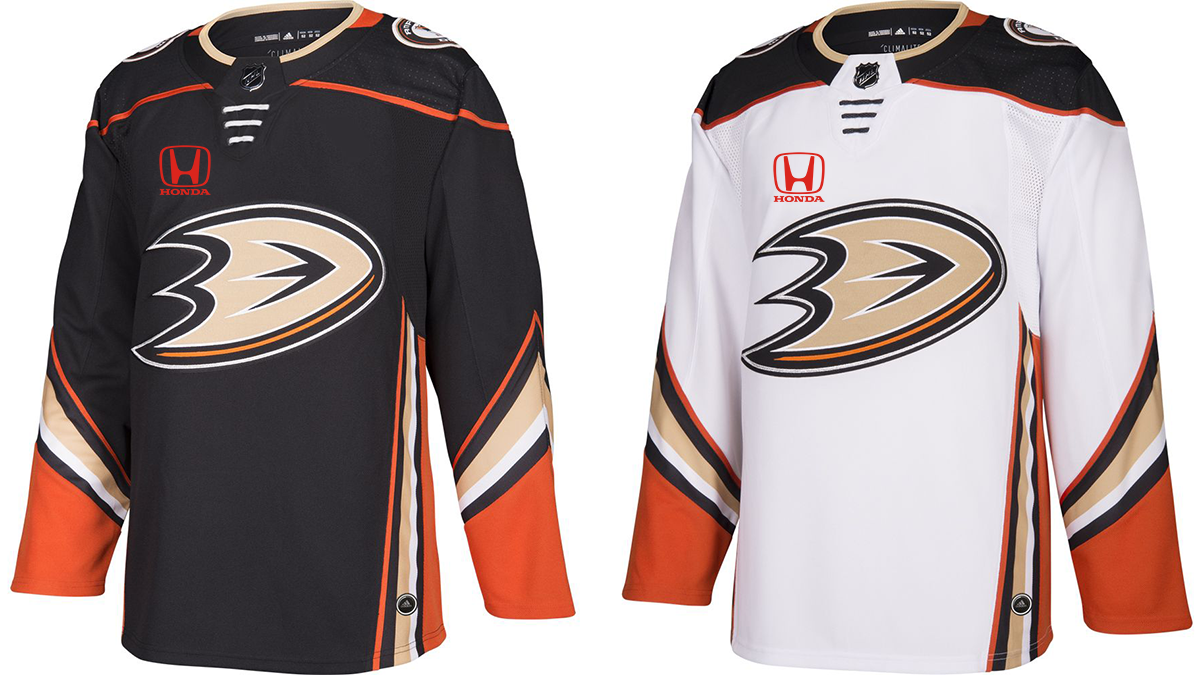
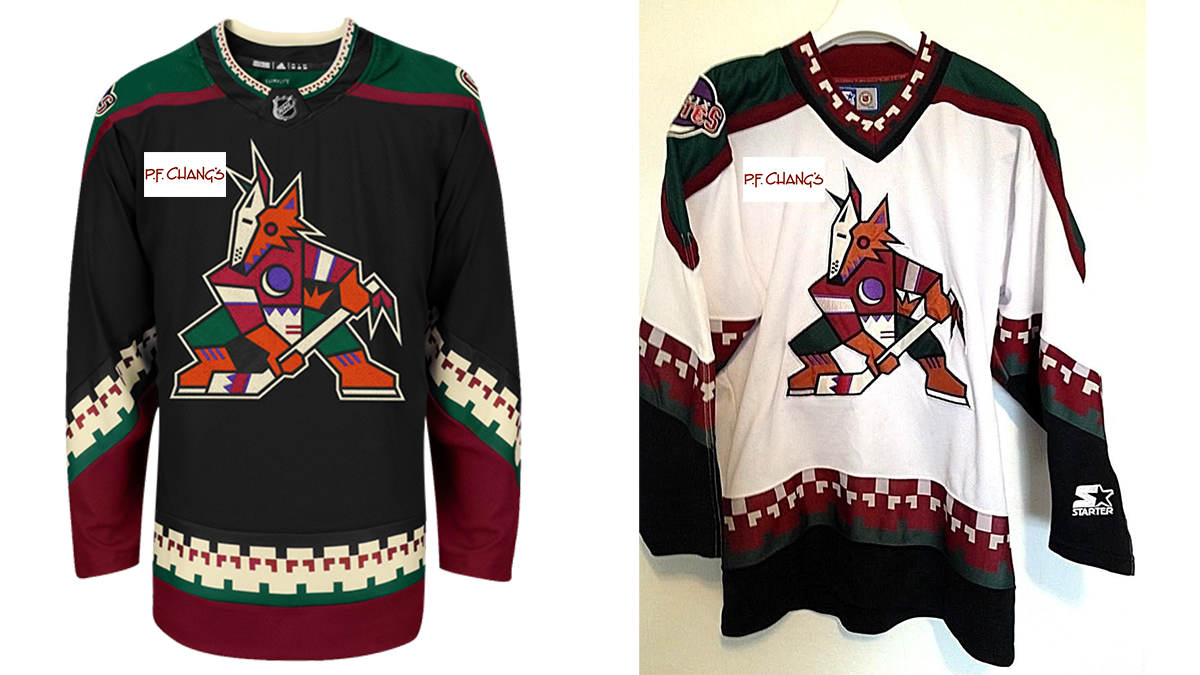
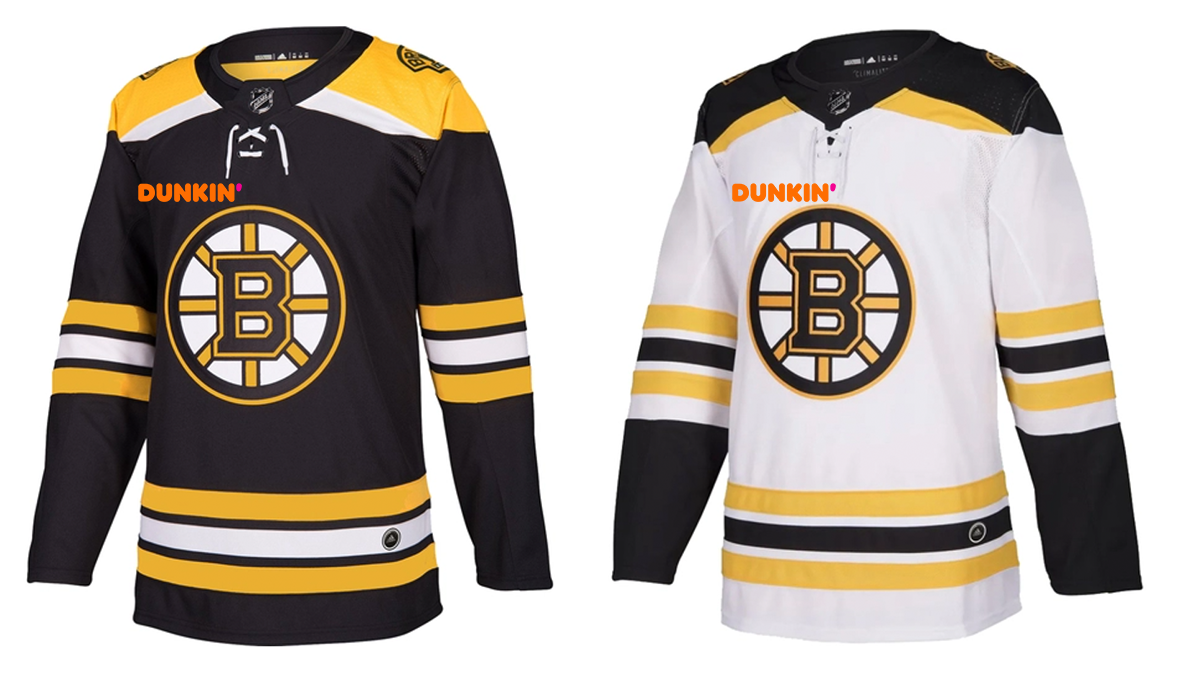

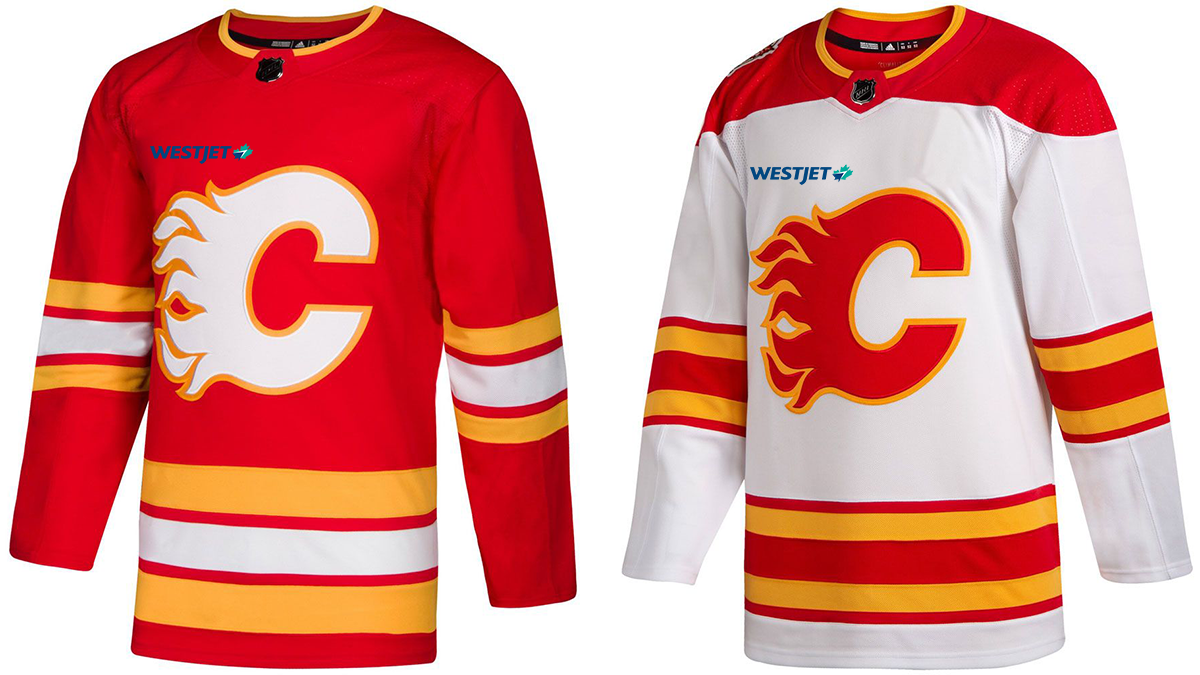
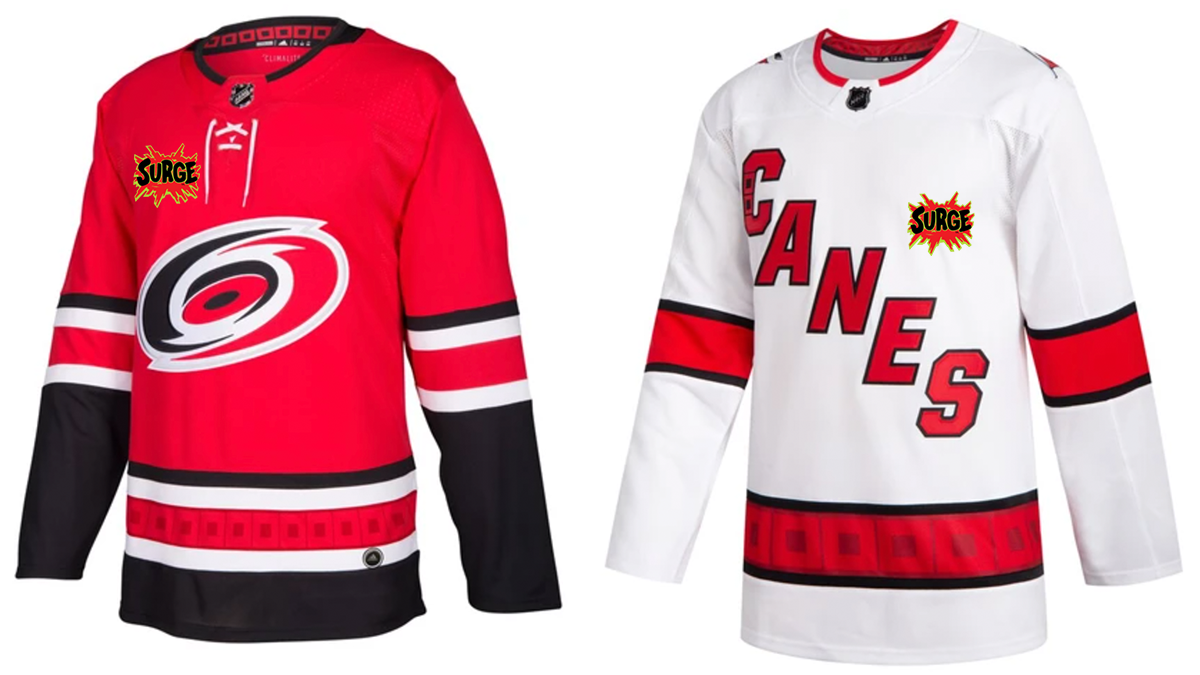
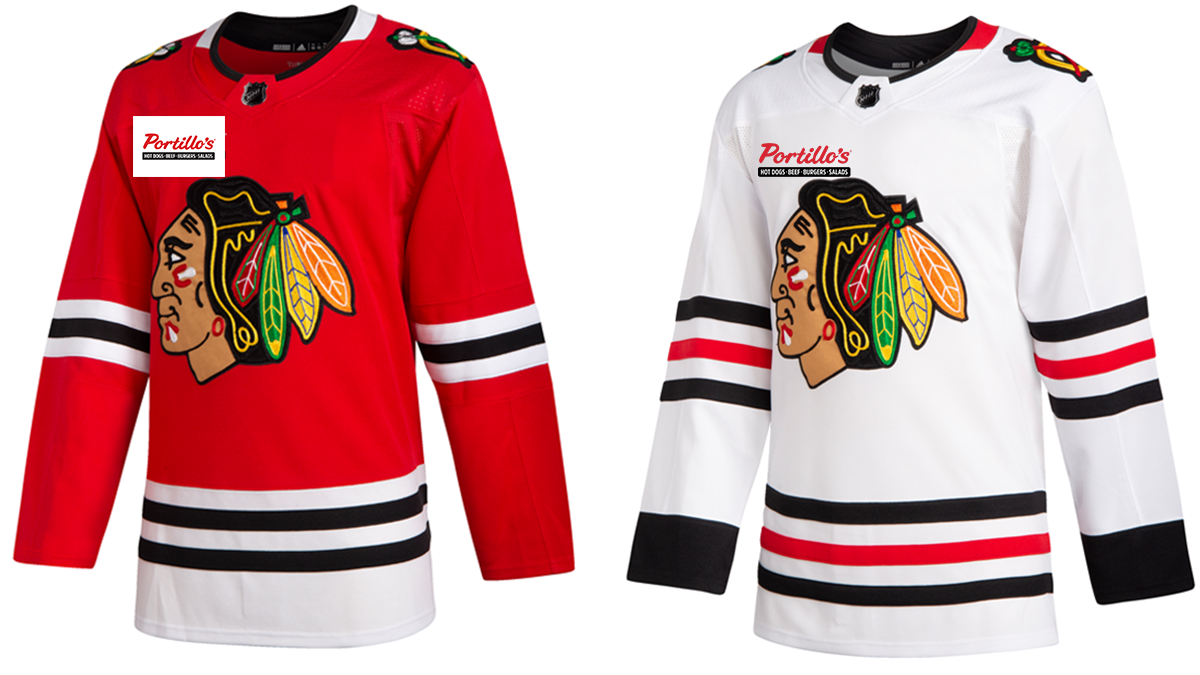


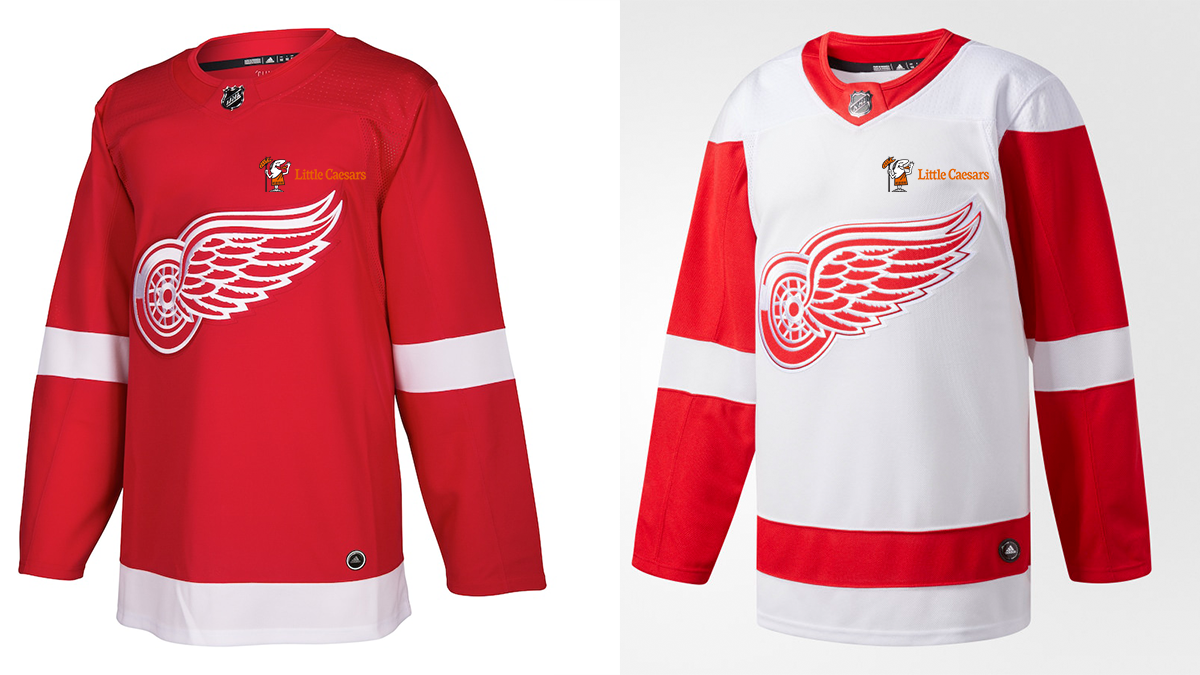


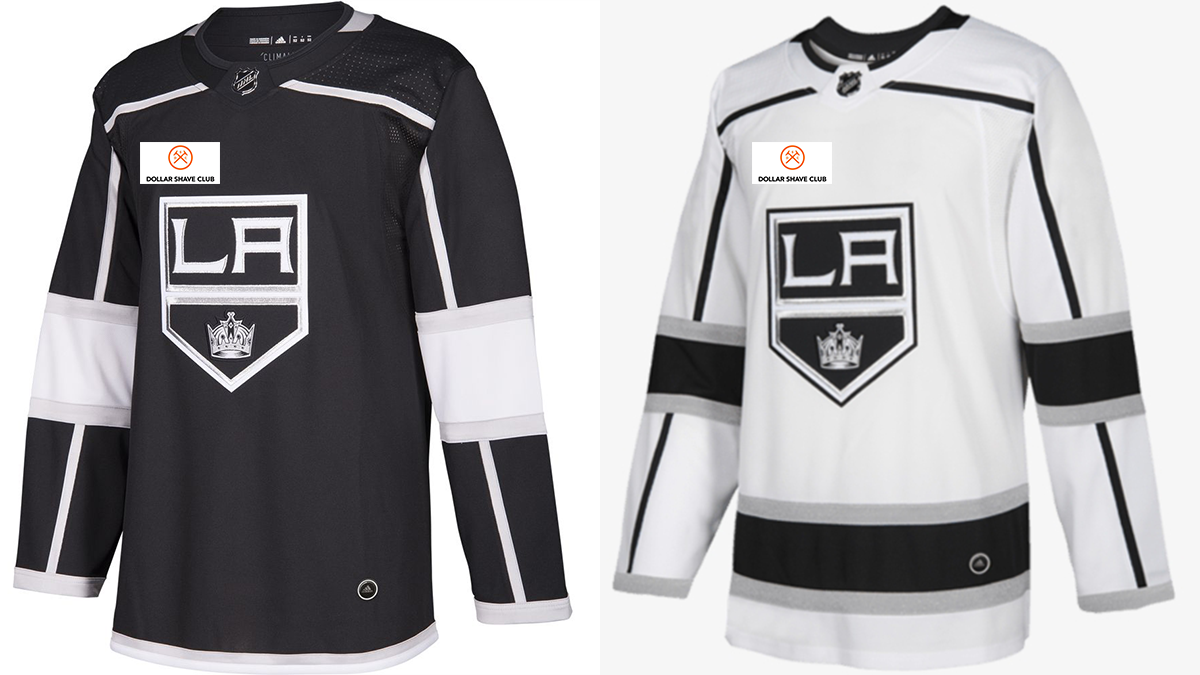
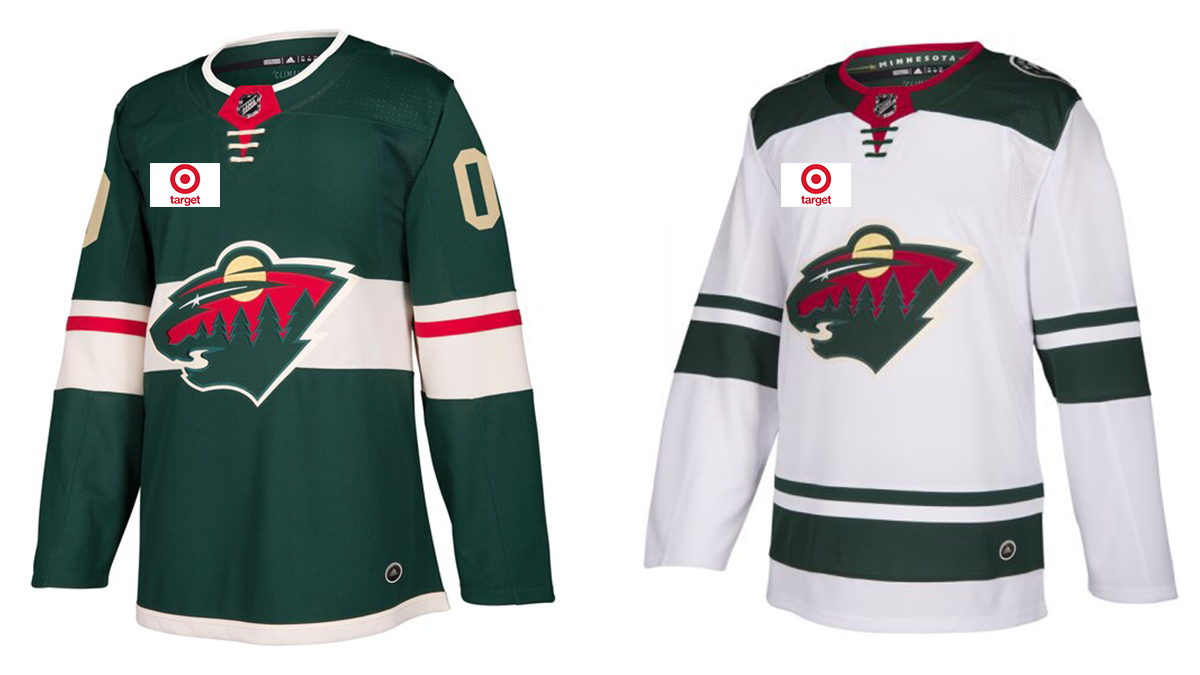

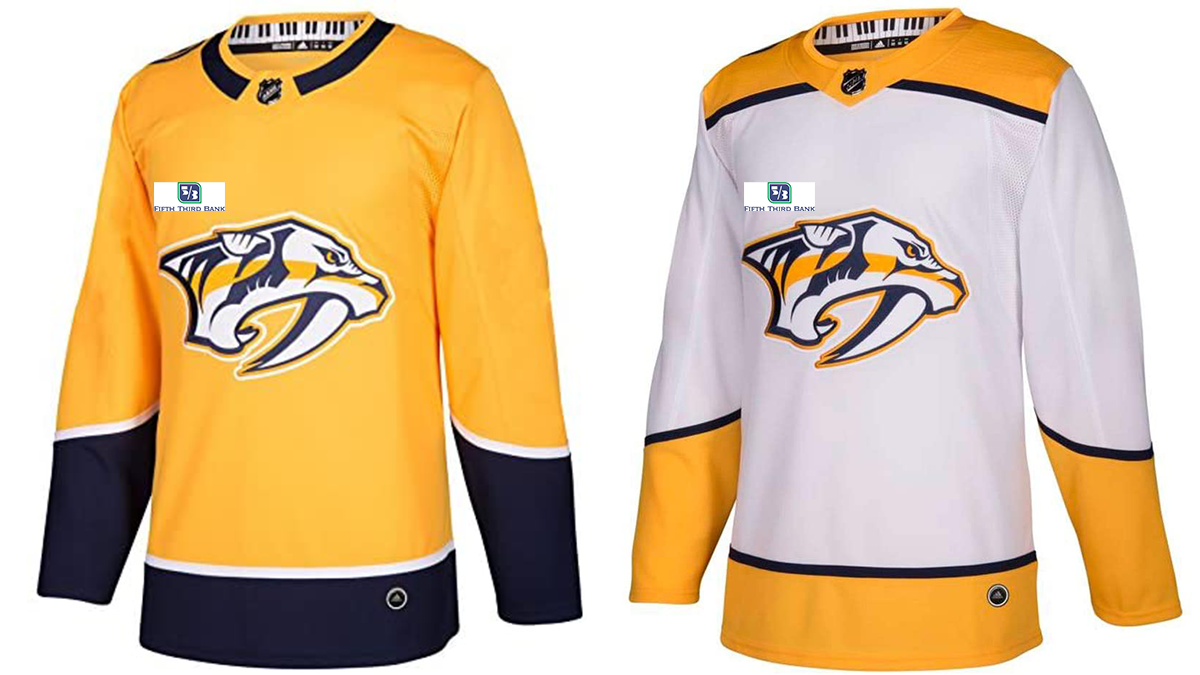
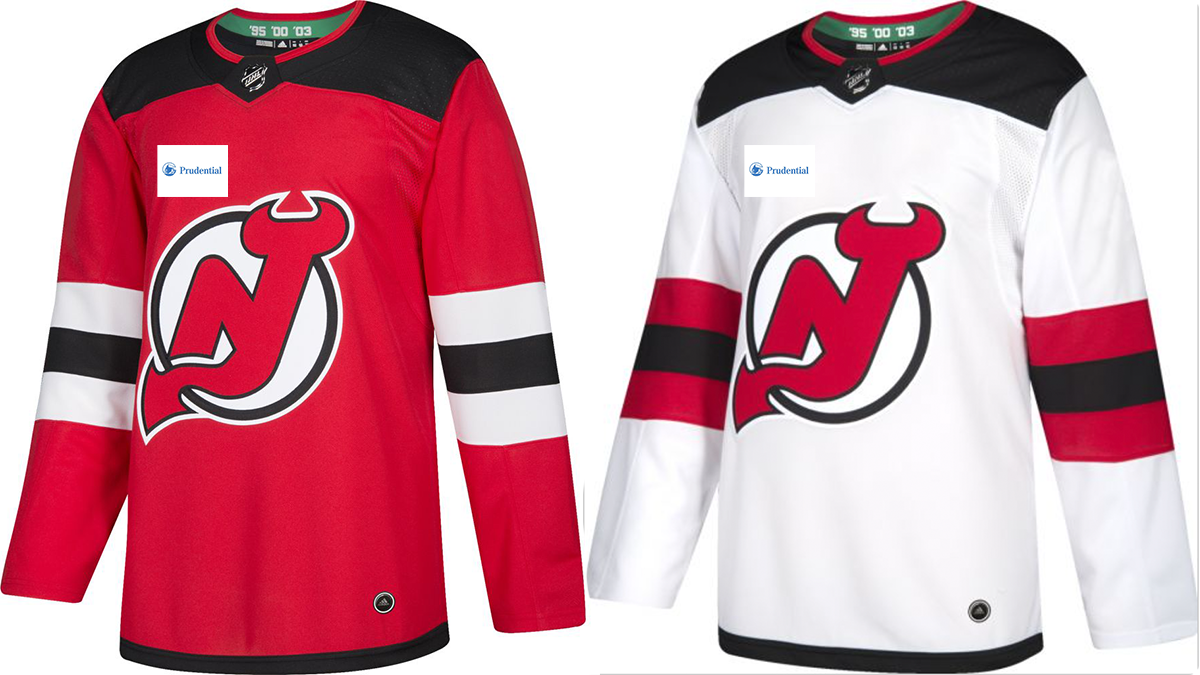



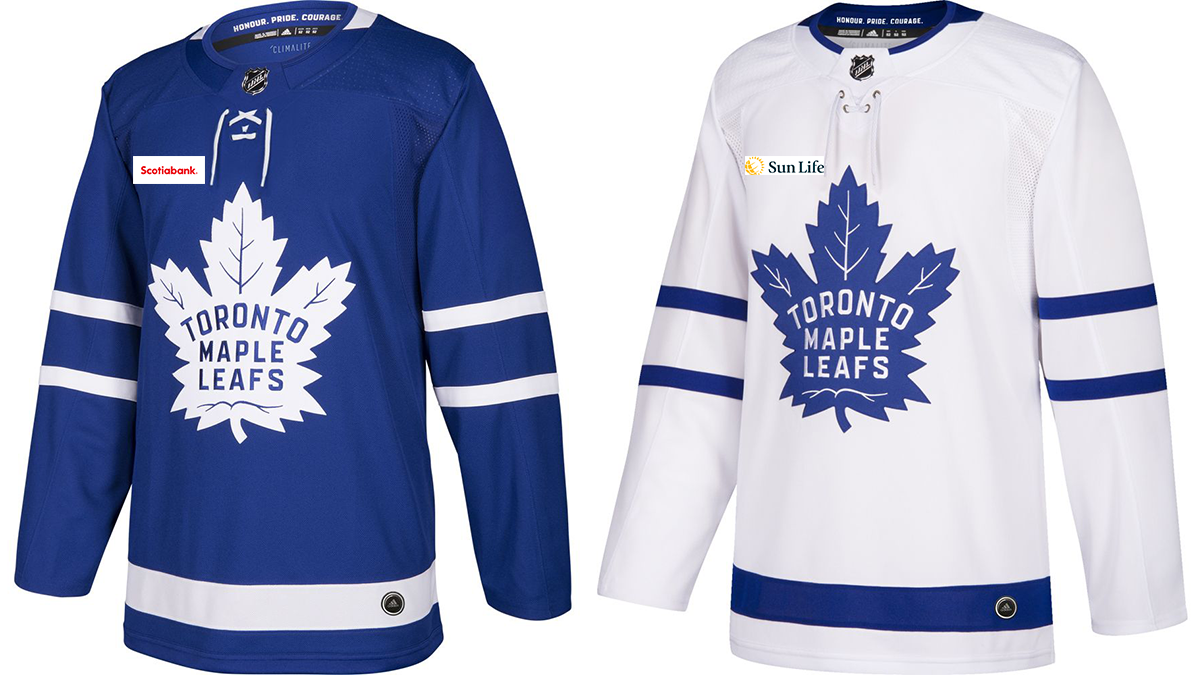
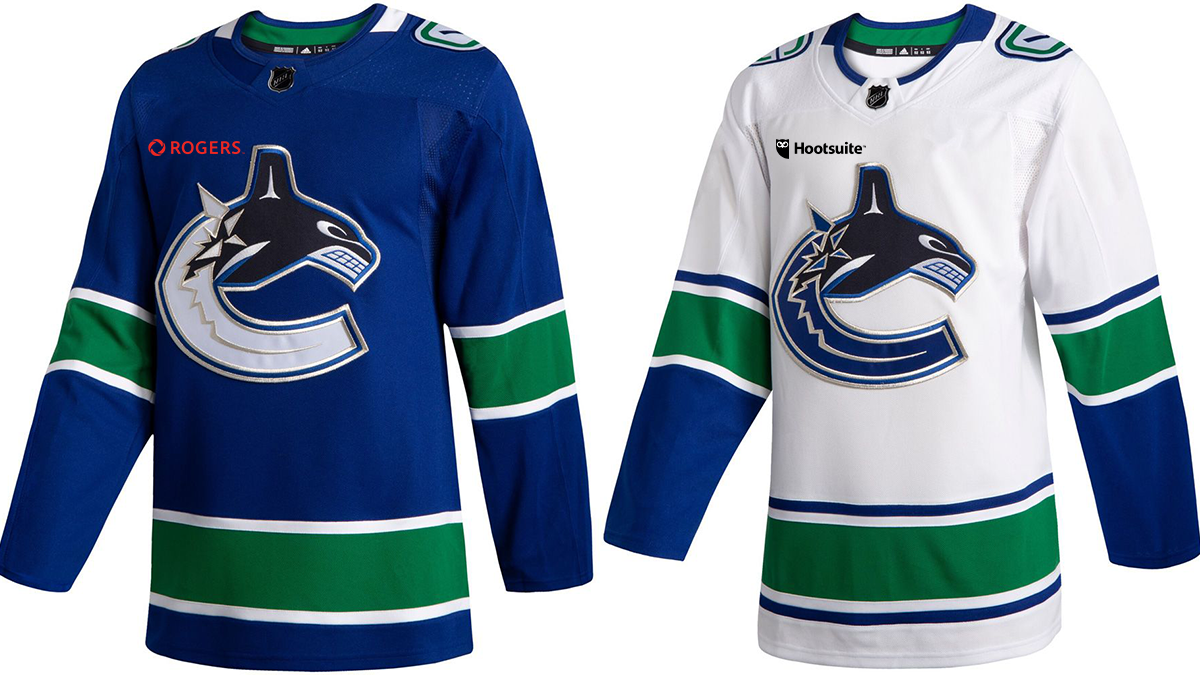
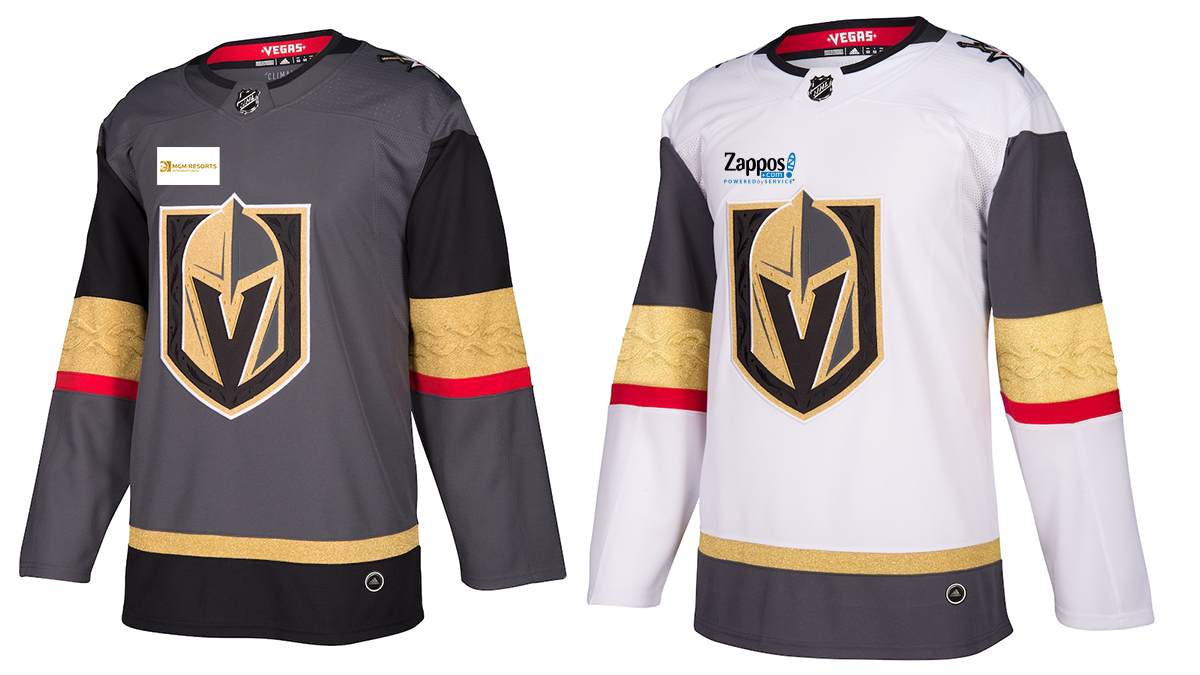


 Down the Frozen River
You must be logged in to post a comment.