Jake DeBrusk scored his first career National Hockey League hat trick to kick things off on a four-point night (three goals, one assist), while Jeremy Swayman made 34 saves en route to his third shutout of the season as the Boston Bruins beat the Los Angeles Kings, 7-0, Monday night at Crypto.com Arena.
Swayman (13-7-3, 1.95 goals-against average, .929 save percentage in 24 games played) turned aside all 34 shots that he faced for his fifth career shutout in the win for Boston.
Los Angeles netminder, Jonathan Quick (14-11-6, 2.67 goals-against average, .909 save percentage in 31 games played) made 14 saves on 19 shots against in 32:40 time on ice before he was replaced by Cal Petersen in the loss.
Petersen (14-7-1, 2.68 goals-against average, .898 save percentage in 23 games played) stopped 11 out of 13 shots faced in relief of Quick for no decision.
The Bruins improved to 32-17-4 (68 points) on the season and remain 4th in the Atlantic Division, while in control of the first wild card spot in the Eastern Conference.
The Kings fell to 29-18-7 (65 points) overall and remain 2nd in the Pacific Division.
The B’s visited Los Angeles for the first time since the 2018-19 season (4-2 loss on Feb. 16, 2019) due to the ongoing COVID-19 pandemic, which also marked the first time Boston faced the Kings in general since the 2019-20 season (4-3 overtime loss on Dec. 17, 2019 at TD Garden).
Bruins head coach, Bruce Cassidy, made no changes to his lineup from Saturday night’s, 3-1, win in San Jose to Monday night’s action in Los Angeles.
As a result, Anton Blidh and Jack Ahcan remained healthy scratches for Boston, while Jakub Zboril (right ACL), Urho Vaakanainen (undisclosed) and Curtis Lazar (upper body) were out of the lineup due to injury.
After a quick entry into the attacking zone for the Kings, Brad Marchand took a hit to move the puck to DeBrusk as the Bruins forward made his way through the neutral zone with speed on the first rush of the game for Boston.
DeBrusk (12) flung a shot on net off of Quick’s glove side and into the twine to give the B’s a, 1-0, lead at 1:01 of the first period– extending his point streak to five games in the process.
By the end of the night, No. 74 in black and gold would amass seven goals and two assists (nine points) in his last five games.
Marchand (30) and Patrice Bergeron (25) tallied the assists on DeBrusk’s first goal of the night– giving Marchand six straight seasons with at least 30 assists in the process on Boston’s first shot of the game.
Midway through the opening frame, DeBrusk (13) sent an indirect catch and release shot from the slot off of Quick’s glove side and into the twine (again) for an unassisted goal that gave the Bruins a, 2-0, lead at 13:37 of the first period.
DeBrusk’s second goal of the game put him in sole possession of fourth places in goals scored this season on Boston’s roster, trailing David Pastrnak (28), Marchand (23) and Bergeron (15).
Less than a couple minutes later, Trent Frederic expressed frustrations with Brendan Lemieux in the exchange of fisticuffs at 15:12 and the two players received five-minute majors for fighting– sending each player to the dressing room early for the first intermission in the 17th fight this season for Boston.
A few minutes later, Blake Lizotte tripped Mike Reilly and presented the Bruins with their first power play of the night at 18:16, but Boston failed to convert on the resulting skater advantage.
Heading into the first intermission, the Bruins led, 2-0, on the scoreboard and, 12-9, in shots on goal.
Boston also held the advantage in blocked shots (7-3) and hits (17-13), while Los Angeles led in giveaways (2-1) and faceoff win percentage (59-41).
The Kings had yet to see time on the skater advantage, while the Bruins were 0/1 on the power play.
DeBrusk (14) got things going again early in the middle frame as he deflected a shot from Bergeron just under the crossbar to give Boston a three-goal lead.
The call on the ice stood as the goal was reviewed but could not be conclusively overturned and DeBrusk earned his first career hat trick– a natural hat trick at that– in the process, while Bergeron (26) and Charlie McAvoy (26) tallied the assists 53 seconds into the second period.
McAvoy’s secondary assist gave him a new career-high in points in a season– surpassing his previous high (32 points) set in 2017-18 and 2019-20.
DeBrusk’s hat trick marked the first hat trick for Boston since Pastrnak recorded a hat trick in a, 3-2, win against the Philadelphia Flyers on Jan. 13th earlier this season.
Moments later, Jesper Frödén cut a rut to the penalty box for holding at 2:23 and Derek Forbort tripped Viktor Arvidsson at 3:02 of the second period– presenting Los Angeles with a 5-on-3 power play for 1:22 before an abbreviated 5-on-4 power play in the remainder.
The Kings, however, couldn’t convert on the skater advantage.
Midway through the period, Sean Durzi was assessed a holding infraction at 11:34.
It didn’t take Boston long to convert on the ensuing power play as Bergeron won the faceoff and the puck worked its way back to the point where Pastrnak unloaded on a blast that Bergeron (15) tipped in front of the net to give the Bruins a, 4-0, lead at 11:40 of the second period.
Pastrnak (24) and Marchand (31) had the assists on Bergeron’s power-play goal as the B’s extended their lead to four goals.
A mere 62 seconds later, Pastrnak sent Taylor Hall (12) through center ice into the attacking zone on his off-wing before riffling a shot from the faceoff dot under Quick’s blocker into the far side of the net.
Pastrnak (25) and McAvoy (27) notched the assists on the goal as the Bruins took a, 5-0, lead at 12:42 of the second period at which point the Kings swapped goaltenders.
Quick left the ice and Petersen strolled over into the crease to hold the fort down for the remainder of the second period, though he would give up a pair of goals in the final frame.
Through 40 minutes of action, Boston led, 5-0, on the scoreboard and, 23-21, in shots on goal, despite trailing Los Angeles in shots on net in the second period alone, 12-11.
The Bruins held the advantage in blocked shots (9-8) and faceoff win% (52-48), while the Kings led in giveaways (5-3).
Both teams had one takeaway each and recorded 23 hits aside, while Los Angeles was 0/2 on the power play and Boston was 1/2 heading into the third period.
Drew Doughty slashed Marchand at 8:12 of the third period and the Bruins cashed in on the resulting power play with one second to spare.
Erik Haula (6) notched his 100th career NHL goal on a shot pass redirection goal from the doorstep courtesy of Charlie Coyle, who recorded his 200th career NHL assist in the process.
Acutally, both Coyle (14) and Craig Smith (13) recorded their 200th career NHL assists on Haula’s 100th career goal in a strange aligning of the universe on one play as the B’s took a, 6-0, lead courtesy of Haula’s power-play goal at 10:11 of the third period.
A few minutes later, Haula (7) scored his second goal of the game on yet another quick shot from the slot as DeBrusk sent the puck to Hall before Hall feigned a give-and-go opportunity for a clearer passing lane to Haula in front of the net.
Hall (27) and DeBrusk (10) tallied the assists as the Bruins took a, 7-0, lead at 13:39 of the third period– marking DeBrusk’s first career four-point night on Haula’s first multi-goal game in a Boston uniform.
There were no more goals and no penalties after Haula scored his second of the game as the Bruins cruised to a, 7-0, shutout in their largest margin of victory this season– scoring seven goals for just the second time this year (previous, 7-3, win on Jan. 10th in Washington, D.C.), while Swayman turned aside every shot he faced.
Boston left Crypto.com Arena with the, 7-0, win despite finishing the night trailing in shots on goal, 34-32, as Los Angeles rallied to a, 13-9, advantage in shots on net in the third period alone.
The Kings left their own ice leading in blocked shots (13-12) and giveaways (9-4), while the Bruins finished the night leading in hits (33-30).
Both teams wrapped up Monday night’s action, 50-50, in faceoff win%, while Los Angeles went 0/2 and Boston went 2/3 on the power play.
The Bruins improved to 22-7-1 (12-3-1 on the road) when scoring first, 20-2-1 (11-1-1 on the road) when leading after the first period and 22-1-2 (14-0-2 on the road) when leading after two periods this season.
The Kings fell to 14-13-4 (6-9-1 at home) when allowing the game’s first goal, 6-10-2 (1-7-0 at home) when trailing after one and 4-12-2 (2-8-1 at home) when trailing through the second period in 2021-22.
The Bruins visit the Anaheim Ducks Tuesday night to close out the month of February as their six-game road trip continues (3-0-0).
Boston kicks off March Thursday night in Vegas and wraps up their road trip in Columbus Saturday before returning home to host the Kings next Monday.
Technically it already started, but we’ll ignore the fact that the Pittsburgh Penguins spoiled the Tampa Bay Lightning’s 2021 Stanley Cup champion banner night with a, 6-2, victory on the road before the Vegas Golden Knights held off a Seattle Kraken comeback in a, 4-3, win at T-Mobile Arena on Tuesday night.
And then Wednesday’s games happened too.
Let’s hit the “reset” button for a second and pretend the 2021-22 is about to get underway. All 32 National Hockey League teams have a chance at clinching 16 available playoff berths.
Any of the 16 teams that make the 2022 Stanley Cup Playoffs could etch 52 names from their roster, front office and organization on the Stanley Cup next June.
The usual divisions– Atlantic, Central, Metropolitan and Pacific– have returned as have the Eastern Conference and Western Conference. The regular playoff format is back (three teams per division, two wild cards per conference qualify, plus the Conference Finals round returns in place of the Stanley Cup Semfinals in 2021).
A full 82-game regular season schedule is slated from October through the end of April with a three-week break in February for the 2022 All Star Game in Las Vegas and the 2022 Winter Games taking precedence before a return to NHL action down the stretch with the postseason kicking off in May like last year and the 2022-23 season likely returning to the pre-pandemic timeline (2023 Stanley Cup Playoffs starting in April).
The 2022 NHL Entry Draft will be in Montréal on July 7th and 8th, while free agency begins on July 13th, but between now and then, we’ve got the 2021-22 regular season to enjoy.
Using last season’s team goals for and team goals against, plus some other “magic numbers” as part of an expected points model, we’re able to project what 2021-22 could be for all 32 teams (yes, even the Seattle Kraken, despite this year being their first season)– though you’ll have to pretend there were no transactions made in the offseason.
In other words, don’t think that any of what you’re about to see is set in stone– view it more as a suggestion for a possible outcome.
Also, please remember my degree is in communication, so any math beyond figuring out “goals + assists = season point totals” doesn’t exist.
In a normal year (like from 2017-18 to 2018-19, for example), you just take all the data from the 82-game schedule for each team plug it into a formula in a spreadsheet, then line things up accordingly in each division.
However, just like how the shortened 2019-20 season disrupted the regular process for projecting a 2020-21 standings outlook, going from last season’s stats in a 56-game schedule to projecting a regular 82-game season in 2021-22 necessitated the use of forecasting point pace as part of the formula.
As for Seattle, a simple means of taking the NHL stats from last season for every player on their roster and plugging it in for a 2021-22 result is exactly what I did.
We’re all just making it up as we go along, folks. These are projections. They are not absolutes.
For the sake of keeping it simple, here’s a look at how things could go (but probably not) in each division for the upcoming 2021-22 season.
The overall vibe of the Central Division for 2021-22 is that it’s just more of exactly what you’d expect. The Colorado Avalanche are lightyears ahead of everyone else, while Kirill Kaprizov and the Minnesota Wild continue to be on the rise and everyone else fights for what they can earn.
Meanwhile, the jury is still out on whether or not the Winnipeg Jets can breakthrough as Canada’s team and break the Canadian curse (become the first Canadian club to win the Cup since 1993).
Will Coloradofinally break through the Second Round and win the Cup?
Are the Avalanche just the Toronto Maple Leafs but with a little more success? My column:
No, but really, it’s worth asking if the Avs making it back to the Western Conference Final for the first time since 2002, is more like Toronto’s struggle to make it out of the First Round for the first time since 2004, or is Colorado’s struggle more like the Washington Capitals pre-2018?
The Caps won three Presidents’ Trophies in 2009-10, 2015-16 and 2016-17, but couldn’t make it past the Second Round– let alone the Pittsburgh Penguins– until they finally did and ended up surging in momentum all the way to their first Stanley Cup in franchise history.
Colorado, on the other hand, has already won the Cup twice (1996 and 2001) and also has three Presidents’ Trophies to their name in 1996-97, 2000-01 and 2020-21, so if recent history has anything to tell us it’s that yet another team with high expectations for at least a few seasons now only to come up short could very well go on to win it all after winning the Presidents’ Trophy the previous year.
Either that or they’ll have to win it in back-to-back seasons like Washington did before they won the Cup in 2018.
Then again, the Tampa Bay Lightning tied the Detroit Red Wings’ record for most wins in the regular season (62), securing the Presidents’ Trophy in the process in 2018-19, then got swept by the Columbus Blue Jackets in the 2019 First Round.
The very next year, however, Tampa kicked off back-to-back Cup rings in 2020 and 2021, to be where they are now as the two-time defending champions likely standing in the path as the only other favorites outside of the Avalanche this season.
Anyway, the Avs mostly kept things the same from last season to this season, losing Joonas Donskoi to the Seattle Kraken in the 2021 NHL Expansion Draft, Brandon Saad to the St. Louis Blues in free agency and making minor swaps among replacement level bottom-six forwards and bottom-pairing defenders.
Oh, then there’s this whole thing about how Philipp Grubauer left for Seattle in free agency too, so Colorado acquired Darcy Kuemper from the Arizona Coyotes.
Between Dallas, Nashville and St. Louis, who will realistically make the playoffs?
The Stars are projected to finish with about 94 points, the Predators sit at 92 points and the Blues are around 91 points in this one projection, but don’t let the points alone be your deciding factor.
Given the strength of the Central Division compared to the Pacific Division, you can bet on five teams making out of the Central among Western Conference playoff berths.
As such, the spread is the difference maker between these three teams expected to be in the wild card hunt– it’s going to come down to the wire one way or another.
Dallas bolstered their goaltending depth by signing Braden Holtby, Nashville traded Ryan Ellis to the Philadelphia Flyers and St. Louis is… …better than last season on paper?
I mean, the Blues signed Saad, acquired Pavel Buchnevich from the New York Rangers in exchange for Sammy Blais, let Seattle claim Vince Dunn at the expansion draft and let Mike Hoffman walk to the Montréal Canadiens in July.
You could say they took a hit here or there, but those aren’t “nobody names” by any means, however.
If Jordan Binnington and Ville Husso can stabilize things in the crease, then St. Louis has a better situation than the Predators.
The Stars, meanwhile, should benefit from a longer season where more of their core guys– like Tyler Seguin, for example– are healthy. Last season’s COVID-19 outbreak to kick things off in January really killed Dallas’ momentum as a team on the verge of being in the 2021 postseason.
Dallas should get back into the swing of things and St. Louis should be able to stay relevant for at least another year, but how hard the Preds rely on Juuse Saros as their starting goaltender will dictate whether or not they’re able to play spoiler with David Rittich as their backup since Pekka Rinne retired.
Can Arizona avoid the basement?
Anything is possible at this point. Loui Eriksson and Andrew Ladd were scoring goals in the postseason, so a fresh start could be just what both players needed for the last few years at least.
That said, Coyotes General Manager, Bill Armstrong, gave a Masterclass™️ in how to go about rebuilding by selling everything over the summer and taking on “bad” contracts with only one or two years remaining in hopes of playing just well enough to be bad enough without making it look obvious that you’re aiming to win the 2022 NHL Draft Lottery.
The Pacific Division is the new Scotia NHL North Division from last season. In other words, it’s the worst– which is great news for the Seattle Kraken as the league’s schedule allots more division play than any other opponents (though the Kraken will play every other team in the league at least twice).
Seattle’s riding the waves of new-age expansion, while the Vegas Golden Knights lead the charge for the Presidents’ Trophy campaign in 2021-22.
Wait, Seattle in 2nd in the Pacific, really?
Yes, really.
The Kraken have a great front office that goes beyond just Ron Francis as General Manager and have done their due diligence in scouting the best talent available to try to replicate the success of the Vegas Golden Knights’ inaugural season in 2017-18, as well as grow beyond just 2021-22.
That said, Seattle probably isn’t going to make it out of the First Round of the 2022 Stanley Cup Playoffs, even if they have to face the Edmonton Oilers according to this projection.
It’s a best case scenario for the NHL’s newest expansion team to be in the weakest division, but aside from having recent Stanley Cup champions Yanni Gourde, Philipp Grubauer, Jaden Schwartz and Dunn on their roster, the Kraken have a plethora of players that are relatively inexperienced with deep postseason runs.
Head coach, Dave Hakstol, also hasn’t had the consistency of making the playoffs and making it out of the First Round in his NHL coaching days, but as a team that, again, is looking to develop long-term success, these are mere growing pains Francis and Co. are willing to accept as the fan base grows.
Why aren’t the Kings making the cut this year when everyone else says they’ll be the most improved?
The simple answer is that everyone’s overrating Los Angeles when it comes to the “ready now” factor.
Sure, Kings General Manager, Rob Blake, did a good thing by getting Viktor Arvidsson in a trade with Nashville this summer to solidify his top-six forward group and signed Alex Edler to fortify his defense, but Los Angeles’ goaltending leaves something to be desired.
Here’s hoping Jonathan Quick can find a little resurgence at this point in his career, while Cal Petersen continues to come into his own.
If Los Angeles has any injuries– and they already have with Arvidsson likely missing some time due to an injury in the last preseason game– they’re already close enough to the bubble that they’ll only fall further behind.
That said, if the Kings don’t make it back to the postseason hunt in 2022, there’s a good chance they make it in 2023.
Los Angeles is improving, but by how much remains to be seen.
Will winning the Presidents’ Trophy hurt Vegas?
Eh, it’s hard to say.
The Golden Knights have packed in just about every type of heartbreak since their inception in 2017, that fans of other franchises have only experienced over the course of at least 50 years, so if Vegas pulls out the Presidents’ Trophy win in 2021-22, don’t be surprised when the inevitable happens and they win the Cup instead of doing what most other Presidents’ Trophy winners in the salary cap era have done.
Only the 2007-08 Detroit Red Wings and Chicago in 2012-13, have been able to win the Presidents’ Trophy and the Stanley Cup since the salary cap was introduced ahead of the 2005-06 season.
Vegas would probably join Detroit and Chicago in doing so just so the Hockey Gods can spite us again.
It’s not easy to be in the Metropolitan Division these days because, well, let’s save that for the three questions below.
Is this the toughest division to project?
Absolutely.
The Carolina Hurricanes decided to just get rid of a few parts and pieces that helped make them good for the last few seasons, so they’re bound to regress even with Sebastian Aho, Andrei Svechnikov, Teuvo Teräväinen and Martin Necas still existing.
The Pittsburgh Penguins since 2009, have always found a way to be near the top of the division standings by the end of the regular season no matter whether or not you believe they’ll inevitably miss the playoffs for the first time since 2006, so anything could happen there.
The New York Islanders have made back-to-back appearances in the Eastern Conference Final, so I’d expect them to be good.
The Washington Capitals are better than the Philadelphia Flyers and New York Rangers, at least, but are probably the only team on the bubble if the New Jersey Devils can come out of nowhere and be competitive this season after signing Dougie Hamilton, Tomas Tatar and Jonathan Bernier in the offseason.
Meanwhile, it’s time for a short rebuild in Columbus as the Blue Jackets would be quite pleased with a top draft pick in 2022.
What if Chris Drury never was promoted as General Manager of the Rangers?
They’d still fire David Quinn and hire Gerard Gallant. I don’t think that’s such a bad idea, but they’d definitely reconsider about 90% of the roster decisions made this summer.
There’s no reason why the Rangers have to go down this path and yet, here they are, fumbling at the one-yard line and possibly plunging their franchise back into the Dark Ages of another rebuild. Or is it the same ongoing rebuild?
What about a team to watch like New Jersey, for example?
I’m big on the Devils this season for some strange reason.
Maybe it’s because a part of me deep down misses the trap game of the 1990s and 2000s that led to Stanley Cups for New Jersey in 1995, 2000 and 2003.
Maybe it’s because they signed Hamilton, Tatar, Bernier and acquired Ryan Graves from the Colorado Avalanche as a supporting cast for Jack Hughes, Nico Hischier, Pavel Zacha, Yegor Sharangovich, Ty Smith and friends.
Seriously, the Devils should be good in the next few seasons, but this year could be the biggest stride forward in terms of their improvement from the basement to their development as a playoff contender.
First, pour one out for Jack Eichel. Now, let’s move on and talk about everyone else.
What does this mean for the Leafs?
Just like how the Stars, Preds and Blues are all right on top of one another in the Central Division standings, the Atlantic Division is stacked from 1st through 4th, so though Toronto leads the way in this projection, I wouldn’t feel too comfortable as a Leafs fan.
The Maple Leafs played in the worst of the four divisions last year in the temporarily realigned divisions in wake of the ongoing pandemic.
No, it’s not just because they played all the other Canadian teams across 56 games, but rather it’s due to the fact that they haven’t been able to matchup with the Tampa Bay Lightning, Florida Panthers and even the Boston Bruins since the 2019-20 season.
A lot and not a lot has changed since then.
Tampa is still dominant as ever, Florida has emerged as a team that’s on the rise and Boston is unpredictable in that– much like the Penguins– it could really go either way with the Bruins this season.
So now Toronto has to take on better competition within their own division and square off with teams like the Vegas Golden Knights, Colorado Avalanche, New York Islanders and others that emerge towards the top of the standings outside of the Canadian teams that the Leafs are all too familiar with at this point.
That said, Toronto still has a great chance at winning the Atlantic Division regular season title or finishing 2nd and having home ice advantage in the First Round for the second-straight postseason.
Can anyone other than Toronto, Florida, Tampa or Boston make it out of the Atlantic this year?
No. Let’s be realistic here.
The Montréal Canadiens made it to the 2021 Stanley Cup Final despite being below .500 in the standings because every division produced four playoff berths and intra-divisional play through two rounds.
In 2020, they upset the Pittsburgh Penguins in the Qualifier despite finishing right at .500.
In any other non-pandemic timeline, the Canadiens would still be looking for their first playoff appearance since they lost to the New York Rangers in six games in the 2017 First Round.
That’s not to say that Nick Suzuki can’t lead the Habs back to glory, but rather that they need to improve all-around in the regular season and peaking in performance in the playoffs.
Though the Ottawa Senators promised unprecedented success from 2021-25, it’s looking like it’ll realistically be anytime between 2024-25 as in the 2024-25 season itself at this point.
Ottawa’s goaltending needs to improve, their defense could use some tweaks and the Sens are banking on their offense getting their feet underneath them and bursting in production in the coming years.
A little more patience won’t hurt them.
The same can be said for the Detroit Red Wings in that Red Wings fans already know– trust in General Manager, Steve Yzerman, is paramount. He’ll work his magic.
It just takes a little time to build a solid foundation and the first floor is almost ready to start going up.
As for the Buffalo Sabres, well…
At least they’ll hopefully give Rick Jeanneret a proper send-off before he retires as their play-by-play announcer for the last 51 years on television.
Hopefully.
Will Tampa win three consecutive Stanley Cup championships?
Probably not.
I’m not ruling it out entirely, but the Lightning have a better chance of winning three Cups in four years than they do three Cups in as many years as things stand currently.
The loss of their entire third line (Blake Coleman, Yanni Gourde and Barclay Goodrow) from last season to this season is sure to leave a mark on the development and restructuring of their bottom-six forwards.
That said, Tampa’s top-six forwards still exist and, if you haven’t already noticed, they’re very good on their own, but the best teams in the playoffs have four lines that can roll without a doubt and the Bolts might just be off the ball for a year in terms of depth.
Alright, if you’ve made it this far, thanks for your patience. By now the season’s already going on a few days into the 2021-22 calendar, so the two of us (or more if you’re reading this to a group) should probably get back to watching games.
Stay tuned for more forecasts for both standings and assorted teams throughout the season.
Additions: F Viktor Arvidsson (acquired from NSH), F Brayden Burke (acquired from ARI), F Phillip Danault, F T.J. Tynan, D Alexander Edler, G Garret Sparks
Subtractions: F Michael Eyssimont (signed with WPG), F Bokondji Imama (traded to ARI), F Matt Luff (signed with NSH), F Tyler Steenburgen (acquired from ARI, signed Liiga), D Mark Alt (signed with San Jose Barracuda, AHL), D Daniel Brickley (signed with Chicago Wolves, AHL), D Cole Hults (traded to ARI), D Kurtis MacDermid (expansion, SEA), G Troy Grosenick (signed with BOS)
Still Unsigned: F Drake Rymsha
Re-signed: F Lias Andersson, F Andreas Athanasiou, F Blake Lizotte, F Trevor Moore, D Kale Clague, D Jacob Moverare, D Austin Strand, D Christian Wolanin
Offseason Analysis: The Kings looked competitive and ahead of schedule, but couldn’t carry the momentum down the stretch and make a surprise appearance in the playoff hunt.
Los Angeles has a great pool of prospects and Quinton Byfield is shaping up to make an impact in his first full season, while General Manager, Rob Blake, was tasked with finding the right fit for a few pieces in the offseason that very well might put the Kings over the edge and back into Stanley Cup Playoff contention.
In a few years, they might be trending down the path of a Cup contender instead of going through a long, strenuous, rebuild.
Despite Anze Kopitar’s $10.000 million cap hit (which runs through 2023-24) and Drew Doughty’s $11.500 million cap hit (which expires after the 2026-27 season), Los Angeles was able to add without subtracting and could salvage the remnants of Jonathan Quick and Dustin Brown from the Kings’ glory days to their current days while Cal Petersen continues to emerge in the crease.
The addition of Alexander Edler on a one-year, $3.500 million contract brings some stability to the blue line and valuable experience to leave an impression on the younger defenders, like Michael Anderson and Tobias Björnfot.
Edler’s presence and shot blocking capabilities should also prove vital in shaping how guys like Olli Määttä, Matt Roy, Sean Walker and Christian Wolanin– already in their defensive primes– compete with each other for their jobs and evolve.
But Edler alone wasn’t the biggest move that Blake made in the offseason.
Sure, there’s the Viktor Arvidsson trade that brings the 28-year-old winger to Los Angeles after breaking into the league with the Nashville Predators in the 2014-15 season and scoring 10-15–25 totals in 50 games in 2020-21 with the Preds, but Blake went a step further and found the answer to a hole down the middle.
The Kings signed Phillip Danault to a six-year contract worth $5.500 million per season, bringing the 28-year-old Victoriaville, Québec native to Los Angeles’ second line for a good stretch of his prime.
Though his production was down from 47 points (13 goals, 34 assists) in 71 games with the Montréal Canadiens in 2019-20 to 5-19–24 totals in 53 games with the Habs in 2020-21, Danault has reached 40 or more points in three out of his last five seasons with varying degrees of talent around him.
Now in Los Angeles, Danault could suit up between guys like Alex Iafallo, Arvidsson, Adrian Kempe or Brown– bringing a balance of youth, speed, experience and playmaking abilities to go with the scoring prowess of any of the aforementioned wingers.
Arvidsson and Danault bring more of a two-way, contemporary, game that aligns well with Kopitar’s two-time Frank J. Selke Trophy winning style
Brown recorded 17 goals in 49 games last season, while Iafallo had 13 goals in 55 games and Kempe notched 14 goals in 56 games. There’s no reason to believe that all three players can’t reach the 20-goal plateau in a full 82-game schedule.
But for all the improvements made among their skaters, the Kings might continue to encounter some growing pains in net as Petersen continues to make his mark on the league as a starting goaltender, while Quick’s dominant days wane in the twilight of his career.
Petersen went 9-18-5 in 35 games last season and had a 2.89 goals-against average, as well as a .911 save percentage in that span.
Through 54 games at the NHL level, Petersen has a career 2.79 goals-against average and a career .916 save percentage and only one shutout.
For comparison’s sake, Quick has a 2.81 goals-against average in his last two seasons combined (64 appearances), but a .902 save percentage in that span.
Quick was Los Angeles’ starter in 2019-20 and had a 16-22-4 record in 42 games played with a 2.79 goals-against average and a .904 save percentage in that span, as well as one shutout.
Last season, Quick went 11-9-2 in 22 games and recorded two shutouts to go along with his 2.86 goals-against average and an .898 save percentage.
For all the promise that Petersen showed in his collegiate days at Notre Dame, he’s yet to make the transition to the professional game and as the years go by, so does his chance at emerging in the average goaltending prime.
If Los Angeles is to make the playoffs next season, Petersen will need to improve.
If the Kings falter, Petersen still has a chance at redeeming himself, though he won’t see much of a pay raise next offseason– but he could still be a late bloomer and sign a short-term bridge extension, awaiting a larger payday after sustained success and better numbers at the NHL level.
This is where it’s important to note that Petersen is a pending-unrestricted free agent come July 1, 2022, while Quick’s contract expires after the 2022-23 season.
If winning with the remnants of their 2012 and 2014 Stanley Cup championship core is important to the Kings, then winning again sooner rather than later is paramount.
Offseason Grade:A-
The Danault signing alone is an exceptionally good contract for a player that could really come into his own with the depth and talent of the Kings around him.
Blake’s given Todd McLellan some better pieces to work with– now it’s up to Los Angeles’ head coach to find the right chemistry among his players to get them back into the hunt.
The return of the usual division alignments for 2021-22 is a welcome sign for the Kings’ chances of making the playoffs in 2022, as they should be better than their counterparts in California, as well as the rebuilding Arizona Coyotes and stagnant teams north of the border in Vancouver and Calgary.
Now as for how far things will go? Well, that depends on if they make the playoffs first and whether or not Los Angeles lucks out having to face a relatively inexperienced team in the postseason.
Zdeno Chara signed with the Washington Capitals, the AHL announced plans for the 2020-21 season, the NHL divisions are sponsored for 2020-21, what’s going on with the New York Islanders, Pierre-Luc Dubois wants out (maybe) and we preview the West Division for the 2020-21 season.
For the first time since 2004, the Tampa Bay Lightning are Stanley Cup champions.
Gone are the days of choking in the 2015 Final, the 2016 and 2018 Eastern Conference Final or being swept in the 2019 First Round.
Open a window– make it a championship window– and see just how long the good times will last (there’s going to be some salary cap stuff to figure out for 2020-21 and beyond, but worry about that later).
For now, raise a socially distant glass on Zoom or whatever and celebrate responsibly as the Bolts downed the Dallas Stars, 2-0, in Game 6 at Rogers Place in Edmonton to win the series 4-2 and bring the Cup back to Tampa for the second time in franchise history.
Brayden Point’s power-play goal in the first period held up to be the game-winning, Stanley Cup clinching goal as Blake Coleman added an insurance marker in the middle frame.
Victor Hedman became the second player in Lightning franchise history to win the Conn Smythe Trophy as the 2020 postseason’s most valuable player.
Hedman’s also the third player from Sweden to win the Conn Smythe and the 10th different defender to win it in league history, joining Duncan Keith (2015), Scott Niedermayer (2007), Nicklas Lidstrom (2002), Scott Stevens (2000), Brian Leetch (1994), Al MacInnis (1989), Larry Robinson (1978), Bobby Orr (1970 and 1972) and Serge Savard (1969) in the process.
He also had 10 goals in the 2020 postseason, which were the most by a defender since Leetch had 11 in 23 games with the 1994 Stanley Cup champion New York Rangers.
Lightning goaltender, Andrei Vasilevskiy (18-7, 1.90 goals against average, .927 save percentage in 25 games this postseason) earned his first career Stanley Cup Playoff shutout in his 58th career postseason appearance– stopping all 22 shots faced en route to winning the Cup Monday night.
Dallas netminder, Anton Khudobin (14-10, 2.69 GAA, .917 SV% in 25 games this postseason) had 27 saves on 29 shots against (.931 SV%) in the loss.
Dallas interim head coach, Rick Bowness, didn’t change a thing from his lineup after winning in double overtime, 3-2, in Game 5 on Saturday to Monday night’s action in Game 6.
As a result, Radek Faksa, Blake Comeau, Jason Robertson, Roope Hintz, Stephen Johns, Ben Bishop, Landon Bow, Taylor Fedun, Gavin Bayreuther, Thomas Harley and Ty Dellandrea remained out of the lineup due to injury or otherwise.
Prior to Game 6 on Monday, Steven Stamkos was ruled out of the rest of the Final by the Lightning on Sunday.
Tampa’s head coach, Jon Cooper, inserted Alexander Volkov on Stamkos’ slot on the fourth line right wing (where Carter Verhaeghe played in Game 5 after Stamkos returned for Game 4 before re-aggravating an injury forced him out of the lineup).
On defense, Kevin Shattenkirk was bumped up to the first pairing with Hedman, while Jan Rutta joined the list of scratches as Zach Bogosian took over Shattenkirk’s role on the third pairing with Ryan McDonagh.
Everything else was the same for the Bolts.
Tampa’s list of scratches on Monday included Luke Schenn, Mathieu Joseph, Verhaeghe, Scott Wedgewood, Rutta, Braydon Coburn, Mitchell Stephens and Stamkos.
Early in the opening frame, Andrew Cogliano tripped up Point and was assessed a minor infraction at 6:32 of the first period.
Tampa wasn’t able to convert on their first power play opportunity of the night, but soon found themselves back on the skater advantage at 11:58, after John Klingberg tripped Volkov.
Less than a minute into the ensuing power play, Point (14) gathered his own rebound and scored on the far side while Khudobin was caught thinking the puck was trapped between his arm and his body.
Nikita Kucherov (27) and Hedman (12) tallied the assists on Point’s power-play goal at 12:23 of the first period and the Lightning led, 1-0.
The goal was Point’s fifth of the series and set a franchise record for the most goals in one postseason by a Tampa player as Point surpassed Tyler Johnson’s previous mark of 13 goals in Tampa’s 2015 Stanley Cup Playoffs run, which ended in a loss to the Chicago Blackhawks in six games in the Stanley Cup Final that year– the most recent time the Bolts made the Final before beating Dallas in six games on Monday night.
Kucherov’s primary assist on the goal also assured him of the fifth most assists (27) in a playoff year in NHL history, trailing Wayne Gretzky (31 assists in 1988), Gretzky again (30 assists in 1985), Gretzky for a third time (29 in 1987) and Mario Lemieux (28 in 1991).
Late in the first period, Hedman interfered with Stars forward, Corey Perry, and received a minor penalty at 18:36, but Dallas’ first power play opportunity did not go well.
Through one period of action in Edmonton on Monday night, the Lightning led, 1-0, on the scoreboard and, 11-4, in shots on goal.
The Bolts also held the advantage in takeaways (1-0), hits (18-12) and faceoff win percentage (60-40).
The Stars, meanwhile, led in blocked shots (8-5) and giveaways (7-5).
Tampa was 1/2 on the power play, while Dallas was 0/1 on the skater advantage heading into the first intermission.
Almost midway through the middle frame, Coleman (5) received a pass through the high slot from Cedric Paquette and fired a one-timer past Khudobin to extend Tampa’s lead to two-goals.
Paquette (3) and Pat Maroon (5) notched the assists on the goal and the Lightning led, 2-0, at 7:01 of the second period.
About a minute later, Tampa defender, Ryan McDonagh was penalized for interference after colliding with Dallas forward, Tyler Seguin at 8:02.
Once more, however, Dallas’ power play was powerless and, in fact, cut shot when Perry bumped into Vasilevskiy yielding a penalty for goaltender interference at 9:22.
Tampa’s ensuing abbreviated power play after a little 4-on-4 action did not result in a difference on the scoreboard as both teams eventually entered their respective dressing rooms for the second intermission with the Bolts still in command, 2-0.
Through 40 minutes of play, the Lightning led in shots on goal, 21-8– including a, 10-4, advantage in the second period alone.
The Bolts also held the advantage in takeaways (3-2), hits (31-20) and faceoff win% (56-44), while the Stars led in giveaways (9-8).
Both teams had 13 blocked shots aside after two periods.
Tampa was 1/3 on the power play, while Dallas was 0/2 heading into the final frame of regulation.
Not much happened in the final period as the Stars rallied to a, 14-8, shots on net in the third period alone advantage– despite ultimately failing to score and finishing the night trailing, 29-22, in total shots on goal.
Dallas played desperate and had one final chance to cut the lead in half on the power play at 15:27 of the third period when McDonagh tripped Joel Kiviranta, but the Stars just couldn’t get any offense on the board.
With 1:44 remaining in the season, Bowness pulled Khudobin for an extra attacker in an attempt to muster just about anything by that point to spur his team for one last chance at forcing a Game 7.
This time, their heroic comeback moment did not come as the Lightning bolted down their defense and struck the Stars with a, 2-0, shutout at the final horn.
Tampa emerged with the 4-2 series win and their first Stanley Cup championship since 2004– their second Stanley Cup ring in franchise history.
Dallas fell to 1-2 in three Stanley Cup Final appearances overall, having won in six games in 1999, against the Buffalo Sabres, and losing in six games in 2000, against the New Jersey Devils.
Six games is all it takes, apparently, for better or worse for the Stars in the Final.
Meanwhile, it’s all the Lightning needed to complete a redemption arc from losing in six games to Chicago in 2015, and the ensuing bouts of embarrassment since then until the stars aligned for Tampa on Monday.
Tampa finished Game 6 leading in blocked shots (22-16), hits (40-37) and faceoff win% (53-47), while Dallas exited the bubble with the advantage in giveaways (11-9) in their final game.
The Lightning finished 1/3 on the power play as the Stars finished 0/3 on the skater advantage.
As the Bolts skated around with Lord Stanley’s mug, Cooper had completed the achievement of winning a championship at every level of hockey that he has coached– a feat that is by no means easy to accomplish, even though he did so while only 53-years-old (which is relatively young for a head coach).
Tampa became the first team to win the Presidents’ Trophy and be swept in the First Round the year before winning the Cup in the following season as the Columbus Blue Jackets ousted the Lightning in four games in the 2019 First Round.
The Lightning, fun fact, overcame Columbus in five games in the 2020 First Round before defeating the Boston Bruins in five games in the Second Round and the New York Islanders in six games in the Eastern Conference Final to advance to the 2020 Stanley Cup Final.
Maroon became the eighth player in history– and first since former Lightning player, Cory Stillman– to win back-to-back Cups with different teams in consecutive seasons.
Stillman won the Cup with the Lightning in 2004, before winning it again in 2006 with the Carolina Hurricanes (the NHL had a lockout that canceled the 2004-05 season in between), while Maroon won the Cup last year with the St. Louis Blues– his hometown team– before raising the Cup again in 2020 with Tampa.
Vasilevskiy set an NHL record for minutes played by a goaltender in a postseason with 1,708:12 time on ice.
He also became the 10th different netminder since the league expanded prior to the 1967-68 season to appear in every game en route to the Cup, joining Corey Crawford (with Chicago in 2013), Jonathan Quick (with the Los Angeles Kings in 2012), Tim Thomas (with Boston in 2011), Martin Brodeur (with New Jersey in 2000), Ed Belfour (with Dallas in 1999), Grant Fuhr (with the Edmonton Oilers in 1988), Patrick Roy (with the Montreal Canadiens in 1986), Ken Dryden (five times with Montreal from 1971-78) and Bernie Parent (with the Philadelphia Flyers in 1974) in the process.
Bowness fell to 15-13 with Dallas in the postseason (all-time) as the Stars fell to 15-13 in the 2020 postseason as a whole, while Cooper improved to 54-29 behind the bench in the postseason with Tampa.
The Lightning finished 18-7 in the bubble in postseason action– capitalizing their longest postseason (25 games) with a Cup win.
Meanwhile, the NHL as a whole was able to award the Stanley Cup for the 2019-20 season amidst the ongoing COVID-19 global pandemic with zero positive tests in Phase 4 of their Return to Play plan– which deserves a banner in its own right– having “administered 33,174 tests to club Personnel, including Players” from the beginning of Phase 4 through September 26th, according to a statement released by the league prior to the game on Monday.
Kudos to the NHL, NHLPA, Gary Bettman and all of the public health and local Canadian government officials that were able to make this happen.
The last time someone scored in double overtime in a Stanley Cup Final, Alec Martinez won the Cup for the Los Angeles Kings in five games against the New York Rangers in 2014.
This time, the Dallas Stars didn’t want to be on the losing end– at least not yet, anyway– as Corey Perry scored a pair of goals– including the game-winning goal in double overtime– to force a Game 6 with a, 3-2, win against the Tampa Bay Lightning at Rogers Place in Edmonton, Alberta on Saturday.
Anton Khudobin (14-9, 2.72 goals against average, .917 save percentage in 24 games this postseason) made 39 saves on 41 shots against for a .951 SV% in the win for Dallas.
Bolts goaltender, Andrei Vasilevskiy (17-7, 1.97 GAA, .925 SV% in 24 games this postseason) stopped 30 out of 33 shots faced (.909 SV%) in the loss.
Despite the loss, Tampa leads the series 3-2 with a chance to win the Cup on Monday night (Sept. 28th).
With Roope Hintz, Radek Faksa and Blake Comeau out of Dallas’ lineup due to injury, Stars head coach, Rick Bowness, toyed with his forward lines starting Jamie Benn, Joe Pavelski and Alexander Radulov on the first line with Joel Kiviranta, Tyler Seguin and Perry rounding out Dallas’ top-six forwards.
Bowness opted to insert Justin Dowling in Hintz’s place on the third line with Mattias Janmark on the left side and Denis Gurianov at right wing.
Dallas’ fourth line trio of Andrew Cogliano, Jason Dickinson and Nick Caamano remained untouched since Caamano went into the lineup in place of the injured Comeau.
On defense, Bowness kept the same pairings.
Lightning head coach, Jon Cooper, kept his lineup for Game 5 the same as it was in Game 4.
Meanwhile, Dallas’ list of scratches included Faksa, Comeau, Jason Robertson, Hintz, Stephen Johns, Ben Bishop, Landon Bow, Taylor Fedun, Gavin Bayreuther, Thomas Harley and Ty Dellandrea.
Tampa’s list of scratches for Saturday night included Luke Schenn, Mathieu Joseph, Zach Bogosian, Scott Wedgewood, Braydon Coburn, Mitchell Stephens, Steven Stamkos and Alexander Volkov.
For the first time since the 2009 Stanley Cup Final– and just the second time since 1955 overall– a pair of Stanley Cup Final games were played on consecutive days.
Additionally, Saturday’s Game 5 marked the first time in Stanley Cup Final history that games on consecutive days required overtime.
Early in the opening frame, Seguin tripped Brayden Point yielding the first power play of the night to the Lightning at 4:19 of the first period.
Tampa’s skater advantage wasn’t as functional as it was in Game 4’s win on Friday, however, as the Bolts weren’t able to muster a power play goal.
Late in the period, Perry jumped on a loose puck that had deflected off of Seguin’s stick while No. 91 in green and white struggled to settle the rubber biscuit.
Perry (4) wired a shot through Vasilevskiy’s arm to give the Stars a, 1-0, lead at 17:52 of the first period.
Seguin (9) and Jamie Oleksiak (4) had the assists as Dallas scored first for the second consecutive game in as many nights.
Entering the first intermission, the Stars led, 1-0, on the scoreboard, while the Lightning led in shots on goal, 10-8.
Dallas held the advantage in blocked shots (5-3) and takeaways (5-3), while Tampa led in giveaways (4-3), hits (22-17) and faceoff win percentage (55-46).
The Lightning were 0/1 on the power play, while Dallas had yet to see any time on the skater advantage heading into the middle frame.
Ondrej Palat (11) tied the game, 1-1, as the Lightning forward received a pass from Nikita Kucherov on a rush into the attacking zone, brought the puck in deep towards the goal line, then cut towards the slot with a deke as Khudobin dove paddle-first in desperation while Palat slide the puck into the twine.
Kucherov (26) and Point (18) tallied the assists on Palat’s goal at 4:37 of the second period.
Midway through the middle period, Carter Verhaeghe slashed Miro Heiskanen and received a minor infraction at 12:33.
Dallas did not convert on the ensuing power play, however.
Through 40 minutes of action on Saturday, the score was tied, 1-1, while the Bolts led in shots on goal, 23-14– including a, 13-6, advantage in the second period alone.
Tampa held the advantage in hits (37-31) and faceoff win% (52-48), while the Stars led in blocked shots (13-11) and takeaways (7-6).
Each club had nine giveaways and was 0/1 on the power play heading into the second intermission.
Khudobin’s 22 saves through the first two periods in Game 5 boosted his 2020 postseason totals to 700 saves in 24 games– becoming the fifth goaltender since 1955-56 (when shots on goal and saves began to be tracked) to record at least 700 saves in a single playoff year.
The other goaltenders to do so? Tim Thomas (798 saves) with the Boston Bruins en route to winning the Cup in the 2011 Stanley Cup Playoffs, Kirk McLean (761) with the Vancouver Canucks in the 1994 postseason, Tuukka Rask (715) with the Bruins in the 2013 postseason and Jonathan Quick (705) with the Kings en route to the Cup in 2014.
Upon the conclusion of Saturday night’s, 3-2, win in double overtime for Dallas, Khudobin has amassed 717 saves this postseason– good enough for the third-most in a postseason since 1955-56.
Mikhail Sergachev (3) put the Lightning ahead of the Stars on a one-timer from the point while Kucherov and Palat screened Khudobin at 3:38 of the third period.
Point (19) had the only assist on the goal as the Bolts pulled ahead, 2-1.
Midway through the period, Erik Cernak caught Pavelski with a high stick and was assessed a minor penalty at 11:06 of the third period– presenting Dallas with their second power play opportunity of the night.
The Stars failed to convert on the skater advantage, but caught Tampa in the vulnerable minute after special teams action as Pavelski (13) collected the garbage on a rebound and tied the game, 2-2, at 13:15.
Benn broke up a clearing attempt from Kevin Shattenkirk, then Heiskanen fired a shot from the point that Pavelski ultimately snagged on a rebound and pocketed the loose change for his 61st career postseason goal– the most by any United States born player in NHL history.
Heiskanen (20) and Seguin (10) were credited with the assists on the goal as Heiskanen became the fourth defender in NHL history to record 20 assists in a single postseason.
Perry and Pavelski, in the meantime, became the eighth and ninth players in league history to score on consecutive days in the Stanley Cup Final– joining Justin Abdelkader (in 2009 with the Detroit Red Wings), Jean Beliveau (in 1955 with the Montreal Canadiens), Ted Lindsay (in 1952 with the Red Wings), Sid Abel (in 1950 with the Red Wings), Tony Leswick (in 1950 with the New York Rangers), Allan Stanley (in 1950 with the Rangers) and Harry Watson (in 1948 with the Toronto Maple Leafs) in doing so.
Additionally, both Perry and Pavelski became the first players aged 35 or older to score in consecutive games in the Stanley Cup Final (in general, not necessarily on consecutive days) since Mark Recchi did so in Games 2 and 3 of the 2011 Stanley Cup Final with Boston.
At the end of regulation, the score remained tied, 2-2, despite the Lightning leading in shots on goal, 30-27.
Dallas had a, 13-7, advantage in shots on net in the third period alone and maintained a lead in blocked shots (19-13) and takeaways (10-7) heading into overtime.
Meanwhile, Tampa led in giveaways (21-16), hits (53-42) and faceoff win% (54-46).
The Bolts were 0/1 and the Stars were 0/2 on the power play entering the extra frame(s).
About nine minutes into the first overtime period, Tampa surpassed the 200-minute mark of overtime hockey in this postseason alone (extending their ongoing record).
Dallas had their first shot on goal in the overtime period at 17:53, while the Lightning looked like (and were) the more dominant team in the first overtime period.
Alas, without a game-winning goal, 80 minutes of hockey was not enough as the Bolts and Stars remained tied, 2-2, on the scoreboard, despite Tampa leading in shots on net, 37-29– including a, 7-2, advantage in the first overtime period alone.
Dallas maintained an advantage in blocked shots (30-14) and takeaways (14-10), while the Lightning led in giveaways (23-21), hits (62-53) and faceoff win% (51-49).
As there were no penalties called in either overtime period, the Lightning finished the night 0/1 on the power play, while the Stars went 0/2.
Midway through the second overtime period, John Klingberg let go of a shot that Perry (5) found on the rebound and scored the game-winning goal while Vasilevskiy dove glove-first in desperate attempt to prolong the Game 5 action.
Klingberg (17) and Seguin (11) notched the assists on Perry’s game-winning goal at 9:23 of double overtime.
Dallas finished the effort with a, 3-2, win and forced a Game 6 while trailing in the series 3-2.
Tampa finished the night leading in shots on goal, 41-33, as well as in giveaways (24-23), hits (64-57) and faceoff win% (51-49).
The Stars finished Saturday night leading in blocked shots (33-18), while both teams managed four shots on goal apiece in the second overtime period.
Despite not scoring a goal in 13 games, Seguin managed to amass three assists as the Stars improved to 5-1 in overtime this postseason.
The Lightning fell to 6-2 in overtime in the 2020 postseason as a result of the Game 5 loss.
Meanwhile, Dallas became the fifth team in NHL history to win a multi-overtime game in which their opponent could have clinched the Stanley Cup.
It was also the second time that the Stars achieved the feat– having previously beaten the New Jersey Devils in Game 5 of the 2000 Stanley Cup Final (before losing the series in six games).
Dallas did, however, beat the Buffalo Sabres in Game 6 of the 1999 Stanley Cup Final– winning the Cup in triple overtime that year– as a bonus fun fact.
Tampa has another chance to finish the Stars and win their second Stanley Cup championship in franchise history Monday night in Game 6 of the 2020 Stanley Cup Final from the Edmonton bubble at Rogers Place.
Puck drop is scheduled for a little after 8 p.m. ET and viewers in the United States can tune to NBC to catch the action, while those in Canada can tune to CBC, SN or TVAS.
In the early days of DTFR, we made an educated guess as to who each team might honor in the future regarding retired jersey numbers. Since then, the Vegas Golden Knights came into existence and more than a few jersey numbers went out of circulation across the league.
It’s time for an update and a look at who the Anaheim Ducks might honor by hanging their name and number from the rafters of Honda Center someday.
Anaheim Ducks Current Retired Numbers
8 Teemu Selanne
9 Paul Kariya
27 Scott Niedermayer
Did Anything Change In The Last Five Years?
Yes! Paul Kariya and Scott Niedermayer (called it, not to brag) had their jersey numbers retired by the Ducks since 2015. Both are very deserving.
Possible Numbers to Retire Someday
10 Corey Perry
Perry won the Hart Memorial Trophy as the regular season MVP for 2010-11, when he scored 50 goals and also added a Maurice “Rocket” Richard Trophy to his trophy case that season, but he has yet to get back to the 50-goal plateau and only crossed the 40-goal plateau once since then with 43 goals in 2013-14.
Since 2013-14, Perry added back-to-back 30-goal seasons with 33 goals in 67 games played in 2014-15, and 34 goals in 82 games in 2015-16.
Nicknamed “Scorey” Perry, his production is much more reminiscent of that of Barry Pederson in a Vancouver Canucks sweater– and he shares more in common with Pederson these days too as a player battling significant injuries.
He missed five months of the 2018-19 season (his last in Anaheim) due to a torn meniscus and an MCL injury. Since then, despite joining the Dallas Stars via free agency on a one-year deal ahead of the 2019-20 season, Perry has looked like a shell of his former self on the ice.
That’s not to say he can’t extend his career another year or two, but at 35-years-old, it’s unlikely that he’ll reach top-six forward status on any roster anytime soon.
Nevertheless, he racked up a Stanley Cup ring in his sophomore season, which also happens to be the Ducks’ only Stanley Cup championship to date back in 2007. In 988 career NHL games with Anaheim, Perry notched 372 goals and 404 assists (776 points), which was about .785 points per game as a Duck.
In his 14 seasons with Anaheim, there was perhaps no bigger name on the roster– aside from Teemu Selanne, Scott Niedermayer and Chris Pronger– so he’s more than likely to see his No. 10 rise to the rafters when he hangs up his skates.
15 Ryan Getzlaf
No, it’s not a product of “cancel culture”– a phrase that didn’t even exist in the mainstream Internet lexicon the last time we did this in 2015– to think that professional athletes should be held to “higher standards” for their words (the same standards the average professional actually has in their office– well, in theory), but the fact of the matter is that Getzlaf used a homophobic slur in Game 4 of the 2017 Western Conference Final and was fined $10,000 by the league for it.
He didn’t exactly apologize upon owning up to it, remarking to reporters after Game 5 that “[a] situation like that, where I’m on the bench by myself, frustration set in. There was obviously some words said, not necessarily directed at anyone in particular. It was just kind of a comment. I’ve got to be a little bit more responsible for the words I choose.
“Definitely as a father, as somebody that takes a lot of pride in this game and the respect for it, it’s tough to see somebody refer to it as what TSN did (a homophobic slur). I didn’t mean it in that manner in any way. For that to take that route was very disappointing for me. I do accept responsibility and I accept the fine.
“We talked to the league and I understand that it’s my responsibility to not use vulgar language. Period. Whether it’s a swear word or whatever it is. We’ve got to be a little bit more respectful of the game, and that’s up to me. I accept that responsibility and we’ll move forward.
“That’s my responsibility to understand that there are eyes and ears on us all the time. Fortunately enough, nobody heard it. If you can read lips, it’s a little bit harder, and I apologize for that. That’s a thing that you won’t hear from me again. I hope I didn’t offend anybody outside the circle that we trust.”
Sure, it might have “just [been] kind of a comment”, but it’s still irresponsible. Getzlaf addressed needing to be more responsible, but then slaughtered any responsibility for his action with the “[i]t’s tough to see someone refer to it as [homophobic]” part.
Might as well translate to “I’m sorry that you’re not sorry for not understanding me when I clearly used a slur according to the league”.
And that “I hope I didn’t offend anybody outside the circle that we trust” part? What the hell does that mean, exactly? Anybody “outside the circle” should still deserve your respect.
He also deflected to being “a little bit more respectful of the game”, but slurs of any kind have nothing to do with “the game”– they’re directed at people.
In the 2016 Stanley Cup Playoffs, Chicago Blackhawks forward, Andrew Shaw, was suspended for one game and fined $5,000 for using a homophobic slur and making an obscene gesture toward officials.
A year later, what’s another $5,000 and not being sidelined for a game?
Pocket change for Getzlaf– a player with an $8.250 million cap hit through 2020-21 and making a salary of $9.250 million in the 2016-17 season alone.
None of this isn’t to say that Getzlaf hasn’t possibly learned from his actions and tried to make a positive change in both his conduct on the ice, as well as in the LGBTQ+ community in Anaheim, but it is to make a point about whether or not character requirements for jersey retirements or Hall of Fame inductions should play more than just a minor consideration in the grand scheme of things.
That said, Getzlaf also was in his sophomore season with the Ducks en route to winning the Cup in 2007, and has amassed 274-691–965 totals in 1,053 career NHL games– all with Anaheim– since the 2005-06 season.
He had a 91-point season in 2008-09, and broke the 30-goal plateau with 31 goals and 87 points in Anaheim’s strong 2013-14 regular season.
He’s no Bobby Hull (an actual domestic abuser and racist), but if Getzlaf hasn’t grown as a person and the Ducks sweep the incident under the rug in favor of “honoring a great hockey player– you know, one who had a lot of respect for the game”, then that’d be a disgrace to the jersey numbers already hanging from the rafters inside Honda Center.
36 John Gibson
After posting a 1.33 goals against average and a .954 save percentage in three games in the 2013-14 season (all wins by the way– one of them being a shutout), Gibson followed up his league debut with a 13-8-0 record in 23 games as a backup in 2014-15, with a 2.60 GAA and a .914 SV%, as well as a shutout.
He made his debut as a starter in the 2015-16 season and had a 21-13-4 record in 40 games along the way, with an impressive 2.07 GAA and a .920 SV%, as well as four shutouts that season. Gibson then improved upon his save percentage and shutouts in a season the following year for the Ducks with a 25-16-9 record in 52 games, as well as a 2.22 GAA, a .924 SV% and six shutotus in 2016-17, en route to Anaheim’s ultimate defeat in the Western Conference Final at the hands of the Nashville Predators that spring.
Since then, the last three seasons haven’t been very kind to Gibson.
Granted, the Ducks as a whole have been on the downward trend and are going through a rebuild (or whatever you want to call it).
In 2017-18, Gibson had a 2.43 GAA and a .926 SV% with four shutouts and a 31-18-7 record in 60 games played. Certainly not bad, in terms of save percentage and wins, but that goals against average took a turn for the more, well, average.
In 2018-19, he had a 2.84 GAA and a .917 SV% with two shutouts and a 26-22-8 record in 58 games. This season, despite the regular season being cut short due to the COVID-19 pandemic, Gibson had a 20-26-5 record and one shutout in 51 games, as well as a 3.00 GAA and a .904 SV%.
Yikes. That’s Martin Jones and Jonathan Quick territory, which, coincidentally happens to be both the starting goaltenders for the rest of the California teams.
That said, Gibson has shown before that he’s one of the better American goaltenders to come around in a long time, so with an actual defense in front of him, the Ducks can win more games!
Then again, if Anaheim constructs a defense that’s solid and he continues to struggle, then it might just mean that his better days are behind him, which is a shame and puts a damper to his potential as the first Ducks goaltender to possibly have his number retired in franchise history– and that’s fully acknowledging that Jean-Sebastien Giguere exists.
Final Thoughts
It’s too early to try to speculate which of the rookies and young players in Anaheim will 1) stick around as part of their rebuild/retool and 2) become key components of the franchise in the long-term to the point of being a franchise star, so the Ducks remain limited in their possible future jersey retirement ceremony’s based on the last five years.
Anaheim’s had two great serviceable “franchise” players to build around in Perry and Getzlaf, but both are nearing the end of their playing days with little hardware to show for their time in Anaheim while one (Perry) doesn’t even play for the Ducks anymore.
Think about that.
The Ducks had a solid core to work with from winning the Cup in 2007, through their most recent appearance in the Western Conference Final in 2017, and they only won one Clarence S. Campbell Bowl and one Stanley Cup in that span.
Admit it, you’ve been wondering when this was going to come out and you’re dying to reflect on whether any of your old hot takes still hold up compared to how some of these beauties actually look on the ice.
Once again it’s time for one DTFR writer’s thoughts and ranking of all the newest threads introduced in the National Hockey League for the 2019-20 season and beyond.
NHL teams often try to create a buzz and stick to the brand, but occasionally there’s a few outliers that do the opposite of what the introduction of Gritty as the mascot of the Philadelphia Flyers has done that organization, for example.
In other words, remember that Dallas Stars third jersey from 2003-06? Yeah, that one. Beloved by some, but hated by many– nevertheless, everyone wonders the same thing “who gave the final approval for that?”
Please enjoy this year’s light-hearted ranking of the newest threads and fashion sense.
In their 26th NHL season, the Anaheim Ducks brought back their Orange County Orange(™) alternate sweaters that were previously worn from 2015-17.
After the mandatory one-year hiatus from the NHL’s third jersey program while the league made the switch from the Reebok Edge to adidas ADIZERO design in 2017-18– as well as Anaheim’s one-year specialty jersey to commemorate their 25th anniversary last season– the current alternate threads have made their official comeback.
While most like the homage of the crest to the original name of the franchise as the “Mighty Ducks of Anaheim”, this sweater just doesn’t really do it for me. Yes, more orange isn’t a bad thing in the NHL, but overall the design is pretty formulaic when it comes to featuring secondary logos, tertiary colors, etc.
It’s nice to see it make its return, but dare I say it, the 25th anniversary alternate sweater was actually… kind of great. Perhaps it should come back.
The Los Angeles Kings are living in the past these days– what with Rob Blake as their General Manager and all, plus the reintroduction of their iconic 1988-96 look.
Los Angeles brought out these Heritage sweaters from the closet to appease jersey collectors looking for a little something from the past, but in the modern ADIZERO fit and with names like “Brown”, “Doughty”, “Kopitar” and “Quick” on the back instead of those other guys who never won a Cup in a Kings sweater like “Gretzky” and “Robitaille”.
It’s as if someone took one of those pieces from an Othello board, added some streaks from Vancouver’s “Flying Skate” spaghetti stripes and worked in the coolest feature (the checkerboard pattern behind the neck) in the smallest place they could’ve possibly done so just to smite us.
The “Burger King” is dead. May he continue to rest in peace.
But if the Kings ever wanted to go all out on a zany Stadium Series design, think black and white checkerboard with the “Burger King” crest. Now that’s how you get a European feel in an outdoor NHL game.
Anze Kopitar would be proud. Do it for your captain, Kings.
The St. Louis Blues decided that Los Angeles couldn’t be the only team digging up what they wore when Wayne Gretzky was on their roster, so they dusted off their own 1990s look and put it back on the shelves at Enterprise Center.
There’s nothing original about it, since it’s just their 1995-98 dark sweater, but ADIZERO-fied. Does this mean Gretzky’s going to come back for another 16 regular season games?
10. Colorado Avalanche (leaked, Nov. 12, 2019)
The Colorado Avalanche had a rather conservative 2016 Stadium Series sweater at Coors Field and the Avs paid for it dearly by losing, 5-3, to the Detroit Red Wings.
This time around, Colorado’s looking to take flight at the Air Force Academy in Colorado Springs with what’s already a winning design.
Embrace the chaos.
Traditionally, the Stadium Series is always about taking hockey where it’s never been– whether it’s an outdoor game in Los Angeles or simply in the sweater design. This year’s Stadium Series matchup is certainly living up to the outlandish theme– dare we say futuristic? If only that future involves minimalism combined with the absurd.
The Vancouver Canucks refreshed their look for the 2019-20 season and beyond by dropping the “Vancouver” wordmark from above the orca and making their crest logo larger than ever before.
Not to be outdone, the Canucks modernized the stick in the rink logo on the shoulders, cast it in white instead of blue and only committed one jersey foul by not keeping the shoulder patches clad in blue on the white road sweaters for contrast.
A little subtle change in detail from home to road sweaters isn’t a bad thing like how the Boston Bruins home shoulder patch reads as “Bruins” above the bear and “Boston” above the bear on the road sweaters. Again, it’s the little things that really make something feel complete and the Canucks could very well rectify this “existential crisis” in time for the 2020-21 season, but it’s nothing major.
The Canucks really did a great job of reducing their colors to blue and green on their alternate “Heritage” sweaters. Is it perfect? No, but it is something different from what they’ve had and different from their usual look, so that’s better than nothing.
The stick in the rink logo really pops on the alternates and it’s a shame they’re likely only going to be worn for this season unless I can convince them otherwise (do the right thing, Vancouver).
Maybe take a little inspiration from the Vancouver Millionaires sleeve striping pattern and figure out a way to correlate that with the alternate logo and you just might make a certified gold mashup of Vancouver hockey sweaters from over the years.
In addition to celebrating their 50th anniversary in style, Vancouver brought back their “Flying Skate” jerseys as throwbacks this year and, well, they’re decent in the ADIZERO design, but unless the Canucks are going to forfeit pacific green and blue to Seattle in 2021, Vancouver shouldn’t switch their colors back to red, yellow and black.
Pavel Bure could pull off the look, but don’t make Elias Pettersson wear those things more than he has to.
Simply put, these 2019 Heritage Classic sweaters should be the Calgary Flames’ road sweaters.
Calgary dug out their 1989 look last season for their current alternate sweater and unless the Flames are planning on bringing back the flaming horse head sweater from 1998-06, it’s probably time to go back to the past for a little while and wallow in the nostalgia of when the franchise didn’t let Jarome Iginla down every year and actually won a Stanley Cup.
Not many things from the 1970s have as much staying power as these Winnipeg Jets 2019 Heritage Classic sweaters. Everything about this jersey is sharp and it’s a shame the Jets can’t use them more often.
Winnipeg is cursed with superior design in both their past life as well as in their current iteration. It’s hard to tell the Jets to use these more when their current complete jersey set is as dynamic as it is and underrated.
When the Edmonton Oilers changed over to their modern orange and navy blue color scheme, I’ll admit I wasn’t a fan at first.
Now, after remembering the days of my youth enjoying the hell out of watching Edmonton’s last great team– the 2005-06 Oilers roster– I want everything to be steeped in the navy blue of Ryan Smyth’s prime.
At first glance, these sweaters look like something you’d find in an intramural floor hockey league, but hey, even if you don’t win the championship, you’d still look better than all the other teams.
They’re bold and daring, but don’t scream “out of this world” in concept. They’re just fun and after all, isn’t that the point of the game? To just “have fun”?
Years from now we’re going to remember Connor McDavid and Leon Draisaitl’s prime as such a conflicting era of Oilers hockey.
The Second Coming of Sidney Crosby (McDavid) was forced to abandon the Wayne Gretzky colors for his own identity– this team’s current identity– led by two-time All-Star goaltender, Mike Smith (who’s corresponding pads with the new alternates are phenomenal, by the way), of course.
Ok, really, I got nothing else about this design. It’s plain, but electric. It has just the right amount of marketability to kids who will have their hearts broken by this team.
The Nashville Predators’ 2020 Winter Classic sweater is a timeless look– most notably because it is actually a thing from the past based on the Dixie Flyers’ sweaters from 1962-71, but also because anytime there’s a script involved on the front of an NHL jersey instead of a logo, there’s a 99% chance Hockey Twitter is going to compare it to the old Minnesota Wild alternate sweater from 2009-17 and wish for more teams to try their hand at cursive writing.
In other words, the Preds actually made something good and that’ll sell well, even if fans are going to have to acknowledge that Nashville’s Stanley Cup contender status window may be closing– and fast.
This strikes me as a very good pond hockey jersey to wear for some reason and that shoulder patch should see added mileage on a future alternate sweater, in case the Predators are looking for a starting point (and to avoid whatever mustard yellow sweater Peter Forsberg had to wear in his short Nashville tenure).
4.Boston Bruins (unveiled, Nov. 24, 2019)
Hitting the ice and the shelves Black Friday. Get yours on 11/29 at the ProShop powered by @47.
The Boston Bruins played it conservatively for the second alternate jersey in a row, simply pulling an old sweater out of the closet, bringing it to a tailor and tweaking a few minor things.
That said, Bruins President, Cam Neely, has a knack for marketing his organization.
Boston’s new alternate is just a throwback from their first full-time road sweater in 1948-49, but with a modernized “B” font from the 2019 Winter Classic sweater and small changes to the stripes.
It’s elegant, but just how daring is it?
“Original Six” franchises are proud to display their history and there’s nothing wrong with that, as long as it’s not a one-off sort of thing that pits the organization’s current stars in a weird alternate timeline where things just don’t look right (looking at you, Montreal Canadiens 100th anniversary trio).
Sure, the Toronto Maple Leafs occasionally bring out something from their Arenas days or St. Pats days for a game or two each year, but they’re not as hideous as whatever the Habs went through before settling on their tricolor motif a few years prior to the NHL’s creation.
Anyway, you have to give credit to the Bruins for actually taking some things from the past and updating them to modern building codes such that players like Patrice Bergeron, David Pastrnak and Zdeno Chara can get a feel for what franchise legends like Eddie Shore, Lionel Hitchman, “Dit” Clapper and Milt Schmidt wore back in the day without cheapening the spectacle in a one-time only scenario.
Neely has a history in his tenure for overseeing every aspect in the design of a legacy product– the 2010 Winter Classic sweater featured an updated 25th anniversary spoked-B crest from the 1948-49 season white jersey clad on a 1958-59 gold jersey with brown instead of black accents.
The 2016 Winter Classic sweater was an updated version of their original 1924-25 sweater– exchanging brown for black. And of course, Boston’s 2019 Winter Classic sweater was based on their look from the early 1930s with a modernized “B” and more stripes on the sleeves.
Timeless doesn’t have to mean drab if the players are flying up and down the ice adding their own creativity to the sweater.
Hockey sweaters can never have too many stripes, nor can they ever have too much green– and I’m not just saying that as someone who’s favorite color is green.
The Dallas Stars are paying homage to the 1940s professional hockey team before them– the Dallas Texans– with a “fauxback” of sorts.
Though they’re claiming the identity of a long-gone team in the basic design elements, the Stars brought forth something fresh and clean to the drawing board instead of all the possibilities the former Minnesota North Stars could have ran with for one game.
Dallas wearing a North Stars emblem in an outdoor game in Dallas wouldn’t be very Dallas.
But this sweater is. Plus the old-school colored pants and white gloves really complete the aesthetic. Who could be mad at that?
Bonus points for the State of Texas patch on the sleeve with an ode to “The Big D” inside it.
You may call them “Candy Canes”, but the Carolina Hurricanes are the owners of Willy Wonka’s Chocolate Factory and we’re all just trying to be one of the lucky five people with golden tickets.
Perhaps that’s the strangest way of saying this year’s new road sweater is everything that most jerseys aren’t– actually creative. There’s no “copy, paste and invert the colors” involved.
The hurricane warning motif was brought back as a bottom stripe (major style points) and they introduced red gloves to match the red pants, as well as a red-based 3-D Hurricanes logo on the sides of the helmet.
Carolina got rid of the added weight on the shoulders by removing the red yoke and righted a wrong on the previous version of their road white sweaters– the names and numbers are back in red.
Though three distinct jerseys for each sweater style (home, away and alternate) is usually not my thing from a brand consistency standpoint, the Hurricanes made significant improvements to playing within their stormy elements and not trying to blend in with anyone else.
They are their own thing– diagonal “CANES” moniker across the front of the road sweater be damned.
If you don’t like it, then you’re clearly not a Caniac.
(And if– for some reason– you are a Caniac and you don’t like these sweaters, well they’re still doing Whalers Night this year, so please enjoy your “traditional” fix on Jan. 11th.)
You can never have too many stripes in soccer, rugby or hockey. Take notes kids.
Also, the Buffalo Sabres really hit it out of the park with the same shiny gold thread that’s prominent in the Vegas Golden Knights’ overall identity.
Much like how the Ducks– in retrospect– nailed their 25th anniversary aesthetic with an element from every jersey in one, the Sabres nailed their 50th anniversary– their golden anniversary– with almost literal gold.
It’s gold in color, but not in carats.
Buffalo’s switching back to royal blue in their home and road sweaters for the 2020-21 season and beyond, so it’s really only fitting that white is the basis for this ode to the team’s inception, growth and existence over half a century.
The Sabres made sure to include all four renditions of their primary logo over the years inside the collar, which is a unique thing about NHL sweaters compared to other leagues– the incredible level of personalization to an organization– no detail is overlooked.
It’s a shame these will only be worn for this season, but it’s a sacrifice many are willing to make for the return to royal blue, I’m sure.
One of these days the Ottawa Senators are due for a rebrand (and with it, new third jerseys), but until then, the Vegas Golden Knights, Detroit Red Wings, New York Rangers and Nashville Predators may all introduce third jerseys at some point.
Probably not this year at this rate, but maybe next year.
Anze Kopitar’s game-winning goal in overtime lifted the Los Angeles Kings over the Boston Bruins, 4-3, on Tuesday night at TD Garden.
Jonathan Quick (10-12-2 record, 3.05 goals against average, .893 save percentage in 24 games played) made 37 saves on 40 shots against (.925 SV%) in the win for the Kings.
Bruins goaltender, Tuukka Rask (13-4-4, 2.31 GAA, .923 SV% in 21 games played) stopped 23 out of 27 shots faced in the overtime loss.
Boston fell to 21-7-7 (49 points) on the season, but remained in command of the Atlantic Division. Meanwhile, Los Angeles improved to 15-18-3 (33 points) and moved to 7th place in the Pacific Division.
The Bruins fell to 12-1-6 at home this season, while the Kings improved to 5-12-3 on the road this season.
The Bruins were without the services of Kevan Miller (knee), Karson Kuhlman (fractured tibia) and Zach Senyshyn (lower body) on Tuesday.
Kuhlman and Anton Blidh (shoulder) skated on their own on Monday as the two work to get back into their respective lineups (Kuhlman likely with Boston, while Blidh is rehabbing an injury sustained in the preseason and would likely be assigned to the Providence Bruins (AHL) when he is reactivated).
B’s head coach, Bruce Cassidy, made no changes to his lineup from last Saturday night’s, 4-2, victory in Florida.
Once more, Connor Clifton, Par Lindholm and Brett Ritchie comprised of Boston’s healthy scratches.
The Bruins had too many skaters on the ice exactly one minute into the first period and presented Los Angeles with their first power play opportunity of the night.
The Kings took full advantage as Jeff Carter rocketed an intentionally wide shot to Blake Lizotte (4) for the redirection into the twine, giving Los Angeles the, 1-0, lead at 2:17 of the first period.
Carter (6) and Tyler Toffoli (12) had the assists on Lizotte’s power play goal as the Bruins gave up the game’s first goal on home ice for the 11th time this season.
Late in the opening frame, Kyle Clifford knocked down Chris Wagner while the B’s forward didn’t have possession of the puck and received an interference infraction as a result at 18:14.
Boston capitalized on their first power play of the game as Danton Heinen (6) redirected the puck into the net with his right skate– tying the game, 1-1, in the process.
Heinen’s power play goal was reviewed for a distinct kicking motion, but the call on the ice stood.
Brad Marchand (33) and David Pastrnak (21) notched the assists on Heinen’s goal at 19:01.
Pastrnak surpassed Barry Pederson for sole possession of the 4th most points by a Bruins player before the age of 24 with the secondary assist on Heinen’s goal.
Only Bobby Orr (507 points from 1966-72), Ray Bourque (399 points from 1979-84) and Joe Thornton (348 points from 1997-2003) had more points with Boston than Pastrnak (333) before turning 24-years-old.
After one period of play Tuesday night at TD Garden, the B’s and Kings were tied, 1-1, on the scoreboard with Boston outshooting Los Angeles, 11-7.
Boston also held the advantage in giveaways (4-3) and faceoff win percentage (57-43), while Los Angeles led in blocked shots (4-3) and takeaways (5-4).
Both teams had eight hits aside and were 1/1 on the power play heading into the first intermission.
Trevor Lewis hooked Jake DeBrusk and was sent to the penalty box at 1:59 of the second period as the Kings kicked off the middle frame with an infraction.
While on the power play, the Bruins couldn’t manage to keep the puck in the attacking zone as Los Angeles worked a quick break turned shorthanded breakaway attempt for Adrian Kempe heading the other way.
Kempe (5) slid a backhand shot through Rask’s five-hole for the third shorthanded goal allowed this season by Boston, as well as the third shorthanded goal for Los Angeles this season.
Kempe’s shorthanded goal gave the Kings a, 2-1, lead and was unassisted at 2:45 of the second period.
Midway through the middle frame, Patrice Bergeron (11) fired a wrist shot from the high slot off the post and in behind Quick with traffic in front of the net to tie the game, 2-2.
Torey Krug (19) had the only assist on Bergeron’s goal at 10:44.
Late in the period, Dustin Brown slashed Charlie McAvoy’s stick out of the Boston defender’s hands and received a minor penalty for his action at 16:07.
The Bruins did not convert on the ensuing power play.
The two clubs entered the second intermission tied, 2-2, on the scoreboard, with the B’s leading in shots on goal, 21-17, through 40 minutes.
Both teams had 10 shots on net in the second period alone.
Meanwhile, the Bruins led in giveaways (10-4), hits (17-14) and faceoff win% (64-36) and the Kings led in blocked shots (9-5) and takeaways (11-6) entering the third period.
Los Angeles was 1/1 on the skater advantage, while Boston was 1/3 on the power play.
Brandon Carlo (3) snapped a 23-game goalless drought after he floated a soft goal past Quick from the point to give the Bruins their first lead of the night, 3-2, at 1:24 of the third period.
DeBrusk (9) and Heinen (9) had the assists on Carlo’s goal.
There were no penalties called in the third period.
With 2:08 remaining in regulation, Kings head coach, Todd McLellan, pulled Quick for an extra skater. It didn’t take long for Los Angeles to capitalize and tie the game.
Matt Roy (4) sent a shot from the point that had eyes and almost was tipped by Carter before reaching the back of the net at 17:59– tying the game, 3-3.
Nikolai Prokhorkin (4) had the only assist on Roy’s goal as the Kings forced overtime with their first shot on goal in a 10:04 span.
At the end of regulation, the Bruins led the Kings in shots on goal, 37-25– including a, 16-8, advantage in the third period alone.
Boston held the advantage in giveaways (11-9), hits (24-22) and faceoff win% (62-38), while Los Angeles led in takeaways (12-8).
Both teams had ten blocked shots each.
Los Angeles finished the night 1/1 on the skater advantage and the B’s went 1/3 on the power play as there were no penalties called in the third period or overtime.
Cassidy started Bergeron, Marchand and Krug in the extra frame, while McLellan opted for Kopitar, Alex Iafallo and Drew Doughty.
The Bruins surged with a couple of breakaways– one from Anders Bjork that was poke checked away by Quick and the other from Bergeron that was sent wide of the goal– but they were no match for Los Angeles’ quick break the other way as Kopitar (14) put the final nail in the coffin.
The Kings had defeated the Bruins, 4-3, at 3:23 of the overtime period with Doughty (17) tallying the only assist.
Boston finished the night leading in shots on goal (40-27), giveaways (11-10) and faceoff win% (63-38), while both teams managed to amass ten blocked shots aside and 24 hits each.
Los Angeles improved to 4-2 in overtime this season, while the B’s fell to 2-3 in the extra frame thus far.
The Kings are now 3-0-0 when scoring a shorthanded goal in a game this season, while the Bruins fell to 5-1-4 when tied after one period and 5-2-2 when tied after two periods this season.
Boston continues their four-game homestand (0-0-1) on Thursday night against the New York Islanders before hosting the Nashville Predators on Saturday and wrapping up before the holiday break next Monday against the Washington Capitals.



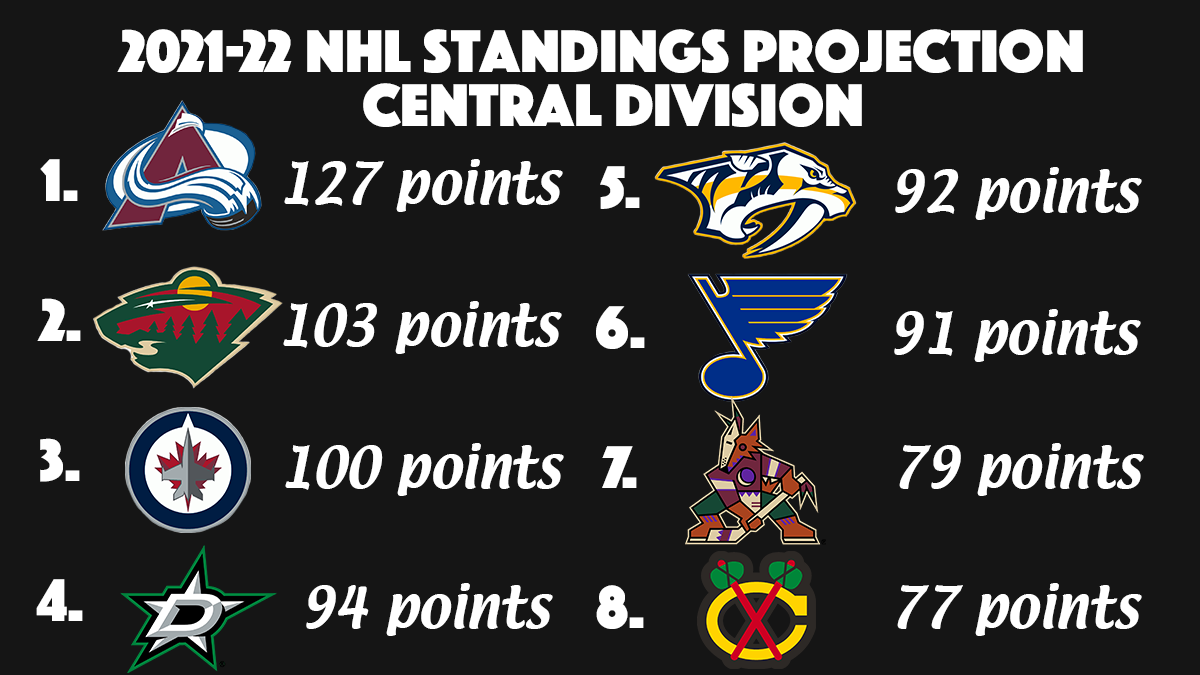

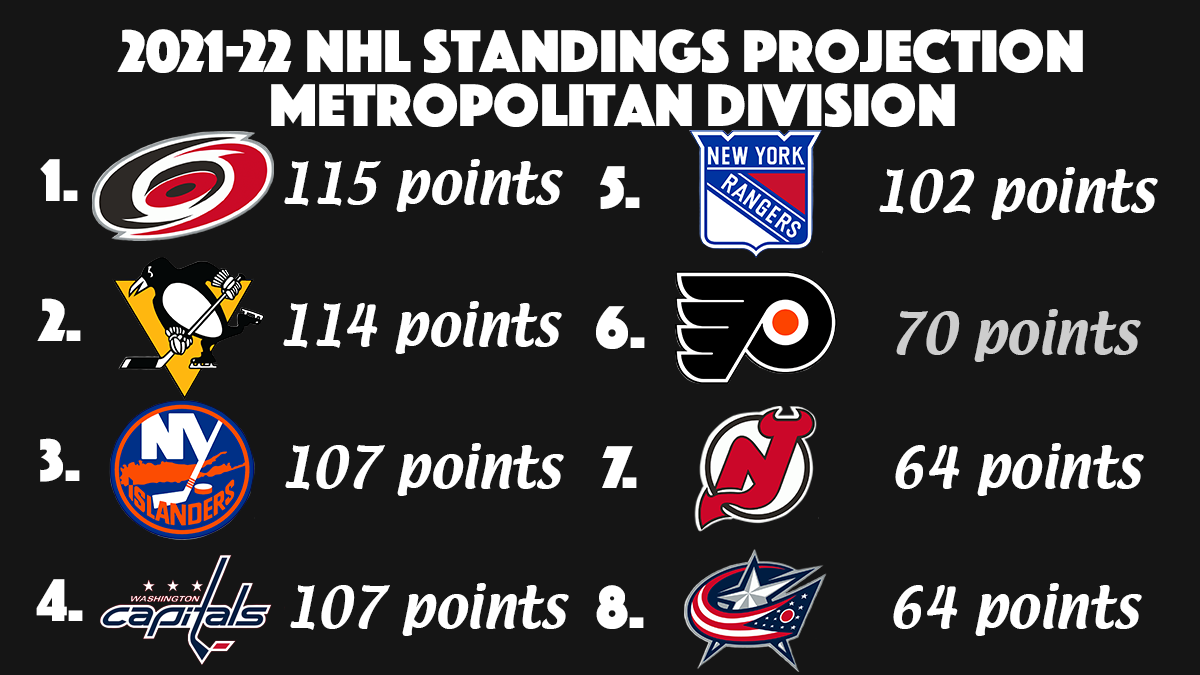






 Down the Frozen River
You must be logged in to post a comment.