Additions: F Michael Eyssimont, F Luke Johnson, F Riley Nash, F Austin Poganski, D Brenden Dillon (acquired from WSH), D Nate Schmidt (acquired from VAN)
Subtractions: F Mason Appleton (expansion, SEA), F Marko Dano (ELH), F Trevor Lewis (signed with CGY), F Skyler McKenzie (HockeyAllsvenskan), F Mathieu Perreault (signed with MTL), F Nate Thompson (signed with PHI), D Jordie Benn (signed with MIN), D Derek Forbort (signed with BOS), D Tucker Poolman (signed with VAN), G Laurent Brossoit (signed with VGK)
Still Unsigned: D Luke Green, G Cole Kehler
Re-signed: F Andrew Copp, F Paul Stastny, F Dominic Toninato, D Jonathan Kovacevic, D Neal Pionk, D Logan Stanley, G Eric Comrie
Offseason Analysis: After sweeping the Edmonton Oilers in the First Round to the surprise of, well, the Oilers themselves, the Jets were promptly swept by the Montréal Canadiens in the Second Round to the surprise of everyone that thought the Montréal vs. Winnipeg matchup would be a little more competitive.
The Jets, however, beat Edmonton by one-goal in three out of their four games in the First Round– with the latter two in comeback fashion and all three one-goal victories needing at least one overtime period (the series finale, in fact, needed three overtime periods).
Winnipeg bet the Oilers, 4-1, in Game 1, 1-0 (OT), in Game 2, 5-4 (OT) in Game 3 and, 4-3 (3OT) in Game 4, then played Montréal about a week-and-a-half after eliminating Edmonton.
The Canadiens beat the Jets, 5-3, in Game 1, 1-0, in Game 2, 5-1, in Game 3 and, 3-2 (OT), in Game 4 while Mark Scheifele sat on the sidelines for the majority of the series– serving a four-game suspension for his Game 1 charge that left Jake Evans with a concussion.
In addition to playing Connor Hellebuyck less and giving Eric Comrie more responsibility as the backup goaltender, Winnipeg could solve some of their problems by simply having a defense.
Whether or not head coach, Paul Maurice, has overextended his stay behind the bench with the Jets (he has), it’s getting closer and closer to “win-now or rebuild” time in Winnipeg.
Jets General Manager, Kevin Cheveldayoff, kept most of his forwards together– signing Andrew Copp and Paul Stastny to one-year extensions worth $3.640 million and $3.750 million, respectively– while adding Riley Nash and Austin Poganski to the mix on matching one-year $750,000 contracts.
Nash reached a career-high 41 points in 76 games with the Boston Bruins in 2017-18, before signing a three-year deal with the Columbus Blue Jackets where his production dropped to 12 points in 78 games in his first season with the Blue Jackets in 2018-19, then 14 points (five goals, nine assists) in 64 games and seven points (two goals, five assists) in 37 games last season prior to being traded to the Toronto Maple Leafs at the deadline while injured.
The 32-year-old forward was drafted in the 1st round (21st overall) by the Oilers in 2007, and made his league debut with the Carolina Hurricanes in the 2011-12 season.
Nash is a low-risk, high-reward signing for bottom-six depth– especially if he can reach about 20 points in a full 82-game season with the Jets, but he’s not winning the Maurice “Rocket” Richard Trophy in 2021-22 (or anytime soon, for that matter).
Copp had a breakout year last season with 15-24–39 totals in 55 games, which was good news for the Jets in the wake of trading Patrik Laine and Jack Roslovic to Columbus for Pierre-Luc Dubois early in the 2020-21 season.
Though Copp may be a late bloomer, at 27-years-old, he is still in the midst of his prime and can only have an upward projection over the course of a regular 82-game schedule.
Dubois managed 20 points in 41 games with Winnipeg last season after scoring one goal in five games with the Blue Jackets prior to the trade.
Compared to Laine’s 12-12–24 totals in 46 games with Winnipeg and Columbus last season, the trade didn’t really spark either player in fresh change of scenery.
Roslovic, meanwhile, produced his best results– 34 points (12 goals, 22 assists)– in 48 games with the Blue Jackets, versus his 12-17–29 totals in 71 games with the Jets in 2019-20.
There shouldn’t be any distractions entering the season or disruptions during the season for Dubois to get back on track, however.
As for Stastny, the 35-year-old center is still in search of his first Stanley Cup ring after passing 1,000 career games in 2020-21.
In 1,001 career NHL games with the Colorado Avalanche, St. Louis Blues, Jets, Vegas Golden Knights and Jets again, Stastny has 263-492–755 totals, including 29 points (13 goals, 16 assists) in 56 games last season in his first year back in his second stint with Winnipeg.
He’s usually good enough for about 40 points every season, so that should help solidify the Jets’ center depth as long as he’s healthy.
Despite a plus-16 goal differential in the regular season, when it mattered most, Winnipeg couldn’t keep the puck out of their own net in the Second Round.
That’s not just something for Hellebuyck to work on by himself, but rather a defensive strategy issue in and of itself.
Luckily for the Jets, they worked the phones to acquire Brenden Dillon from the Washington Capitals and Nate Schmidt from the Vancouver Canucks in separate trades a day after one another in July.
On July 26th, Winnipeg sent a 2022 2nd round pick and a 2023 2nd round pick to Washington for Dillon and on July 27th, the Jets dealt a 2022 3rd round pick to Vancouver for Schmidt.
Dillon had a quietly productive season as a top-four defender with 2-17–19 totals in 56 games with the Capitals, while Schmidt’s production dropped from 31 points (seven goals, 24 assists) in 59 games in 2019-20 with Vegas to 15 points (five goals, 10 assists) in 54 games with the Canucks.
It’s a risk, but the Jets are hoping that Schmidt can bounce back to being a 30-point scoring defender in the mix with with Neal Pionk and Josh Morrissey, as well as Dillon.
Speaking of Pionk, he signed a four-year extension worth $5.875 million per season this offseason after amassing 3-29–32 totals in 54 games in 2020-21.
It seems like a fair deal all around for a productive defender that plays a leading role as a power play specialist at only 26-years-old.
Offseason Grade:B-
The Jets addressed a need (improving their defense), but weren’t able to be as aggressive in either the free agent or trade market, despite remaining a piece or two away from being able to be a Stanley Cup contender.
At the very least, Winnipeg could see forward progress in the postseason with better asset management, but the problem remains the same from year-to-year– over-reliance on Hellebuyck and an unwillingness to move on from Maurice’s system.
If Cheveldayoff isn’t getting frustrated by the same results over the years, then True North Sports & Entertainment better start putting the pressure on the Jets’ front office to succeed or face the consequences of insanity (trying the same thing and expecting different results).
They’re in better shape than other teams in the Central Division, but are they as good as the Avalanche or Golden Knights on paper if they’re able to get to the Western Conference Final and have to play one of the league’s more dominant teams?
Apparently the National Hockey League’s Board of Governors were up to something this month as it was reported by Sportico on Tuesday that the Board unanimously approved ads on the front of NHL jerseys beginning with the 2022-23 season.
The ads will be no bigger than a 3-inch-by-3.5-inch rectangle, which is slightly larger than the ads featured on the front of National Basketball Association (NBA) jerseys.
It was only a matter of time before the NHL followed the NBA in generating additional revenue by doing what professional hockey leagues outside of North America have been doing for many years, as well as what’s been done for at least a few seasons now in the American Hockey League (AHL) and ECHL minor league levels on this side of the pond.
As always, hockey Twitter is taking the news well.
Let’s embrace the chaos for a moment and pick some sponsors for all 32 NHL teams that would make so much sense they’ll obviously be overlooked for, well, actual revenue generating streams instead.
Anaheim Ducks
What we want: Disney+ or TCL
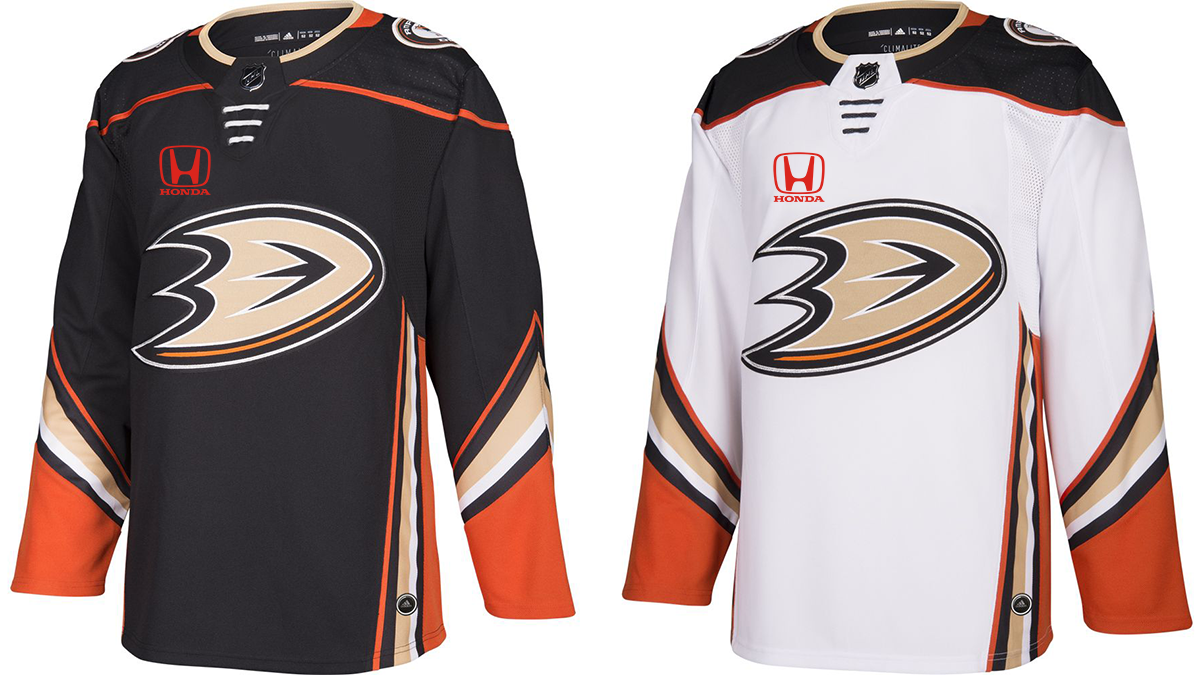
What we’ll get: Honda
The Ducks play at Honda Center and, yeah, there’s really nothing besides Disney swooping in and sponsoring the team that they used to own as a means of cross promoting both the Ducks and The Mighty Ducks: Game Changers on Disney+, so we’re stuck with a Honda logo at center ice and on the front of Anaheim’s jerseys.
In any case, Honda’s red logo works pretty well with the Orange County orange featured as an accent color on Anaheim’s home and road jerseys.
NHL teams have a tendency to go back to the well with their partners– think of how many teams have either the same helmet sponsor as another team or just slapped on the same brand as their venue’s naming rights deal– but if we want to expand the playground a little bit perhaps TCL could be of interest for the Ducks.
Come to think of it, that’s probably a better option.
*Opens up Photoshop*
Arizona Coyotes
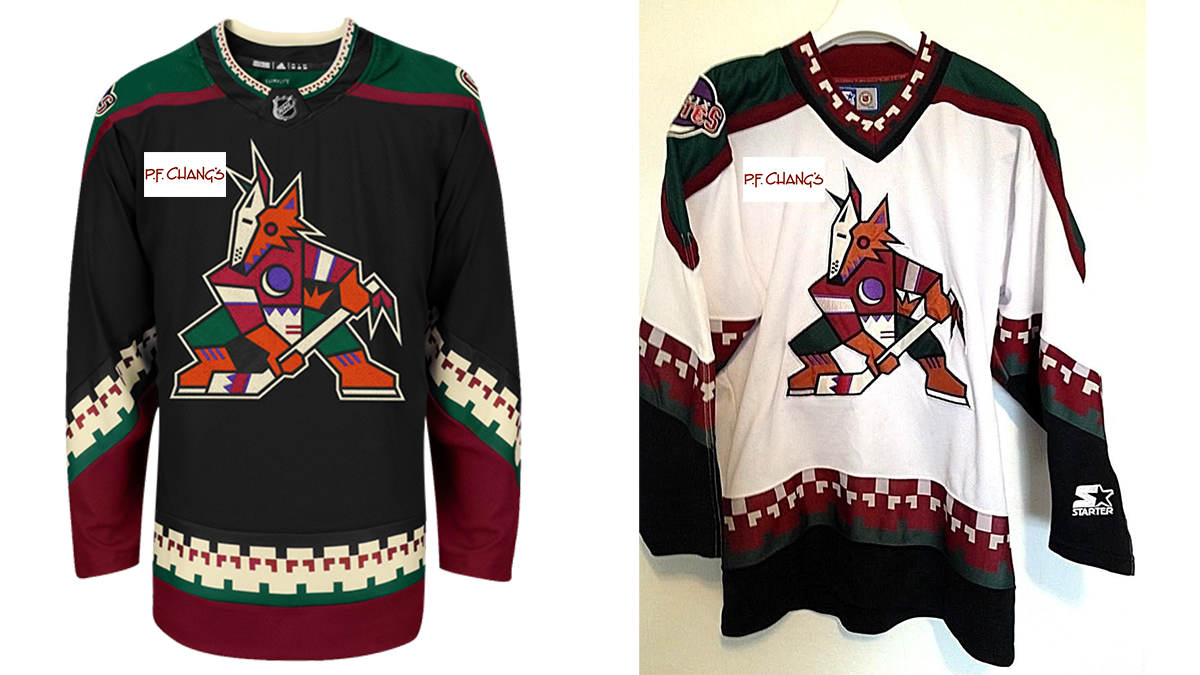
What we want: P.F. Chang’s or Cold Stone Creamery
What we’ll get: Fry’s or something, probably
Believe it or not the Los Angeles Chargers won’t be the only team tweeting about P.F. Chang’s for long as the restaurant chain was founded in 1993, and opened their first location in Scottsdale, Arizona, so it only makes sense to go back to their roots and toss an ad on the Coyotes’ jersey.
Also founded in Arizona– Cold Stone Creamery.
We figured that’d probably make sense on an AHL team’s jersey, though, despite the obvious cold ice, cold ice cream connection.
The Coyotes had Mountain America on their helmets at home and Dignity Health on their road helmets in 2020-21, so in reality we’ll probably get one of those two on the front of their jerseys in 2022-23.
Boston Bruins
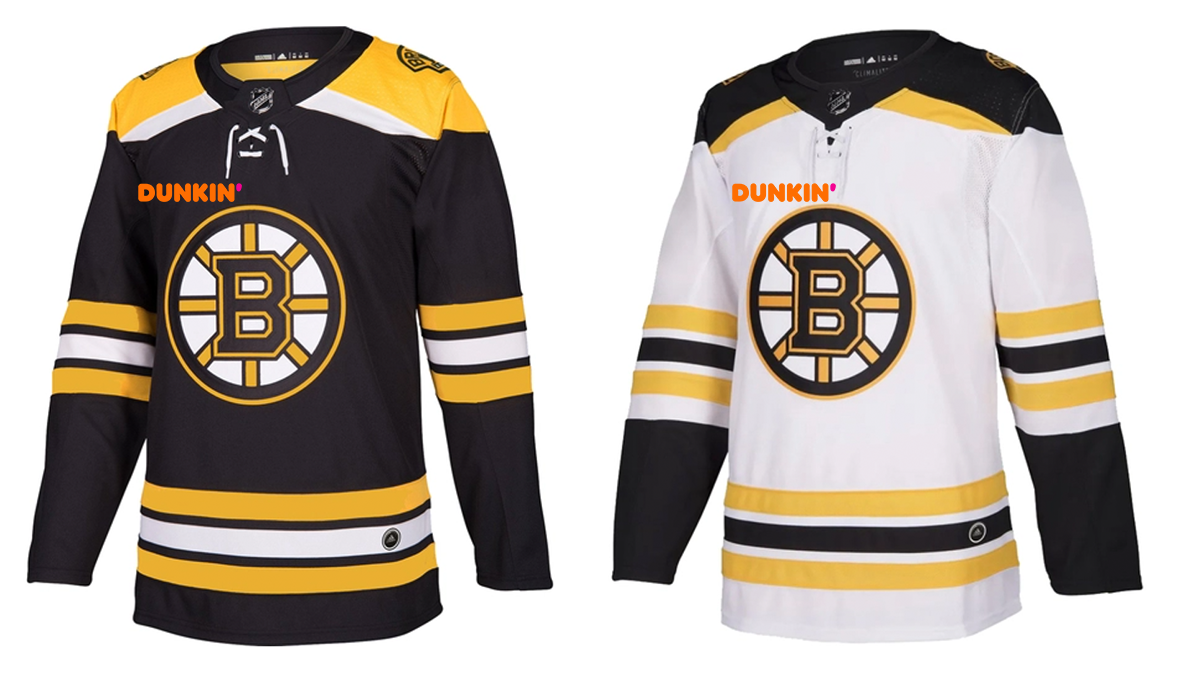
What we want: Dunkin’ or bust
What we’ll get: TD Bank or O.R.G. Packaging, probably
What could possibly be more Boston than a Bruins jersey with a Dunkin’ logo on it?
Their AHL affiliate– the Providence Bruins– already play in the Dunkin’ Donuts Center in Rhode Island and have a Dunkin’ ad patch on their jerseys. Why not call it up to the major league?
That said, with some NBA teams earning up to about $20 million in jersey ad space revenue, the B’s likely will reach for a brand with deeper pockets than doughnuts and coffee.
Delaware North likes their relationship with a certain bank from Toronto (TD Bank) and has had one of the league’s longest relationships with a Chinese company (O.R.G. Packaging) as part of the NHL’s intended growth beyond the continents of North America and Europe, so one of the two brands is more likely to appear on a Bruins jersey.
Buffalo Sabres
What we want: Super Chexx
What we’ll get: KeyBank
The Sabres could use some fun in their lives these days and you know what really helps put the mind at ease? Bubble hockey.
That’s right, Innovative Concepts in Entertainment, Inc. (ICE)– the manufacturers of the popular bar and arcade classic, Super Chexx, that your rich friend down the street growing up also had in the comforts of their home– is based outside Buffalo and would be a match made in heaven right about now.
Especially as Sabres fans are looking for something to do while the game’s on TV.
So yeah, we’re definitely going to get KeyBank, Tim Horton’s or something else entirely instead.
Calgary Flames
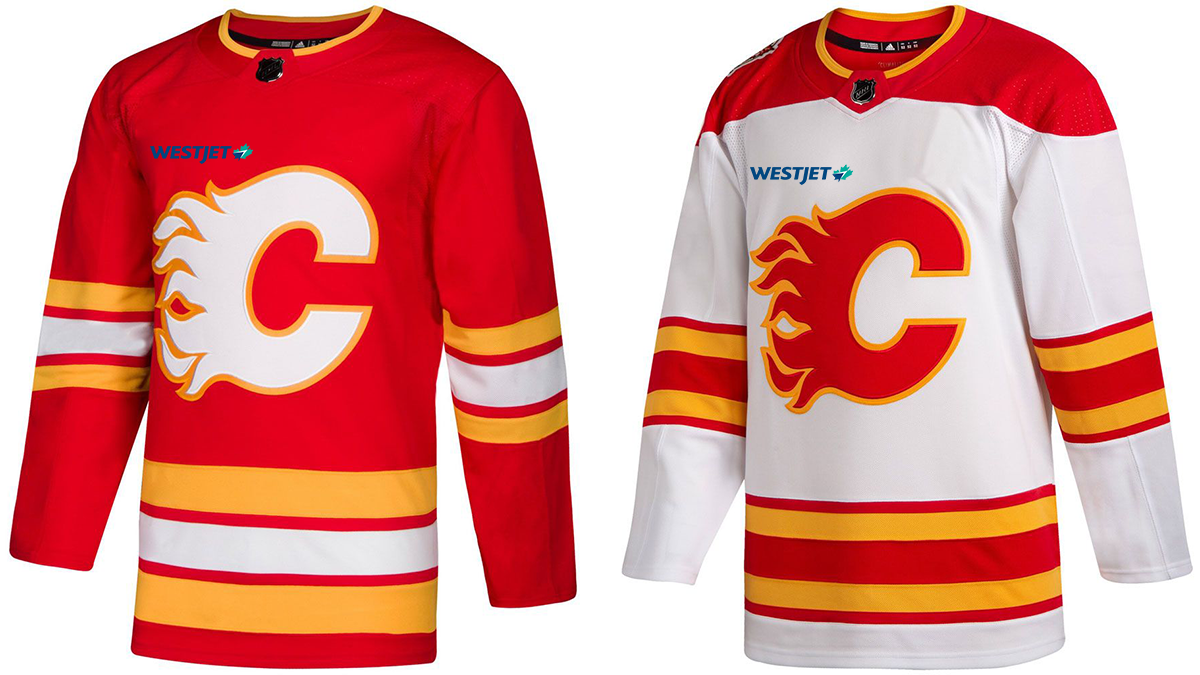
What we want: WestJet or Duraflame
What we’ll get: Scotiabank
If you, as an American, can name any other Canadian airline other than Air Canada, then congratulations. If you can’t, then may I introduce you to WestJet?
WestJet’s headquarters are next to Calgary International Airport and it’d be nice to prove to the world that Canada is more than just a land of Tim Horton’s, Roots, Canadian Tire, Rogers, Scotiabank and Mr. Sub.
If Duraflame isn’t available, then you might as well dip into the low-cost airline industry as a means of attracting tourists to Banff National Park, Calgary Stampede or whatever it is that sets Calgary apart from the rest of Alberta (so… not being Edmonton).
Carolina Hurricanes
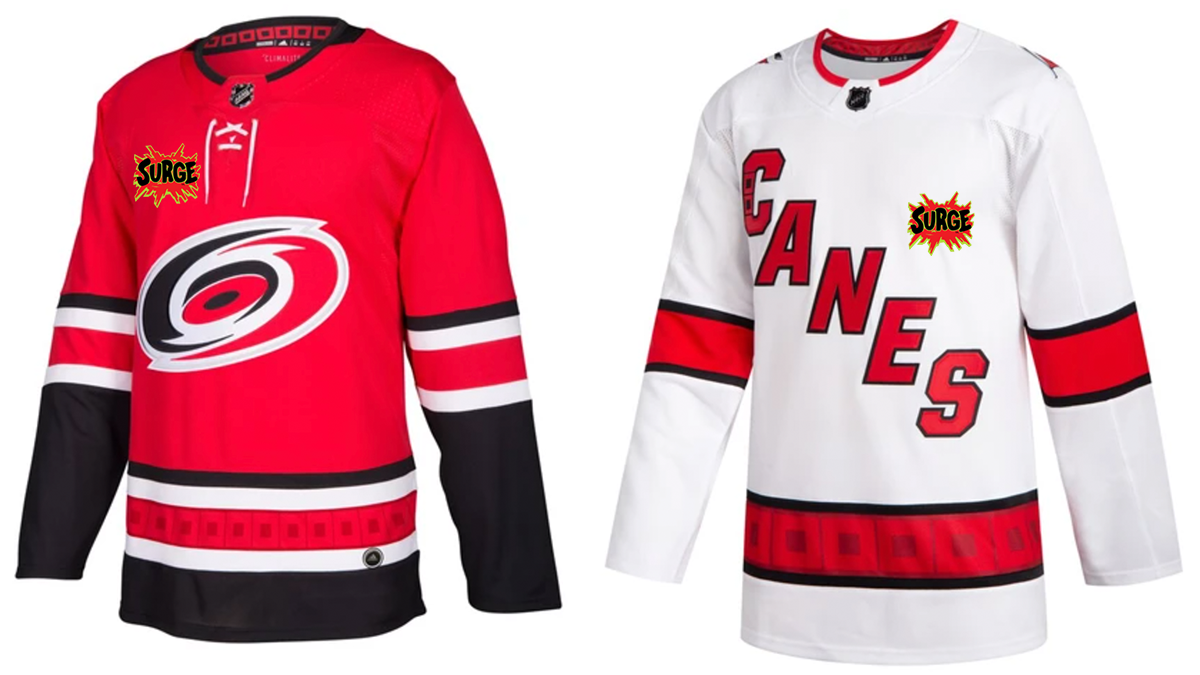
What we want: Surge
What we’ll get: PNC, Diehard, maybe Cheerwine or something else
This should be obvious, but if you haven’t paid attention to the Hurricanes for at least the last few seasons now they do a “Storm Surge” celebration after every win on home ice in the regular season (and sometimes playoffs).
Surge (the soda) is one of those drinks that makes headlines every few years for being pulled straight out of the vault and placed back on grocery store shelves– speaking of which, does anyone know if it’s currently available?
If not, it’ll definitely be back by the 2022-23 season.
Yes, it’s hard to envision where an ad will be placed on the road jersey as the prime real estate is used up by the diagonal “CANES” letters and– for a few players– the captain’s “C” or alternate captain’s “A”.
Chicago
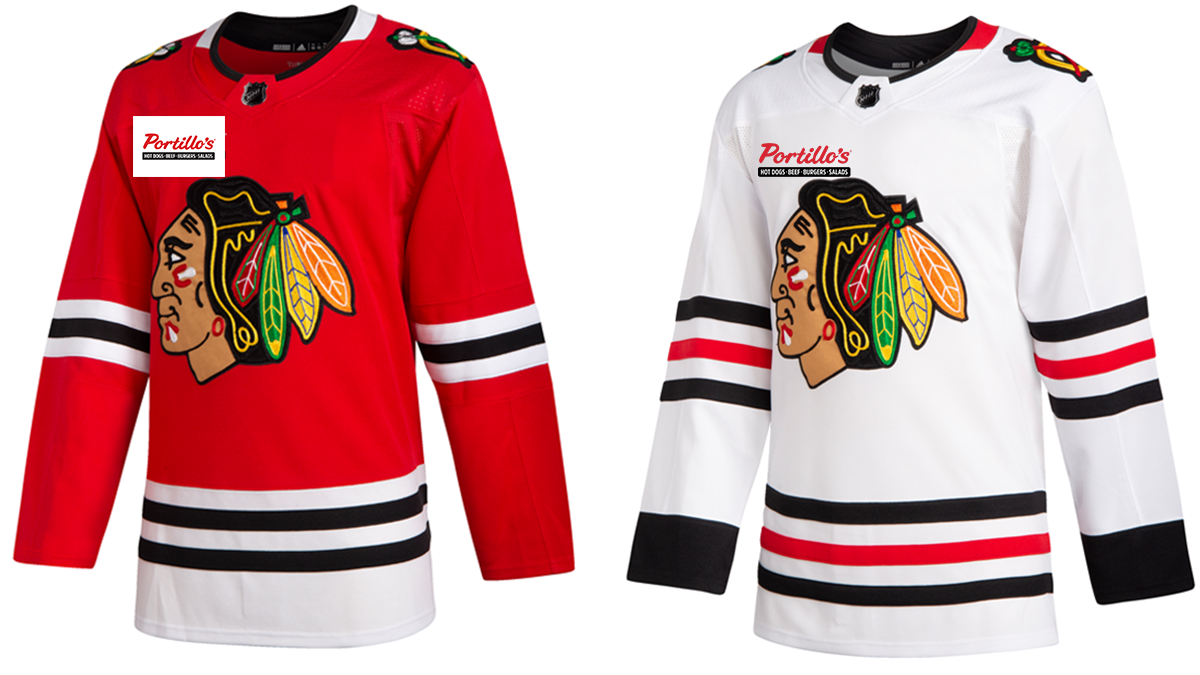
What we want: Portillo’s
What we’ll get: United
Look, between Walgreens, Sears and Portillo’s there’s a few legendary brands that Chicago could partner with as their first jersey ad in franchise history (not including practice jerseys).
Obviously only one of the three mentioned above is the right choice and its the one that might lead you to Walgreens later if you have a weak stomach. Besides, Sears is fading from our collective memory whether it is out of business already or not.
Clark Griswold would be proud of Portillo’s proudly being displayed on a, well, if a WHL team can rebrand, so can you, Chicago.
Colorado Avalanche
What we want: Chipotle or Coors
What we’ll get: Ball
Look, whether or not Nathan MacKinnon eats Chipotle is a debate for another day, but one thing’s for sure– both Chipotle and MacKinnon started their careers in Colorado.
Though Coors or Coors Light would make more sense, we have to consider the fact that kids might be wearing these jerseys to the game and we haven’t heard whether or not the jerseys that are sold in the proshops in 2022-23 and beyond will include the front jersey ad or not.
If they do, then we probably can’t market beer to children.
I’m pretty sure there’s a law about that and it’s also the reason why all my 1:64 scale diecast Rusty Wallace and Dale Earnhardt, Jr. cars from when I was a kid said “Team Rusty” and “Dale Jr.” on them, respectively, instead of Miller Lite and Budweiser.
Columbus Blue Jackets
What we want: Wendy’s
What we’ll get: Nationwide
Coinciding with the uptick in Columbus born and raised players on the Blue Jackets roster, it would be a great idea to add Wendy’s– which was founded in Columbus in 1969– to the team in such a way that perhaps Jack Roslovic and Sean Kuraly star in local commercials to the Blue Jackets viewing area during the 2022-23 season.
I know that’s assuming Roslovic signs an extension, but the pending-restricted free agent at the end of the 2021-22 season helped facilitate the Pierre-Luc Dubois for Patrik Laine trade with the Winnipeg Jets by forcing Winnipeg into trading him to his hometown team.
Unlike several recent stars that left the city via free agency, Roslovic will stick around for the long term.
Especially if there’s some goods in kind involved with a Wendy’s sponsorship. I mean, I would at least.
Dallas Stars
What we want: Whataburger
What we’ll get: AT&T
Though Whataburger would be a welcome party in the burger wars when Columbus and Dallas would “meat” up, there’s no beef to be found in this hypothetical because AT&T has already made that decision for us.
Sometimes you just can’t think too hyperlocal and AT&T fetches a more national audience than a regional chain that primarily serves Texas.
Besides, if you go to Dallas for a Stars game, you can always just get Whataburger then. It’s not like they’re going to send you a meal with a jersey if ads are on the jerseys sold to fans in 2022-23.
Detroit Red Wings
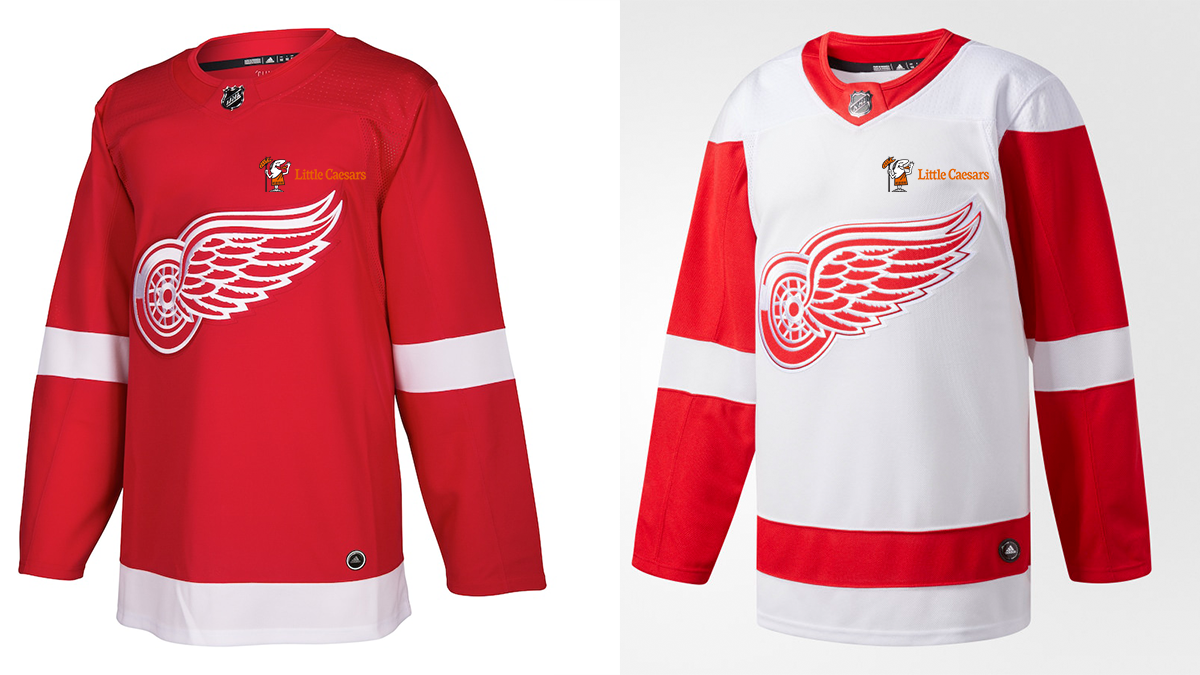
What we want: Little Caesars
What we’ll get: Little Caesars
The last few teams have all involved food and we’re going to be stuck on this theme for at least one more team after this.
Both the Red Wings and Little Caesars are owned by the Ilitch family and if you think adding one more connection between Detroit and pizza is a bad thing then you clearly don’t understand the marketing behind this.
Kids love pizza. Adults love pizza. There’s a lot of good memories involving pizza.
Plus, with General Manager, Steve Yzerman, in charge, the Red Wings are on the rise, which will only further tap into the nostalgia from when Detroit was doing what the Tampa Bay Lightning are currently doing to the rest of the league.
Edmonton Oilers
What we want: Boston Pizza
What we’ll get: Rogers
Edmonton thought they could replicate the success Ken Holland had in Detroit by hiring Holland as their General Manager and when they see that we’ve got a pizza establishment heading for the front of the Red Wings’ jersey, then the Oilers will think it’s also a good idea to snag a slice.
That’s where Boston Pizza comes in.
Whether or not they’ll get Connor McDavid to do an ad read or be left with whatever scraps surround him on the Oilers roster remains to be seen.
In all likelihood, Rogers Communications will probably just get to slap their logo on another element of Edmonton’s brand.
Florida Panthers
What we want: Royal Caribbean International
What we’ll get: Baptist Health or something
The Blockbuster guy (the late Wayne Huizenga) founded the team and almost named them the “Florida Block Busters”, so it’d be neat to incorporate an homage to the days of Blockbuster (rest in peace) with the almost Blockbuster-like colors of Royal Caribbean International on the jersey.
Plus, who among us hasn’t uttered the words “I need a vacation from my vacation” before?
If you’re an out of town fan visiting the Panthers in Florida or watching the Panthers come to your town— there’s a cruise line for you even if you wouldn’t go remotely near a cruise before the ongoing pandemic began.
Los Angeles Kings
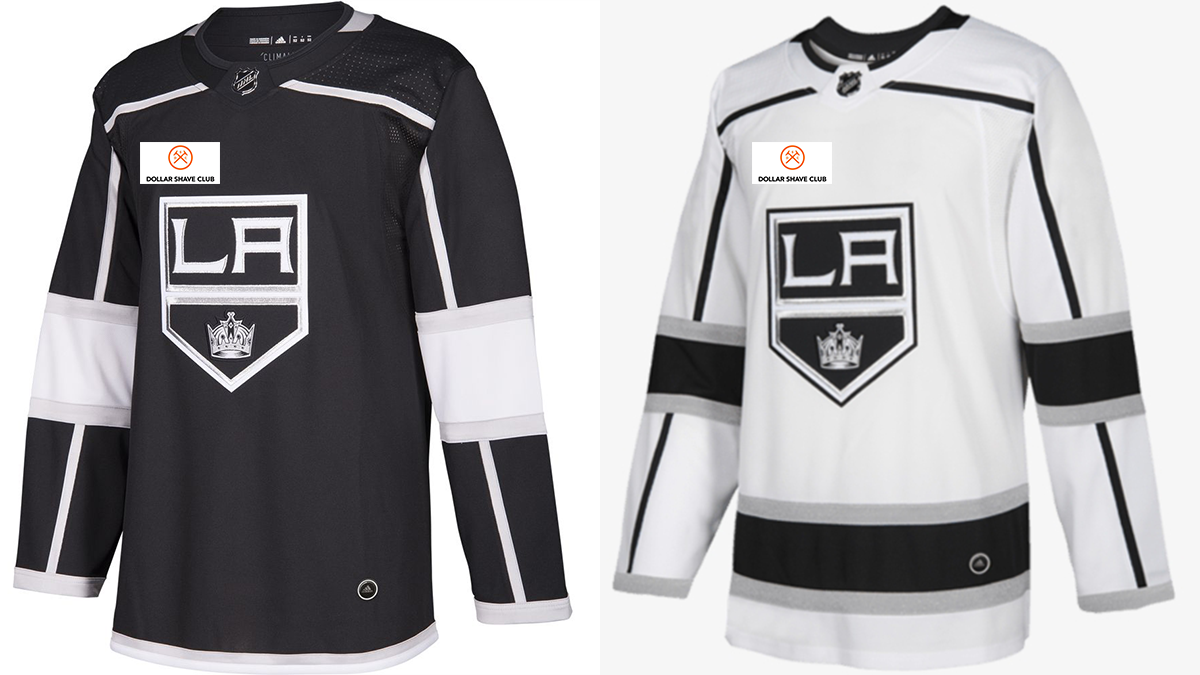
What we want: Dollar Shave Club
What we’ll get: Anschutz Entertainment Group
Never doubt for a second that a team owner wouldn’t give up the chance to toot their own horn, which is why it’s quite possible that one of the world’s biggest entertainment entities would slap their own logo on the front of a Kings jersey.
If you’re not able to finagle a way to write things off as a deduction, then Dollar Shave Club presents a unique opportunity despite the fact that shaving isn’t something that’s in Drew Doughty’s vernacular (or any hockey player, for that matter, when the Stanley Cup Playoffs roll around).
Manscaped could also make a run here and in any case, fine.
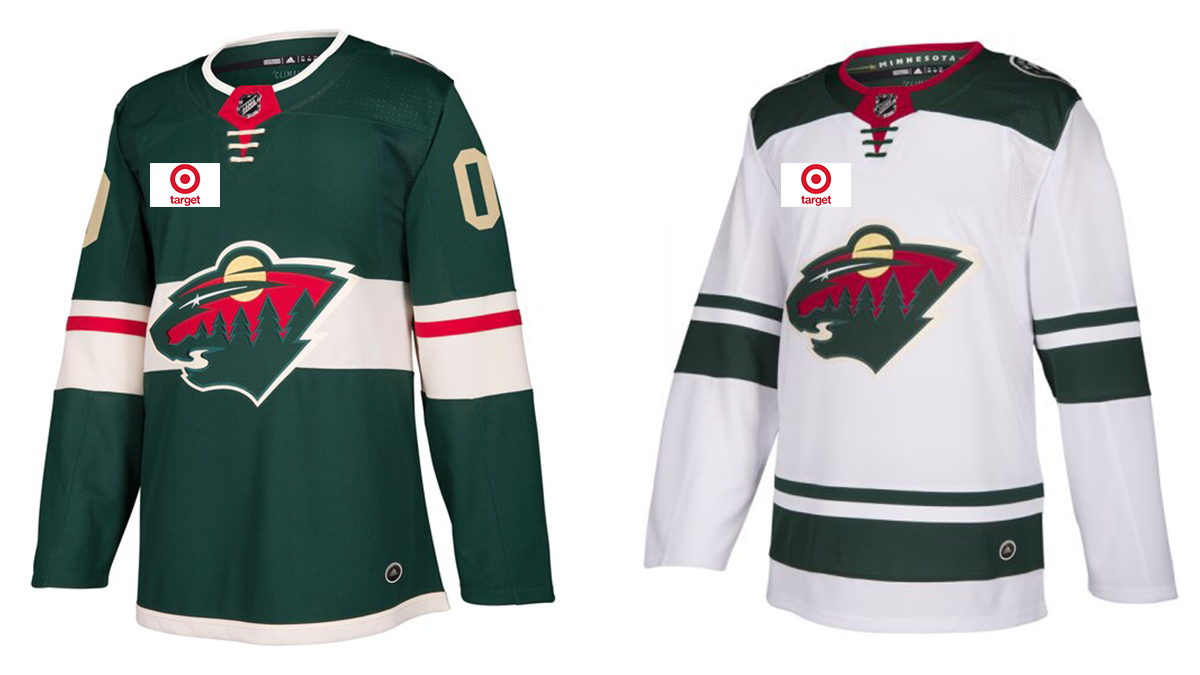
Minnesota Wild
What we want: Target or General Mills
What we’ll get: Xcel Energy
When you think of Minnesota what’s the first thing you think about?
That’s right, the very place where you could be standing right now reading this while you’re waiting for a cash register to open up or aimlessly perusing the aisles for those impulse purchases you somehow always make at Target.
It fits the Wild color scheme well and if we’re not going to get General Mills involved then at least getting more than the standard 5% discount for having a Target RedCard via goods in kind might be enough to convince Kirill Kaprizov to stay in Minnesota long-term.
Montréal Canadiens
What we want: CCM and/or Molson
What we’ll get: Bell
CCM makes more than just jerseys, but it’s not like adidas would be just fine with a CCM logo appearing on the front of an adidas ADIZERO jersey.
So, we’re left with two obvious choices– Molson or Bell.
If there’s nothing against a Canadian team bearing an alcoholic beverage on the front of their jersey with the potential for that brand to be marketed towards kids, then perhaps Molson– whose family ties own the Habs– might make an appearance near the crest.
That or we’ll just get more airtime for Bell. Either way, Montréal would be attractive enough as a franchise to bring in more than one jersey ad sponsor if the league doesn’t have any specific rules outside of the size of the ad.
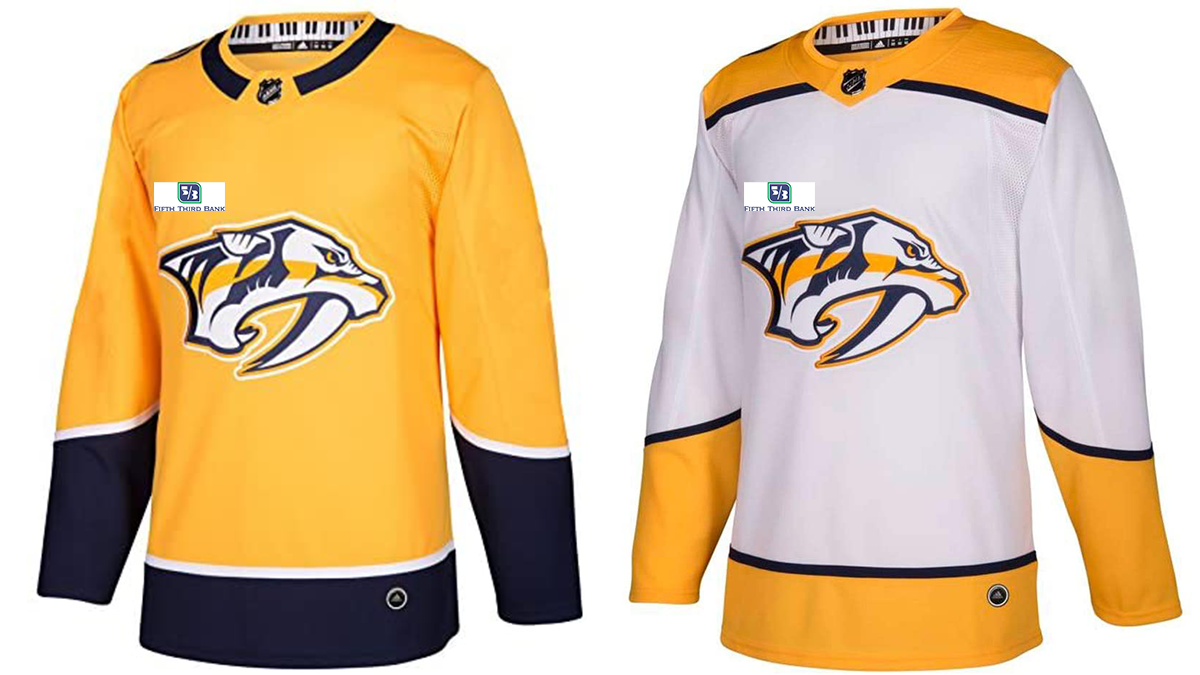
Nashville Predators
What we want: Curb Records or CMT
What we’ll get: Fifth Third Bank
The music city could attract a music label if they wanted to, but Fifth Third Bank loves investing in Nashville for some reason– like, a lot, despite being headquartered in Cincinnati, Ohio and primarily serving Ohio, Kentucky, Indiana, Illinois, Michigan, West Virginia, North Carolina, Georgia and Florida more than all of Tennessee.
In any case, good for the Predators. They’ll have some deep pockets to reach into while other teams surely will have to squabble for seven figures related to the going rate for the prime ad space.
Still feels like we’d be missing out on a sweet Curb Records patch close enough to the guitar pick on the right shoulder though.
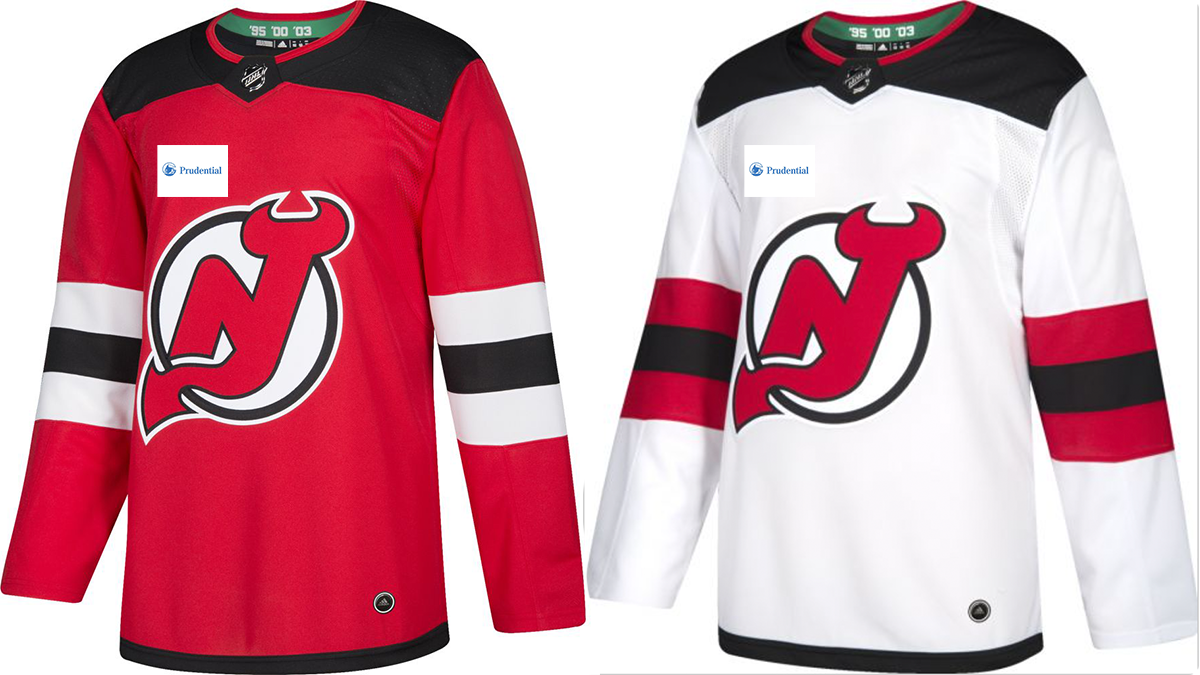
New Jersey Devils
What we want: Honestly, just Prudential is fine
What we’ll get: Prudential
The Devils are overlooked and let’s admit it, you couldn’t think of something distinctly New Jersey either– besides not being allowed to fill your own gas tank.
Bruce Springsteen is not sponsoring the Devils alone.
Whether it’s settling on an old reliable or simply making use of what’s trustworthy and already available, Prudential and New Jersey just seem like a good fit.
New York Islanders
What we want: Gorton’s
What we’ll get: Not Gorton’s
“We want fishsticks!”
O.K., you got them. Take that, Rangers fans. The Islanders are cool now because they’re steering into the skid.
They just won’t go as far as bringing back the fisherman jersey from the dead, but alas, they’ll show a spark of creativity and even crack a smile on Lou Lamoriello’s face with the real Gorton’s fisherman making an appearance on the jersey.
Obviously this will never happen.
New York Rangers
What we want: Liberty Mutual if they’re bringing back the “Lady Liberty” jerseys as an alternate
What we’ll get: Chase for sure, maybe New York Life too
Liberty Mutual (a Boston company) on the “Lady Liberty” jersey would be a sight to see, but New York will never let it happen.
Instead, Chase, which already has quite a great partnership with the team, Madison Square Garden, Manhattan, etc. will likely just step up and foot the bill for one– if not all– of the jerseys in full.
That’s fine. The Rangers will suffer the same consequences of having a diagonal wordmark on their jersey like Carolina’s road jersey, but at least New York’s pretty much always been this way so they should have some ideas of how to work around that.
Ottawa Senators
What we want: Canada Post
What we’ll get: Bell, Scotiabank or Canadian Tire
Canada’s capital city gets the honor of having Canada Post on their jerseys because it breaks up the trend of having the same three or four companies sponsoring all seven Canadian teams (like how their helmets were for 2020-21).
In reality, we’ll probably get more of the same from the Sens and either Bell, Canadian Tire or Scotiabank will make an appearance on Ottawa’s jersey.
At the very least, Canada’s postal service sponsoring a team is more economically viable than the United States Postal Service sponsoring a team.
Philadelphia Flyers
What we want: Wawa or Audacy
What we’ll get: Comcast or GlaxoSmithKline
Remember how I said you don’t want to go too local for a jersey ad? Well, Wawa on a Flyers jersey is an exception.
That said, it probably wouldn’t have the staying power to work on a road jersey too, so Philadelphia could tap into the artist formerly known as Entercom, since rebanded as Audacy, for more.
Audacy maintained their Philadelphia headquarters and covers a broad range of Internet radio, digital content, regular radio and podcasting platforms, plus their logo is orange which fits the Flyers brand.
It’s either that or Comcast will slap their own logo on the jersey or something.
Pittsburgh Penguins
What we want: Duolingo
What we’ll get: PPG Industries
Duolingo is headquartered in Pittsburgh and as a website and mobile app, every sports league with ads on jerseys needs at least one that makes you scratch your head at first before realizing the connection between the company and the city.
The dating app, Bumble, once was featured on the NBA’s Los Angeles Clippers jerseys prior to the Clippers replacing Bumble with their more jersey ad with the online browser extension coupon company, Honey.
Dating and living expenses in Los Angeles are probably harder than learning a few new languages through Duolingo, so combining Duolingo with the Penguins makes perfect sense since hockey players can come from all over and speak many languages.
Besides, it might give your team an advantage if they can communicate with one another in a setting that is more comfortable for them.
St. Louis Blues
What we want: Busch
What we’ll get: Enterprise
I know we’ve been over the whole “can they market beer to kids with these jerseys” thing, but St. Louis is the city of Anheuser-Busch, so it’s only fitting that the Blues get a jersey ad that 1) is Anheuser-Busch related and 2) works with their color palette.
If Major League Baseball’s St. Louis Cardinals play in Busch Stadium and get Budweiser by default with red as a primary color for the ball club, then the Blues naturally get Busch blue and Busch beer. I don’t make the rules.
Plus Midwesterners really like the stuff.
San Jose Sharks
What we want: Adobe
What we’ll get: SAP or Zoom
Look, we weren’t going to get away with making these in Photoshop and not having to give Adobe something— and with headquarters in San Jose it only made sense.
The Sharks have a deep relationship with SAP, though, so it’s more likely than not that the team will just go further with the brand that also is featured on their helmets at home and holds the current naming rights for SAP Center.
Plus with the uptick in the use of Zoom, San Jose could double-dip and match SAP on the home jersey with SAP stickers on their helmets with Zoom covering the road set (jersey ad and helmet ads).
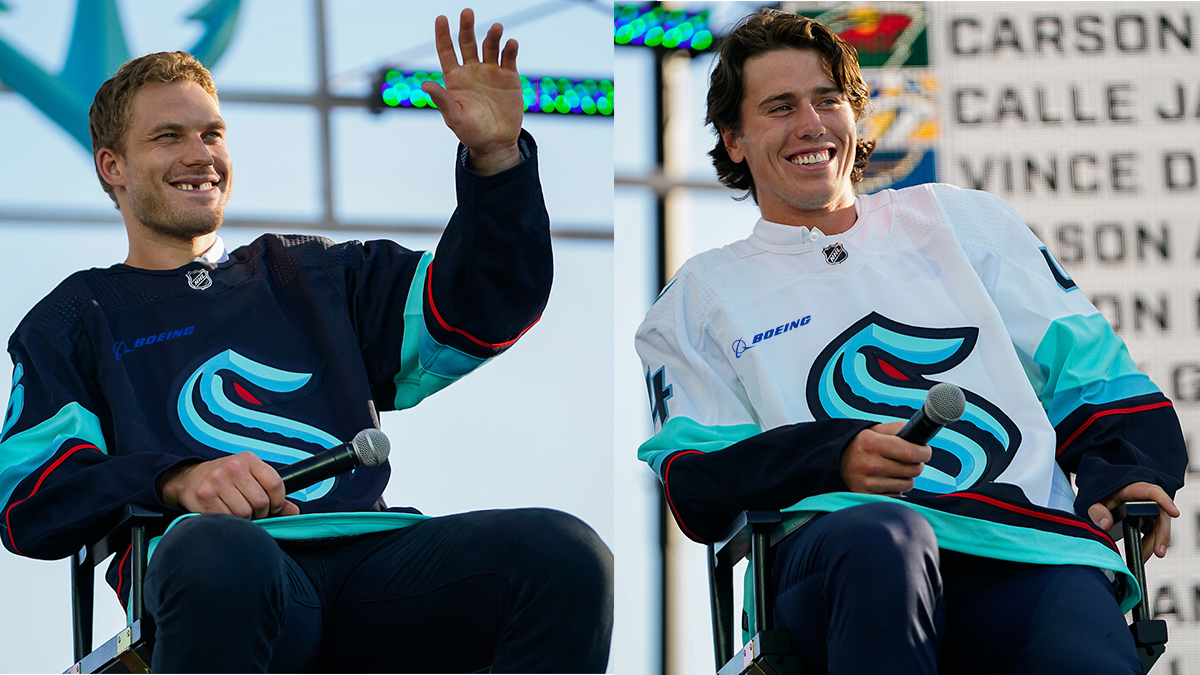
Seattle Kraken
What we want: Boeing
What we’ll get: Alaska Airlines
The Kraken already have a deal with Alaska Airlines as the official airline of the franchise, but what’s bigger than an airline itself?
That’s right, Boeing, the company that makes a lot of planes and other aerospace stuff, was founded in Seattle and still has a major presence in Washington as the largest private employer in the state.
Want to see your newest expansion team take flight? Just add some Boeing engineering to the jerseys.
You might have thought Microsoft would make sense for a Seattle-based team, but the league’s agreement with Apple probably puts a quick end to that.
Tampa Bay Lightning
What we want: Accusoft
What we’ll get: DEX Imaging
Every sport with ads on jerseys has that one company that nobody’s really sure what they do, but they appreciate that they’re spending their money on their favorite team.
That just might be Accusoft’s relationship with the Lightning come time for ads on jerseys in 2022-23.
The private computer software company is headquartered in Tampa and was founded back in 1991, as Pegasus Imaging– one year prior to the Lightning’s debut season as an NHL team in 1992-93.
Toronto Maple Leafs
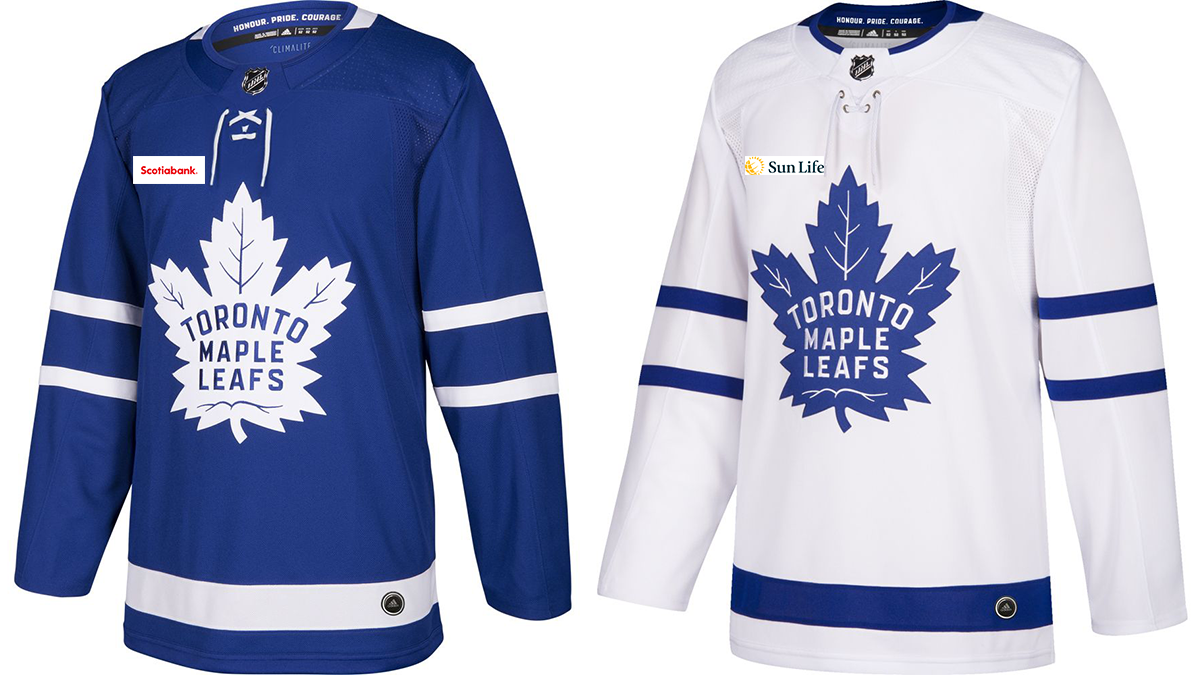
What we want: Swiss Chalet, Sun Life Financial
What we’ll get: Scotiabank, Sun Life Financial
Scotiabank already has a stronghold on Toronto both financially and in the sense that the Maple Leafs play inside Scotiabank Arena and proudly display Scotiabank’s logo on their helmets, so it seems inevitable that Scotiabank would also make an appearance on the Leafs jersey.
But Toronto is strong enough to maximize the value of a 3-by-3.5-inch ad and capitalize on the Maple Leaf Sports and Entertainment (MLSE) brand.
MLSE already has an agreement with Sun Life Financial on their NBA team’s jerseys and the Toronto Raptors were able to go on to win their first championship in 2019.
Perhaps the key to ending the Maple Leafs’ Stanley Cup drought lies within attracting Sun Life Financial to an NHL jersey ad.
Vancouver Canucks
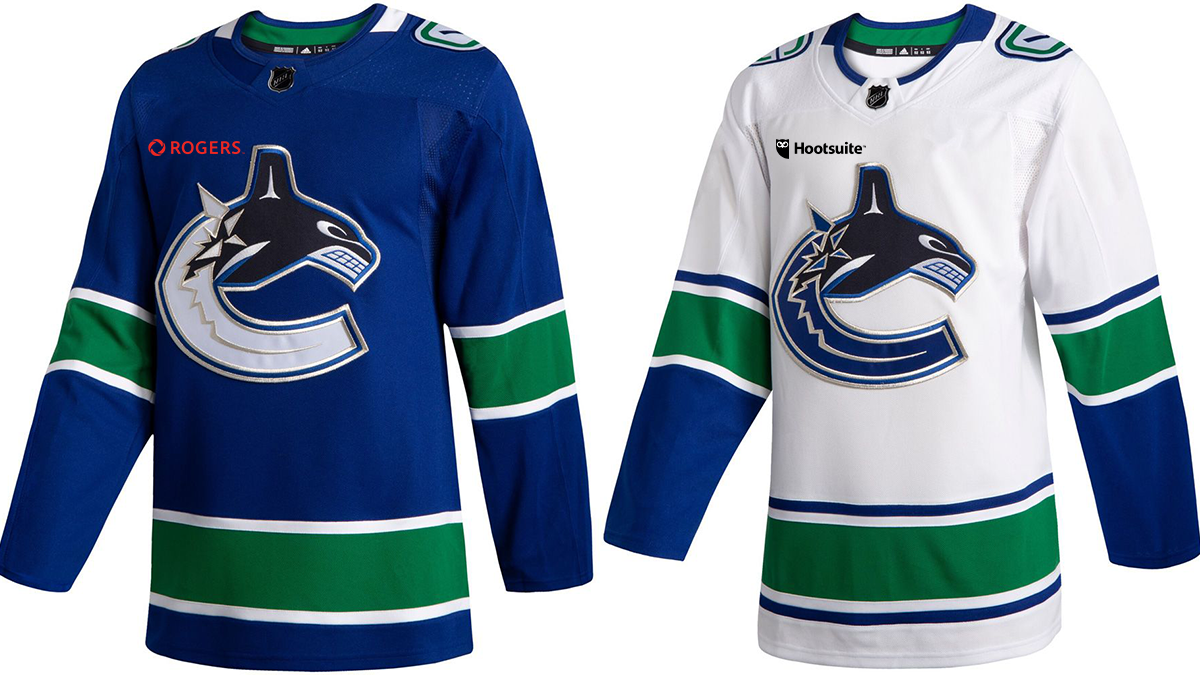
What we want: Hootsuite
What we’ll get: Rogers
Remember when you’d see Hootsuite on just about every tweet with a photo? Am I the only one imagining that?
In any case, Hootsuite was founded and is based in Vancouver and still plays a major role in social media management for brands.
Whereas Rogers is accessible to most every day Canadians, Hootsuite would be more of a “corporate” target audience and you need sponsors at all levels to attract a wide base of potential clients, fans, etc.
That said, the Canucks have had a long relationship with Rogers in that they play in Rogers Arena, so it’s probably going to be Rogers.
Vegas Golden Knights
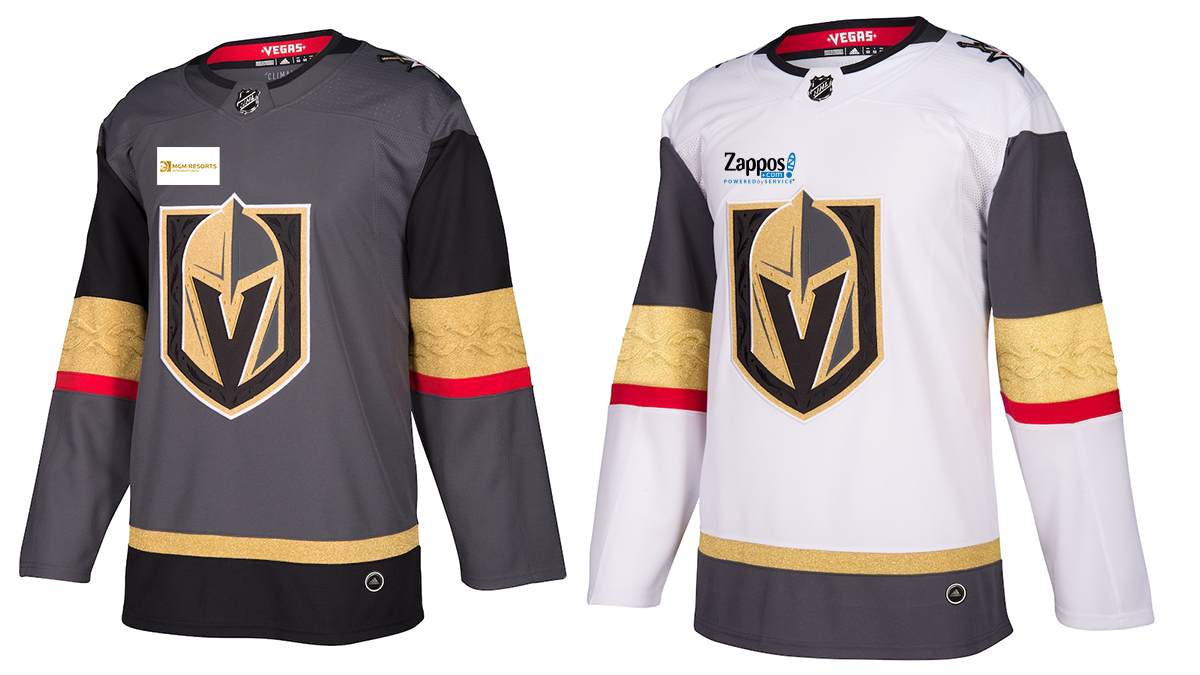
What we want: Zappos.com
What we’ll get: MGM Resorts International or Allegiant Air
Want to have fun with a local Nevada brand? Zappos is the way to go!
Want to be realistic and attract out of town fans to a destination like Las Vegas? MGM Resorts International is your sponsor and with Allegiant Air as an ultra-low cost airline that’ll gladly bring you to Vegas for a Golden Knights game…
Yeah, it’s inevitable that between MGM and Vegas’ current road helmet sponsor (Allegiant) that there’d quickly be no room for a company like Zappos.
Credit One Bank is on the home helmets for the Golden Knights, so don’t be surprised if they’re a wild card for a jersey ad too.
Washington Capitals
What we want: Marriott International
What we’ll get: Capital One, Custom Ink
Sportswriters rejoice! Your Marriott points may soon reward you with a Capitals jersey or something like that.
Headquartered in Bethesda, Maryland, Marriott International would make sense from a local and international brand recognition stance.
But you know what we’re probably going to get instead? Sheer confusion as Capital One places an ad on front of a jersey that already says “Washington Capitals”. The Capital One Washington Capitals– live at Capital One Arena!
Either that or Caps owner, Ted Leonsis, might like to make a connection between making custom jerseys for local adult league co-ed softball teams or something and, well, Custom Ink’s logo appearing on Capitals jerseys.
Winnipeg Jets
What we want: A&W or SkipTheDishes
What we’ll get: Canada Life or Bell
A&W was founded in Winnipeg, while SkipTheDishes is headquartered in Winnipeg.
Since it’s 2021, and not 1956, we’re more than likely to see SkipTheDishes on a Jets jersey, but if their helmet ads from 2020-21 are any indication for 2022-23 and beyond, then Bell is probably going to land a spot near Winnipeg’s crest.
Canada Life is taking over as the new naming rights holder for Canada Life Centre where the Jets play, so there’s always a chance they’ll end up with their logo on the front of the jersey too.
Welcome back to another exciting rendition of “let’s trust the guy with a degree in communication to do some basic math stuff”.
As you are hopefully already aware, I kept the 2019-20 forecasts under wraps simply because I didn’t have the time and/or motivation to write up an explanation for each and every one of them.
Even still, I’m “behind” on 2020-21 posts given that the Columbus Blue Jackets have already reached the 20-game mark of the season.
That’s why we’re looking at both what the expectations were coming into the condensed 56-game schedule, as well as how things are holding up after the first, well, almost half the season.
If you’re a fan of numbers and things, you probably already read about this “catch-up format” in my first forecast for the Boston Bruins roster entering 2020-21. If you’re just a Blue Jackets fan, I’ve done my best to paraphrase my own writing, but you can go back and read it if you feel inclined.
As always, keep in mind that my degree is in communication and my minor was in sport management. My Intro to Stats class only fulfilled the math portion of my “general education” and met once-a-week at night for two-and-a-half hours in the fall 2013 semester.
I actually learned how to use the forecast function in Microsoft Excel in one of my sport management classes. Besides that, I got a “C” in that Intro to Stats class, so my credentials for doing this seem promising, right?
First year players are impossible to predict until they’ve had at least one National Hockey League game under their belt.
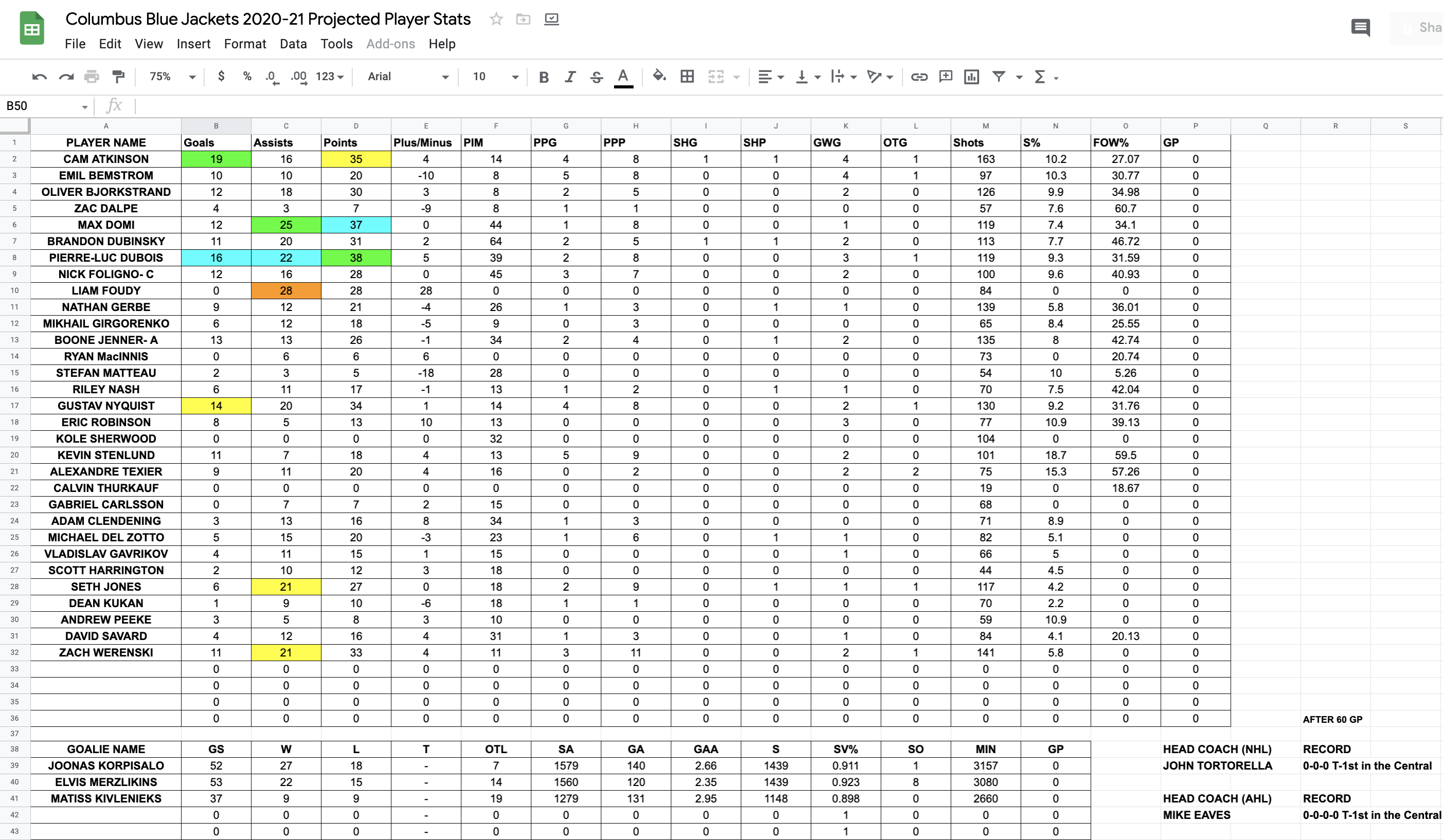
Young players that have had minimal NHL experience may also reflect “inflated” results– Liam Foudy’s forecasted assists entering the 2020-21 season has been highlighted for this reason.
Entering this season, he had only been part of two career NHL games and had one assist in that span. The forecasting function accounts for a player’s entire career and does some mathematics to come up with something over a predetermined number of games for the upcoming season (in this year’s case, 56).
In other words, Foudy’s forecast after 20 team games played should look a bit more “realistic”, for the lack of a better term.
A forecast is not the same as predicting pace.
Foudy has three assists in 12 games played in 2020-21, for example, and is forecasted to finish with about 11 on the season, whereas he is currently on pace for about eight helpers.
There are numerous variables that can, and will, impact a players’ performance throughout the year, including injuries, being a healthy scratch (or on the taxi squad), other American Hockey League related or waiver related transactions, sickness, COVID protocol, suspensions and general superstitions related to individual routines, beliefs, etc. (getting enough sleep before a game, wearing a certain lucky tie, using the same undershirt or shoulder pads for the last 13 years or whatever).
Players can get “hot” or “cold” at any point.
It’s not something that can be accounted for in a numerical forecast that sets aside the “eye test” until you try to figure out the nuances of how or why a player is playing the way they are playing.
In a perfect timeline, this forecast pretends nothing bad could ever happen and every Blue Jackets player lives up to their expectations. In reality, some will pan out, some will exceed expectations and some will fall short for whatever reason.
It’s an educated guess for an outcome in a sport that’s highly unpredictable due to its collectivistic nature and sheer puck luck.
Columbus Blue Jackets Forecast Through 0 Games (56 Games Remaining)
First up, let’s take a look at how things were expected to go coming into the 2020-21 season.
Prior to being traded to the Winnipeg Jets for Patrik Laine and Jack Roslovic, Dubois was forecasted to lead Columbus in scoring with 16-22–38 totals this season.
New acquisition, Max Domi, was forecasted as a close second to Dubois with 37 points– leading the team in assists in the process with 25 (among NHL regulars last season, since Foudy technically was forecasted to lead in assists among Blue Jackets with 28).
Of course, Dubois was traded and Laine and Roslovic are off to hot starts with Columbus– scoring goals in bunches when they find the scoresheet, it seems. We’ll get to that in a minute.
Cam Atkinson was forecasted to score 19 goals prior to the start of the 2020-21 season, which leads Dubois’ 16 forecasted goals and Gustav Nyquist’s 14 forecasted goals on the roster.
Dubois, of course, was traded and Nyquist is out due to injury for most of this season, so… that checks out.
On defense, Zach Werenski and Seth Jones were expected to continue to lead with the way with 33 and 27 points, respectively, from the blue line.
Both defenders are expected to amass 21 assists this season– good enough for the third most forecasted among Blue Jackets skaters entering this season.
In the crease, John Tortorella will have to find the right balance between Joonas Korpisalo and Elvis Merzlikins.
There’s potential for a really solid goaltending duo in Columbus if Korpisalo is the starter and can best his 2.66 forecasted goals against average, as well as his forecasted .911 save percentage, while Merzlikins manages to find a way to reach his 2.35 forecasted GAA and .923 forecasted SV%.
Of course, after 20 team games played, Merzlikins is currently out with an upper body injury, so time will tell if he can return to form.
Columbus Blue Jackets Forecast Through 20 Games (36 Games Remaining)
Through 20 games of the 2020-21 season, the Blue Jackets are three points outside of the last playoff spot in the Discover NHL Central Division, trailing the Chicago Blackhawks for this season’s 4th place cutoff line.
The acquisition of Laine and Roslovic have been quite a welcome sight for Columbus fans, though consistency from the rest of the lineup remains to be an issue.
Laine, however, is currently forecasted to lead the team in goals (26) and points (46), while Roslovic is on track for 10-17–27 totals, which is about what he had in 71 games with the Jets last season (29 points).
Using the current forecasted totals, Roslovic is on track for about .551 points per game this season. He had .408 points per game with Winnipeg in 2019-20.
Atkinson remains in the top-three in scoring, trailing Laine in goals and points with 20 forecasted goals and 39 forecasted points, respectively, while Oliver Bjorkstrand is currently forecasted to amass 15-21–36 totals (the third most on the current roster).
On the blue line, Jones leads the way among defenders in points (32), as well as all skaters in assists with 27 forecasted assists through 20 team games played in the 2020-21 season.
Werenski is more in line with what you’d expect from a young defender of his caliber (8-16–24 forecasted totals) and has missed time due to injury, so that’s clearly a factor in his forecasted drop from before the season began to now.
In the crease, Korpisalo is sure to get more starts than Merzlikins as the latter is currently injured.
Korpisalo’s current forecast yields a goals against average between 2.59-2.63, while Merzlikins is on track for a 2.29-2.33 in however many games he ends up getting.
Why the range in GAA?
That’s new for this season.
It’s just to show a range between what the forecasted total is according to the model and what the adjusted forecast shows (calculated based on the forecasted goals allowed/forecasted minutes multiplied by 60, as one would traditionally do with goals allowed/minutes played multiplied by 60 to determine GAA).
I’m no statistician and I felt like there might be a way to try to get a better read on how things are going for goaltenders (with or without enough necessary data to yield a “realistic” result).
Don’t make any bets using only this forecast. If you’re a professional, you probably already know that.
Anyway, Korpisalo has a forecasted range between .912 and .913 in save percentage through 20 team games played and Merzlikins is on track for between a .923 and a .924 in SV%.
Again, a similar principle applies here.
One end of the range is the straight up forecast, while the other is influenced by forecasted saves/forecasted shots against.
Well, that does it for this forecast. Tune in after 40 team games played to see how things might go down the stretch (the final 16 games this season).
“Tracking pucks” are out (at least for now), Pierre-Luc Dubois and Patrik Laine were traded for one another, Jim Rutherford resigned as General Manager of the Pittsburgh Penguins and the “NDubble” is underway in Lake Placid.
Zdeno Chara signed with the Washington Capitals, the AHL announced plans for the 2020-21 season, the NHL divisions are sponsored for 2020-21, what’s going on with the New York Islanders, Pierre-Luc Dubois wants out (maybe) and we preview the West Division for the 2020-21 season.
Nick and Colby recap the headlines from the last month as well as take a look at all of the New York market teams and try to figure out if any of them are actually any good as Season Six of the podcast begins.
The salary cap isn’t going up as much as everyone hoped. Also, there were plenty of trades, buyouts and extensions handed out in the last week. Nick, Colby, Cap’n and Pete examine each move and pick 2019 NHL Awards winners.
William Karlsson had a goal, Jonathan Marchessault had an assist and Reilly Smith had a goal and an assist en route to the Vegas Golden Knights 3-2 victory over the Winnipeg Jets in Game 4 of the 2018 Western Conference Final. The Golden Knights first liners— along with another strong performance from their goaltender— helped cement a 3-1 series lead.
Vegas is one win away from advancing to the Stanley Cup Final almost a year since their roster was formed via the 2017 Expansion Draft.
Marc-Andre Fleury made 35 saves on 37 shots against for a .946 save percentage in the win for the home team at T-Mobile Arena Friday night, while Winnipeg netminder, Connor Hellebuyck, stopped 26 out of 29 shots faced for an .897 SV% in 58:29 time on ice in the loss.
Penalties are all the more costly in the postseason and the Jets got an early reminder of why that is in the first period when Tyler Myers was called for interference less than two minutes into the action.
William Karlsson (6) buried a shot from one knee off the post and in on the power play and the Golden Knights led, 1-0, 2:25 into the first period. Jonathan Marchessault (10) and Reilly Smith (14) notched the assists on the goal.
Marchessault tied the NHL record for most points by a player in his team’s first playoff appearance (18 points) with his assist on Karlsson’s goal. Igor Larionov was the last player to record 18 points in his team’s first postseason with the San Jose Sharks in 1994, while Jude Drouin was the first to establish the record of 18 points by a player in his team’s first postseason as a member of the New York Islanders in 1975.
A little past the halfway mark of the first period, Mark Scheifele slashed Brayden McNabb and was subsequently sent to the penalty box to serve for a minor infraction. Vegas did not convert on the ensuing player advantage.
After one period, the Golden Knights led, 1-0, on the scoreboard and trailed, 10-9, in shots on goal. Both teams had nine blocked shots and four giveaways aside, while the Jets led in hits (17-15). Vegas led in takeaways (3-2), faceoff win percentage (65-35) and was 1/2 on the power play after 20 minutes of play, while Winnipeg had yet to see any time on the special teams advantage.
Karlsson slashed Jets captain, Blake Wheeler, and was sent to the sin bin early into the second period— less than three minutes into the second frame— but Winnipeg couldn’t will the puck past Fleury on the power play.
Then Tomas Nosek tripped Jacob Trouba at 8:28 of the second period and the Jets went back on the power play.
This time, things were different, as Wheeler had set up Patrik Laine with one of the best chances of the night, only to be denied by Fleury after Laine couldn’t receive the pass cleanly, settle the puck and release one of his patented quick shots in time. No matter, Winnipeg would get another chance.
On the ensuing faceoff in the attacking zone, the Jets won the puck and worked it around the offensive zone before Dustin Byfuglien fed Laine in his comfort zone— the faceoff dot just to the right of Vegas’s netminder.
Laine (5) ripped a shot past Fleury and Winnipeg had a power play goal of their own, tying the game, 1-1, at 9:29 of the second period. Byfuglien (11) and Wheeler (18) had the assists on the goal.
Just like in Game 3, however, the Golden Knights responded on the scoreboard less than a minute later as Nosek found redemption for serving time in the sin bin.
Nosek (1) poked the puck through Hellebuyck after Pierre-Edouard Bellemare nearly scored on a wraparound 10:12 into the second period, giving Vegas a 2-1 lead.
Bellemare (1) and Luca Sbisa (1) were credited with the assists on the Golden Knights goal 43 seconds after Winnipeg tied the game.
Late in the period, Sbisa tripped Nikolaj Ehlers and Vegas went on to kill off the minor penalty without any trouble from the visiting team’s power play.
Through 40 minutes of play, the Golden Knights led, 2-1, on the scoreboard and trailed, 25-22, in shots on goal. Vegas also led in blocked shots (16-15) and takeaways (13-6), while Winnipeg led in hits (32-28) and giveaways (8-6). Faceoff win percentage was even (50-50) after two periods and the Jets were 1/3 on the power play, while Vegas was 1/2 on the skater advantage heading into the second intermission.
A mere 28 seconds into the third period, McNabb was guilty of cross checking Scheifele and was sent to the box. Winnipeg came out of the gates surging and being shorthanded did not help Vegas’s cause, though the Golden Knights were able to kill off the penalty, thanks to Fleury’s stellar goaltending.
But it was Tyler Myers (4) finding the back of the twine in the vulnerable minutes after Winnipeg’s power play, having shot the puck through Fleury’s five-hole and wedging it underneath the net camera.
Jack Roslovic (3) had the only assist on the game-tying goal at 5:34 of the third period. This time the Golden Knights did not immediately strike back and the game remained tied, 2-2, for a little over seven minutes.
A Jets turnover led to a loose puck winding up on Smith’s stick. The Vegas forward charged into the attacking zone and sniped a snap shot past Hellebuyck’s short side going bar down to give the Golden Knights their third lead of the night, 3-2.
Smith’s (2) goal was just his second of the postseason and was unassisted at 13:02.
Time ticked down. Tension grew. Tempers didn’t flare as much as they had in previous games in the series, which didn’t lead to any retaliation penalties that could’ve jeopardized everything for either club.
With 90 seconds remaining in regulation, Hellebuyck vacated the goal for an extra attacker.
Paul Maurice called a timeout at a stoppage in play with 1:13 remaining in regulation to rally his Jets roster, but Gerard Gallant’s Golden Knights matched the intensity— clearing the puck, battling along the boards and keeping the vulcanized rubber biscuit away from their opponent.
Vegas won the final faceoff of the game with 6.8 seconds remaining in their own zone. Winnipeg would not get a last second shot away as Marchessault guided the puck through the neutral zone as the final horn sounded.
The Golden Knights won Game 4, 3-2, and are now one win away from advancing to the 2018 Stanley Cup Final— in their inaugural season.
After 60 minutes of play, Winnipeg led in shots on goal (37-29) and giveaways (16-9), but Vegas led in blocked shots (25-18), hits (45-43) and more importantly in the final results column. The Jets went 1/4 and the Golden Knights were 1/2 on the power play Friday night.
Game 5 is Sunday afternoon at Bell MTS Place in downtown Winnipeg, Manitoba. Puck drop is scheduled for a little after 3:00 p.m. ET and viewers in the United States have the chance to witness history on NBC. Fans in Canada, meanwhile (assuming the entire country’s rooting for the last Canadian team in the postseason) can cheer for the Jets on CBC, Sportsnet or TVAS.
Offseason Analysis: Wait…Kevin Cheveldayoff did something in free agency?
I hadn’t planned on actually having to cover any transactions in this article…
For those who may be unaware, Jets GM Kevin Cheveldayoff is perhaps best-known for his complete disregard for those of us who cover offseason (and trade deadline, for that matter) roster moves and the like. So when he came out firing on July 1st picking up notable free agents like Kulikov and Mason, it came as quite a surprise.
The Jets have have generally always been one of those bubble teams that are hard to predict, but are usually a fun group to watch. Ironically, those two qualities are basically tied together around one central theme: They often struggle to keep pucks out of their own net. Winnipeg has no shortage of offensive punch, but it’s hard to win games 5-4 every night.
With all that in mind, and having done a very solid job of building within the organization for the past few years, Cheveldayoff apparently decided the time was finally right to bring in some outside help to try and push his team over the proverbial hump. We’ll start in net, where former Calder winner Steve Mason was brought in on a 2-year, $4.1M (I scoffed, but the Jets had the cap space) deal to supplement young stud Connor Hellebuyck. Obviously Mason hasn’t turned out to be the world-beater he appeared to be during his unbelievable rookie campaign with Columbus all those years ago, but with his 26-21-8 record, 2.66 GAA and .908 SV% last year with Philadelphia all nearly mirroring his career averages, he’s proven himself to be a more-than-useful backstop, particularly when used in a ‘1a-1b’ goaltending duo role, which could very well be what we see utilized in Winnipeg. Should he or Hellebuyck falter, the Jets have the luxury of having proven backup Michael Hutchinson and 2013 2nd round pick Eric Comrie waiting in the wings with AHL-affiliate Manitoba.
Moving away from the blue paint, the Jets also bolstered an already solid, if not always consistent blueline with the addition of 6’1″ 204lb Russian defenseman Dmitry Kulikov. The jury is still deliberating on Kulikov’s true value (even after over 500 games of NHL experience), but he has certainly shown flashes of high-quality play over the years. His offensive production hasn’t often been what he was once thought capable of, but with all of the talent on Winnipeg’s blueline, that’s not a high priority for him to fill, anyhow. A physical force capable of some absolute filling-loosening hits, the Jets simply need Kulikov to limit his mistakes and help stabilize their D corps. At just 26 years of age, he’s still more than capable of learning and adapting his game, but brings with him the benefit of being an NHL regular since his draft year, giving him experience beyond his years. Slot Kulikov next to big Dustin Byfuglien dishing out plenty of physicality with a steady amount of added offense on Winnipeg’s 2nd pairing, with 2012 and 2013 1st round picks Jacob Trouba and Josh Morrissey munching up the minutes on the top pairing and smooth-skating vets Toby Enstrom and Tyler Myers (picturing 5’10” Enstrom and 6’8″ Myers standing next to each other on the blueline makes my heart happy) rounding out the rotation. Throw in the versatile Ben Chiarot as the 7th man, and Winnipeg’s blueline looks more than capable of stepping up their performance from seasons past.
Up front, the Jets went into this offseason with little to worry about, but adding the versatility of guys like Matt Hendricks and Michael Sgarbossa on low-risk deals obviously didn’t hurt them. Hendricks can replace some of Anthony Peluso’s grit while also being a much more serviceable player, while Sgarbossa, though likely to spend much of the season in Manitoba, can bring a bit of extra offensive prowess into the lineup as opposed to Quinton Howden, whom he essentially replaced.
The rest of the forward group carries over, and there’s not a slouch among them. Of the 12 forwards I have on Winnipeg’s projected opening night roster, only one has reached the age of 30 as of this writing, and that’s 31 year old captain Blake Wheeler, who is coming off of a 26 goal, 74 point season. Eight of those forwards are former 1st round picks; five of whom were Winnipeg’s own choices. There’s also in-house 2nd round pick Nic Petan (who I have as the 13th forward) accompanying 3rd round pick Adam Lowry and 4th rounder Andrew Copp. Strong camps from youngsters like 2015 Jets 1st rounder Jack Roslovic or Sabres 2014 2nd round pick Brendan Lemieux could easily get them out of Manitoba for the start of the year, as well.
Remember what I said about Cheveldayoff building from within?
Offseason Grade: B
The Jets weren’t that far off from contending, even in the hyper-competitive Central. Cheveldayoff has done an excellent job of building his team the way he wants it, with his own core group of young talent. He knew he didn’t need to throw that big of a wrench at it, and he didn’t. With a few small tweaks, on generally reasonable deals, the Jets look to have covered the few leaks they had. If this young team can continue to gel, and play with the consistency they’ve lacked in key moments over the past few years, they have the tools to put a serious hurting on some unsuspecting opponents.
Oh, and say a prayer for all of the crossbars Laine will be punishing in the coming months.
Boston Bruins (from LA) D Jakub Zboril, Saint John (QMJHL)
Boston Bruins LW Jake DeBrusk, Swift Current (WHL)
Boston Bruins (from CGY) RW Zach Senyshyn, Sault St. Marie (OHL)
New York Islanders (from PIT via EDM) C Mathew Barzal, Seattle (WHL)
Winnipeg Jets LW Kyle Connor, Youngstown (USHL)
Ottawa Senators D Thomas Chabot, Saint John (QMJHL)
Detroit Red Wings LW Evgeny Svechnikov, Cape Breton (QMJHL)
Minnesota Wild C Joel Eriksson Ek, Farjestad (SWE)
Ottawa Senators (from NYI via BUF) C Colin White, USA U18 (USHL)
Washington Capitals G Ilya Samsonov, Magnitorgotrsk (MHL)
Vancouver Canucks RW Brock Boeser, Waterloo (USHL)
Philadelphia Flyers (from NSH via TOR) C/RW Travis Konecny, Ottawa (OHL)
Winnipeg Jets (from STL via BUF) F Jack Roslovic, USA U18 (USHL)
Montreal Canadiens D Noah Juulsen, Everett (WHL)
Anaheim Ducks D Jacob Larsson, Frolunda Jr. (SWE-JR)
New York Islanders (from NYR via TB) LW Anthony Beauvillier, Sherwinigan (OHL)
Columbus Blue Jackets (from TB via PHI and TOR) D Gabriel Carlsson, Linkoping, Jr. (SWE-JR)
Arizona Coyotes (from CHI) C/RW Nicholas Merkley, Kelowna (WHL)
Pre Draft Trades
The Buffalo Sabres acquired G Robin Lehner and F David Legwand from the Ottawa Senators for the 21st overall pick in the 2015 NHL Entry Draft.
The Boston Bruins traded D Dougie Hamilton to the Calgary Flames for the 15th, 45th, and 52nd overall picks in the 2015 NHL Entry Draft.
The Los Angeles Kings acquired F Milan Lucic from the Boston Bruins for the 13th overall pick, G Martin Jones, and D Colin Miller. Boston retained $2.7 million of Lucic’s salary.
Trades Made During the Draft
The Buffalo Sabres acquired F Ryan O’Reilly and F Jamie McGinn from the Colorado Avalanche for F Mikhail Grigorenko, D Nikita Zadorov, and F J.T. Compher and the 31st overall pick.
The Edmonton Oilers trade the 16th and 33rd overall picks to the New York Islanders for D Griffin Reinhart.
The Toronto Maple Leafs sent the 24th overall pick to the Philadelphia Flyers in exchange for the 29th and 61st overall picks.
The Tampa Bay Lightning swapped the 28th overall pick with the New York Islanders for the 33rd and 72nd overall picks.
The Toronto Maple Leafs sent the 29th overall pick to the Columbus Blue Jackets for the 34th and 68th overall picks.
The Anaheim Ducks acquired the 41st overall pick and a 2016 draft pick from the New Jersey Devils for Kyle Palmieri.


















 Down the Frozen River
You must be logged in to post a comment.