Tag: DTFR Numbers Game

  • Numbers Game: 2018-19 League Forecast Entering December

    We’re just over a week into December, I know, but let’s all hop in the time machine and take a retroactive look at how the rest of the season should pan out based on how the league standings were through November 30, 2018.

    Things have started to cool in places around the league (like Carolina), while other clubs (like Buffalo) have heated up to become serious playoff contenders– so let’s take a look at how everything should shake out between now and the first couple of weeks of April.

    There’s no guarantees with any forecast, but general indications start to get a little clearer once the season’s hit the quarter-mark and American Thanksgiving has come and gone.

    Realistically, if your team is anywhere between 1st and 5th in your division, you’re in for the ride of your life still from now through the end of the regular season. If you’re 6th, 7th or 8th, well, it’s never too early to start thinking about the Draft lottery (plus the 2019 IIHF World Junior Championship’s coming up at the end of the month, so that’s exciting too) or about how many games it would take to go on an incredibly hot streak and jump back into the playoff picture.

    Nothing’s impossible.

    Without further ado, it’s time to glance around the league and breakdown some of the unforeseen circumstances that are yet to come.

    Projected Standings After Two Months

    Eastern Conference

    Atlantic Division

    1. y-Tampa Bay Lightning, 108 points (26 GP so far)
    2. x-Boston Bruins, 104 points (25 GP so far)
    3. x-Toronto Maple Leafs, 101 points (26 GP so far)
    4. wc1-Buffalo Sabres, 91 points (27 GP so far)
    5. Montreal Canadiens, 91 points (25 GP so far)
    6. Detroit Red Wings, 85 points (25 GP so far)
    7. Florida Panthers, 84 points (24 GP so far)
    8. Ottawa Senators, 83 points (26 GP so far)

    The Tampa Bay Lightning rightfully lay claim to the crown as the leader of the Atlantic Division at regular season’s end. It doesn’t matter that Steven Stamkos has yet to record a point in six career Game 7s. The Lightning have Nikita Kucherov, Tyler Johnson and Brayden Point on a line of their own. They don’t even need Stamkos.

    Just kidding, they still do, because that other No. 91 signed with the Toronto Maple Leafs in the offseason and just think how explosive a playoff matchup of Tampa and Toronto could be in the Battle of John Tavares Signed Where Leafs Fans Wanted Steven Stamkos To Sign Just A Couple Of Offseasons Ago, But Didn’t Because He Stayed With The Lightning.

    You know it’s going to happen.

    Actually, in the latest forecast entering December, the Boston Bruins slide out of the top spot, because injuries continue to plague their season. However, if they can recover to full health, there’s a good chance they might usurp the Maple Leafs and finish 2nd in the division, unlike what current standings dictate.

    But regaining full health is a major stipulation and part of the reason why– while Toronto is 3rd in this forecast– there’s a good chance the Bruins might (probably will) slip further as January’s forecast nears.

    This is about the time where it’s important to note the overarching focus on this forecast should be on where each team is positioned and how close in points they are to those above and below before placing any concrete emphasis on how things play out from now through the first week of April 2019.

    The Buffalo Sabres make the biggest gain in the Atlantic Division, jumping up four spots in the division standings from the basement to 4th place and a playoff berth (albeit a wild card spot).

    The Sabres 10-game winning streak– combined with the additions of Rasmus Dahlin and Jeff Skinner in the offseason– proved to be a season-defining stretch of games as Buffalo returns to Stanley Cup Playoff action for the first time since 2011 (despite the current 0-3-2 run in their last five games).

    On the outside looking in, the Montreal Canadiens slipped a spot and might be a pretender– especially if Carey Price (11-8-4 record, 2.92 goals against average, .902 save percentage in 23 games played) continues to struggle. To his credit, his GAA is under three now, so there’s that.

    The Detroit Red Wings gained some traction with the ongoing lack of focus in Ottawa Senators video reviews and the Florida Panthers injuries.

    Metropolitan Division

    1. p-Washington Capitals, 108 points (25 GP so far)
    2. x-Columbus Blue Jackets, 99 points (25 GP so far)
    3. x-Pittsburgh Penguins, 98 points (24 GP so far)
    4. wc2-New York Rangers, 92 points (26 GP so far)
    5. New York Islanders, 90 points (24 GP so far)
    6. Carolina Hurricanes, 87 points (25 GP so far)
    7. Philadelphia Flyers, 86 points (24 GP so far)
    8. New Jersey Devils, 81 points (24 GP so far)

    The Washington Capitals remain in control of the Metropolitan Division with the Columbus Blue Jackets and Pittsburgh Penguins in tow.

    Of course, Columbus and Pittsburgh are worth keeping a close eye on as the Blue Jackets have been all over the place near the top and the Penguins have yet to be in playoff position since– actually, pretty much never so far this season.

    Plus there’s the whole “second-half of the season surge” we’re still waiting to see from Mike Sullivan’s bunch. That’ll almost assure Pittsburgh of a playoff berth, if not in a divisional spot, at least.

    The New York Rangers gained two spots since entering November, which means the rebuild’s over!

    Just kidding.

    Look how close the Rangers, New York Islanders and Carolina Hurricanes are forecasted to be in points. Even the Philadelphia Flyers have a chance– mathematically speaking, of course.

    The battle for the last wild card spot in the Eastern Conference is going to come down to one of the teams in the Big Apple and Carolina, especially since the rest of the division lacks clarity.

    Meanwhile, the New Jersey Devils are in the dumps. Taylor Hall isn’t a flash in the pan, but the rest of the Devils are, it appears.

    Western Conference

    Central Division

    1. z-Nashville Predators, 104 points (26 GP so far)
    2. x-Minnesota Wild, 98 points (25 GP so far)
    3. x-Winnipeg Jets, 97 points (24 GP so far)
    4. wc1-Colorado Avalanche, 93 points (26 GP so far)
    5. wc2-Dallas Stars, 90 points (26 GP so far)
    6. St. Louis Blues, 88 points (24 GP so far)
    7. Chicago Blackhawks, 87 points (26 GP so far)

    Both the Nashville Predators and Minnesota Wild remain in the 1-2 spots in the latest forecast. Despite the current hot streak from the Calgary Flames, the Predators are going to be the best team in the conference by the end of the regular season.

    The Winnipeg Jets are starting to become like the Penguins under Sullivan’s reign in that Paul Maurice is bound to lead his team to a second-half of the season surge into a divisional spot (or higher).

    Of course, there’s always a wild card– both in the literal wild card berth and dark horse standpoint– and that’s the Colorado Avalanche.

    The Avs have a great chance at jumping up into a divisional spot, since they’ve gained three positions from the previous forecast entering November to the current forecast entering December. The fact of the matter is the Avalanche are a playoff contender– like last season– but with the added improvement of having built on last season’s experience.

    Then there’s the Dallas Stars, who might find themselves landing in a wild card position by circumstance (have you even seen the Pacific Division?) and by luck in Jim Montgomery’s first season behind the bench.

    Towards the cellar of the Central Division, the St. Louis Blues are bad, but not as bad as they are currently, which isn’t great news if you’re trying to lose for Jack Hughes.

    But if you’re a Blues fan who hates rivals more than losing, there’s a positive takeaway– the Chicago Blackhawks are destined to finished last in the Central. They’re bad. Very bad.

    Pacific Division

    1. y-San Jose Sharks, 97 points (26 GP so far)
    2. x-Anaheim Ducks, 97 points (28 GP so far)
    3. x-Calgary Flames, 93 points (26 GP so far)
    4. Vegas Golden Knights, 85 points (27 GP so far)
    5. Edmonton Oilers, 82 points (25 GP so far)
    6. Los Angeles Kings, 79 points (26 GP so far)
    7. Arizona Coyotes, 78 points (24 GP so far)
    8. Vancouver Canucks, 78 points (28 GP so far)

    The San Jose Sharks’ grasp on the Pacific Division is loosening as the Anaheim Ducks are heating up as one of the hottest teams out west– and that’s not including the one with fire in their name.

    San Jose should– should— hit their stride at some point and have everything click into place, but if they don’t the Ducks are hot on their tail. How close? Close enough to show there’s no difference in their forecast total points in the standings by the end of the regular season.

    The Sharks could be first or they could be second. Perhaps the Calgary Flames have something to say about that.

    It’s anybody’s game in the Pacific Division playoff berths, but one thing’s for sure, there’s not going to be a wild card team coming out of the Pacific.

    For the Vegas Golden Knights, that means they’re really going to have to soar and never let their foot off the gas. Vegas only survived so much without Nate Schmidt in the lineup on their blue line– they can’t afford any more major bumps in the road.

    The Edmonton Oilers have Ken Hitchcock behind the bench and while they might appear to be gaining ground, they’re sure to be just outside of the playoff window looking in like how Hitchcock’s Stars were last season. Just wait for the implosion.

    In the bottom three, the Los Angeles Kings might not be as terrible as they have been if 1) Marco Sturm gets named head coach and Willie Desjardins’ interim basis comes to a close and 2) the Kings light a fire under their grizzled veterans and revive whatever’s left of them this season.

    The Arizona Coyotes are on par with how Arizona’s been the last few seasons. Not great, but not terrible and sometimes downtrodden due to injury.

    The hype surrounding the Vancouver Canucks in October and early November was just that– hype. No amount of Elias Pettersson, Bo Horvat and Brock Boeser can compensate for the holes on the blue line and lack of goaltending. It’s almost as if Canucks General Manager Jim Benning has been living a Groundhog Day career from year-to-year with Vancouver.

    Their offense is good, their defense is suspect and their goaltending isn’t starter quality.

  • Numbers Game: March to the Playoffs

    First of all, it’s March, which means it’s officially the best month of the year, but not for any of the reasons you’re thinking. College basketball can stay on the back burner– especially when there’s playoff hockey to look forward to next month when, oh yeah, that NCAA championship game actually occurs.

    Save your “March is the worst month of the year” takes for the next person in line, thanks.

    Anyway, at this point in the season it’s worth noting that the trade deadline has come and passed. While acquisitions like Rick Nash for the Boston Bruins, Derick Brassard for the Pittsburgh Penguins, Tomas Tatar for the Vegas Golden Knights and Paul Stastny for the Winnipeg Jets will certainly impact their teams, the following projected standings are merely an educated guess at how things should pan out.

    There are simply too many variables that Microsoft Excel cannot account for, namely injuries, roster changes and well, whether or not a player woke up on the right side of the bed that day.

    To that end, some projected points totals had a little Gut Feeling 2.0 added to them. In other words, the Toronto Maple Leafs are not going to end up with 130 or 131 points like a couple of models showed– there’s simply not enough games remaining for them to almost match an NHL record.

    Therefore, more realistic measures have been added for some teams to account for “reality”.

    Some teams like the Chicago Blackhawks, for instance, had a little win-percentage on the season taken into account for their 19 remaining games on the season– and then reflected in the total number of points they should earn.

    As with all stats and analytics, try not to get too bogged down on one or another. A holistic viewpoint goes much further than trying to survive on heart and grit alone.

    Especially in today’s NHL, where speed and skill are more present than ever before.

    With that, here’s a glance at how the standings should shake out for all 31 NHL clubs based on their performances through February 28, 2018.

    As always, my degree is in communication, not math. In other words, throw everything mentioned above out the window, strap yourself in and good luck surviving the adrenaline rush that is the Stanley Cup Playoffs.

    Oh, your team’s not going to make it, you say?

    My condolences, Ottawa Senators, Buffalo Sabres, New York Rangers, Carolina Hurricanes, Blackhawks and Arizona Coyotes fans. Next year is totally your year.

    Maybe.

    2017-2018 Projected Standings after Five Months

    Eastern Conference

    Atlantic Division

    1. y-Tampa Bay Lightning, 106 points (64 GP so far)
    2. x-Boston Bruins, 105 points (61 GP so far)
    3. x-Toronto Maple Leafs, 105 points (66 GP so far)
    4. Montreal Canadiens, 78 points (63 GP so far)
    5. Detroit Red Wings, 75 points (63 GP so far)
    6. Florida Panthers, 75 points (60 GP so far)
    7. Buffalo Sabres, 68 points (64 GP so far)
    8. Ottawa Senators, 65 points (62 GP so far)

    The Atlantic Division was already determined in December. Nothing should surprise anyone, except for how close it should be coming down the wire for first place in the division.

    It might seem crazy considering the Tampa Bay Lightning really bolstered their defense with Ryan McDonagh at the trade deadline, but Boston and Toronto have as much speed and offense to remain in the hunt for that little “Y” next to their names down the stretch. Plus it helps that the Lightning, Bruins and Maple Leafs aren’t playing each other every night, so that has to factor in their somehow.

    Between 4th and 6th in the division it’s anyone’s game. The Montreal Canadiens, Detroit Red Wings and Florida Panthers are all teetering on the edge of either a rebuild or just a few steps away from a re-tool-on-the-fly.

    Neither of them are inherently “ideal”, but they can’t do anything else to compete with Tampa, Boston and Toronto.

    It’s worth noting that the Buffalo Sabres will barely climb out of the basement of the division this year. And that’s without Jack Eichel (fractured ankle).

    Simply put, the Ottawa Senators are beyond bad.

    Metropolitan Division

    1. z-Pittsburgh Penguins, 108 points (64 GP so far)
    2. x-Philadelphia Flyers, 99 points (63 GP so far)
    3. x-New Jersey Devils, 97 points (63 GP so far)
    4. wc1-Columbus Blue Jackets, 96 points (63 GP so far)
    5. wc2-Washington Capitals, 94 points (64 GP so far)
    6. New York Islanders, 87 points (64 GP so far)
    7. Carolina Hurricanes, 75 points (63 GP so far)
    8. New York Rangers, 72 points (64 GP so far)

    After much turbulence leading up to this month in the Metropolitan Division, it seems by the end of the month, we’ll have a clear picture of who’s really a contender, who’s making a Second Round exit and who’s just pretending to be on the ice when they’re actually sending out some pretty high-tech holograms on the ice.

    In other words, the Pittsburgh Penguins are suited for a three-peat as long as Matt Murray can stay healthy. Even still, they’re beginning to peak at the right time as they have done every year with Mike Sullivan behind the bench.

    But who’s that neighbor of theirs in Pennsylvania? They might have to re-grease some poles in Philadelphia, because the Flyers are surging right now and it should carry them into decent playoff position.

    The New Jersey Devils, Columbus Blue Jackets and Washington Capitals all remain competitive, but sadly fall victim to First or Second Round exits simply because have you seen the rest of the Eastern Conference? Yeah, I thought so too.

    One of these years if the Carolina Hurricanes look to actually spend a little more money they’ll be able to take their money-puck approach back to the postseason for the first time since 2009, but this year is not that year. They didn’t do anything at the deadline and it shows.

    Western Conference

    Central Division

    1. p-Winnipeg Jets, 116 points (63 GP so far)
    2. x-Minnesota Wild, 104 points (63 GP so far)
    3. x-Nashville Predators, 100 points (62 GP so far)
    4. wc2-St. Louis Blues, 92 points (65 GP so far)
    5. Dallas Stars, 92 points (63 GP so far)
    6. Colorado Avalanche, 85 points (63 GP so far)
    7. Chicago Blackhawks, 70 points (63 GP so far)

    Your President’s Trophy winners, ladies and gentlemen, entering March 2018 should be the Winnipeg Jets.

    That’s right, the team in Winnipeg, Manitoba with a seating capacity of a little more than 15,000 fans at Bell MTS Place. That one. Winnipeg. The Western Conference’s Carolina Hurricanes. They aren’t big spenders, yet they bought exactly what they needed at the trade deadline in Paul Stastny.

    Meanwhile, apparently Eric Staal‘s first hat trick in a little over five years is enough to catapult the Minnesota Wild on a surprising run down the stretch. Though they are currently 3rd in the Central Division, Minnesota is coming alive.

    It’s hard to knock the Nashville Predators off of their game– especially while they’re in command of the division– but something just doesn’t go exactly as planned this month for the Preds.

    They’ll still beat Minnesota in the First Round and set themselves up for quite a matchup with Winnipeg in the Second Round though. Obviously the winner of that is going to battle the Vegas Golden Knights for the Clarence S. Campbell Bowl.

    A warning to the St. Louis Blues– keep up this downward trend and the Dallas Stars will replace you in the wild card.

    Whatever upper body injury is plaguing Corey Crawford is only making things worse for the Chicago Blackhawks.

    In some models, they should be a lot better than they are right now, but that’s due to their impressive streak of success from 2010-17. Now, in 2018, the wheels fell off and the floor fell out from under them– on top of the Crawford injury.

    Pacific Division

    1. y-Vegas Golden Knights, 113 points (63 GP so far)
    2. x-Los Angeles Kings, 105 points (64 GP so far)
    3. x-Anaheim Ducks, 100 points (64 GP so far)
    4. wc1-San Jose Sharks, 94 points (64 GP so far)
    5. Calgary Flames, 78 points (65 GP so far)
    6. Edmonton Oilers, 78 points (63 GP so far)
    7. Vancouver Canucks, 77 points (64 GP so far)
    8. Arizona Coyotes, 63 points (62 GP so far)

    The Vegas Golden Knights, in their inaugural season, come up three points shy of winning the 2017-18 President’s Trophy as the team with the best regular season record. The Vegas Golden Knights.

    Despite the push from all of the California clubs, this is Vegas’s division title to lose. Not just in the regular season, but in the playoffs too.

    No amount of onslaught from the Los Angeles Kings or Anaheim Ducks should be able to stand a seven-game series with Ryan Reaves and the rest of the Golden Knights. Having said that though, it’s a shame the San Jose Sharks will likely pair-up with the Jets, because we’ll never get to know if Vegas could single handedly defeat all three California teams en route to the 2018 Stanley Cup Final.

    That’s assuming a lot, but let’s roll with it.

    All season long the Calgary Flames have been a lovable underdog. Unfortunately, their time is cut short. All good things must come to an end and again, if you’re going to do nothing at the deadline as a fringe competitor, you can’t expect to improve.

    At least you shouldn’t, otherwise well, you know the definition of insanity (doing the same thing and expecting a different result).

    Better luck next year, Edmonton Oilers, Vancouver Canucks and Arizona Coyotes.

  • Numbers Game: Boston through 60 (in 17-18)

    Thanks to a nor’easter back in January that postponed a Boston Bruins-Florida Panthers matchup to the very last day of the regular season in April, the Bruins have passed the 60 game mark just in time for the trade deadline to have come and gone.

    In other words, thanks to the day off between Sunday’s game in Buffalo and Tuesday night’s matchup on home ice against Carolina, I was able to put together projections for all of the new additions to the roster from the last week or two (Brian Gionta, Rick Nash, Tommy Wingels and Nick Holden).

    Anyway, through 60 games of the 2017-18 season, the Boston Bruins have faltered as of late to 3rd place in the Atlantic Division with five games in hand on the Toronto Maple Leafs.

    Nothing to worry about– what’s that, Patrice Bergeron‘s out for at least two weeks?

    Okay, still nothing to worry about. The Bruins have a secret weapon with the last name “Nash”. No, his first name’s not “Rick”, though Rick Nash could really bring this team to the next level as a result of his acquisition. The secret weapon is Riley Nash.

    Yes, Riley Nash.

    He’s having a career season that could result in 13-23–36 totals when all is said and done. Even with his current 10-18–28 totals in 59 games played, he’s set new career highs in all offensive categories. Imagine what an additional three goals and five assists over the next 22 games could do for Boston as they head down the stretch with some unprecedented depth-scoring.

    But enough about Riley Nash, let’s take a look at the rest of the roster, shall we?

    Take a look at the latest forecast for the Bruins in the charts below. As always, please keep in mind that my degree is in communication and not math or anything to do with numbers, really. My expertise is in words so if anything looks out-of-whack– it’s Microsoft Excel’s fault.

    I’m just kidding.

    There’s outliers in everything and not every prediction pans out. Again, these charts are only a utopian view on things– ignoring injuries, healthy scratches, sickness, bad hair days or anything else.

    Unknown-7

    Boston Bruins Projections Through 60 Games (22 Games Remaining)

    This slideshow requires JavaScript.

    Rick Nash should fit right in alongside David Krejci and Jake DeBrusk on the second line for Boston. In turn, the second line’s offense should breakout once the chemistry of a few games together is in flawless rhythm. Rick Nash just might end up with 40 points on the season, thanks to Krejci’s golden passes.

    Hopefully that means another contract at the end of the season for the pending-UFA wearing No. 61.

    Brad Marchand should top the scoring list for the Bruins for yet another year, surpassing the 70-point plateau with an expected 30-44–74 totals by the end of the regular season. Fellow linemates, Bergeron and David Pastrnak should also see some fantastic results over the next 22 games.

    Even with his current injury– a fractured right foot– Bergeron should be able to set a new career high in goals (33). Meanwhile, Pastrnak should cruise past the 60-point plateau, primarily setting up helpers on Marchand’s gifted offense.

    Boston’s answer to their opponent’s third line on any given night? Danton Heinen.

    The rookie should amass 16 goals and 36– 36!– assists (52 points) in his first full NHL season.

    Looking further down the lines, Tim Schaller should reach the 20-point plateau. As a fourth liner. The rest of the fourth line? Sean Kuraly should reach 15 points. Noel Acciari should notch 11 points.

    On defense, Zdeno Chara and Charlie McAvoy should put up respectable numbers for their age groups while Torey Krug continues his venture in the “live or die by the sword” life.

    Krug is on pace for 51 points this season, which would match his career year of… …last season. The only problem is when he has a bad night, he has a bad night. Still, his scoring and puck moving abilities far outweigh some of his drawbacks. His counterpart, however, is in the midst of a sophomore slump.

    Brandon Carlo hasn’t been great. Fear not though, he’s still a top-four defenseman moving forward. The future of the Bruins blue line is contingent upon McAvoy leading the charge with Carlo developing more of a shutdown style. Though he is only projected to score one goal this season, his offense isn’t the main focus.

    His plus-minus, however, should be. Carlo has a plus-11 entering Tuesday night. He’s projected to be a plus-14. For someone that’s averaging almost 20 minutes a night a plus-3 differential in the last 22 games of the season should be a bit of a concern considering Boston’s overall improvement in goal scoring from last season to this season.

    Consider giving Nick Holden a shot, Bruce Cassidy, if Carlo’s condition worsens. Conversely, give Matt Grzelcyk a try on the second pair, since he’s already on pace for a better season than Carlo.

    In goal, Tuukka Rask is best limited to between 55-60 games and it’s looking like this year will keep him in that sweet spot. You’ve been warned, other 30 teams in the NHL.

    Rask’s projected 2.21 goals against average and .927 save percentage rank 2nd and 3rd in his career in seasons with at least 41 games played.

    Meanwhile, the real Anton Khudobin has decided to show up again. He’s a backup goaltender disguising himself as “having a ridiculous season”, well, until recently at least. A forecasted 2.44 GAA and .920 SV% isn’t the worst thing for a backup goaltender, but it doesn’t scream “is there a goaltending controversy in Boston?” (which, for the record, there never was since Tim Thomas‘s departure).

    Khudobin filled in well at the beginning of the season when it mattered, but his luck has slowed. He’s performed his role well enough to earn another year in black-and-gold if Bruins general manager, Don Sweeney, chooses to send him a new contract for another year while Zane McIntyre and Dan Vladar develop in the system (or Jeremy Swayman down the road).

  • Numbers Game: Ranking the NHL Mascots (5-1)

    Numbers Game: Ranking the NHL Mascots (5-1)

    The following is a continuation of the ranking of all of the mascots in the NHL, based on the list of NHL mascots Wikipedia page.

    462032248.jpg
    Blades is definitely mascot goals if you want to make the top five. (Photo by Brian Babineau/ Getty Images)

    5. Blades- Boston Bruins

    Blades is a fierce looking mascot with a big heart deep inside. Trust me, from personal experience, Blades is really nice, despite what nightmares he may give you. The Bruins hit one out of the park when they introduced Blades, a bruin (which is an old English word for “bear”, look it up) that has luscious blue eyes.

    Additionally, Blades is less sarcastic than The Bear, Boston’s unofficial mascot that they use in plenty of marketing schemes who helps fit the New England stereotype of being tough and a diehard fan of Rene Rancourt.

    C23vSKrXUAQHEjA.jpg
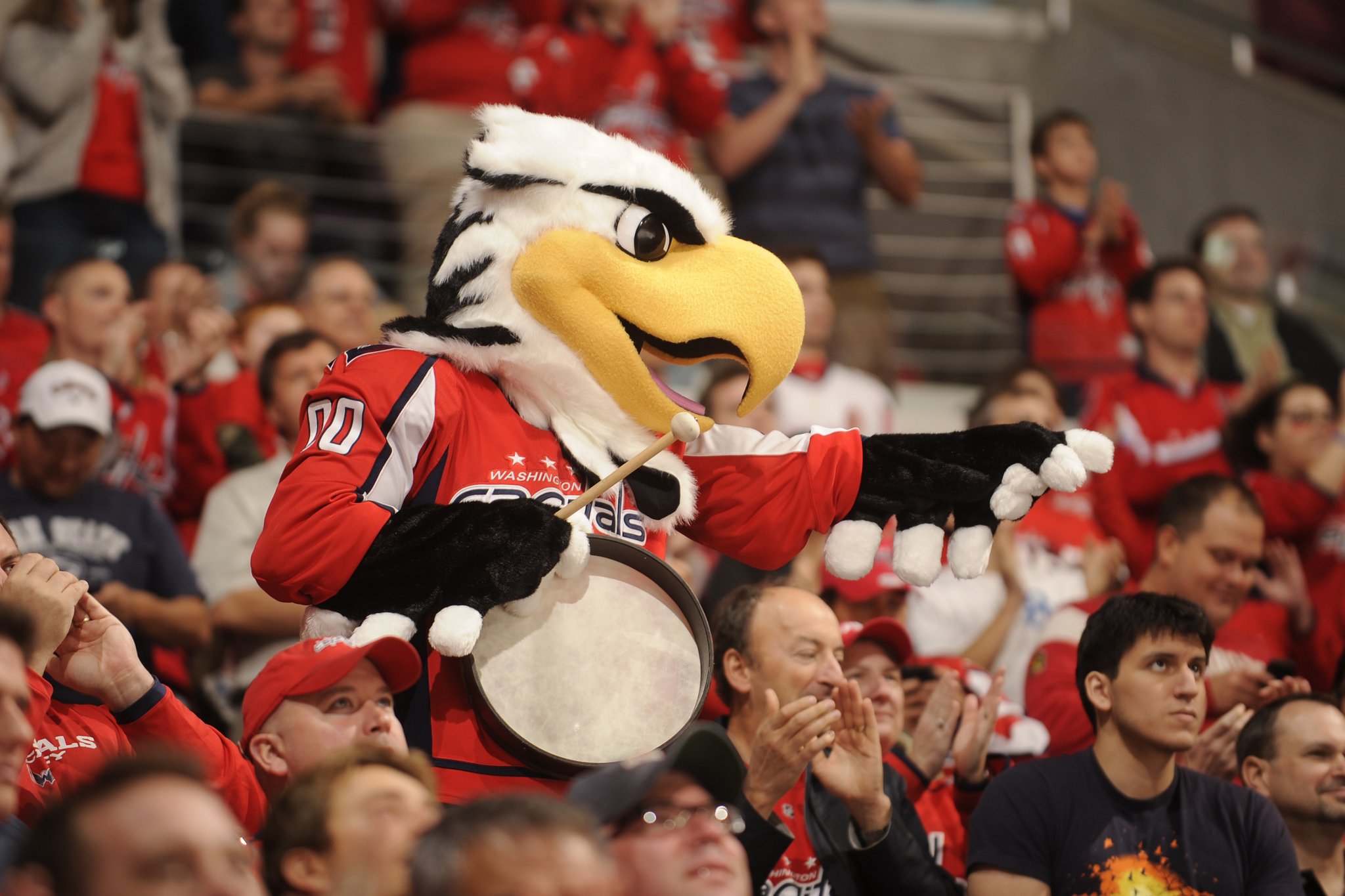
    Slapshot is a great mascot for the Capitals, but enough with the drum, Slapshot, we’re trying to watch the game. (Photo via @Caps_Slapshot)

    4. Slapshot- Washington Capitals

    Nothing screams patriotism than a bald eagle representing your hockey franchise that plays in Washington, D.C. Nothing. Slapshot is an excellent mascot. Seriously. Well done. Props to you, Washington Capitals, you remembered to give your wicked cool mascot pants and all.

    My only complaint (like with any mascot) is the drum. I hate those during play and they’re pretty tacky if your fan base can’t rally themselves and must be provoked to cheer or chant. Okay, rant over, please don’t hate me Capitals fans. It’s nothing against you, just something about sports that I’ve observed over the years.

    Cgm5UHBUUAAyhX3.jpg
    Wild Wing, you make my heart sing. (Photo via @WildWing_93)

    3. Wild Wing- Anaheim Ducks

    The California teams sweep the podium in my ranking of the NHL’s mascots and for good reason. To some, Wild Wing could rank higher or lower, but to me, Wild Wing comes in at number three. Look, this is a quality mascot. I have no complaints other than minor qualms about Wild Wing’s lack of pants and such. And if you claim he’s wearing pants and that they’re white. Newsflash, IT’S AFTER LABOR DAY.

    As an aside, I’ve never seen the Mighty Ducks or any of the sequels. No, I won’t watch them because you tell me I have to in order to be a real ’90s kid, hockey fan or whatever.

    C1x-hOmUoAEw1jp.jpg
    S.J. Sharkie + Brent Burns forever. True love does exist. (Photo via @sjsharkie)

    2. S.J. Sharkie- San Jose Sharks

    What other mascot tries to eat everyone they meet? Anyone? Anyone? I didn’t think so. S.J. Sharkie not only rappels from the rafters (and gets stuck every now and then), but likes to offer his bite instead of a handshake as a formal greeting. Simply put, S.J. Sharkie is on the shortlist of mascots I wouldn’t mind having at my birthday party sometime.

    No amount of Metallica could keep the Shark Tank rocking on its own. S.J. Sharkie is the heart and soul of SAP Center and he knows how to keep it loud all the time. Party at S.J. Sharkie’s everyone.

    Cz2Dfl2UsAArsgx.jpg
    Bailey is truly the pride of the pack. He is the king of mascots. (Photo via @BaileyLAKings)

    1. Bailey- Los Angeles Kings

    Bailey reigns supreme over all of the other mascots in the NHL. He’s got the royal look down with the heart of a lion. Though lions are typically menacing, Bailey’s actually pretty amiable. The Los Angeles Kings really outdid themselves with the creation and implementation of Bailey as their mascot.

    Named after the Kings’s pro scouting director, Garnet “Ace” Bailey, who was tragically killed when United Airlines Flight 175 hit the south tower on 9/11, the Los Angeles franchise turned the tragedy and mourning of a coworker, mentor, friend and family member into part of the organization’s legacy forever. What better way to memorialize a man like “Ace” Bailey than by making him the most approachable mascot in the NHL?

  • Numbers Game: Ranking the Mascots of the NHL (20-16)

    Numbers Game: Ranking the Mascots of the NHL (20-16)

    By: Nick Lanciani

    The following is a continuation of the ranking of all of the mascots in the NHL, based on the list of NHL mascots Wikipedia page.

    CtY77z2WgAAuCiC.jpg
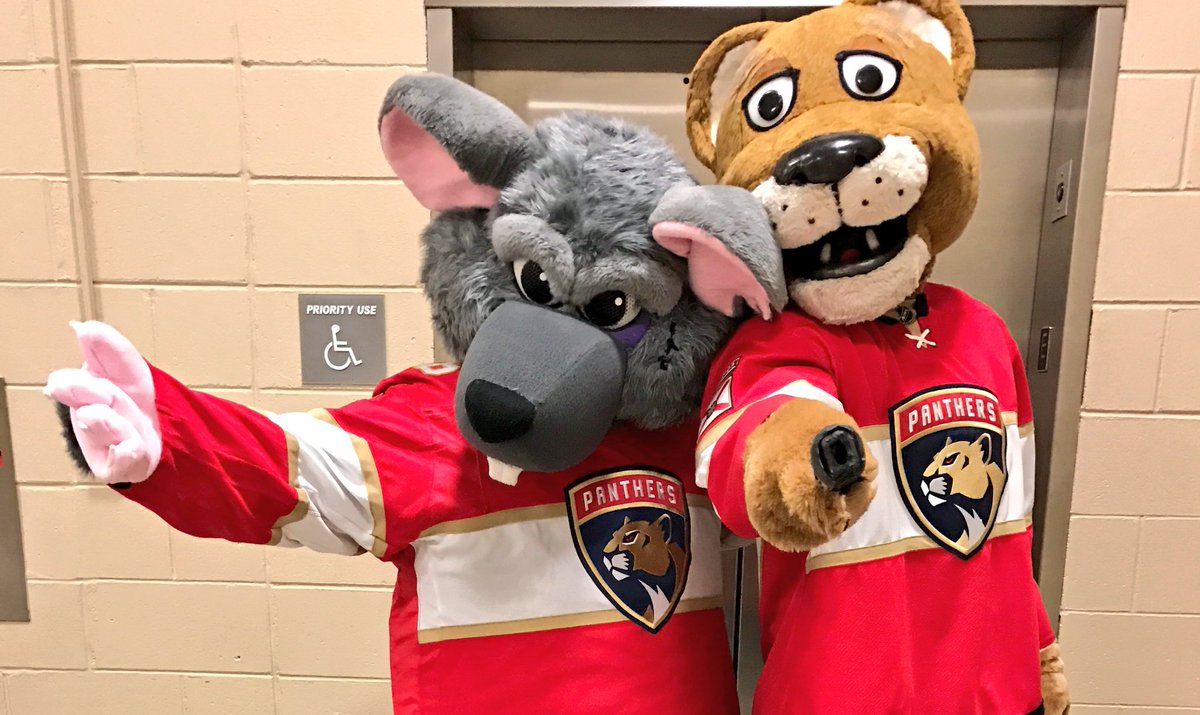
    Viktor E. Ratt (left) and Stanley C. Panther (right) would be a winning combo if Viktor E. Ratt retired. (Photo via @FlaPanthersCARE)

    20. Stanley C. Panther/ Viktor E. Ratt- Florida Panthers

    If it weren’t for Viktor E. Ratt’s existence, Stanley C. Panther might have cracked the top ten. But since Viktor E. Ratt exists, I was generous enough to at least include them in the top-20. Look, I understand Vikor E. Ratt’s significance, given the history and tradition behind Florida Panthers fans tossing plastic rats on the ice, but one mascot is enough. Leave the 1996 inspired rat behind. Please.

    As for Stanley C. Panther, he’s average. Despite being rather plain looking, he has a clean aesthetic and ties in perfectly with the Florida Panthers as an organization (aside from, you know, his existence as a Florida panther, the endangered animal and an extension of the brand).

    VictorEGreen.png
    Victor E. Green definitely stands out in a crowd. (Photo via Dallas Stars)

    19. Victor E. Green- Dallas Stars

    An ode to the man who moved the North Stars to Dallas or simply an ode to their jersey color, you decide, but Victor E. Green is a pretty solid, lovable, alien. The fact of the matter is that he is too lovable. While I give the Dallas Stars props for joining the mascot bandwagon however long ago (it was pretty recent, but not as recent as Hunter’s arrival with the Edmonton Oilers), an alien is a bit far fetched, unless your team is located in the same state as Area 51 (hello, Vegas Golden Knights employees who are reading this, please take my idea and run with it).

    Kudos to the Stars, though, for the wonderful mascot bio that notes Victor E. Green’s relationship status as “[a]lienated” and his birthplace as “[a] galaxy far, far away” (Star Wars > Star Trek, come at me, nerds). Minus five points for being too similar to a MLB mascot, though.

    456878046_slide.jpg
    Harvey the Hound, giving me nightmares, since forever for some reason. (Photo by Derek Leung/ Getty Images)

    18. Harvey the Hound- Calgary Flames

    Craig MacTavish isn’t a fan of Harvey the Hound, just ask that 2003 playoff game where he ripped out Harvey the Hound’s tongue (look it up on YouTube on your own time). Fun fact, Harvey the Hound is the oldest mascot in the NHL. Because of that, he gets some brownie points and rises in my ranking. But also because of that and his much needed spin through the washing machine or whatever, he gets downgraded a few spots.

    Look, I have no real complaints about Harvey the Hound here other than the costume should probably be dry cleaned and maybe modernized a bit. And no, despite what you may be thinking, Scorch wasn’t better.

    137818689.jpg
    Gnash looks smashing, despite the fact that the baby blue went better with the silver that was once rampant in Nashville’s jerseys. (Photo by Matt Zambonin/ Freestyle Photo/ Getty Images)

    17. Gnash- Nashville Predators

    Got to say, not a huge fan of the baby blue, but otherwise Gnash fits the bill perfectly for the Predators. I mean, simply put, there’s not much else to say about this mascot. So 17th it is.

    ik5bmd7B.jpg
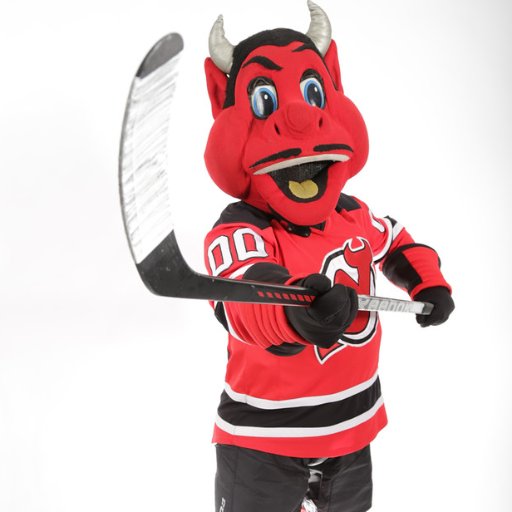
    If it’s from New Jersey it better be Bruce Springsteen or else– so not this guy. Nice try, New Jersey. (Photo via @NJDevil00)

    16. N.J. Devil- New Jersey Devils

    Some people say N.J. Devil is one of the greatest mascots in sports. I am not “some people”. It might be unfair to hold their uniforms against them, but there’s just something that seems unoriginal about New Jersey’s mascot. What’s with the mustache? Why haven’t they changed their jerseys (or at least added a third jersey) in ages?

    It’s New Jersey, why don’t they just dress up one of Bruce Springsteen’s guitars and call it their mascot? Better yet, just get Bruce Springsteen himself to show up at every game. Maybe then the recent lackluster attendance problem will be solved.

  • Numbers Game: Ranking the mascots of the NHL (25-21)

    Numbers Game: Ranking the mascots of the NHL (25-21)

    By: Nick Lanciani

    The following is a continuation of the ranking of all of the mascots in the NHL, based on the list of NHL mascots Wikipedia page.

    sparky-twitter-avatar-400.jpg
    Why, just why? Sparky the Dragon’s on Twitter kids (@SparkyNYI).

    25. Sparky the Dragon- New York Islanders

    Sparky the Dragon double-dipped as the mascot of the Islanders, wearing blue and orange during Islanders games, and pink, red and black for the New York Dragons (Arena Football) team until 2009. This mascot made sense for the Dragons, considering, hello, Sparky the Dragon is a dragon. But unfortunately for minority Isles owner, Charles Wang (who also owned the New York Dragons), you can’t always get what you want from applying one thing to satisfy two needs.

    What was so wrong about the Gorton’s fisherman era Islanders? Honestly, just take that concept and make it a walking thing that creeps on people– I mean, takes pictures with fans and ensures everyone is having a good time at Barclays Center. Plus, the 90s are cool again and most likely every hipster in Brooklyn would flock to an arena that’s ill-fitted for hockey to 1) learn who the Islanders are and 2) dig the on fleek colors of the fisherman (is that what they say now?).

    rdqu8amd.jpg
    Come to think of it, what’s with mascots on Twitter anyway? Photo via @NordyWild on Twitter (Nordy’s Official Account)

    24. Nordy- Minnesota Wild

    Everyone says Nordy looks like Alex from Madagascar and while I won’t disagree, I will say that Nordy looks pretty bad. It doesn’t help that the Wild applied their bear logo across his face, for starters. Plus his mane is a bit unkempt.

    Come to think of it, I don’t really know what really makes Nordy quite an unattractive mascot. Maybe it’s his number. I mean, 18,001 is a bit much to fit on a jersey. Plus his smile just screams “help me”, “get me out of here” or something along those lines. Minnesota made an attempt. That’s good. He is a lot less creepy than some mascots in the MLB (looking at you– actually, all of the MLB mascots except for Wally the Green Monster). But for NHL mascots, Nordy doesn’t rank quite as well.

    03-27-edm-huntersupplied-copy.jpg.size.xxlarge.promo.jpg
    “Go stand next to him! He won’t bite– actually, Billy, I’m not sure if he bites,” me if I was a parent. (Photo via Andy Delvin/ Oilers Entertainment Group)

    23. Hunter- Edmonton Oilers

    Shouts to the Edmonton Oilers for finally introducing a mascot to their organization for their first time in franchise history this season. Hunter’s namesake comes from the original owner of the then Alberta Oilers of the World Hockey Association, Bill Hunter.

    But that’s about it for cutesy comments about this sure to devour anyone in its path looking mascot. Look, Hunter’s a great name for the Oilers considering it pays homage to the aforementioned Bill Hunter, but it’s probably not a great name for a lynx that for sure is a carnivore and hunts things. I don’t know, maybe it’s just me or something. Regardless, Edmonton, you tried. Am I glad you finally have a mascot, yes. It’s just a little… creepy.

    Bernie in the Stands145428727_std.jpg
    Bernie’s eyes will haunt you in your sleep. (Photo via Colorado Avalanche)

    22. Bernie the St. Bernard- Colorado Avalanche

    The Colorado Avalanche have been feeling the Bern since they switched up their mascot from Howler the Yeti to Bernie the St. Bernard in 2009. For the first few years of Bernie’s existence, I could live with the change.

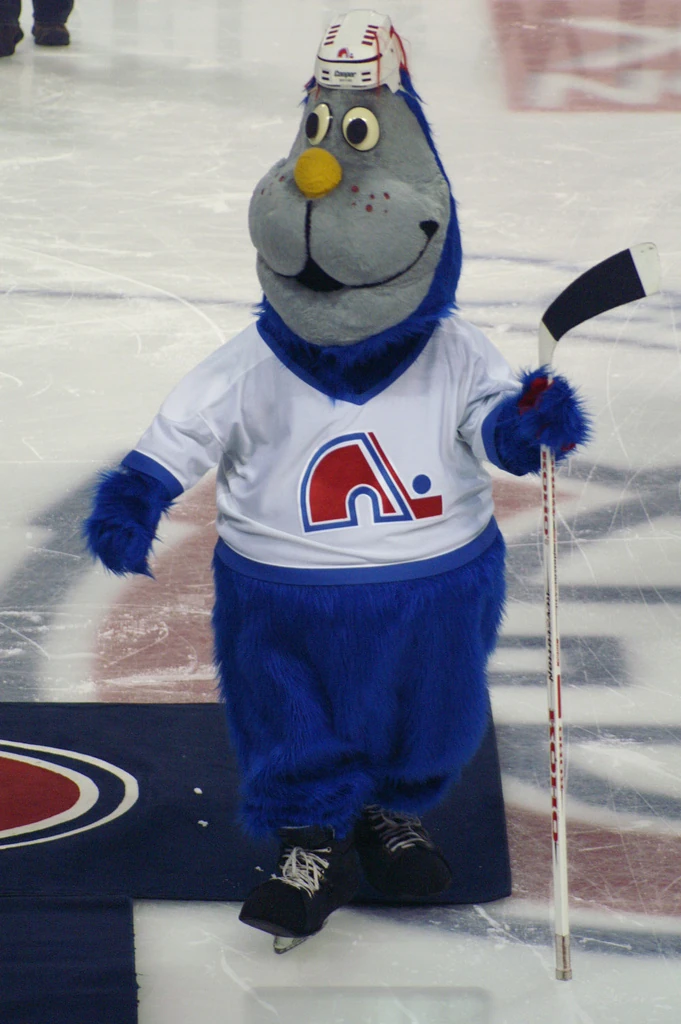
    Yet, as I grow older, I become more nostalgic and cranky towards change. Howler the Yeti was better. Even in the franchise’s days as the Québec Nordiques, whatever this thing was that was the Nordiques mascot was better than this alien-looking dog (look at Bernie’s eyes and tell me he’s not something from Area 51, speaking of which, there’s an idea for you, Vegas Golden Knights, give us an alien). And what’s with the barrel, Bernie? What are you hiding from us and how did you get that past security?

    Minnesota+Wild+v+Arizona+Coyotes+pklC9SRKyo3l.jpg
    Could be worse. (Photo via Christian Petersen/ Getty Images North America)

    21. Howler- Arizona Coyotes

    Howler isn’t all that bad, just not that great. He’s average. The kind of mascot that you can be proud of, but wish could do more. Put him in a kachina jersey all year and he’d probably jump up 20 spots in my rankings.

    Other than that, I really don’t have any reason why Howler fits in at 21st overall. He just does. Maybe it’s his face. Yeah, come to think of it, his face kind of bothers me. It’s almost too perfect and kind of oddly angled to a point for a nose. That thing’s probably sharp and could poke out someone’s eye. Minus 10 points for safety.

  • Numbers Game: Top-5 Pending RFA Goalies

    By: Nick Lanciani

    12:01 PM ET on July 1st (precisely) marks the start of the NHL’s free agency period, so of course, you’ve found yourself scavenging the Internet for the freshest hot takes and the best indications of where players will end up. Likewise, you probably just want to know who’s available out there (and I’m not talking about Tinder).

    Well fear not, because I’m here to set things straight with a short series of posts about the Top-5 free agents in every category you can think of (UFA forwardsUFA defensemenUFA goaliesRFA forwards, RFA defensemen and RFA goalies) in this latest edition of Numbers Game posts. RFAs are fun, RFAs are cool, but here’s the thing, other general managers will hate you forever apparently if you offer sheet one of their guys. Also, shouts to you if you’re still reading these. That shows commitment. And heart. And grit. I’ll be done with these— for now.

    Down the Frozen River- Smaller Circular Logo

    1. G Petr Mrazek (27-16-0-6, 2.33 GAA, .921 SV% with the Detroit Red Wings)- $737,500 cap hit, 23 years old

    Petr Mrazek is the only starting goaltender of this bunch and he’s due for a payday with the Detroit Red Wings. The only problem is, they still have Jimmy Howard and are paying him a bunch. So while Mrazek’s in the waitroom, you might as well give him a call if you’re a GM that needs a starting goalie that hasn’t even reached his full potential or tapped into his best play.

    2. G Darcy Kuemper (6-7-0-5, 2.43 GAA, .915 SV% with the Minnesota Wild)- $1.250 million cap hit, 25 years old

    The Minnesota Wild would be smart to keep Darcy Kuemper around long enough to turn him into a valuable asset that they could cash in, which sounds exactly like what they’re planning on doing. Let’s just say that Kuemper’s not a starter if Devan Dubnyk goes down with an injury, but until you find a rental replacement, he’ll be able to hold you over.

    3. G Calvin Pickard (7-6-0-1, 2.56 GAA, .922 SV% with the Colorado Avalanche)- $850,500 cap hit, 23 years old

    Calvin Pickard has the chance to be a decent backup, but is nowhere near the projections of taking over the number one spot in Colorado just yet. In a related story, the Avalanche should really keep him and get him a defense, just in case Semyon Varlamov gets hurt again and/or Pickard plays better than Varlamov for whatever reason.

    4. G Anders Nilsson (10-13-0-2, 3.12 GAA, .901 SV% with the Edmonton Oilers/St. Louis Blues)- $1.000 million, 25 years old

    Anders Nilsson has played in 52 career NHL games over three seasons and has never ended a season with a GAA less than 2.75, so yeah, offer sheet him all you want. Whoever owns him would be glad to get a 7th rounder (at best).

    5. G Kristers Gudlevskis (0-0-0-1, 1.00 GAA, .969 SV% with the Tampa Bay Lightning)- $608,333 cap hit, 23 years old

    Kristers Gudlevskis has had two solid starts to his NHL career as the presumptive backup to Andrei Vasilevskiy once the Tampa Bay Lightning eventually (probably) move Ben Bishop or lose him at the 2017 expansion draft to Las Vegas.

    Honorable Mention

    Me if I were still playing DekHockey (I forget my stats, good GAA, decent SV%)- $0 cap hit

    I mean, seriously, there’s only 14 RFA goalies available (if that by 12:01) and there’s hardly enough to make a top-5 from them.


  • Numbers Game: Top-5 Pending RFA Defensemen

    By: Nick Lanciani

    12:01 PM ET on July 1st (precisely) marks the start of the NHL’s free agency period, so of course, you’ve found yourself scavenging the Internet for the freshest hot takes and the best indications of where players will end up. Likewise, you probably just want to know who’s available out there (and I’m not talking about Tinder).

    Well fear not, because I’m here to set things straight with a short series of posts about the Top-5 free agents in every category you can think of (UFA forwardsUFA defensemenUFA goalies, RFA forwards, RFA defensemen and RFA goalies) in this latest edition of Numbers Game posts. RFAs are fun, RFAs are cool, but here’s the thing, other general managers will hate you forever apparently if you offer sheet one of their guys. Also, shouts to you if you’re still reading these. That shows commitment. And heart. And grit.

    Down the Frozen River- Smaller Circular Logo1. D Tyson Barrie (13-36-49 totals with the Colorado Avalanche)- $2.600 million cap hit, 24 years old

    Colorado Avalanche general manager, Joe Sakic, is going to have quite the offseason to manage squashing the rumors about the Avalanche trading Tyson Barrie and whatnot. But hey, if you’re an opposing GM and you’re reading this, go ahead and give Barrie’s agent a call if Colorado can’t figure things out soon enough. I’ll wait. Barrie had a breakout 53 point season in 2014-2015 and is managing around the same stats and style of play. Hard hitting when you need him, depth scoring when you need it. Come to think of it, maybe I can get the rest of the DTFR guys here to submit an offer sheet (that’s how this stuff works, right?), I mean, why not?

    2. D Rasmus Ristolainen (9-32-41 totals with the Buffalo Sabres)- $925,000 cap hit, 21 years old

    Don’t let the Buffalo Sabres float under your radar in case there’s a chance things don’t work out for them and Rasmus Ristolainen (who doubled his points total this season from 2014-2015). Plenty of people would tell you the Sabres are doing everything in their power to keep him around and that’s a good thing, but if you wanted to be that guy, be that guy. The only thing that might weigh him down is his plus/minus (which is an outdated stat). In three seasons, it’s gone from a minus-15 to a minus-32 to, most recently, a minus-21. But then again, he plays for the Sabres.

    3. D Hampus Lindholm (10-18-28 totals with the Anaheim Ducks)- $894,166 cap hit, 21 years old

    This season was the first season, in his three career seasons with Anaheim, that Hampus Lindholm amassed less than 30 points. Although he only missed the mark by two. If you’re a fan of the Ducks and think they’re a good team, then you might suggest his numbers are inflated. But when a 21 year old comes into the league and upends Cam Fowler in his first three seasons, you know he’s legit for Anaheim. Lindholm is due for a big deal that’ll lock him up, however there’s always a chance some other team could meddle with Anaheim’s plans.

    4. D Michael Stone (6-30-36 totals with the Arizona Coyotes)- $1.150 million, 25 years old

    Tied with Danny DeKeyser on my list for the oldest pending RFA mentioned by yours truly, Michael Stone has improved by far in his first five career NHL seasons with the Arizona Coyotes. In 81 games during the 2014-2015 season, Stone had 3-15-18 totals. This season, Stone doubled everything with 6-30-36 totals in 75 games played. Need I say more if you’re interested in luring away talent for your blue line?

    5. D Dmitry Orlov (8-21-29 totals with the Washington Capitals)- $2.000 million cap hit, 24 years old

    In his first full season with the Washington Capitals, Dmitry Orlov had 8-21-29 totals. This season beat his 3-8-11 totals in 54 games in 2014-2015 and his 3-16-19 totals in 60 games played in 2011-2012. Nearing his prime, Orlov would be ready to move on from Washington if they don’t seem to have the room and someone else is interested in utilizing his services and time.

    Honorable Mentions

    D Danny DeKeyser (8-12-20 totals with the Detroit Red Wings)- $2.188 million cap hit, 25 years old

    There’s not much else in the RFA defensemen outlet store, so sometimes this is what you got to get. Then again, the Detroit Red Wings should lock up Danny DeKeyser for as long as they can, while locking out Kyle Quincey from the Joe Louis Arena (and Little Caesars Arena, just to be safe).

    D Cody Ceci (10-16-26 total with the Ottawa Senators)- $894,166 cap hit, 22 years old

    I’ll be completely partial and throw it out there that I’m a fan of the underdog in Cody Ceci. In three seasons, his points have increased from nine in 49 games played in 2013-2014 to 21 points the next season, to 26 points this season. He’s only 22, so as long as you get him out of Ottawa, there’s a good chance there’s still hope with him. All joking aside, the Senators shouldn’t make the mistake of letting another quality, low cost, high reward defenseman get away too soon.

  • Numbers Game: Top-5 Pending RFA Forwards

    By: Nick Lanciani

    12:01 PM ET on July 1st (precisely) marks the start of the NHL’s free agency period, so of course, you’ve found yourself scavenging the Internet for the freshest hot takes and the best indications of where players will end up. Likewise, you probably just want to know who’s available out there (and I’m not talking about Tinder).

    Well fear not, because I’m here to set things straight with a short series of posts about the Top-5 free agents in every category you can think of (UFA forwardsUFA defensemen, UFA goalies, RFA forwards, RFA defensemen and RFA goalies) in this latest edition of Numbers Game posts. RFAs are fun, RFAs are cool, but here’s the thing, other general managers will hate you forever apparently if you offer sheet one of their guys.

    Down the Frozen River- Smaller Circular Logo1. LW Johnny Gaudreau (30-48-78 totals with the Calgary Flames)- $925,000 cap hit, 22 years old

    If you’re going to offer sheet somebody, better offer sheet the best. And scoring wise, newsflash, it’s Johnny Gaudreau. He had 24-40-64 totals in 80 games his rookie season with the Calgary Flames in 2014-2015 and improved his sophomore year with 30-48-78 totals in 79 games this season. It shouldn’t be hard to tell that he’s in for a major payday coming off of his entry level contract with the Flames. And if you’re going to be that GM that goes hard in the paint, you might as well go hard in the paint from the gate.

    Now watch all these RFAs (re)sign a deal before free agency opens, or just stay put and not touch any offer sheets that might come in.

    2. RW Nikita Kucherov (30-36-66 totals with the Tampa Bay Lightning)- $711,666 cap hit, 22 years old

    Nikita Kucherov has averaged 65.5 points in the last two seasons. Talk about consistency. That’s also quite an improvement from his rookie year totals of 9-9-18 in 52 games in 2013-2014. Since then he’s emerged as a high-end talent for the Tampa Bay Lightning, who have a plethora of young, pending RFAs both now and in the future to concern themselves with (and the expansion draft in June 2017). So good luck to Lightning general manager, Steve Yzerman, or then again, maybe he doesn’t need any luck, since he was able to keep Steven Stamkos around for as long as his roster is going to be lighting them up in Tampa.

    3. C Alex Killorn (14-26-40 totals with the Tampa Bay Lightning)- $2.550 million cap hit, 26 years old

    And for even more consistency, we have Alex Killorn, who’s averaged 39.7 points in the last three seasons. Surely Tampa’s going to have a handful with this offseason when it comes to keeping their talent happily signed under the salary cap. Killorn came into the league in the 2012-2013 lockout shortened season and had 7-12-19 totals in 38 games in his rookie year, which isn’t too shabby either, considering everything. Do I have to keep repeating myself now?

    4. C Nathan MacKinnon (21-31-52 totals with the Colorado Avalanche)- $925,000 cap hit, 20 years old

    Mixing up the order a bit (if you had’t noticed, I inadvertently arranged them by points), Nathan MacKinnon falls to fourth on my top-5 list, not because’s he’s bad, but rather because Tampa is all but sure to see some chaos in the offer sheet department this offseason. I pretty much guarantee it with Jim Benning as the Vancouver Canucks general manager, Peter Chiarelli in Edmonton and some hungry, hungry, hockey teams around the league.

    Because of this factor, Colorado might see some intrigue if they cannot lock up MacKinnon or Tyson Barrie. Of note, MacKinnon had 24-39-63 totals in 82 games in his rookie season of 2013-2014. He suffered a set back due to injury in 2014-2015 with 14-24-38 totals in 64 games.

    5. LW Marcus Johansson (17-29-46 totals with the Washington Capitals)- $3.750 million cap hit, 25 years old

    Marcus Johansson has been a 40+ point scorer in four of his six seasons so far with the Washington Capitals. A bit older than some of the other quality pending RFAs, Johansson finds himself at a crossroads where he plays with the Capitals, but could easily slide into another lineup and become just another overpaid player if someone’s not careful. It kind of helps when T.J. Oshie, Alex Ovechkin, Nick Backstrom and others are on your team, but then again Johansson has been consistent, regardless of whatever you believe. If you’ve got the time, money and draft picks, go for it. I’m all for watching teams get into a war of words over offer sheets.

    Honorable Mentions

    LW Chris Kreider (21-22-43 totals with the New York Rangers)- $2.475 million cap hit, 24 years old

    The New York Rangers are aging and up against the salary cap. Knowing that Rick Nash is potentially at play on the trade market, will they be able to keep Chris Kreider around long enough to resign him or will someone swoop in and toss him an offer sheet?

    C Vladislav Namestnikov (14-21-35 totals with the Tampa Bay Lightning)- $874,125 cap hit, 23 years old

    The formula for this one is simple, steal a good, young Lightning forward before they notice while they work out deals with their other good, young, pending RFA forwards.

  • Numbers Game: Top-5 Pending UFA Goalies

    By: Nick Lanciani

    12:01 PM ET on July 1st (precisely) marks the start of the NHL’s free agency period, so of course, you’ve found yourself scavenging the Internet for the freshest hot takes and the best indications of where players will end up. Likewise, you probably just want to know who’s available out there (and I’m not talking about Tinder).

    Well fear not, because I’m here to set things straight with a short series of posts about the Top-5 free agents in every category you can think of (UFA forwards, UFA defensemen, UFA goalies, RFA forwards, RFA defensemen and RFA goalies) in this latest edition of Numbers Game posts. Also, I have bad news, if you came here expecting to find a starting goaltender, you won’t find one.

    Down the Frozen River- Smaller Circular Logo1. G Chad Johnson (22-16-0-4, 2.36 GAA, .920 SV% with the Buffalo Sabres)- $1.300 million cap hit, 29 years old

    Chad Johnson is the closest thing to a starting goaltender, compared to the majority of the rest of the pending UFA goalies. Goalies are weird. They have no timetable for development, they’re unpredictable and most everyone seems to make whatever conjecture imaginable about whether or not a goalie is good or not, worthy of starting or a lifetime backup (or #AHLLifer, but that might just be a running joke here).

    Johnson is a solid backup (dare my circa 2010 self say it). In 45 games played for Buffalo this season, he racked up 22 wins, a 2.36 GAA and a .920 SV%. While that might not look elite compared to other goaltenders around the NHL, Johnson has been an entirely different goaltender since his 2.10 GAA and .925 SV% in 27 games with the Boston Bruins in 2013-2014. Granted, his goal against average crept past the 3.00 mark in 2014-2015 with his 19 game stint with the New York Islanders, with the right team, Johnson can solidify your crease.

    If you even have a better blue line than most teams around the NHL, perhaps Johnson could be the next Martin Jones to emerge as a goalie that never really had a chance to fully take control of a number one starting job, without any competition, and run with it.

    Look, at $1.300 million this season, Johnson is not much of a risk to take in the coming years if you sign him to a multiyear contract. The hope is that he continues his upswing as long as you balance his time and/or have a good enough team in front of him. Johnson is one of those underrated, feel good stories and who wouldn’t want to see him succeed?

    2. G Jhonas Enroth (7-5-0-1, 2.17 GAA, .922 SV% with the Los Angeles Kings)- $1.250 million cap hit, 27 years old

    Jhonas Enroth is not a starting goalie. Now that that’s out of the way, here’s why. He had his best career save percentage with the Los Angeles Kings this season at a .922 in 16 appearances and he even had his best goal against average (2.17) in 10 games played or more of his career.

    Compared to the time Enroth split time with the Buffalo Sabres and the Dallas Stars in 2014-2015 when he had a 18-26-0-2 record in 50 games played with a .904 SV% and 3.07 GAA, he’s a changed goaltender when he has 1) a defense in front of him and 2) a backup role that limits him to around 20 games a season. The 2014-2015 season was his worst campaign since his first career NHL start in the 2009-2010 season, when he debuted his NHL career with a .892 SV% and a 4.12 GAA.

    The moral here is that Enroth is better than most people give him credit for, however, many still question his stature in a 6′ by 4′ net. And with smaller pads coming to the league, his play is bound to be affected by that. But alas, the old days of 3.00 GAA and .800 SV%’s being tremendous might finally return if you like offense. We’ve come to know low 2.00 and high 1.00 GAA’s as standard, when in actuality, pretty much any goalie under a 3.00 is better than you would think.

    Again, it all boils down to the role of the goalie and how much usage they get. Another season like this season for Enroth would be respectable if he continues to be a top-notch backup that plays in anywhere from 20 to 25 games a year.

    3. G James Reimer (17-14-0-7, 2.31 GAA, .922 SV% with the Toronto Maple Leafs/San Jose Sharks)- $2.300 million cap hit, 27 years old

    Don’t laugh, but James Reimer might finally be starting to turn the corner and become a good goaltender. In 40 games played with the Toronto Maple Leafs and the San Jose Sharks this year, he had a 17-14-0-7 record, 2.31 GAA and a .922 SV%. His GAA and SV% this year were both career bests in the most number of games he’s played in a single season.

    Granted, his record could still use some room for improvement in the “wins” column, Reimer is ready to make a run at being a number one goalie on the right team. If Calgary tightens their defense and feels like making newly acquired goaltender, Brian Elliott, compete for his number one spot, similar to how he battled Jake Allen in St. Louis, then Reimer is their man.

    Then again, they probably should stick with what they’ve got. But my point remains, James Reimer can be good after all. I’ve said it before, goalies are weird. In six NHL seasons, Reimer has had a goal against average of 3.10 or more three times, all with the lackluster Maple Leafs. Of note, his 2.31 GAA performance beat his 2.46 GAA in 2012-2013 when he played in 33 of the 48 game lockout shortened season.

    Take it or leave it, Reimer is a solid choice for your net if you have the right guys in front of him. He might not be a starter (yet), but his skills can still be honed in before it’s too late. At only 27 years old, he likely has at least 10 more years of playing in front of him.

    4. G Anton Khudobin (3-3-0-0, 2.69 GAA, .909 SV% with the Anaheim Ducks)- $2.250 million cap hit, 29 years old

    Chalk Anton Khudobin up as another solid backup goaltender— if you have the right defense for him. He might not be stealing wins in the “wins” column, but Khudobin has shown flashes of quality stats in both goals against average and save percentage.

    Last season, Khudobin made only nine appearances before the Anaheim Ducks settled on Frederik Andersen and John Gibson as their goaltending tandem. Of course, Andersen was traded to Toronto earlier this month and Gibson is now considered their number one guy, so why would they risk the chance of losing out on a decent backup when you consider their other option (they have none).

    Khudobin’s 2013-2014 season campaign with the Carolina Hurricanes resulted in 36 games played with a .926 SV% and a 2.30 GAA. Since then he has not seen the same action or numbers, but there’s a good chance that with the right mix of players, Khudobin could bail a team out in a game or two and play as a backup in 20 to 25 games.

    By now I’m sure you’ve recognized my trend. Backup goalies should only play 20 to 25 games, depending on who they are. If they prove more value to you, based on their performance, up their appearances to 30. But if you’re considering splitting time between your goalies, get two starters. Don’t waste your time mismanaging a position you can’t fully manage in net.

    5. G Jonas Gustavsson (11-9-0-1, 2.72 GAA, .908 SV% with the Boston Bruins)- $700,000 cap hit, 31 years old

    Before you start breaking out the jokes about Jonas Gustavsson, consider this; Gustavsson only has one losing season as a backup goaltender in seven seasons in the NHL since 2009-2010 with Toronto and stops with the Detroit Red Wings and Boston Bruins. His career save percentage has hovered right around .900 and he’s only had a season that ended with a GAA of more than 3.00 once (a 3.28 in 2009-2010).

    When there’s not much else to choose from, sometimes it’s best to take a stab at someone who can hold you over for a year or two as a quality backup. He should play nowhere near 40 games, nor should he only play seven, as he’s done twice in his career, both with the Red Wings (once in the shortened 2012-2013 season and again in 2014-2015). Actually, you know what? His numbers don’t really show how much you should use him one way or another.

    I’ll admit, I was scratching for a fifth goaltender to include in my top-5 pending UFA goalies (no offense to Gustavsson). The fact of the matter is that the talent pool in the crease is extremely thin this offseason, so it’s best to just get what you’re money can buy to hold you over without overpaying and/or develop your guys in the system.

    Honorable Mentions

    G Ben Scrivens (5-8-0-0, 3.07 GAA, .906 SV% with the Montreal Canadiens)- $2.300 million cap hit, 29 years old

    Ben Scrivens has never had a GAA less than 2.55— and that was when he split the 2013-2014 season with Los Angeles and the Edmonton Oilers. So that pretty much explains everything, given that he’s also played for Toronto and most recently Montreal in his career that spans all the way back to the 2011-2012 season.

    He’s certainly not a starter and he’s definitely not worth $2.300 million as a back up, but if there’s no one else left, he’s going to be paid whatever amount of money to stand in the net for some team (like what Montreal did before they had Mike Condon take the brunt of the work and handle it as well he could with what little the Canadiens had going for them while Carey Price was hurt).

    G Karri Ramo (17-18-0-1, 2.63 GAA, .909 SV% with the Calgary Flames)- $3.800 million cap hit, 29 years old

    It appears the Calgary Flames are ready to throw in the towel on trying to develop the once considered top prospect of the Tampa Bay Lightning. In six NHL seasons, broken up by a stint in the KHL, Ramo has never had a season with a GAA better than 2.60 or a SV% better than .912.

    It’s not the save percentage that bothers me, but rather, it’s that goals against average that’s a little concerning for any team that chooses to sign a goalie that made 37 appearances this season and surmounted a 2.63 GAA and a .909 SV%. Perhaps there’s one more shot left for Ramo, but at whatever price is under a million dollars and for a backup role. Again, if you had to, he’s someone to take in free agency over whatever might be left for a year.

    G Anders Lindback (5-7-0-1, 3.11 GAA, .894 SV% Arizona Coyotes- $875,000 cap hit, 27 years old

    In 2011-2012, Anders Lindback proved he could be a decent backup with a 16 game performance that resulted in a career best 2.42 GAA and a .912 SV% that season, despite a 5-8-0 record.

    When he was with the Nashville Predators, he had blue liners in front of him to prevent chances and Pekka Rinne to play more than the majority of the games of the season. Lindback’s bounced all around the league and might have settled in with the Arizona Coyotes if it weren’t for Louis Domingue as an up and comer for the Coyotes. For a low-risk, high reward opportunity, why not take a 27 year old backup goaltender for a year or two and see if he can improve with a better team in front of him?