Sebastian Aho scored a pair of goals as Alex Nedeljkovic made 32 saves in a, 3-0, shutout win for the Carolina Hurricanes in Game 2 of their 2021 First Round series with the Nashville Predators at PNC Arena on Wednesday.
Nedeljkovic (2-0, 1.01 goals-against average, .964 save percentage in two games played) became the second rookie goaltender in Hurricanes/Hartford Whalers franchise history to record a postseason shutout, joining Cam Ward in doing so.
Ward notched a pair of shutouts in the 2006 Stanley Cup Playoffs en route to leading Carolina to the franchise’s first Stanley Cup championship.
Meanwhile, Predators goaltender, Juuse Saros (0-2, 3.08 goals-against average, .910 save percentage in two games played) stopped 28 out of 30 shots faced in the loss.
The Hurricanes were without Jaccob Slavin on the blue line, so Jake Gardiner was dressed for Carolina.
Meanwhile, Predators head coach, John Hynes, had replaced Calle Jarnkrok (illness), Mathieu Olivier and Ben Harpur with Eeli Tolvanen, Brad Richardson and Matt Benning in the lineup on Wednesday.
Early in the action, former Carolina forward, Erik Haula, got tangled up with Martin Necas and received a minor infraction for roughing– yielding the game’s first power play to the Hurricanes at 2:02 of the first period.
The Canes were not successful on their first skater advantage of the game.
Moments later, Nashville defender, Mattias Ekholm, tripped Warren Foegele and presented Carolina with another power play at 7:17 of the opening frame.
The Hurricanes wouldn’t waste much time on the ensuing skater advantage before Aho (1) received a pass from Andrei Svechnikov through the high slot and one-timed the puck into the back of the twine.
Svechnikov (1) and Dougie Hamilton (1) had the assists on Aho’s power-play goal and Carolina took a, 1-0, lead at 8:03.
The Predators got their first skater advantage of the night at 8:47 when Vincent Trocheck roughed up Benning, but the Preds weren’t able to convert on the power play.
Nor did Nashville have any success on the skater advantage moments later when Hamilton was penalized for interference at 13:04.
No, the Preds also didn’t score on the power play at 15:59 when Aho roughed Haula and again the Predators were powerless on the advantage at 19:03 when Jordan Staal cut a rut to the sin bin for interference.
Heading into the first intermission, the Hurricanes led, 1-0, on the scoreboard and were outshooting Nashville, 10-9.
Carolina also led in blocked shots (4-2), takeaways (2-1), giveaways (5-3) and hits (20-18), while the Predators dominated the faceoff dot in faceoff win percentage (57-44).
Nashville was 0/4 and the Canes were 0/2 on the power play entering the middle frame.
Ryan Johansen got tangled up with Svechnikov as the two forwards exchanged pleasantries and received roughing minors at 4:16 of the second period.
After two minutes of 4-on-4 action, the two teams resumed full strength with cooler heads (for a few minutes anyway).
Brett Pesce was penalized for holding at 8:34, but Nashville continued to struggle on the power play as Nedeljkovic stood tall in the crease for Carolina.
Viktor Arvidsson took a trip to the box at 9:38 for interference, but the Hurricanes couldn’t muster anything on the resulting power play.
Shortly thereafter, Benning and Jordan Martinook got into a heated exchange, yielding roughing minors at 12:03 of the second period and plunging the game into another pair of minutes at 4-on-4.
Late in the period, Nino Niederreiter hooked Richardson, but the Preds couldn’t get anything going on the ensuing power play at 16:37.
Through 40 minutes of action, the Hurricanes held onto their, 1-0, lead on the scoreboard despite Nashville pulling ahead in shots on goal, 24-20, including a, 15-10, advantage in the second period alone.
Carolina held the lead in blocked shots (10-6), giveaways (11-10) and hits (36-32), while the Predators had the advantage in takeaways (5-3) and faceoff win% (56-44).
Nashville was 0/6 on the power play, while the Canes were 1/3 on the skater advantage heading into the final frame.
Foegele sent the puck over the glass and out of play, yielding an automatic delay of game infraction almost midway through the third period at 9:24.
The Preds couldn’t capitalize on the resulting power play.
Late in the period, Hynes pulled Saros for an extra attacker, but Carolina worked to clear the puck out of their own zone.
Pesce dumped the puck deep– missing the empty net– but didn’t ice the puck as Aho (2) charged into the attacking zone, pounced on the loose puck and buried the rubber biscuit into the net to give Carolina a two-goal lead.
Pesce (3) had the only assist on Aho’s second goal of the night and the Hurricanes led, 2-0, at 19:07 of the third period.
Less than a minute later, Foegele (1) worked the puck behind the goal line and wrapped around the net, sending an errant puck off of Ryan Ellis’ skate and through Saros for a three-goal lead.
Jesper Fast (1) had the only assist on Foegele’s insurance goal as the Canes made it, 3-0, at 19:32.
At the final horn, Carolina had secured a 2-0 series lead with a, 3-0, win as Nedeljkovic recorded the shutout– his first career postseason shutout.
The Predators finished the night leading in shots on goal, 32-31, despite Carolina leading in shots on goal in the third period alone, 11-8.
Nashville also wrapped up Wednesday night’s action with the lead in giveaways (19-16) and faceoff win% (53-48), while the Canes finished the night leading in blocked shots (17-10) and hits (52-39).
The Preds went 0/7 and the Canes went 1/3 on the power play in Game 2.
The Hurricanes lead the series 2-0 as the venue shifts to Bridgestone Arena for Game 3 in Nashville on Friday. Puck drop is expected a little after 7 p.m. ET and viewers in the United States can tune to national coverage on USA Network, while those in Canada can watch the action on FXX-Canada or TVAS2.
“The stretch” is here. No, not the 7th inning stretch. It’s the Push for the Playoffs™️ as the NHL on NBC broadcasts will tell you.
Sure, the Boston Bruins have played 43 games and this forecast is already a little behind, but this time of year is loaded with things to do, stats to track and storylines to follow.
At least it’s not as far behind as other forecasts I still owe.
Everything that you’re about to see is done by hand. Kind of.
Sure, it all started in Microsoft Excel then migrated over to a GoogleDoc one day, but the premise is the same– I have no idea what I am doing.
My degree is in communication and my minor was in sport management. As part of my “Gen Ed” requirement to graduate, I got a “C” in Intro to Stats. Later, one of my sport management professors taught me how to use the “forecast” function in Excel (shouts Dr. Lyons).
It’s been four years since being told to step out of line and wait off to the side while my school searched high and low to find my diploma only to realize that it had been on the table in front of them the whole time (yes, this is a true story– my roommate even called me wondering where the hell I was for pictures with everyone).
The rest is history. Let’s get to talking about Boston’s forecast through 40 games, shall we?
First year players are hard to predict (if not impossible altogether) until they’ve had some experience in the National Hockey League under their belts. At least a game will make do, though their numbers will look a tad inflated until more time goes by and reality sets in.
That’s just a blanket statement that usually comes with an example– like Zach Senyshyn in recent years– though after 40 team games in a 56-game regular season schedule, there’s not enough data (this season, forecasted or otherwise) to really point out where making bets on a young player’s forecasted stats might be inadvisable.
Forecast is not pace.
While looking things over in both this current forecast and previous editions, please remember that there’s many variables that can (and will) disrupt a player’s season like injuries, lineup changes (being a healthy scratch, taxi squad member or otherwise), other American Hockey League related or waiver related transactions, trades, sickness, COVID protocol and intangible things like general superstitions, hot and cold streaks, etc.
Sadly, nobody’s been able to find a way to quantify all of that in a forecast function 2.0. In a perfect world, every player plays a full season.
Every player can reach, exceed or miss expectations in an exciting game of collective actions and puck luck. Unpredictability is part of many reasons why we watch sports.
Boston Bruins Forecast Through 40 Games Played (16 Games Remaining)
Brad Marchand remains on track to receive Hart Memorial Trophy attention as he’s in the midst of having a strong pull in Boston’s playoff direction.
The Bruins winger is forecasted to have 23-38–61 totals when all is said and done in 2020-21, which would’ve put him on pace for about 90 points in a regular length 82-game season had the ongoing pandemic never happened.
For the first time this season, David Pastrnak (17-19–36 forecasted totals) is not forecasted to lead his team in goals.
Instead, Marchand and Patrice Bergeron (23-28–51 forecasted totals) are forecasted to split the team lead in goals with 23 each, while Pastrnak trails with the second-most (17).
Nick Ritchie and Craig Smith are on track for 13 and 12 goals, respectively, as some of the better components of Boston’s depth this season, while third line center, Charlie Coyle’s down year continues with seven forecasted goals this season, which… …actually isn’t that bad?
Sure, 2021 hasn’t been the best year for Coyle, but it seems like a “bad year” for Coyle works much in the same that a “bad year” does for David Krejci.
It’s not that Coyle and Krejci are superhuman, but rather just human.
Plus, Krejci has already surpassed the four goals that he was forecasted to score in this 40 team games played model. Relax, folks. Every year can’t be golden.
On defense, Charlie McAvoy leads the team in points from the blue line with 7-30–37 forecasted totals, while newcomer Mike Reilly continues to impress with 22 forecasted assists (that’ll probably be too few).
In the meantime, upon returning to full health, Matt Grzelcyk can carve out 19 points in a battered season for Boston’s defenders.
While Reilly is destined to continue being a playmaker from the back end, newly acquired forwards Taylor Hall and Curtis Lazar are each expected to contribute offensively with Hall forecasted for 30 points by season’s end alongside Krejci and Smith, while Lazar should be good for 12 points on the season from the fourth line.
Oh and as for the since departed Anders Bjork? Well, at the time of the trade, he was forecasted to produce eight points this season.
That said, with consistent ice time in a top-six role in Buffalo, the new Sabres forward could yield respectable double-digit totals in such a short timespan. Nothing crazy, but 10 points or more isn’t out of reach if he was already on track to get about eight.
As long as the Bruins’ new-found offense can continue to produce and spur bottom-six scoring, then there’s a good chance with enough time to heal that the B’s can reset themselves on course for a playoff run with something to prove.
Sure the 2021 Expansion Draft for the Seattle Kraken got a bit more complicated with pending-unrestricted free agents in Hall and Reilly added to the fold, but if this is truly it for Boston’s core with Bergeron, Krejci, Marchand and Tuukka Rask (Krejci and Rask also being pending-UFA’s) then the time is now to go all-in and go for it.
Rask (2.20-2.22 forecasted goals-against average, .919-.923 forecasted save percentage) is expected to be rejuvenated by a decreased workload due to injury and the emergence of a hot hand in Jeremy Swayman– Boston’s fourth-string goaltender that, along with Dan Vladar, has literally saved the season.
Upon Jaroslav Halak’s (2.43-2.46 forecasted goals-against average, .913-.917 forecasted save percentage) return from COVID protocol, there’s a chance the usual duo of netminders for the Bruins could show signs of rust as they ease back into the routine for the long run.
That’s where Swayman and his best case scenario 2.22 forecasted goals-against average and .926 forecasted save percentage can provide relief as the B’s workout a three goaltender rotation similar to the Carolina Hurricanes’ situation with Petr Mrazek, James Reimer and Alex Nedeljkovic.
Whether it was inevitable that the NHL as a whole adopts a three-goaltender system because goaltending tandems were already catching on or simply a product of the contemporary times in a pandemic whereby carrying a third goaltender becomes a necessity by default, it’s not a bad idea for Boston to assess what they’ve got for the future.
Next season could very well be Rask and Swayman in net if the Bruins re-sign No. 40 this summer as the Finnish goaltender has indicated he’d like to be part of Boston’s transition in the crease a la the days of the transfer in power from Tim Thomas to Rask himself.
It’s June October and the Stanley Cup has been awarded and already cleaned more than a few times from all of the beer and other things that the Tampa Bay Lightning have done with it, which means it’s the perfect time to gather in a city around your TV screen and be ready to throw on any of the 31 National Hockey League team draft hats (excluding the Seattle Kraken– we’ll deal with them next season) when your name is called.
Well, if you’re one of the 31 prospects lucky enough to go in the first round of the 2020 NHL Entry Draft on Tuesday night, at least. Rounds 2-7 will take place Wednesday, starting at 11:30 a.m. ET as always– kind of.
For the first time in NHL history, this year’s draft is virtual thanks to the ongoing COVID-19 pandemic.
NHL
Montreal was set to play host to the 2020 NHL Draft at Bell Centre back on June 26th and 27th, but it’s 2020 and with the global pandemic still going on, the league originally postponed the event back on March 25th before announcing it as a virtual draft at a later date (this week).
It’s also the first time that the draft is being held outside of June since the 2005 NHL Entry Draft, which was held at the Westin Hotel Ottawa in Canada’s capital city– Ottawa, Ontario– on July 30th of that year and it’s the first time that the draft is being held completely on weekday(s) for the first time since the 1994 NHL Entry Draft in Hartford, Connecticut, which was on Tuesday, June 28th of that year (remember the Whalers?).
The projected first overall pick– Alexis Lafrenfière– will get his moment in the spotlight sometime once the 2020-21 regular season begins, but until then he’ll have to settle for whatever lights his parents have in the living room.
Coverage of this year’s first round begins Tuesday night at 7 p.m. ET on NBCSN in the United States, as well as SN and TVAS in Canada. Rounds 2-7 will be televised on NHLN in the U.S. and SN1 in Canada.
1. New York Rangers–> LW Alexis Lafrenière, Rimouski, (QMJHL)
Considered the best player to come out of the Québec Major Junior Hockey League since Sidney Crosby– who also played for Rimouski Océanic back in his Junior days– Lafrenière is a no-brainer for the New York Rangers.
He might be the best player in the draft since Connor McDavid was selected 1st overall by the Edmonton Oilers in 2015, and for good reason.
Lafrenière had 35 goals and 77 assists (112 points) in 52 games for Rimouski this season until the rest of the regular season, as well as all of the postseason and Memorial Cup were cancelled due to the ongoing pandemic.
There’s nothing wrong with the Rangers stacking up on talent on the left side with Artemi Panarin and Chris Kreider already in play. Simply put Lafrenière on the third line if you must and watch the forward depth lead the club into a playoff contender.
2. Los Angeles Kings–>C Quinton Byfield, Sudbury (OHL)
Byfield had 32-50–82 totals in 45 games with the Ontario Hockey Leagues’s Sudbury Wolves this season. His 6-foot-4 , 215-pound frame will help ease the transition for the Los Angeles Kings from Anze Kopitar and Jeff Carter down the middle to whatever’s next with Byfield taking center stage.
His speed and skating ability is already a cut above the rest in the draft and having a two-time Frank J. Selke Trophy winner (Kopitar) as a teammate should further elevate Byfield’s game into one of the better two-way centers as he’ll be sure to learn a thing or two from him.
3. Ottawa Senators (from San Jose Sharks)–>C/LW Tim Stützle, Mannheim(DEL)
The best German prospect since Leon Draisaitl, Stützle amassed 7-27–34 totals in 41 games with Adler Mannheim in the DEL last season. He’s a dynamic forward that plays a mature game for his age, which is a promising sign for the Ottawa Senators that ensured they’d be having “unparalleled success from 2021-25”.
It’s not off to that promising of a start for the Sens, but with their rebrand, Stützle at 3rd overall and the 5th overall pick at their hands, Ottawa’s brighter days are ahead if not now. They’ll just need to find a new starting goaltender to really make them a playoff contender with Craig Anderson’s departure as part of Ottawa’s plan.
4. Detroit Red Wings–>D Jamie Drysdale, Erie (OHL)
While Detroit Red Wing General Manager, Steve Yzerman, could make a splash later in the week trying to attract Alex Pietrangelo or Michigan native, Torey Krug, to Detroit’s blue line, it’s about time the Red Wings took another defender to potentially anchor the defensive zone in the future with last year’s first round pick, Moritz Seider.
Drysdale checks off all the boxes for the Red Wings as the best defender in the draft and you know what wins championships in “Hockeytown”? Defense.
That said, he had 9-38–47 totals in 49 games with the Erie Otters of the Ontario Hockey League in 2019-20 and is capable of utilizing his 5-foot-11, 175-pound build to his advantage in a two-way game.
5. Ottawa Senators–>RW Lucas Raymond, Frölunda (SHL)
Everybody loves Raymond and his playmaking abilities– drawing comparisons to Ottawa’s intra-province rival, Toronto Maple Leafs forward, Mitch Marner, according to scouts and mock draft experts alike.
His skill, two-way style and high hockey IQ are what sets him apart from other players his age and pairs well with Stützle in the picture for the Sens as a pair of players that could change the face of a franchise on their own. In 33 games last season with Frölunda HC, Raymond had 10 points (four goals, six assists) playing as a teenager among men in the SHL.
He has one goal and one assist (two points) in four games this season already.
The Anaheim Ducks need some scoring power as they stockpile youth on the roster and Perfetti brings the right amount of scoring prowess combined with an all-around ability that sets him apart as a forward.
Perfetti’s vision is one that will generate scoring chances– whether for himself or a teammate– as he amassed 37 goals and 74 assists (111 points) with the Saginaw Spirit (OHL) in 61 games last season.
At 5-foot-10, 177-pounds, he’s not flashy, but he creates space for his own game and that’ll compliment well with Anaheim’s need for a true top-six forward in the coming years– be it first or second line center or just a solid option at left wing.
7. New Jersey Devils–>C Marco Rossi, Ottawa (OHL)
Like the Senators, the New Jersey Devils have three picks in the first round of this year’s draft and if everything goes according to plan, the Devils will make off with a pretty solid core of forwards to intersperse among their organizational depth.
Rossi lit up the OHL in scoring last season with 39 goals and 81 assists (120 points) in 56 games with the Ottawa 67’s, while drawing comparisons to that of Claude Giroux. Meanwhile, he could join the likes of Thomas Vanek, Michael Grabner and others as one of few Austrian born players to be drafted in the first round.
8.Buffalo Sabres–>C Anton Lundell, HFIK (Liiga)
Lundell had 10-18–28 totals in 44 games with HIFK last season in Finland’s top professional league (Liiga) and has a knack for protecting the puck rather well.
One of the better two-way centers in the draft, the 6-foot-1, 185-pound 19-year-old has some room to grow into a top-six role with the Buffalo Sabres in the near future– especially if Casey Mittelstadt and/or Tage Thompson can’t solidify their game in terms of a long-term second line center companion to Jack Eichel’s standout status as the first line center.
The Sabres need to shore up their strength down the middle– regardless of Eric Staal’s presence for this season on the second or third line.
Jarvis had 98 points (42 goals, 56 assists) in 58 games with the Portland Winterhawks of the Western Hockey League last season before the pandemic cut things short.
He’s a crafty new-age center that has room to grow and has shown he can be more of a second-half of the season player that could one day peak at the right time for something the Minnesota Wild haven’t seen in a while– a deep playoff run.
With the Wild moving on from Mikko Koivu, Minnesota will need to replenish the pipeline down the middle both in the immediate and for the future.
10. Winnipeg Jets–>D Jake Sanderson, USA U-18 (USHL)
Sanderson could go higher in the draft or lower reminiscent of how Cam Fowler fell from 5th in the final rankings coming into the 2010 NHL Draft to being selected 12th overall by the Ducks.
He plays with aggression and has a 6-foot-2, 185-pound frame that could make losing Dustin Byfuglien prior to last season a little bit easier for the Jets– though Sanderson has big shoes to fill on a diminished Winnipeg blue line, unless GM Kevin Cheveldayoff flips Patrik Laine for an incredible return to shore up some own zone help for 2019-20 Vezina Trophy winning goaltender, Connor Hellebuyck.
With some polishing of his skills at the University of North Dakota whenever the 2020-21 season is expected to begin, Sanderson could improve from his 7-22–29 totals in 47 games with the U.S. National Development Program into a power play specialist that loves to use the body.
11. Nashville Predators–>D Kaiden Guhle, Prince Albert (WHL)
One of David Poile’s strengths as Nashville Predators GM has long been drafting defenders and Guhle is no exception to the rule. At 6-foot-2, 186-pounds, he could fit in with reigning Norris Trophy winner, Roman Josi, as well as Mattias Ekholm and friends on the blue line.
With 11-29–40 totals in 64 games for the Prince Albert Raiders in the WHL last season, Guhle is a consummate two-way defender that can grind his way out of battles and move the puck out of his own zone– a strong suit of Nashville’s defensive core for at least the last 15 years.
12. Florida Panthers–>RW Alexander Holtz, Djurgårdens (SHL)
Holtz had 16 points (nine goals, seven assists) in 35 games with Djurgårdens IF last season in the SHL as a pure goal scorer that’s waiting to emerge with a plethora of shots to take.
He led players 18 and under in Sweden’s top league in scoring and has decent size (6-foot, 192-pounds) to go with adapting well to the increased intensity of NHL-level hockey in due time, though he’ll probably use another season to develop as a more prominent scorer with Djurgårdens in 2020-21.
That said, new Florida Panthers GM, Bill Zito, will take to stocking up prospects in Florida’s new affiliation with the Charlotte Checkers (AHL) with pleasure if the American Hockey League is able to make a season happen in the face of the ongoing pandemic.
13. Carolina Hurricanes (from Toronto Maple Leafs)–>RW Jack Quinn, Ottawa (OHL)
Though the Carolina Hurricanes could go with taking a goaltender in the first round, GM Don Waddell just might be satisfied enough with how Alex Nedeljkovic continues to develop with Carolina’s new AHL affiliate– the Chicago Wolves– and instead opt for the next best available player in Quinn.
Carolina is much more satisfied crafting a plan via free agency or through a trade to add a goaltender this offseason for what could hopefully bolster their chances as a Cup contender– that’s right, it’s time for the Canes to unleash a storm on the rest of the league as a big improvement from last season to this season.
Quinn was one of two 50-goal scorers in the OHL last season as he finished the year with 52 goals and 89 points in 62 games. He’s also one of eight OHL players to score at least 50 goals in their first NHL draft eligible season since 2000-01.
You know who else did that? Guys like Patrick Kane, Steven Stamkos, John Tavares, Jeff Skinner and Alex DeBrincat. Not too shabby.
14. Edmonton Oilers–>G Yaroslav Askarov, SKA-Neva St. Petersburg (VHL)
The best goaltender in the draft, Askarov had a 12-3 record in 18 games in Russia’s second-tier league last season. He amassed a 2.45 goals against average and a .920 save percentage in the process and has a .974 SV%, as well as a 0.74 GAA through three games with SKA St. Petersburg in the KHL this season.
As the Edmonton Oilers continue to find their way while trying to avoid wasting the primes of once in a generation talents like Connor McDavid and Leon Draisaitl, it’d make perfect sense for the Oilers to nail down a solid goaltending prospect for once.
Especially as there’s an immediate need for someone to replace Mikko Koskinen and/or whoever Edmonton chases after in free agency.
While the team that beat the Oilers in the 2006 Stanley Cup Final passed over him in this hypothetical mock first round, Edmonton was sure to snag Askarov before anyone else could.
15. Toronto Maple Leafs(from Pittsburgh Penguins)–>D Braden Schneider, Brandon (WHL)
While serving as an alternate captain of the Brandon Wheat Kings (WHL) for the second year of his three full Junior seasons thus far, Schneider brought forth a solid two-way game to contribute to his team on the ice in addition to his leadership in the dressing room.
He had 7-35–42 totals in 60 games last season with the Wheat Kings, while utilizing his 6-foot-2, 202-pound body to shutdown opponents with his two-way game.
Schneider won’t be ready to hit the NHL ice in 2020-21, but he should be able to slide into a prominent role with the Toronto Maple Leafs in due time.
16. Montreal Canadiens–>C/RW Dawson Mercer, Chicoutimi (QMJHL)
Mercer is a versatile forward that could be beneficial to fitting in with the Montreal Canadiens current game plan– find as many Nick Suzuki’s as possible among their forwards and roll four lines while hoping for the best in Shea Weber, Jeff Petry and others on defense, as well as Carey Price in goal.
The Habs are at a transition point from their old core to a new-age dynamic with the added bonus of head coach, Claude Julien, reconstructing his coaching strategies to propel the Canadiens forward from their .500 season in 2019-20, to hopefully a more legitimate standing as a playoff team in 2020-21.
Mercer amassed 60 points between the Drummondville Voltigeurs and Chicoutimi Saguenéens in 42 games in the OHL last season and should be able to add a little bit of a power forward component to Montreal’s roster in the near future.
17. Chicago Blackhawks–>D Justin Barron, Halifax (QMJHL)
Barron missed a chunk of time last season with the Halifax Mooseheads (QMJHL) due to a blood clot issue, but still managed to put up 4-15–19 totals in 34 games from the blue line while playing an efficient physical game.
The Chicago Blackhawks have a solid group of young forwards emerging that it’s about time they start focusing a little more on developing a defense– whether it’s from within by selecting Barron or through free agency and making trades. In either case, Duncan Keith and Brent Seabrook aren’t getting any younger and they can’t play forever.
18. New Jersey Devils (from Arizona Coyotes)–>RW Jacob Perreault, Sarnia (OHL)
With their second pick in the first round, New Jersey snags a versatile winger with a knack for shooting the puck and scoring. Perreault had 39-31–70 totals in 57 games with the Sarnia Sting (OHL) last season and should be ready to make an impact on the Devils’ NHL roster sooner rather than later.
He also led Sarnia with 15 power-play goals last season and could help load up New Jersey’s talent pool on the special teams.
19. Calgary Flames–>C Connor Zary, Kamloops (WHL)
If the Calgary Flames are serious about making some big changes to their core, they’re going to need to find a long-term solution down the middle and, luckily, Zary brings just that.
A dynamic skater with decent hands, he had 38 goals and 48 assists (86 points) in 57 games with the Kamloops Blazers (WHL) last season and lends himself to a suitable role as a team player with his 6-foot, 178-pound build at center.
20. New Jersey Devils (from Vancouver Canucks via Tampa Bay Lightning)–>C Hendrix Lapierre, Chicoutimi (QMJHL)
Upper body injuries limited Lapierre to 19 games last season, but he managed to put up 17 points (two goals, 15 assists) in that span as one of the better playmakers his age.
The Devils complete their trifecta of first round picks with a bit of a gamble, but a high upside if everything works out and Lapierre’s health doesn’t end up being a concern. New Jersey’s influx of speed, skill and youth should be able to get them to attract some key role players in the coming years to fill out bottom-six roles on a playoff contending roster.
21. Columbus Blue Jackets–>C/LW Dylan Holloway, Wisconsin (NCAA)
The Columbus Blue Jackets have taken to college hockey players with a lot of love in recent years and there’s no love lost for scooping up Holloway and his 6-foot, 203-pound frame as either a center or left wing in the near future in Flavortown.
He had 8-9–17 totals in 35 games in his freshman year with the Wisconsin Badgers and will likely need at least one more year under his belt in the college program before making the jump, but with the addition of Max Domi via trade ahead of the draft on Tuesday, the Blue Jackets can take their time to craft a heavy hitting lineup down the middle.
22. New York Rangers (from Carolina Hurricanes)–>C Ridly Greig, Brandon (OHL)
Despite being 5-foot-11 and 163-pounds, Greig can play in any role and has a good hockey IQ that comes in handy at both ends of the rink. His 26-34–60 totals in 56 games with the Wheat Kings last season should be decent enough for the Rangers to supplement their first round choice in Lafrenière in due time.
23. Philadelphia Flyers–>C Brendan Brisson, Chicago (USHL)
Brisson had 24-35–59 totals in 45 games with the Chicago Steel (USHL) last season and will be attending the University of Michigan to further develop his two-way game.
His consistency should only improve, as well as his scoring ability, which is promising for the Philadelphia Flyers as Claude Giroux peaks in his prime about the time Brisson could make his NHL debut.
24. Washington Capitals–>LW Rodion Amirov, Ufa (KHL)
In what’s not a surprise to anyone, the Washington Capitals aren’t afraid to take a shot on a Russian forward as Amirov had 22 points (10 goals, 12 assists) in Russia’s second-tier league last season. His shot and playmaking skills are good, but he’ll need a little time to develop and get stronger before hitting the ice at the NHL level.
At 6-foot-2, 194-pounds, Foerster brings some size to the Colorado Avalanche’s pool of prospects to go along with his 80 points (36 goals, 44 assists) in 62 games last season with the Barrie Colts (OHL). He’s also a decent playmaker, which fits right in with the team mentality of the Avs in their current era.
26. St. Louis Blues–>LW John-Jason Peterka, München (DEL)
Peterka led Germany with four goals in seven games at the 2020 World Junior Championship and has an impressive skating ability for his age, which lends itself to playing amongst the professionals in the DEL. He had 7-4–11 totals in 42 games with EHC München last season and is expected to continue to develop his game and work on using his size (5-foot-11, 192-pounds) to his advantage.
27. Anaheim Ducks (from Boston Bruins)–>D Jérémie Poirier, Saint John (QMJHL)
With their second pick in the first round, the Ducks don’t mind taking a defender and letting him take his time to get better in his own zone before making an impact in Anaheim. Poirier had 20 goals and 33 assists (53 points) in 64 games last season with the Saint John Sea Dogs (QMJHL) and plays a “live by the sword, die by the sword” game that can really come into its own as a shutdown defender with some more development.
28. Ottawa Senators (from New York Islanders)–>D Helge Grans, Malmö (SWE J20)
Grans is a right-shot defender that has a great understanding of the game and decent vision to go along with his 4-23–27 totals in 27 games in Sweden’s junior lead last season, as well as one goal and two assists for Malmö in 21 games in the SHL last season.
He impressed coaches enough to begin the 2020-21 season in Sweden’s top league and should round out a great first round draft for the Senators.
29. Vegas Golden Knights–>D Ryan O’Rourke, Sault Ste. Marie (OHL)
A two-way defender, O’Rourke has a good hockey sense and had 7-30–37 totals in 54 games with the Sault Ste. Marie Greyhounds (OHL) last season. The Vegas Golden Knights already have a solid defensive core, but would be establishing an even better foundation for the future by taking the 6-foot, 178-pound defender.
30. Dallas Stars–>C Thomas Bordeleau, USA U-18 (USHL)
Bordeleau had 16-30–46 totals in 47 games with the U.S. National Development Program last season and has room to grow, but has time to develop within the Stanley Cup runners’ up, Dallas Stars’, system. A native of Texas, he’ll be attending the University of Michigan this fall.
31. San Jose Sharks (from Tampa Bay Lightning)–>D William Wallinder, MoDo (SWE J20)
Rounding out the first round of the 2020 NHL Draft, the Tampa Bay Lightning sent the San Jose Sharks the 31st overall pick for Barclay Goodrow back when the global pandemic hadn’t put an early end to the regular season and before the Bolts won the Cup. As a result, the Sharks have the last pick in the first round since they traded their 2020 1st round pick to Ottawa in the Erik Karlsson trade.
As such, it’s only fitting that San Jose continue to build up their defense with Wallinder as a solid option for moving the puck out of his own zone– either by carrying it on his own or finding an open teammate, while shutting down opponents with his 6-foot-4, 191-pound build.
David Krejci and Patrice Bergeron each scored power-play goals to advance the Boston Bruins to the Second Round of the 2020 Stanley Cup Playoffs with a, 2-1, win against the Carolina Hurricanes in Game 5 of their First Round matchup on Wednesday.
With the win, the B’s get to stay in the Toronto bubble and continue playing hockey at Scotiabank Arena during the COVID-19 pandemic for at least another four games.
Jaroslav Halak (3-1-0 in four games, 2.29 goals against average, .912 save percentage this postseason) made 23 saves on 24 shots against for a .958 SV% in the win for the Bruins.
Meanwhile, Hurricanes goaltender, Petr Mrazek (2-3 in five games, 2.08 GAA, .929 SV% this postseason) stopped 25 out of 27 shots faced for a .926 SV% in the loss.
The Bruins improved to 20-2 all time when leading a series 3-1.
Carolina fell to 10-5 all time when scoring first in a game when facing elimination.
David Pastrnak was a game-time decision ahead of Game 5, but took part in warmups as expected and was placed in his usual spot on the first line at right wing in place of Anders Bjork.
No other lineup changes were made by Bruins head coach, Bruce Cassidy, for Game 5.
Andrei Svechnikov missed his second game of the series after being injured in Game 3 and remains out indefinitely for the Hurricanes.
The good news for Canes head coach, Rod Brind’Amour, however, is that Jordan Staal was still in the lineup for Game 5 after being hit and going straight down the tunnel in the third period of Game 4.
Boston’s list of scratches for Wednesday’s action included Bjork, Zach Senyshyn, Nick Ritchie, John Moore, Maxime Lagacé, Urho Vaakanainen, Jakub Zboril, Jeremy Lauzon, Trent Frederic and Karson Kuhlman.
Carolina’s list of scratches included Joel Edmunson, Jake Bean, Max McCormick, Svechnikov, Roland McKeown, Trevor van Riemsdyk, Clark Bishop, Steven Lorentz, Anton Forsberg and Alex Nedeljkovic.
At puck drop, Zdeno Chara tied Wayne Cashman for the 2nd most playoff games in a Bruins sweater (145). Ray Bourque is the franchise leader with 180 playoff games in a B’s sweater.
Bergeron (144 games) and Krejci (140) rank 4th and 5th, respectively.
Almost midway into the opening frame, Haydn Fleury (2) released a shot from the point that rang the far crossbar tucked in the net and came back out, causing everyone to be momentarily confused until the officials reviewed that the puck had, in fact, gone in and out of the twine.
Sebastian Aho (9) and Jordan Martinook (1) notched the assists on Fleury’s goal as the Hurricanes jumped out to the, 1-0, lead at 9:35 of the first period.
Moments later, the Canes were presented with the first power play of the game as Charlie McAvoy was penalized for hooking Warren Foegele at 15:15.
Carolina, however, couldn’t convert on the skater advantage as the B’s made the kill.
Entering the first intermission, Carolina led, 1-0, on the scoreboard, despite trailing Boston, 9-8, in shots on goal.
The Bruins held the advantage in blocked shots (7-4) and faceoff win percentage (57-43), while the Hurricanes led in takeaways (2-1) and hits (17-8). Both teams had two giveaways aside.
The Canes were 0/1 on the power play, while the B’s had yet to see any action on the skater advantage after 20 minutes of play.
Pastrnak hooked Justin Williams and cut a rut to the penalty box at 1:49 of the second period, but the Hurricanes weren’t able to convert on the ensuing advantage.
Midway through the middle frame, Aho hooked Bergeron on a breakaway and was sent to the sin bin at 13:47, yielding a power play to the Bruins.
Late in the advantage, Krejci (3) was in the right place at the right time for a lucky deflection turned garbage goal from the doorstep for No. 46 in black and gold– tying the game, 1-1, in the process.
Pastrnak (2) and Bergeron (4) had the assists on Krejci’s power-play goal at 15:16.
With 50 seconds remaining in the second period, Martinook roughed Ondrej Kase along the boards and crossed the line in the eyes of the officials– landing a roughing minor at 19:10 and presenting Boston with their second power play of the game.
The B’s wasted no time to convert and take their first lead of the afternoon with what became the game-winning goal from Bergeron (2) after No. 37 for Boston received the puck and twirled it from the edge of the trapezoid behind the goal line off of Mrazek and through the Carolina goaltender’s five-hole.
Pastrnak (3) and Krejci (6) collected the helpers on Bergeron’s power-play goal at 19:56 of the second period and the Bruins led, 2-1, entering the second intermission.
Through 40 minutes of play, Boston was in command, 2-1, on the scoreboard and, 22-18, in shots on goal– including a, 13-10, advantage in shots on net in the second period alone.
The Bruins also led in blocked shots (10-8) and giveaways (8-4), while the Hurricanes led in hits (27-20) and faceoff win% (53-47).
Both teams had five takeaways each, while the Canes were 0/2 and the B’s were 2/2 on the power play.
Foegele was guilty of a hold against Charlie Coyle 44 seconds into the third period and presented Boston with another power play, but this time the B’s wouldn’t score.
In fact, nobody scored in the final frame of regulation as both teams managed a combined 11 shots on goal in the third period alone.
Joakim Nordstrom was sent to the box for interference at 3:18, but the Bruins killed off his minor.
Later, Williams tripped Coyle and was assessed a minor infraction at 7:58 of the third period, but once more Carolina made the kill.
With 2:13 remaining in the game, Brind’Amour pulled Mrazek for an extra attacker, but with 49.9 seconds remaining in the Hurricanes’ season, Brind’Amour was drawing up plans for a last-ditch effort at tying the game and (potentially) forcing overtime after using his timeout during a stoppage.
Time ticked down and the final horn sounded as the Bruins won, 2-1, and clinched the series, 4-1, in Game 5.
Boston finished the afternoon leading in shots on goal (27-24), blocked shots (17-10) and giveaways (10-7), while Carolina wrapped up Wednesday’s effort with the advantage in hits (33-27) and faceoff win% (54-47).
The Canes finished 0/3 and the B’s finished 2/4 on the power play as Boston advanced to the Second Round of the 2020 Stanley Cup Playoffs– awaiting the results of the Philadelphia Flyers vs. Montreal Canadiens and Washington Capitals vs. New York Islanders series’.
The Bruins also improved to 2-2 in the 2020 postseason when trailing after one and 2-0 when leading after two periods. Cassidy also improved to 5-3 behind the bench in Boston when given the chance to finish a series.
Jake DeBrusk had a pair of goals as the Boston Bruins scored four goals in the third period to erase a two-goal deficit and win, 4-3, in Game 4 of their 2020 Stanley Cup Playoffs First Round matchup with the Carolina Hurricanes at Scotiabank Arena in Toronto on Monday.
For the 11th time in franchise history, the Bruins rallied from a multi-goal deficit in the final period of a playoff game and won as Jaroslav Halak (2-1-0 in three games, 2.73 goals against average, .897 save percentage this postseason) made 16 saves on 19 shots (.842 SV%) in the win.
Hurricanes goaltender, James Reimer (2-1 in three games, 2.34 GAA, .934 SV% this postseason) stopped 29 out of 33 shots faced for an .879 SV% in the loss.
Once again, David Pastrnak (unfit to play) was out of the lineup for Boston ahead of Game 4 and missed his third game this postseason due to injury.
Carolina forward, Andrei Svechnikov (unfit to play), missed his first game of the series after sustaining a lower body injury in the third period of Game 3 last Saturday and is likely out for the rest of the First Round series.
Bruins head coach, Bruce Cassidy, made no changes to his lineup from Saturday’s, 3-1, win in Game 3 to Monday night’s Game 4.
Hurricanes head coach, Rod Brind’Amour, re-inserted Jake Gardiner on the defense in place of Trevor van Riemsdyk, while Ryan Dzingel was dressed in place of Svechnikov.
Brind’Amour opted for Jordan Martinook on the left side of Sebastian Aho with Teuvo Teravainen in his usual right wing role, while Dzingel fit in on the second line with Vincent Trocheck at center and Justin Williams on the right side.
On the third line, Brind’Amour began the night with Jordan Staal at center– flanked by Warren Foegele at left wing and Brock McGinn at right wing.
Meanwhile, Nino Niederreiter, Morgan Geekie and Martin Necas comprised the fourth line for the Canes.
On defense, Jaccob Slavin was paired with Dougie Hamilton on the first pairing, Brady Skjei suited up alongside Sami Vatanen and Gardiner was flanked by Haydn Fleury.
Boston’s list of scratches for Game 4 included Zach Senyshyn, Nick Ritchie, John Moore, Maxime Lagacé, Urho Vaakanainen, Jakub Zboril, Jeremy Lauzon, Trent Frederic, Karson Kuhlman and Pastrnak.
The Canes were without the services of Joel Edmundson, Jake Bean, Max McCormick, Svechnikov, Roland McKeown, van Riemsdyk, Clark Bishop, Steven Lorentz, Anton Forsberg and Alex Nedeljkovic.
Dzingel caught Connor Clifton with a high stick and presented the B’s with the first power play opportunity of the night at 1:38 of the first period.
Boston wasn’t able to convert on the ensuing skater advantage, however, and found themselves on the penalty kill shortly after the Hurricanes killed off Dzingel’s minor.
Jack Studnicka cut a rut to the penalty box after slashing Skjei’s stick out of his hands and gave Carolina their first power play of the night at 4:55.
The Canes did not score on the resulting advantage, however.
Almost midway through the opening frame, Williams (1) fired a shot that had eyes through bodies from both teams in front of the net and clunked its way through Halak to give the Hurricanes the game’s first lead, 1-0.
Trocheck (2) and Gardiner (1) tallied the assists on Williams’ goal at 9:17.
Carolina took the, 1-0, lead all the way into the dressing room for the first intermission as neither team found its way onto the event sheet in goals or penalties after Williams opened the scoring.
The Hurricanes led in shots on goal (7-6), takeaways (4-0), hits (15-14) and faceoff win percentage (71-29) after 20 minutes of play, while the Bruins led in blocked shots (4-2) and giveaways (5-3).
Both teams were 0/1 on the power play heading into the middle frame.
Teravainen hooked Studnicka and was sent to the box at 9:31 of the second period for the middle frame’s first action on the event sheet, but Boston wasn’t able to convert on the power play.
Less than a minute after Carolina killed off Teravainen’s minor infraction, Martinook (2) snapped a shot past Halak’s glove side on what otherwise looked like a preventable outcome.
Aho (8) had the only assist on Martinook’s goal as the Hurricanes extended their lead to, 2-0, at 12:08 of the second period.
Moments later, Martinook thought he had scored again when he deflected the rubber biscuit into the back of the twine, but his stick was well above the crossbar and immediately negated what would’ve been a three-goal lead for the Hurricanes.
Late in the period, Hamilton was guilty of holding Studnicka and cut a run to the sin bin for a pair of minutes that would extend into the third period at 19:37.
After 40 minutes of action Monday night, the Canes led, 2-0, on the scoreboard and shots on goal were even at 17 aside– despite Boston’s, 11-10, advantage in shots on net in the second period alone.
Carolina led in blocked shots (12-11), takeaways (9-2), hits (27-23) and faceoff win% (62-38) after two periods, while both teams had eight giveaways each.
The Hurricanes finished 0/1 and the Bruins went 0/3 on the power play entering the second intermission, as there were no penalties called in the third period.
Almost midway through the third period, DeBrusk chased after a puck in the offensive zone while Reimer came out of his net to also make an attempt at the loose puck in the high slot before DeBrusk (2) scored a goal while falling in avoidance from a major collision with Reimer as Fleury also bumped into his own goaltender.
Ondrej Kase (3) and Clifton (1) had the assists on DeBrusk’s first goal of the game and the Bruins cut Carolina’s lead in half, 2-1, at 7:26 of the third period.
It was the first five-on-five goal for Boston in a little more than eight periods dating back to Game 2.
With about ten minutes left in regulation, Charlie McAvoy made a huge, clean hit on Staal that forced Staal down the tunnel and out of the game.
Seconds later, Clifton (1) rocketed a one-timer from inside the faceoff dot to Reimer’s left off of a setup by Joakim Nordstrom from behind the goal line to tie the game, 2-2.
Clifton’s shot sailed over Reimer’s blocker, while Nordstrom (2) and Chris Wagner (1) notched the assists on the goal at 10:10 of the third period– marking two goals for the Bruins in a span of 1:44.
Upon giving up two quick goals like that, Brind’Amour used his timeout to ease his team’s nerves and draw up a plan to take the lead back and defender it, but nothing went according to plan for the Canes in the final frame.
Shortly after returning to play, Torey Krug sent Brad Marchand (3) in on a breakaway, whereby No. 63 in black and gold stickhandled the puck as he strolled in, made Reimer open the five-hole and slipped the rubber biscuit through the gaping five-hole to put Boston in command for the first time in the game.
Krug (3) had the only assist and the Bruins led, 3-2, at 11:40.
Less than a few minutes later, DeBrusk (3) scored his second goal of the night from point blank thanks to a great setup from Kase to make it, 4-2, for the Bruins.
Kase (4) and David Krejci (5) had the primary and secondary assists, respectively, as Boston pulled ahead by two goals at 14:17 of the third period– having scored four unanswered goals in a span of 6:51.
With about 1:37 remaining in the game, Brind’Amour pulled Reimer for an extra attacker.
Seconds later, Teravainen (3) scored on a shot that looked like it might have intended to be a pass, but broke through a screen in front of Halak and slid right through the Bruins goaltender’s five-hole on the first shot of the third period for the Canes.
Skjei (2) and Hamilton (1) had the assists on Teravainen’s goal and Carolina pulled to within one, 4-3, at 18:33.
Despite pulling their goaltender again for an extra skater with about 1:10 remaining, the Hurricanes could not force overtime.
At the final horn the Bruins had won, 4-3, and taken a, 3-1, series lead as a result.
Boston finished the night leading in shots on goal, 33-19, and had a, 16-2, advantage in the third period alone.
Meanwhile, Carolina finished the night leading in blocked shots (18-15), giveaways (14-11), hits (37-36) and faceoff win% (53-48).
Boston improved to 27-2 all time in a postseason game when Marchand scores a goal, while Clifton earned his first career multi-point playoff game.
The Bruins have the chance to eliminate the Hurricanes and advance to the Second Round of the 2020 Stanley Cup Playoffs in Game 5, which is set for Wednesday afternoon with puck drop set for a little after 4 p.m. ET.
Fans in the United States can catch the game on NBCSN, NESN or FOX Sports Carolinas, while those in Canada can tune to Sportsnet (SN) or TVA Sports (TVAS) for the action.
46-29-7, 99 points, 4th in the Metropolitan Division
Eliminated in the Eastern Conference Final by Boston
Additions: F Dominik Bokk (acquired from STL), F Ryan Dzingel, F Brian Gibbons, F Erik Haula (acquired from VGK), F Alex Lintuniemi, D Fredrik Claesson, D Joel Edmundson (acquired from STL), D Gustav Forsling (acquired from CHI), D Jake Gardiner, D Chase Priskie, D Kyle Wood (acquired from SJS), G Anton Forsberg (acquired from CHI), G James Reimer (acquired from FLA)
Subtractions: F Patrick Brown (signed with VGK), F Micheal Ferland (signed with VAN), F Patrick Marleau (bought out), F Greg McKegg (signed with NYR), F Andrew Poturalski (signed with ANA), F Nicolas Roy (traded to VGK), F Aleksi Saarela (traded to CHI), D Trevor Carrick (traded to SJS), D Calvin de Haan (traded to CHI), D Justin Faulk (traded to STL), D Adam Fox (traded to NYR), D Dan Renouf (signed with COL), D Josh Wesley (signed with San Antonio, AHL), G Scott Darling (traded to FLA), G Curtis McElhinney (signed with TBL)
Still Unsigned: F Saku Maenalanen (KHL, CAR reserve list), F Justin Williams
Re-signed: F Sebastian Aho, F Clark Bishop, F Brock McGinn, D Hadyn Fleury, D Roland McKeown, G Petr Mrazek
Offseason Analysis: While some teams have signed the biggest names in free agency and improved in one particular aspect, one team has made all the right moves in multiple areas.
Already stocked with plenty of strength, depth and youth, the Carolina Hurricanes added in every category.
Canes GM, Don Waddell, was busy this summer making nine trades since the end of the regular season– seven of which involved players– and signing key pieces of the 2019-20 roster to new deals.
First and foremost, Carolina’s priority this offseason resided in Sebastian Aho’s next contract.
Aho originally signed an offer sheet with the Montreal Canadiens at the dawn of free agency on July 1st, but the Hurricanes matched the deal about a week later and retained his services.
Montreal thought a five-year, $8.454 million per season, offer with a little more than $21 million in signing bonuses owed in the first year of the contract would unnerve Carolina.
It’s just a drop in the bucket for Canes owner, Tom Dundon, who is investing more than just a better on-ice product around the organization.
Though the Hurricanes couldn’t convince Adam Fox to sign with the team after acquiring the defender from the Calgary Flames as part of the Noah Hanifin and Elias Lindholm for Dougie Hamilton and Micheal Ferland trade, Carolina sent Fox to the New York Rangers for a 2019 2nd round pick and a conditional 2020 3rd round pick.
If Fox plays at least 30 games this season for the Rangers, then the 2020 3rd round pick is upgraded to a 2020 2nd round pick.
At the Draft in June, Waddell worked a deal with the Toronto Maple Leafs acquiring Patrick Marleau, a conditional 2020 1st round pick and a 2020 7th round pick in exchange for a 2020 6th round pick.
If the 2020 1st round pick from Toronto is a top-10 pick, then Carolina will receive a 2021 1st round pick instead.
Marleau was bought out by the Hurricanes and will cost Carolina $6.250 million against the cap this season.
The Canes have $8.583 million tied up in buyout penalties as Alexander Semin’s $2.333 million penalty expires at the conclusion of the 2020-21 season, which means Waddell has plenty of salary to work with in the coming years.
Two days after the Draft, Carolina sent Calvin de Haan and Aleksi Saarela to the Chicago Blackhawks for Gustav Forsling and Anton Forsberg on June 24th.
Forsling, 23, is a suitable option for a top-six defender role with room for growth– given he’s on the upswing in his prime (defenders generally aren’t considered “peak” until their early 30s).
Forsberg, 26, has some experience as an NHL backup, but will supplement Alex Nedeljokvic’s workload with the Charlotte Checkers (AHL) for the foreseeable future.
After winning their first Calder Cup championship in franchise history, a significant portion of the Checkers’ core was utilized as trade bait or pushed out of the Hurricanes organization by incoming youth are ready for their AHL debuts.
There are seven newcomers to the Checkers roster from within the Hurricanes system from last season to this season, including three players under the age of 22.
Out of the 33 players listed on their 2019 Calder Cup Playoff roster, 15 of them have moved on from Charlotte to another team in professional hockey (NHL, AHL, ECHL, Europe, Russia, etc.) and even Mike Vellucci left the Checkers to join the Wilkes-Barre/Scranton Penguins as their new head coach.
In his place, former assistant coach turned current Checkers head coach, Ryan Warsofsky, will take the task of running things from behind the bench as the AHL’s youngest head coach at 31-years-old.
Nicolas Roy and a conditional 2021 5th round pick were flipped to the Vegas Golden Knights for Erik Haula on June 27th.
Haula, 28, only managed to play 15 games last season for the Golden Knights before suffering a knee injury, but the veteran forward had a career-high 55 points (29 goals, 26 assists) in 76 games with Vegas in 2017-18.
He should fit in well within a top-nine forward role, either as a second line or third line center/left wing and is a cheaper replacement for Ferland’s breakout year that led to a new four-year deal worth $3.500 million per season with the Vancouver Canucks in free agency.
If Haula is still on Carolina’s roster after this season or if the Canes trade Haula for a player, multiple draft picks or a draft pick in rounds 1-5, then Vegas receives the conditional 2021 5th round pick. If no condition is met, then the Hurricanes will not have to forfeit their draft pick to the Golden Knights.
Three days after adding Haula, Waddell found a new backup goaltender in a trade with the Florida Panthers.
Carolina traded Scott Darling and a 2020 6th round pick (originally belonging to the Buffalo Sabres) to Florida in exchange for James Reimer on June 30th.
Reimer, 31, had a disappointing 3.09 goals against average and a dismal .900 save percentage in 36 games with the Panthers and is looking to rebound with the Hurricanes in a backup role after seeing his GAA climb for the last three seasons with Florida while trying to take on more games in light of Roberto Luongo’s waning years.
Luongo is now retired (as of this offseason) and didn’t win a Stanley Cup championship in his 19 NHL seasons, unlike Justin Williams, who won the Cup three times in 20 seasons.
Williams, 37, hasn’t officially retired, but is “stepping away” from the game for the time being.
The 2014 Conn Smythe Trophy winner won two Cups with the Los Angeles Kings in 2012 and 2014 and played a role in Carolina’s 2006 Stanley Cup championship.
His presence in the Hurricanes dressing room over the last two seasons was pivotal in the transition among ownership, the front office and with the players on the ice.
Finally, after a minor swap with the San Jose Sharks, which saw Trevor Carrick depart the organization for Kyle Wood on August 6th, Waddell finished (for now) his busy offseason trades with one more major move.
Longtime anchor on Carolina’s power play and top-four defender, Justin Faulk, was packaged with a 2020 5th round pick and traded to the defending Stanley Cup champion St. Louis Blues in exchange for Joel Edmundson, Dominik Bokk and a 2021 7th round pick on Sept. 24th.
The Canes retained 14% of Faulk’s salary ($676,667) in the transaction, while adding a solid top-six defender (Edmundson) and a top German prospect (Bokk) to the fold.
And that’s not even covering Waddell’s brilliance in free agency.
Carolina signed Ryan Dzingel to a two-year contract worth $3.375 million per season on July 12th– adding to the Hurricanes’ plethora of forwards with 20 or more goals last season.
Dzingel recorded 22-22–44 totals in 57 games with the Ottawa Senators last season before being traded to the Columbus Blue Jackets at the trade deadline.
Though he only managed 4-8–12 totals in 21 games with Columbus, Dzingel fell victim to Blue Jackets head coach, John Tortorella’s, coaching style– whereby nothing is changed until it has to change.
Columbus didn’t find the right fit for the 27-year-old forward in their lineup and Dzingel didn’t take to Tortorella’s scheme and thus, signed with the Hurricanes, where Rod Brind’Amour is saving the team once more.
Seriously, Brind’Amour is the perfect person behind the bench for the organization, if last season didn’t already prove that enough.
Not only did the Hurricanes make the Eastern Conference Final, but Brind’Amour brought back the glow of Carolina’s glory days.
He was the face of the franchise at the dawn of the millennium and he is the face of efficient coaching– with a high compete level– in the contemporary NHL.
And one more thing…
If you’re worried about what Faulk’s departure means for Carolina’s power play, don’t be.
That’s why Jake Gardiner signed a four-year contract worth $4.050 million per season on Sept. 6th.
The durable 29-year-old defender is in his prime, effective on special teams and looking to turn over a new leaf after breaking into the league with the Toronto Maple Leafs in the 2011-12 season.
Offseason Grade: A
In short, this team is legit. Waddell added to the roster without subtracting anything major that he hadn’t already planned to replace and Martin Necas could land a job on the team this season.
Of the 22 skaters on the team currently, the average age is 25.3, which makes last season’s run to the Eastern Conference Final even more impressive– even with the ever increasing presence of younger and younger players league-wide.
Carolina is the last team to receive an “A” grade for their offseason work and is looking to make a jump in the Metropolitan Division standings in the regular season from wild card team to division title contender.
As the entire hockey world awaits training camp action next month, let’s make some (un)educated guesses about the upcoming season that will totally pan out because everything always goes as expected. (It doesn’t.)
The projected standings below are only a forecast.
They are based on recent indications– as well as the last few seasons of stats– and cannot account for variations in roster construction (a.k.a. trades and free agency moves).
There’s a lot of variables that will turn the tables upside down, including transactions, injuries and otherwise. Anything can happen.
As always, it’s more important to remember 1) the spread and 2) the positioning.
Just how many points separate the projected division winner from the last wild card spot (the spread) and where a team is supposed to finish in the division standings (the position) can imply that things aren’t always what they seem.
A team that’s projected to win it all still has to play an 82-game regular season, qualify for the playoffs and go on to amass 16 wins in the postseason.
Projected Standings After ZERO Months
Metropolitan Division
y-Washington Capitals, 107 points
x-Pittsburgh Penguins, 102 points
x-Columbus Blue Jackets, 93 points
wc1-New York Islanders, 91 points
wc2-Philadelphia Flyers, 91 points
New York Rangers, 89 points
Carolina Hurricanes, 87 points
New Jersey Devils, 84 points
Washington Capitals: Pros and Cons
Year after year, Washington finds themselves at the top of the Metropolitan Division with or without any sort of logical explanation.
The last time the Capitals didn’t finish 1st in the division? It was the 2014-15 season when the New York Rangers followed up a 2014 Stanley Cup Final appearance with 113 points and the President’s Trophy.
Once again, the Caps will find a way to turn things on late into the season and manage the top spot in the Metropolitan Division, but they’ll be doing so without a long list of members from their 2018 Stanley Cup championship roster.
After matching his regular season goal scoring total in the 2018 Stanley Cup Playoffs, Devante Smith-Pelly wasn’t able to get back to form and subsequently reassigned to the American Hockey League’s Hershey Bears during the 2018-19 season.
Now, he’s an unrestricted free agent.
Also departing Washington this summer were the likes of Brett Connolly (signed with Florida), Andre Burakovsky (traded to Colorado for Scott Kosmachuk, a 2nd round pick in 2020 and a 3rd round pick in 2020), Nathan Walker (signed with St. Louis), Matt Niskanen (traded to Philadelphia in exchange for Radko Gudas) and Brooks Orpik (retired)
Madison Bowey was traded to Detroit in February. Jakub Jerabek left via free agency last season and is now playing in the KHL. Philipp Grubauer was traded to the Avalanche last June. Jay Beagle signed with the Vancouver Canucks last July. Alex Chiasson joined the Edmonton Oilers last October.
With such a quick turnover in the makeup of their lineup, the Capitals’ championship window may already be closing– and fast.
At least Garnet Hathaway, Richard Panik and Carl Hagelin all signed four-year contracts with cap hits under $3.000 million.
How would the Capitals fail?
Radko Gudas and Tom Wilson end up suspended for the entire season somehow and get the rest of the Capitals in trouble for something.
Pittsburgh Penguins: Pros and Cons
Phil Kessel is signed through 2021-22 at $6.800 million per season. Alex Galchenyuk is signed through 2019-20 with a cap hit of $4.900 million.
Using the money saved from trading Kessel to Arizona and hoping Galchenyuk will suddenly become a 30 or 40 goal scorer simply because he’s now on the same roster as Sidney Crosby, Penguins General Manager, Jim Rutherford, figured it’d be a smart move to lock up Brandon Tanev in free agency with a six-year contract at $3.500 million per season and a modified no-trade clause one offseason removed from signing Jack Johnson.
If there’s any positives for Pittsburgh, it’s that Crosby still exists and Mike Sullivan remains the head coach. Oh and Evgeni Malkin exists too, though some would find it hard to believe, since he wasn’t included in the top-100 players of the last century list.
As long as Matt Murray and Casey DeSmith can weather the storm of an insufficient defense, injuries and inadequacy from last season, then there’s a good chance the current longest active playoff appearance streak remains alive.
If not, well, just look for Rutherford to continue to move chairs around on the Titanic.
This team is starting to spring a leak. If they’re not careful, they’ll sink in the standings.
But since the season really doesn’t start until January anyway for the Pens, they’ll work their way into a playoff berth as they’ve done for the last dozen years or so.
How would the Penguins fail?
Rutherford trades another goal scorer for a “glue guy” and clones Tanev and/or Johnson. Realistically, Murray continues to cool down from his meteoric rise a couple of seasons ago and won’t cost too much as a pending-RFA.
Columbus Blue Jackets: Pros and Cons
All my ex’s live in… everywhere but Columbus.
The Blue Jackets lost Artemi Panarin to the New York Rangers, Sergei Bobrovsky to the Florida Panthers, Matt Duchene to the Nashville Predators and Ryan Dzingel to the Carolina Hurricanes, but they brought in Gustav Nyquist and brought back Marko Dano via free agency.
Yeah, ok, so it wasn’t a great summer for Columbus GM Jarmo Kekalainen and Blue Jackets fans– even if they knew at least one of their big names (Bobrovsky) was never going to re-sign.
But while a lot of armchair GMs think the Blue Jackets are destined for a rebuild, there’s a glimmer of optimism if Joonas Korpisalo and Elvis Merzlikins can carry the weight of the crease, while younger players like Alexandre Texier, Pierre-Luc Dubois and Josh Anderson continue to emerge.
Making it as far as they did into the Second Round of the 2019 Stanley Cup Playoffs was vital to the experience gained by Columbus’ core.
Though they’re likely not going to a be a dominant force in 2019-20, they should be in contention for what would be a fifth playoff berth in seven years under Kekalainen’s reign.
And if they turn heads again like they did when they swept the President’s Trophy winning Tampa Bay Lightning in the First Round, then there’s sure to be some interest in lacing up the skates for the Blue Jackets in the future.
Then again, it could be tank city until Korpisalo or Merzlikins becomes a legitimate starter and somebody becomes an 80-point scorer again.
It just takes some time… Oh and someone should probably re-sign Zach Werenski while you’re at it.
How would the Blue Jackets fail?
The Union doesn’t lose. Ok, if everybody leaves, then it might.
New York Islanders: Pros and Cons
Having Lou Lamoriello as your General Manager means some players are going to love him (if they’ve already been with him for many years before) and some players are going to be chased out of the city when they are told they are going in a different direction, but then don’t quite land who they think they’re getting, only to leave you once again for… well, Semyon Varlamov isn’t really an upgrade at this point.
But Robin Lehner’s gone after winning the Bill Masterton Memorial Trophy with the Rangers Islanders last season after having a remarkable career-year in the face of addiction and other struggles.
New York’s only getting older and Anders Lee took a “hometown discount” to stay on Long Island.
Speaking of Long Island, is it too early to start construction on the Belmont Park arena yet?
Something has to distract everyone from the undercutting of several prospect’s development– whether they’ve rightfully had a chance to prove themselves at the NHL level or not.
Barry Trotz is a great head coach, but how much more can he do with a middle of the road team that gives up on prospects too early?
Get them back to the Second Round only to be crushed by a team that’s mixing youth, speed, skill, grit and actually playing 21st century hockey?
It’s almost as though the Islanders learned nothing from 1995-2006.
How would the Islanders fail?
It’s [the] trap!
Philadelphia Flyers: Pros and Cons
Flyers General Manager, Chuck Fletcher, actually hasn’t had that bad of an offseason– at least when it comes to tweaking his roster.
Sure Matt Niskanen and Justin Braun are both 32-years-old, but they’re decent top-4 defenders that should be able to lead from the back end with Shayne Gostisbehere as Travis Sanheim and Ivan Provorov come into their own.
Speaking of Provorov, he’s still an unsigned-RFA and Philadelphia has more than enough money (about $13.400 million in cap space) to get some sort of a deal done right now. Why wait until the last minute? What’s that? Travis Konecny needs a contract right now too? Oh never mind. Let’s make things complicated!
Besides giving Kevin Hayes a seven-year contract worth $7.143 million per season with a no-movement clause, the Flyers should have– a lot of explaining to do when their experiment doesn’t work out.
The Hayes contract is bad, but just how bad can things get with Hayes back on a team that’s coached by… Alain Vigneault!?!
Vigneault’s the real wild card here as the jury is still out on whether or not his style still fits the game or if the Rangers were just that bad in his final year with New York.
All things considered, Philadelphia should be back into playoff contention. Just not Cup contention in 2019-20.
How much more of this can Claude Giroux take?
How would the Flyers fail?
Alain Vigneault, Mike Yeo and Michel Therrien can’t figure out who is actually the head coach on a night-to-night basis even though Vigneault technically owns the job (Yeo and Therrien are assistant coaches for the Flyers, if you haven’t heard). Oh and goaltending if Carter Hart gets injured.
New York Rangers: Pros and Cons
The Rangers landed the biggest prize in free agency, signing Artemi Panarin to a seven-year contract worth $11.643 million per season.
Though they are still in a rebuild, Panarin’s addition to the roster helps make New York more of an attractive destination and speeds things up in the overall plan.
It doesn’t hurt that GM Jeff Gorton had the 2nd overall pick in this year’s draft too. Kaapo Kakko is ready for the limelight in Manhattan as Henrik Lundqvist’s reign is in its twilight days.
Lundqvist is under contract through the 2020-21 season and at 37-years-old– it’d take a miracle for the Rangers to win him a Cup at this point.
The Rangers only have one forward over the age of 30 (Matt Beleskey’s 31) and two defenders 30 or older as well (Brendan Smith, 30, and Marc Staal, 32).
Beleskey is likely to bounce around the organization between New York and Hartford (AHL), while there’s a good chance Smith could be buried as well.
But their “veteran presence” is valuable to time on ice management among the younger skaters that might not be quite as NHL ready as Kakko and friends.
Jacob Trouba is new to the Rangers and destined to anchor their new-age defense from the top pairing, while Kevin Shattenkirk joins the long list of buyouts in recent years by New York.
The Rangers are short almost $5.400 million in dead cap space thanks to Shattenkirk, Dan Girardi and Ryan Spooner’s buyouts around the league (Shattenkirk and Girardi were Rangers buyouts, but Spooner had retained salary and was bought out by the Vancouver Canucks this offseason).
Next year, New York faces almost $7.500 million in cap penalties from the trio of buyouts before Spooner comes off the books entirely and the number dips down to about $2.544 million from 2021-22 to 2022-23.
Also another Harvard product– Adam Fox– is the new Jimmy Vesey experiment, but on the blue line. And Vesey? He was traded to Buffalo.
Panarin and Kakko are worth watching this season, while the rest of the team remains to be seen.
How would the Rangers fail?
Henrik Lundqvist stops looking so good all of a sudden. That man is stunning.
Carolina Hurricanes: Pros and Cons
Though the forecast says otherwise, Carolina should actually be closer to playoff contention than you may think coming off their 2019 Eastern Conference Final appearance.
Hurricanes General Manager, Don Waddell, has weathered the storm this offseason. Actually, his job was made pretty easy when the Montreal Canadiens signed Sebastian Aho to a five-year offer sheet worth $8.454 million per season.
Considering the value Aho brings and the potential that’s still there– that’s a steal.
Though a little more than $21 million in signing bonuses through the first two years is considered a “hefty” price for an owner to pay, let’s remember that we’re talking about professional sports.
If Montreal really wanted to make things difficult for Canes owner, Tom Dundon, then they should’ve offered something with a larger cap hit, but that would’ve meant a steeper price to pay in compensation had Carolina not matched the deal. #AdvantageCarolina
Aho will be 27 by the time his new contract runs out, which means he’ll be a pending-UFA in 2024, but there’s plenty of time to worry about the next contract when the time comes.
Right now, the Hurricanes have added some much needed top-six/top-nine forward depth in Erik Haula (acquired from Vegas) and Ryan Dzingel (signed via free agency), while adding a 1st round pick in 2020 (or 2021 if Toronto’s 2020 1st rounder is a top-10 overall selection) and swapping Calvin de Haan with the Chicago Blackhawks for Gustav Forsling (there were other pieces involved, like Anton Forsberg going to Carolina too).
The average age of Carolina’s skaters? 25.
Considering how far the core went in 2018-19, that’s beyond impressive and it’s a testament to head coach, Rod Brind’Amour.
In July, Petr Mrazek re-signed with the Hurricanes on a two-year deal and James Reimer was acquired in a trade with the Florida Panthers as Curtis McElhinney signed with the Tampa Bay Lightning.
Though Alex Nedeljkovic might be another year out from competing for the starting job, the crease is Mrazek’s to lose once again with Reimer looking to rebound from a dismal time in Florida.
Carolina is poised for another deep run, but how soon will it be given the fact that their emergence as a contender means that every other team wants to beat them that much more from night-to-night?
How would the Hurricanes fail?
The Canes have a strong analytics department, so the only thing that could naturally disrupt their plans? Regression (and no WiFi).
New Jersey Devils: Pros and Cons
The Devils won the draft lottery and procured Jack Hughes with the 1st overall pick in June.
New Jersey was third-to-last in overall standings last season.
Though they added P.K. Subban in a trade with the Nashville Predators in June, drafted Hughes and have Taylor Hall, Nico Hischier and Will Butcher on their roster, the Devils still need a lot of pieces to improve.
Hall’s a pending-UFA at season’s end. His next deal– whether it’s with New Jersey or not– determines the fate of this team.
Cory Schneider’s still under contract through 2021-22 and Mackenzie Blackwood is only 22-years-old.
Goaltenders are rarely superstars when they’re that young, so while Blackwood may be the starter heading into the season and goalie of the future for the organization– it wouldn’t be a surprise to see some ups and downs before the dust settles.
Now for the good news.
Nikita Gusev was acquired in a trade with the Golden Knights and Ray Shero doesn’t have a lot of no-trade clauses to deal with if the Devils look to sell at the trade deadline.
How would the Devils fail?
If they somehow lose the Taylor Hall trade a few years after winning it.
This week’s episode is chock full of coffee infused, Seattle inspired, artisanal Seattle expansion discussion in addition to William Nylander’s new deal with the Toronto Maple Leafs. Plus, waivers and trades are rampant this time of year, Tom Wilson: The Bad and the Bad Things That Happened This Week, Chuck Fletcher was hired as General Manager of the Philadelphia Flyers and a 15-year first round draft pick look back of the Los Angeles Kings.
Before the action gets going Wednesday night against the Toronto Maple Leafs, let’s take a quick second to give an updated forecast on the Carolina Hurricanes roster through 20 games played in the regular season.
Carolina currently sits 5th in the Metropolitan Division with a 9-8-3 record (21 points) on the season and has been all over the board in the league’s most tumultuous division thus far. The Hurricanes have been as high as 1st place in the Metropolitan and as low as 7th in the division on Nov. 6th (then again on Nov. 10th and 11th).
The Canes stormed out of the gate, then quickly dissipated around Halloween dropping out of the lead– but still maintaining a divisional playoff spot– before the rise of the Columbus Blue Jackets bumped them out of a postseason berth altogether on Nov. 1st.
They flirted with a wild card spot for a few days before the sinking ship began to carry too much water.
Head coach, Rod Brind’Amour has implemented a new style in the Hurricanes organization, featuring an emphasis on more shots on goal than ever before regardless of the actual scoring outcome.
Carolina is infected with the youth bug. Rookie mistakes and inconsistencies are to be made and a rookie coach trying to avoid the inevitable errors is no small task. Nothing is truly overnight and through the first quarter of the regular season, the Hurricanes are finding that out.
There’s some good news, however, as the Metropolitan Division is separated by a mere eight points from the Blue Jackets (1st) to the Pittsburgh Penguins (8th), so fixing the weak-spots in one’s game should lead to some separation from the competition with enough wins stringed together.
But with good news, there’s always some bad news too and that is what’s to be expected.
No really, as in the expected outcomes for the Hurricanes latest forecast– it’s not great.
Here’s the latest updated forecast for Carolina through the first 20 games of the regular season, keeping in mind there are many variable that will change what’s to come due to injury, lineup changes, etc. unknown to the frontiers of Microsoft Excel’s formulas.
As always, my degree is in communication– not math.
If a player meets the forecasted stats, they’ve met expectations. If they do better, they exceed expectations. If they do worse, they either missed a lot of action or didn’t live up to expectations.
There’s nothing to forecast puck luck, but we can point out trends and general indications from the scoresheet each night.
Carolina Hurricanes Forecast Through 20 Games (62 Games Remaining)
This slideshow requires JavaScript.
If anything, it’s promising that Sebastian Aho is on track for 26 goals and 43 assists (69 points) in his third NHL season. Next to Teuvo Teravainen‘s 17-35–52 expected totals, that’s about as far as it goes for excitement.
Only Aho, Jordan Staal and Micheal Ferland are expected to reach the 20-goal plateau for the Hurricanes this season. To make matters worse, Staal should end up with 22 goals and Ferland with 20, meaning Carolina will barely even have three players past the 20-goal mark. Yikes.
Hey at least Victor Rask is back from injury after missing the first 20 games.
On the blue line, three defenders will reach the 30-point plateau in expected points as Dougie Hamilton (12-26–38 expected totals), Justin Faulk (10-27–37 expected totals) and Jaccob Slavin (6-24–30 expected totals) lead the way in scoring from the point.
Considering the rest of the offense isn’t necessarily there, at least the defense is pretty respectable, all things considered.
If the Hurricanes get things going, they can capitalize on overall improvements and likely end up with at least two blue liners pushing 40 points. If they don’t– they might be worse than middle of the road. Again.
In goal, well, it’s the same old, same old.
Scott Darling (2.97 expected goals against average and .899 expected save percentage) has yet to prove he is a capable starting netminder. In fact, his expected totals as things stand right now wouldn’t even be backup goaltender caliber.
Petr Mrazek (2.73 expected GAA, .907 expected SV%) might have something left in the tank for one last chance at redemption and becoming a starter– if his defense can tighten its game up and limit quality shots against.
As for Curtis McElhinney (2.87 expected GAA, .908 expected SV%), well, he’s a decent backup in a limited role, so if Carolina wants to continue with a three-goaltender rotation, McElhinney is certain to improve his overall forecast, though only to respectable backup numbers.
After 20 games into the regular season, the Hurricanes aren’t looking much different from last season. This, of course, after they traded their best scorer in Jeff Skinner to the Buffalo Sabres in the offseason for peanuts (draft picks).
Brind’Amour has improved Carolina’s pace of play, but he can’t do anything about the roster that was dealt to him. That’s where General Manager Don Waddell is going to have to get crafty– and soon, given the perpetual rebuild and playoff drought since 2009.





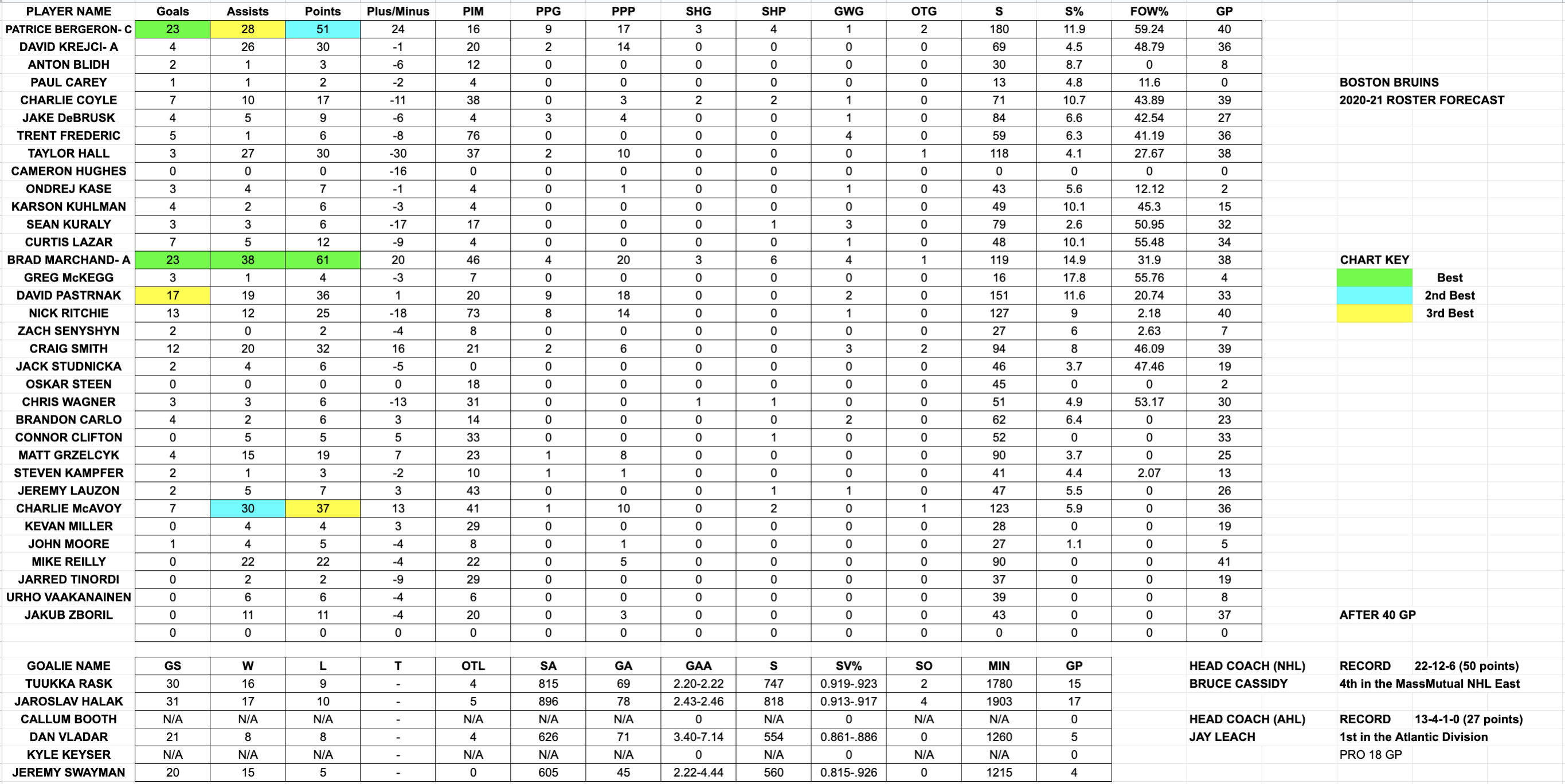































 Down the Frozen River
You must be logged in to post a comment.