Tag: 2004 Stanley Cup Final

  • Lightning repeat as Stanley Cup champions in Game 5 shutout

    Lightning repeat as Stanley Cup champions in Game 5 shutout

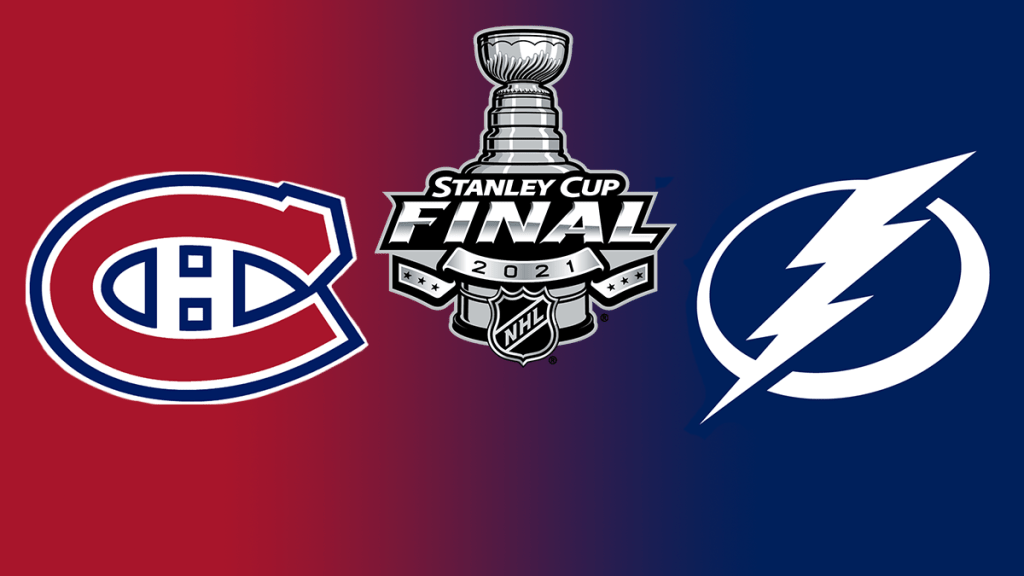
    Ross Colton’s goal was more than enough to seal the deal on the Tampa Bay Lightning’s third Stanley Cup championship in franchise history Wednesday night at Amalie Arena in Game 5 of the 2021 Stanley Cup Final.

    Andrei Vasilevskiy made 22 saves in a, 1-0, shutout victory on home ice over the Montréal Canadiens as he became the first goaltender since legendary Canadiens goaltender, Ken Dryden, to play in every playoff game en route to winning back-to-back Stanley Cup rings.

    It was also the 5th shutout (6th of his postseason career) for Vasilevskiy this postseason as the Lightning goaltender became the first in league history to win all four series clinching games in a shutout.

    He’s also won his last five consecutive playoff series’ in shutout fashion as Tampa shutout the Dallas Stars, 2-0, in Game 6 of the 2020 Stanley Cup Final before going on their 2021 run by shutting out the Florida Panthers, 4-0, in Game 6 of Tampa’s 2021 First Round matchup, eliminating the Carolina Hurricanes, 2-0, in Game 5 in the 2021 Second Round and beating the New York Islanders and Canadiens, 1-0, in Game 7 of the 2021 Stanley Cup Semifinals and Game 5 of the 2021 Stanley Cup Final, respectively.

    Colton was also the fourth rookie to score a Stanley Cup clinching goal since 1927, in Wednesday night’s effort.

    The Bolts are back-to-back Stanley Cup champions, having won the Cup in 2020 and 2021, as the first repeat champions since the Pittsburgh Penguins did so in 2016 and 2017.

    Tampa also did so in a span of about 10 months, since the ongoing global pandemic altered the National Hockey League’s postseason calendar for 2020, and shortened the 2020-21 league calendar to 56 games in the regular season, followed by a postseason that began in May and ended in the first week of July.

    Last year, the Lightning raised the Cup as the designated road team at Rogers Place in Edmonton, Alberta at a neutral site as the NHL played through the COVID-19 pandemic in a bubble in the 2020 Stanley Cup Playoffs.

    This year, for the first time in 17 years, the Bolts raised the Cup in front of their home fans as 2004 Stanley Cup champion with Tampa, Dave Andreychuk, watched along in attendance to cap the 2020-21 Lightning’s run.

    In 2004, NHL on ESPN and NHL on ABC coverage had come to an end with the conclusion of Tampa’s Game 7 victory over the Calgary Flames in the Stanley Cup Final.

    The 2004-05 season-long lockout that ultimately canceled all NHL action for the year meant that ESPN could punt their broadcasting rights to the 2005-06 season or opt out altogether.

    They chose the latter.

    That’s when NBC stepped in and the NHL had games on Outdoor Life Network, then Versus, NBC Sports Network (which shortly rebranded as NBCSN), as well as on NBC.

    In 2021, NHL on NBC signed off for the final time as the league shifts its focus back to ESPN/Disney and Turner Sports for the next seven seasons in the United States starting with the 2021-22 season (the 2021 Seattle Kraken Expansion Draft and first round of the 2021 NHL Draft will be on ESPN2 this month, if you’re wondering).

    Back at Amalie Arena on Wednesday night, Vasilevskiy (16-7, 1.90 goals-against average, .937 save percentage in 23 games played) made 22 saves on 22 shots against en route to winning the Conn Smythe Trophy as the 2021 Stanley Cup Playoffs’ Most Valuable Player.

    Montréal goaltender, Carey Price (13-9, 2.28 goals-against average, .924 save percentage in 22 games) stopped 29 out of 30 shots faced in the loss.

    Lightning head coach, Jon Cooper, improved to 9-0 all time in a series when leading 2-0, while the Bolts became the first team to raise the Cup on home ice since Chicago did so in 2015.

    Pat Maroon, meanwhile, also became the first player (and fourth overall) since Ed Litzenberger to win three consecutive Cups with two different teams as Litzenberger won with Chicago in 1961, as well as Toronto from 1962-64.

    Neither Habs head coach, Dominique Ducharme, nor Cooper, made a change to their lineups for Game 5 on Wednesday.

    Alex Killorn remained out of the lineup for the Lightning for fourth game in-a-row after blocking a shot in Game 1. He told reporters after the game that he suffered a broken left fibula in Game 1 and wanted to suit up again if he could play.

    Corey Perry kicked things off in Game 5 with a hooking infraction as Perry impeded Mathieu Joseph’s play and presented the Lightning with the game’s first power play at 3:21 of the first period.

    Tampa couldn’t convert on the ensuing skater advantage, however.

    Moments later, the Canadiens got their first chance on the power play as Jan Rutta cross checked Artturi Lehkonen at 7:19.

    Montréal’s time on the advantage was unchanged as Erik Cernak earned an interference minor and Perry was assessed an embellishment infraction almost a minute after Rutta cut a rut to the penalty box at 8:15.

    About 30 seconds after Cernak and Perry went to the sin bin, though, Josh Anderson hooked Blake Coleman and joined his teammates in Montréal’s box at 8:43 of the opening frame.

    The two teams skated at 4-on-4 for 37 seconds before Tampa had an abbreviated power play thereafter.

    Just past the midpoint of the first period, the Bolts were outshooting the Habs, 11-2, with 9:53 remaining in the opening period– reminiscent of how the Lightning outshot the Canadiens, 11-1, through the first half of the first period in Game 4.

    Entering the first intermission, the score was still tied, 0-0, despite Tampa outshooting Montréal, 13-4.

    The Bolts also held the advantage in blocked shots (3-0), takeaways (2-1) and hits (25-16), while the Habs led in faceoff win percentage (52-48) after one period.

    Both teams had three giveaways each while the Canadiens were 0/1 and the Lightning were 0/2 on the power play heading into the middle frame.

    David Savard sent an errant puck over the glass and out of play and received an automatic minor 21 seconds into the second period, but the Habs couldn’t score on the resulting power play.

    Almost midway through the second frame, Mikhail Sergachev tripped up Nick Suzuki and presented the Canadiens with another power play that went by the wayside at 8:32.

    Moments later in Tampa’s attacking zone, Ryan McDonagh made a lateral pass along the blue line to Savard, who promptly crashed the slot and slid a shot pass towards the crease for Colton (4) to redirect into the twine.

    Savard (5) and McDonagh (8) had the assists on Colton’s goal as the Lightning took a, 1-0, lead at 13:27 of the second period.

    Keeping in the trend with the rest of the series– the team that scored first in each game won the game.

    Late in the period, Ben Chiarot yanked Brayden Point down on a breakaway, yielding a power play to the Bolts as a result as Chiarot was assessed with a holding infraction at 19:22.

    Though the ensuing skater advantage spanned the end of the second period and the start of the final frame of regulation, the Bolts couldn’t find a way to solve Montréal’s penalty kill.

    After 40 minutes of action at Amalie Arena on Wednesday night, the Lightning lead the Canadiens, 1-0, on the scoreboard and were outshooting the Habs, 19-14, despite Montréal holding a, 10-6, advantage in shots on goal in the second period alone.

    Tampa held the lead in blocked shots (4-3), takeaways (7-3), giveaways (10-3) and hits (44-35), while the Canadiens led in faceoff win% (54-46).

    Both teams were 0/3 on the power play heading into the final period.

    Early in the third period, Nikita Kucherov had a great chance to score, but Price stood tall and shut him down while losing his stick and making desperation saves.

    Montréal responded with a breakaway as Anderson burst into the zone with tremendous speed, was denied by Vasilevskiy and ultimately crashed back-first into the post and briefly went down the tunnel before returning for the rest of the game.

    With 1:51 remaining in the third period, Ducharme pulled Price for an extra attacker, but after a stoppage resulted in neutral zone faceoff, the Habs sent Price back into the crease for a few seconds to ensure a little security between the pipes if they lost the draw.

    Montréal won the ensuing faceoff as Price once again sprinted for the bench with 1:36 remaining, but Tampa’s defense was too much for the Canadiens– though the Lightning’s offense couldn’t put an exclamation point on the game with an empty net goal.

    The Habs used their timeout with 1:24 remaining as assistant coach, Alex Burrows, tried to rally his players for one last push.

    At the final horn, Vasilevskiy and the Bolts earned a, 1-0, shutout in Game 5 and clinched their second-straight Stanley Cup ring in as many years.

    Wednesday night marked the third time that Tampa won the Cup in franchise history.

    The Bolts also improved to 17-3 all time when scoring first in series-clinching games.

    Tampa finished Game 5 leading in shots on goal, 30-22, including an, 11-8, advantage in the third period alone.

    The Lightning dominated in just about everything else at the end of the night, leading in giveaways (11-6), hits (56-48) and faceoff win% (52-48), while both teams had nine blocked shots each.

    Montréal exited the building 0/3 on the power play, but then again, Tampa also struggled on the skater advantage in the action– going 0/3 on Wednesday night as well.

    Tampa finished the 2021 postseason 16-7 overall, while the Habs went 13-9.

  • The definitive review of all 31 Reverse Retro jerseys

    Adidas and the National Hockey League are trying something creative this season. It wouldn’t really be right to call it “new”, since most things are old anyway, but all 31 adidas Reverse Retro jerseys were revealed on Monday to mixed reviews by fans and jersey critics alike on social media.

    In theory, “everything that’s old is new again” can be a reassuring nostalgic feeling, but it works best when you’re reuniting with friends you haven’t seen in a while and some of them haven’t changed one bit or something.

    In reality, “everything that’s old is new again” is just a marketing ploy to sell jerseys and– to the dismay of my wallet– I’m sold. Somewhat.

    Not every jersey is perfect, but some are unique, some are good looking and others are downright attractive.

    Yes, it’s possible to be seduced by sweater threads. Ask any jersey collector.

    Before we begin, there’s just one question left to ask– what, exactly, were the prerequisites for determining what could be considered “retro”?

    There’s inconsistency across the board between all 31 teams, but that’s bound to happen since some have been around since before the league’s inception (see, Montreal Canadiens) and other teams are just entering their fourth season of existence (shoutout Vegas Golden Knights).

    Alright, let’s grade some sweaters.

    Editor’s note: Yes, adidas picked a single year that each jersey represents, but we’re going to present a more accurate timeline for when each original design was flying around the ice.

    Anaheim Ducks (based on the 1995-96 alternate)

    https://platform.twitter.com/widgets.js

    The Anaheim Ducks must have been browsing eBay one night, saw that the original “Wild Wing” (or “Mighty Wing”, if you prefer) jerseys often sell for double the price of a regular adidas authentic jersey these days and said to themselves “gee, we could make that money easily” without realizing that the sales on eBay do not– in any part– go to the Ducks themselves.

    Nevertheless, this is a good plan B, but almost everything from the Mighty Ducks era is beloved except for one thing– whatever’s happening on this jersey.

    For one season, it’s a good gimmick and a quick cash grab (especially for the drying up reserves due to the ongoing COVID-19 pandemic).

    It’s standard for an NHL team to reach back in time, change a thing or two and sell a lot of “new” jerseys. Solid effort, Anaheim.

    It shouldn’t come back out of the vault ever again.

    Grade: C

    Arizona Coyotes (based on the 1998-2003 alternate)

    https://platform.twitter.com/widgets.js

    This is one of my favorite jerseys in the Reverse Retro bunch simply for the fact that the Arizona Coyotes took an already legendary concept from the 1990s and made it better.

    Sure the original look wasn’t great (but also not as horrendous as you probably remember) back in the day, but this time around it looks much better with purple as the base color instead of green.

    Why? Because the Coyotes’ moon logo is primarily purple and purple is featured more prominently in the crest logo on this jersey than the green ever was– plus is makes the saguaro inspired cacti design at the bottom pop.

    Purple is the night sky of a desert sunset. It accentuates the mountains and rock formations in the lower third.

    In simple terms, this jersey is art. It’s a masterpiece.

    Grade: A

    Boston Bruins (based on the 1981-95 design)

    https://platform.twitter.com/widgets.js

    A simple remix of an iconic look that the Boston Bruins used for many years spanning the likenesses of Terry O’Reilly, Ray Bourque and Cam Neely in the “Big Bad Bruins”/”Lunchpail A.C.” era, this Reverse Retro redesign works well as a short-term implementation of the league’s fourth jersey rotation to Boston’s lineup.

    Could it become something that sticks in the Hub for a while? Sure, but the franchise would be best to use this for a few seasons and work on an incredible new gold design.

    Though it’s hard to argue not resurrecting the bear patch on the shoulders full-time. That bear has seen some things.

    The Bruins last used a gold-based jersey in the 2010 Winter Classic and a gold-based third jersey in 1995-96 (the first year of the NHL’s official third jersey program). Prior to that, the B’s actually wore gold for select games from 1940-44, then again as a primary design from 1955-67, when the team was mostly irrelevant to the overall league standings.

    It must be mentioned, however, that when Bobby Orr first laced up for Boston, he was wearing a gold uniform in his 1966-67 rookie season.

    Simply put, the Bruins need a gold jersey in their rotation. This one works (for now).

    Grade: A

    Buffalo Sabres (based on the 2000-06 alternate)

    https://platform.twitter.com/widgets.js

    The Buffa-goat is back. Kind of.

    It’s on the shoulders and modernized with the current color scheme (so… Buffalo’s original colors), but the Sabres opted to cancel out one of their positive changes made in the offseason with a negative resurrection.

    No, the two swords logo on the front isn’t bad, but one thing that never made me feel anything special for the original 2000-06 alternates was the fact that the city’s name appears in the lower striping pattern.

    It’s neat, but is it necessary?

    At least it looks better in traditional Sabres colors and the number font is just like “the good old days” when Buffalo dominated the league with players like Miroslav Satan, Maxim Afinogenov, Daniel Brière and others.

    If the Sabres make the playoffs for the first time since 2011, then we’ll know the real reason why the franchise has been awful for about a decade. It all comes down to style points.

    Grade: A

    Calgary Flames (based on the 1998-2006 alternate)

    https://platform.twitter.com/widgets.js

    Yes, folks, as the Calgary Flames’ tweet mentions– “Blasty” is back.

    Now get off your high horse if you think this is truly a “Reverse Retro” jersey and not just an updated alternate/fourth sweater.

    There was just one minor change to the eye in this design– aside from the white flaming “C” instead of how it looked originally on the shoulders in red– and it’s the striping pattern on the bottom.

    There’s significantly less red to this jersey. It isn’t bad, but just… …not great. It doesn’t really “reverse” anything major, which discredits the basic foundation and understanding of the Reverse Retro ideology.

    Had adidas gone in a different direction and made a white reversed version of the iconic “Blasty” look, then Calgary would be getting a better grade.

    Grade: C

    Carolina Hurricanes (based on the Hartford Whalers 1979-82, 1983-85 design)

    https://platform.twitter.com/widgets.js

    Prior to the 2018-19 season, the Carolina Hurricanes introduced a Hartford Whalers Throwback jersey that they wore three times between 2018-20 (twice against the Boston Bruins in 2018-19 and once against the Los Angeles Kings in 2019-20).

    Despite not playing in Hartford since relocating to North Carolina ahead of the 1997-98 season, Carolina made every effort to get into character– even dressing up PNC Arena in Whalers colors on the inside of the barn, but there was one thing missing from the look.

    This time around the Canes have added “Pucky” to the shoulders of this second iteration of a throwback sweater.

    It’s grey though, which isn’t so much of an inversion of the 1979 color scheme so much as it is a reversal of the 1992-97 final design before leaving Hartford.

    At the very least the Hurricanes deserve credit for going all-in on the retro requirement and not coming up with any “fauxback” shenanigans using Whalers colors on a Carolina logo.

    Grade: B+

    Chicago Blackhawks (based on the 1940-41 design)

    https://platform.twitter.com/widgets.js

    Well, this is… something.

    Back in 1940, the Chicago Blackhawks only had the crest on their dark jersey with the white jersey simply having numbers on the front and back a la American football teams.

    This is, in fact, a Reverse Retro with the overall design of the white jersey from the 1940-41 season now done in black, but the logo was understandably modified to make it… less racist than it was back then?

    Sure the Blackhawks name itself was done in honor of both a military division and a prominent Sauk nation member, Black Hawk, and the club does (at best) more than other professional teams that have recently changed their name (see, Washington Football Team) to honor indigenous people, but the logo isn’t great.

    The overall aesthetic is simplistic, but sharp. Why ruin it with a caricature?

    Grade: D+

    Colorado Avalanche (based on the Québec Nordiques 1991-95 design)

    https://platform.twitter.com/widgets.js

    It’s hard to imagine what the Québec Nordiques would look like today– especially since they were rebranding for the 1995-96 season anyway had they not relocated to Denver, Colorado, but the Avalanche have provided a clear look at what wouldn’t have been a terrible idea if the Nordiques had decided to go with the rebrand in the ’90s, then settle back down from a period of throwing caution to the wind.

    There’s nothing wrong with bringing something out of the closet once in a while, but someone might cry “jersey foul” if it’s exactly as things used to look before relocating.

    That makes things difficult for Carolina and Colorado to do a Reverse Retro sweater without leaving someone feeling like they’ve had their team “stolen” once again.

    But whatever, these are meant to make a profit off of nostalgic feelings and jersey collectors. Buy one or not, it doesn’t affect the feelings of the overall brand.

    The fact that the Avs and Canes lay claim to the old logos helps them make it out alive in the grueling course of Reverse Retro critics, unlike the Minnesota Wild’s attempt at being the Minnesota North Stars without stepping on the Dallas Stars’ history too much.

    Now the only question I have left for the Avalanche is should I get this in Nathan MacKinnon or Mikko Rantanen?

    Grade: A

    Columbus Blue Jackets (based on the 2000-01 design)

    https://platform.twitter.com/widgets.js

    The Columbus Blue Jackets read the directions for the assignment and nearly got a 100% on the final exam. These jerseys are incredible– even if they remind you of the early days of the Washington Capitals (and Washington’s current alternate jersey).

    Sure the original Blue Jackets logo is a bit out there, but Columbus set the bar in terms of doing something different and giving the fans in the heart of Ohio a red jersey for the first time in franchise history.

    It shouldn’t become commonplace, since– you know– they’re the Blue Jackets– “blue” is literally in their name, but for an “outlandish” marketing standpoint, this jersey has everything.

    Except for one thing. Stinger’s not on the shoulder patch.

    For whatever reason, adidas decided to include Columbus’ current cannon shoulder patch/alternate logo on this jersey instead of following the guidelines of simply reversing their original look.

    That’s why they almost got a “100” on their exam. Just a few points off for not including the most iconic thing about the franchise’s early years and current mascot.

    Grade: A

    Dallas Stars (based on their 1997-2006 design)

    https://platform.twitter.com/widgets.js

    Adidas claims this jersey is based on Dallas’ 1999 Stanley Cup champion look, but the star based design for the Stars began as a third jersey in 1997, before making its way to the full-time grounds for the home and road uniforms from 1999-2006.

    Since rebranding ahead of the 2013-14 season, Dallas has put an emphasis on one thing– being Dallas. Gone are the days of the Minnesota North Stars. By removing any semblance of gold from their jersey, the Stars fully completed their transition from pre-relocation to post-relocation.

    As a result, this monstrosity happened.

    It’s not that the star-shaped design isn’t appreciated– it’s that it shouldn’t be matched with white pants, white gloves, white socks and drained of any color or originality to begin with, since the crest is rather muted as a result of the change from gold to silver on a white background.

    Had the jersey been black with a white bottom star-striping pattern then it’d be a different story.

    Grade: D

    Detroit Red Wings (based on their 1987-2007 design)

    https://platform.twitter.com/widgets.js

    Once more, adidas claims that this Reverse Retro jersey harkens back to a championship winning year for the Detroit Red Wings back in 1998. In reality, the Red Wings wore the same look from 1987-2007, with the only difference being that since the 2003-04 season, the NHL deemed white jerseys to be the road set instead of the home uniform.

    This jersey seems to borrow the silver from Detroit’s 2017 Centennial Classic jersey to give it a little more definition than a long-sleeved plain white shirt with a logo slapped on the front and red numbers with a nameplate on the sides and back.

    If only they would’ve picked something from Detroit’s days as the Detroit Cougars or even the Detroit Falcons.

    The Cougars had some designs unlike any other in franchise history, while the Falcons used yellow with the usual red and white format for the club– marking the only time the team has ever used more than just red and white on a regular sweater.

    Reversing the Falcons colors would’ve been a hard sell, sure, but the Cougars, man. There was potential and it was left untapped.

    Grade: F

    Edmonton Oilers (based on the 1979-80 design)

    https://platform.twitter.com/widgets.js

    It’s simple, clean and a nod to the team’s inaugural NHL season, while subtly paying homage to their pre-Edmonton Oilers days as the Alberta Oilers in the World Hockey Association (WHA).

    Orange is more prominent in what would otherwise likely be a better companion to their home uniform as a road jersey than their current road set, but that’s just probably one of the reasons why the entire jersey wasn’t done in orange instead of white as the base design– because it already exists (sure, with the more modern shade of blue and traffic cone orange, but you get the point).

    These aren’t bad, but the Oilers never really stray far from the formula.

    Todd McFarlane at least had fun with the brand and nudged it towards the future with his 2001-07 alternate jersey– love it or hate it.

    There are just… …fine. The logo wasn’t reversed like some had hoped, but whatever.

    Grade: B-

    Florida Panthers (based on the 1993-98 design)

    https://platform.twitter.com/widgets.js

    The Florida Panthers have long had an identity crisis.

    For some, the leaping panther is a better looking logo than today’s spitting image of current head coach, Joel Quenneville, despite the modern logo dating back to the 2016-17 season, which was prior to Quenneville’s arrival behind the bench last season.

    Confused? That’s exactly how Florida feels.

    This team has probably flipped from red to blue and back again as many times as the state has in U.S. Presidential elections in the last few decades.

    Florida’s first dark based uniform was red, then added a blue alternate jersey to their rotation from 1998-2003, before swapping the red with the blue as their new home look from 2003-06, prior to de-arching the nameplates on the back of the jersey on an otherwise untouched design in 2006-07– which was prior to Reebok’s demands that the Panthers use a template with vertical piping centered between the underarms and crest from 2007-11.

    Anyway, the Panthers need a blue uniform in their set and this one utilizes the current colors of the franchise (red, blue, tan and white) well in the inverted aesthetic of how the club looked when the team first hit the ice in South Florida after almost being named the Florida Block Busters upon expansion in 1993.

    At this point anything else is just filler material to describe a masterpiece that doesn’t really need words to be observed.

    Grade: A

    Los Angeles Kings (based on the 1988-91 design)

    https://platform.twitter.com/widgets.js

    Purple “Forum Blue” is back and the Los Angeles Kings have never felt more royal– except for that time they won the Cup twice in a three-year span in 2012 and 2014.

    The timeless look of the Wayne Gretzky era jerseys were given a fresh paint job with old leftover colors, which begs the question “is this really a Reverse Retro look or something new entirely from recycled parts?”

    Has marketing gone too far?

    Probably not, since there’s no burgers involved this time around.

    While the Kings could’ve come up with something different, Los Angeles played it safe and went with something that encapsulates the spirit of the city– trying to be the Los Angeles Lakers.

    You might not know some of the struggling actors in Hollywood or if that really was just Anze Kopitar that walked by, but everyone can identity a favorite (or hated, if you’re a Boston Celtics fan) Laker.

    Grade: C+

    Minnesota Wild (based on the Minnesota North Stars 1978-79 design)

    https://platform.twitter.com/widgets.js

    Whereas the Carolina Hurricanes and Colorado Avalanche own and used some form of their old logo from prior to relocation for their Reverse Retro jerseys, the Minnesota Wild have no ties to the Minnesota North Stars because the North Stars moved to Dallas in 1993, so we’re left with the Wild logo as the crest on the front in 3-D and in North Stars colors.

    By default, these jerseys should’ve been what the Stars used, but with the North Stars stylized “N” on the front of the jersey or Dallas could’ve just let Minnesota buy back that old logo or whatever, but instead we get this jersey that looks more appropriate for a local beer league team sponsored by Subway.

    Some say the Wild should switch to these colors full time– especially with Dallas relinquishing gold from their palette ahead of the 2013-14 season, but those people should just move on like the North Stars did.

    The Wild are here to stay and could’ve been really creative with a red or tan based primary color in a true Reverse Retro design based on their original look from 2000-03.

    Besides, Minnesota could use a red jersey as an alternate, whether you like it or not. It is one of their team colors and it could go well with their more uniform approach to their jerseys since adidas took over ahead of the 2017-18 season.

    Otherwise these are just fine. The yellow on green number font gives off a “Da Beauty League” vibe, which just isn’t very like the NHL to have fun.

    Grade: C

    Montreal Canadiens (based on the 1974-2007 design with 1909 elements, etc.)

    https://platform.twitter.com/widgets.js

    While the Montreal Canadiens played it rather conservative with regards to their Reverse Retro look, the designers over at adidas really came up with something crisp, clean and hit it out of the park.

    Montreal last had a third sweater in 2006-07, and it was really well done for being the one and only regular alternate jersey in franchise history.

    Though the Habs have a timeless look that isn’t one to be messed with in any matter, there’s always an exception to every rule and this is it if the Canadiens are planning on using this blue jersey as an alternate in the long-term.

    Then again, people from Montreal might feel weird about wearing what would otherwise be considered the Nordiques’ primary color, so there’s the “Battle of Québec” to consider.

    If you’re a Habs diehard, maybe you don’t like this jersey. If you’re from Québec City and begrudgingly became a Habs fan after the Nordiques relocated to Colorado instead of joining the Boston Bruins fanbase north of the border or simply following the Avalanche, then perhaps this is the jersey for you.

    Grade: A

    Nashville Predators (based on the 1998-2001 design)

    https://platform.twitter.com/widgets.js

    If the Nashville Predators had walked out onto the ice wearing these in 1998, it would’ve explained their evolution to the modern marigold jerseys a lot better than the simple reversal of the colors that they originally made ahead of the 2011-12 season before Reverse Retro became a thing for 2020-21 (and beyond?).

    That said, Nashville’s original look inverted to a gold based jersey with the blue stripe separating the silver yoke that runs down the sleeves still looks fantastic– and with the old number and nameplate fonts too!

    The one thing that’s not true to the original 1998 design (other than the slightly modified original crest), however, is the shoulder patch that originally debuted on the mustard yellow alternate sweater from 2001-07, but made its way to the home and road uniform’s shoulders from 2005-07.

    Does that actually mean this look is really just based on the 2005-07 design and adidas doesn’t think that something as old as 15 years ago isn’t, you know, actually kind of old?

    No big deal though, these jerseys are still great, since the Predators went with the better shoulder patch from their early days.

    The guitar pick that’s been on their right shoulder of their regular jerseys since 2011 shouldn’t be afraid of going extinct.

    Grade: A

    New Jersey Devils (based on the 1982-92 design)

    https://platform.twitter.com/widgets.js

    Italy! Great to see they finally got an NHL team.

    The New Jersey Devils are paying homage to The Sopranos with these Italian flag inspired jerseys.

    Actually, it’s just the inverted color scheme of their original road jersey and the Devils have a quality Reverse Retro jersey on their hands. If they plan on keeping the Heritage Jersey long-term, then this brings a fine balance to The Force.

    If not, New Jersey should really design a black alternate jersey and roll with red, white, black and green as their main color scheme among the club’s four jersey options.

    Now why do I have a craving for Sbarro?

    Grade: A

    New York Islanders (based on the 1978-84 design)

    https://platform.twitter.com/widgets.js

    Was the Gorton’s Fisherman unavailable?

    It doesn’t really look like the New York Islanders even tried at all, but upon further inspection you’ll notice that the orange and white are reversed on this jersey– and that’s besides the fact that the blue is a darker shade than how it looked back in the day (and nowadays too).

    To the Isles’ credit, this jersey isn’t outlandish like most of their other attempts at creating a contemporary image for their club.

    It’s uninspiring and, frankly, not that original, but it works. It just doesn’t offer much for the Reverse Retro vibes, however, which takes major points off overall.

    At the very least it wasn’t oversimplified like their neighbors’ new threads in Manhattan.

    Grade: D

    New York Rangers (based on the 1996-98, 1999-2007 alternate)

    https://platform.twitter.com/widgets.js

    Want to know how to kill a good thing? Make it a practice jersey.

    These Statue of Liberty jerseys don’t scream “[g]ive me your tired “, but rather “I’m tired and I shouldn’t have been awoken. Now let me go back to sleep.”

    The striping pattern on the sleeves would look better on a New England Patriots pro-shop sweater, which should probably unnerve New York Giants and New York Jets fans that are also New York Rangers fans.

    It should’ve been red with blue, silver and white inverted stripes to truly make it “Reverse Retro”.

    Instead, New York gave us this. Whatever this is.

    Grade: F

    Ottawa Senators (based on the 1992-93 design with the 1997-2007 crest)

    https://platform.twitter.com/widgets.js

    Are you upset about the Ottawa Senators going back and modernizing an early version of their 2-D logo while casting off the red based home jerseys into the sunset? Well then here’s a red jersey for you!

    It’s the reverse of the original black jersey, which is sort of back (there’s some minor differences in number font, striping, etc.) and it’s fine, but it just feels like something Sens fans have come to know and despise in recent years– it feels cheap.

    Sure, Brady Tkachuk, Thomas Chabot, Matt Murray and Co. will look good in it, but introducing this jersey alongside the resurrected homage to the days of yore that the team currently has as home and road sweaters just makes this whole thing feel off.

    That said, Ottawa does need a red jersey to complete their otherwise timeless set and it wasn’t like we’re going to get a reversed barber pole jersey anytime soon.

    Usually something a little different is preferred, though, to make it feel like an alternate or at least a throwback to the original Senators franchise. This will work for now, however.

    Grade: B+

    Philadelphia Flyers (based on the 1984-97 design)

    https://platform.twitter.com/widgets.js

    The inside of the neck of the jersey says it’s inspired by Philadelphia’s look in 1995, but the Flyers wore this design for much longer before, during and after the mid-90s.

    Hell, the base of this design first emerged when “Cooperalls” were adorned, then promptly banned by the NHL because after two seasons they were found to be too much of a safety hazard (sliding on ice without any brakes became an issue because of the nature of the pants’ ability to act like a broom in curling and clear a path to the boards).

    Anyway, the Flyers already have a solid set of jerseys to the extent that this one isn’t really necessary.

    It might conjure images of Halloween, nightmares of Gritty or reminders of being sent down to the Lehigh Valley Phantoms (AHL) if you don’t perform well in them, but they’re fine, I guess.

    Unnecessary, but fine.

    Grade: C

    Pittsburgh Penguins (based on the 1992-97 design)

    https://platform.twitter.com/widgets.js

    The Pittsburgh Penguins became bold in the 1990s after winning their first Stanley Cup ring in franchise history.

    First, in 1992, they introduced the “Robo-Penguin” crest to the world, then they made a jersey with diagonal lettering on the front as their road uniform.

    Neither decision was very smart and only one of them was corrected on this Reverse Retro jersey, which– all things considered– doesn’t look that bad.

    Sure the Penguin on the shoulders is free from his triangle like on their current alternate jerseys (former 2017 Stadium Series look), but the “Pittsburgh” letting seems to standout better on the white edition of this timeless classic (for better or worse).

    More teams should experiment with diagonal alternates, but that’s not to say that every team can succeed– let alone barely get away with an acceptable look with just words on the front of their jersey.

    There’s a lot of rich jersey history for the Pens though and some of that potential went untapped. It’s a shame, really.

    Grade: C+

    St. Louis Blues (based on the 1995-98 design)

    https://platform.twitter.com/widgets.js

    Aside from the music, the St. Louis Blues are blue for a reason. Sure red is in the St. Louis city flag, but they’re the Blues. The BLUES.

    This is almost as bad as the trumpet jerseys that were rightfully spited to the gates of the underworld.

    It’d almost make sense to put the shoulder patch as the main crest on these, since then it’d at least make sense as an homage to what was almost the worst alternate jersey in the history of the league, but thankfully avoided due to Mike Keenan’s keen eye.

    Some things are just better in concept, but in reality they’re not. As a fashion jersey, this is probably fine. As something the team has to wear on the ice for a game, well… …that’s different.

    At least the team didn’t end up moving to Saskatoon back in 1983, right?

    Grade: D

    San Jose Sharks (based on the 1997-2007 design)

    https://platform.twitter.com/widgets.js

    Adidas stipulates that this jersey harkens back to 1998, but the San Jose Sharks originally used this template as an alternate jersey back in 1997-98– the final season that San Jose wore their original uniforms since joining the league in 1991 as an expansion team.

    The original Sharks logo is a timeless classic from the ’90s, while the fact that San Jose has already reached back and utilized their original setup to mark their 25th anniversary back in the 2015-16 season, it’s only fitting that they’d naturally move onto their second ever look for the subsequent nod to their franchise history.

    In other words, ten years from now, you can probably expect an orange Reverse Retro jersey based on the 2007-13 design, because that’d keep the pattern going.

    Anyway, these are fine. They’re nothing spectacular, since grey is a hard sell on a home uniform, but reviving an iconic look without murdering it by reversing it is exactly what the Reverse Retro jerseys are all about.

    Grade: B

    Tampa Bay Lightning (based on the 2001-07 design)

    https://platform.twitter.com/widgets.js

    They really like pointing out when teams won Cups years ago with these jerseys, huh? Once again, adidas points out that this is from “2004” (as in “the year the Tampa Bay Lightning won their first Stanley Cup championship in franchise history”), but the Bolts used this template from 2001-07 after originally debuting the frameworks of this jersey when they first hit the ice in 1992 as an expansion team.

    Tampa refined the look over the years by changing the number and nameplate font to italics, changing the font altogether and finally landing on the look that they wore the last time they won the Cup before 2020.

    As such, these Reverse Retro jerseys are a great nod to the Lightning’s history as a hockey market.

    Though their current uniforms might be a bit plain, a blue version of what is essentially their original design adds a spark of life to their complete jersey set.

    Teams sometimes go back to old motifs after a while and if these are popular enough, the Lightning would be smart to find a way to mix their current logo with this jersey template or something.

    Grade: A

    Toronto Maple Leafs (based on the 1967-70 design and 1970-72, 1973-75 design, etc.)

    https://platform.twitter.com/widgets.js

    What were they thinking? Seriously, what were they thinking?

    It’s one thing to pull out the old alternate Leaf logo on the shoulders from “the bad Leaf era” or whatever, but it’s another thing to use elements from the 1960s Toronto Maple Leafs jersey and slap it on the 1970s and 1980s jersey design.

    Toronto introduced new jerseys for the 1967 Stanley Cup Playoffs and went on to win the Cup wearing the Leafs logo that was brought back for its appearance on this Reverse Retro jersey, but again, it’s a sin according to Leafs fans and historians to put it on the base design of some of the worst Maple Leafs hockey in franchise history.

    Also, it’s a crime to put a blue maple leaf on a blue Maple Leafs jersey– and with blue numbers on the sides and back too!

    There’s so much adidas could’ve done with Toronto’s lengthy history of jerseys and instead they went for the most bland design.

    If they hadn’t used up the throwbacks to the Toronto Arenas and Toronto St. Pats over the last few years, then that would’ve been a great opportunity for a Reverse Retro look that was truly something special.

    Even still, they could’ve gone with anything from 1927-67 or 1992-2011 for a better retro feel.

    These are just insulting to the Leafs’ legacy.

    Grade: F

    Vancouver Canucks (based on the 2001-06 alternate)

    https://platform.twitter.com/widgets.js

    Gradients aren’t usually something that look great in sports– especially on a hockey jersey. Yet, this time around the Vancouver Canucks have made significant strides in gradient technology.

    When this template first hit the ice in 2001, Vancouver utilized a slow change from blue to maroon which– while being a little bit out there– didn’t look completely out of place for Canucks standards.

    It wasn’t the greatest thing ever seen, but it also wasn’t the worst, since Vancouver’s previous gradient design was a horizontal change as opposed to the almost symmetrical vertical approach.

    Plus, the Canucks had those “V” jerseys before, so it can’t possibly get any worse, right?

    This time around, instead of maroon, the Canucks are using green and a sharper looking number font. Sometimes progress takes time, but when it’s allowed the time to grow, the end result is something pretty special.

    These Reverse Retro threads get a seal of approval as one of the better nods to an organization’s more recent past.

    Grade: A

    Vegas Golden Knights (based on the Las Vegas Thunder 1993-98 design)

    https://platform.twitter.com/widgets.js

    The Vegas Golden Knights were born in 2017, therefore making it pretty difficult to reverse something retro that hadn’t even been born yet.

    If you were thinking “well, they could at least reverse the colors of their jerseys” then you must not have noticed the introduction of their gold alternate uniform this offseason, so that limits you further.

    Unless you get creative.

    “Sin City” used to have an International Hockey League (IHL) team known as the Las Vegas Thunder.

    The Thunder had a primarily a 1990s looking teal, silver, black and white color scheme and used the template that Vegas based their Reverse Retro jersey on to design this red edition with the Golden Knights’ alternate logo on the front of it.

    It works, but at what cost?

    Vegas could use a red jersey in their overall selection of jerseys to choose from, but this one probably won’t be getting too much time in the spotlight.

    Even for a place where “a bit much” is the standard, this jersey seems a bit too much.

    Grade: C

    Washington Capitals (based on the 1995-2000 road design)

    https://platform.twitter.com/widgets.js

    The Washington Capitals hit a home run by digging out the eagle and updating it with their current colors. The only thing that should change if these become part of their jersey rotation is the name and number font.

    It’s nice to see something from the past brought into the future, but it’d also be nice to see it get cleaned up a bit more than just the occasional dusting.

    It’s an iconic look from the days of a questionable change in the direction of the franchise’s branding, but in the end it made the team that much better.

    Or maybe this all just the nostalgia talking. Either way, it gets them an “A”.

    Grade: A

    Winnipeg Jets (based on the old 1979-80 Winnipeg Jets)

    https://platform.twitter.com/widgets.js

    Like the Minnesota Wild and their relation to the Minnesota North Stars, the current Winnipeg Jets have nothing to do with the old Winnipeg Jets, but at least the Jets have the ability to use the old Jets logo.

    They also have the ability to use the old Jets’ colors, which could’ve led to a unique red based Reverse Retro jersey, but we got something that looks like it was designed by Snow Miser instead.

    Did it really have to be grey?

    The Aviator Jersey is at least more colorful than this and did a better job inverting the color scheme than whatever’s going on here.

    The logo is fine, the rest of the jersey is, well, it leaves something to be desired.

    Grade: D-
  • Lightning shutout Stars in Game 6, win 2nd Cup in franchise history

    For the first time since 2004, the Tampa Bay Lightning are Stanley Cup champions.

    Gone are the days of choking in the 2015 Final, the 2016 and 2018 Eastern Conference Final or being swept in the 2019 First Round.

    Open a window– make it a championship window– and see just how long the good times will last (there’s going to be some salary cap stuff to figure out for 2020-21 and beyond, but worry about that later).

    For now, raise a socially distant glass on Zoom or whatever and celebrate responsibly as the Bolts downed the Dallas Stars, 2-0, in Game 6 at Rogers Place in Edmonton to win the series 4-2 and bring the Cup back to Tampa for the second time in franchise history.

    Brayden Point’s power-play goal in the first period held up to be the game-winning, Stanley Cup clinching goal as Blake Coleman added an insurance marker in the middle frame.

    Victor Hedman became the second player in Lightning franchise history to win the Conn Smythe Trophy as the 2020 postseason’s most valuable player.

    Hedman’s also the third player from Sweden to win the Conn Smythe and the 10th different defender to win it in league history, joining Duncan Keith (2015), Scott Niedermayer (2007), Nicklas Lidstrom (2002), Scott Stevens (2000), Brian Leetch (1994), Al MacInnis (1989), Larry Robinson (1978), Bobby Orr (1970 and 1972) and Serge Savard (1969) in the process.

    He also had 10 goals in the 2020 postseason, which were the most by a defender since Leetch had 11 in 23 games with the 1994 Stanley Cup champion New York Rangers.

    Lightning goaltender, Andrei Vasilevskiy (18-7, 1.90 goals against average, .927 save percentage in 25 games this postseason) earned his first career Stanley Cup Playoff shutout in his 58th career postseason appearance– stopping all 22 shots faced en route to winning the Cup Monday night.

    Dallas netminder, Anton Khudobin (14-10, 2.69 GAA, .917 SV% in 25 games this postseason) had 27 saves on 29 shots against (.931 SV%) in the loss.

    Dallas interim head coach, Rick Bowness, didn’t change a thing from his lineup after winning in double overtime, 3-2, in Game 5 on Saturday to Monday night’s action in Game 6.

    As a result, Radek Faksa, Blake Comeau, Jason Robertson, Roope Hintz, Stephen Johns, Ben Bishop, Landon Bow, Taylor Fedun, Gavin Bayreuther, Thomas Harley and Ty Dellandrea remained out of the lineup due to injury or otherwise.

    Prior to Game 6 on Monday, Steven Stamkos was ruled out of the rest of the Final by the Lightning on Sunday.

    Tampa’s head coach, Jon Cooper, inserted Alexander Volkov on Stamkos’ slot on the fourth line right wing (where Carter Verhaeghe played in Game 5 after Stamkos returned for Game 4 before re-aggravating an injury forced him out of the lineup).

    On defense, Kevin Shattenkirk was bumped up to the first pairing with Hedman, while Jan Rutta joined the list of scratches as Zach Bogosian took over Shattenkirk’s role on the third pairing with Ryan McDonagh.

    Everything else was the same for the Bolts.

    Tampa’s list of scratches on Monday included Luke Schenn, Mathieu Joseph, Verhaeghe, Scott Wedgewood, Rutta, Braydon Coburn, Mitchell Stephens and Stamkos.

    Early in the opening frame, Andrew Cogliano tripped up Point and was assessed a minor infraction at 6:32 of the first period.

    Tampa wasn’t able to convert on their first power play opportunity of the night, but soon found themselves back on the skater advantage at 11:58, after John Klingberg tripped Volkov.

    Less than a minute into the ensuing power play, Point (14) gathered his own rebound and scored on the far side while Khudobin was caught thinking the puck was trapped between his arm and his body.

    Nikita Kucherov (27) and Hedman (12) tallied the assists on Point’s power-play goal at 12:23 of the first period and the Lightning led, 1-0.

    The goal was Point’s fifth of the series and set a franchise record for the most goals in one postseason by a Tampa player as Point surpassed Tyler Johnson’s previous mark of 13 goals in Tampa’s 2015 Stanley Cup Playoffs run, which ended in a loss to the Chicago Blackhawks in six games in the Stanley Cup Final that year– the most recent time the Bolts made the Final before beating Dallas in six games on Monday night.

    Kucherov’s primary assist on the goal also assured him of the fifth most assists (27) in a playoff year in NHL history, trailing Wayne Gretzky (31 assists in 1988), Gretzky again (30 assists in 1985), Gretzky for a third time (29 in 1987) and Mario Lemieux (28 in 1991).

    Late in the first period, Hedman interfered with Stars forward, Corey Perry, and received a minor penalty at 18:36, but Dallas’ first power play opportunity did not go well.

    Through one period of action in Edmonton on Monday night, the Lightning led, 1-0, on the scoreboard and, 11-4, in shots on goal.

    The Bolts also held the advantage in takeaways (1-0), hits (18-12) and faceoff win percentage (60-40).

    The Stars, meanwhile, led in blocked shots (8-5) and giveaways (7-5).

    Tampa was 1/2 on the power play, while Dallas was 0/1 on the skater advantage heading into the first intermission.

    Almost midway through the middle frame, Coleman (5) received a pass through the high slot from Cedric Paquette and fired a one-timer past Khudobin to extend Tampa’s lead to two-goals.

    Paquette (3) and Pat Maroon (5) notched the assists on the goal and the Lightning led, 2-0, at 7:01 of the second period.

    About a minute later, Tampa defender, Ryan McDonagh was penalized for interference after colliding with Dallas forward, Tyler Seguin at 8:02.

    Once more, however, Dallas’ power play was powerless and, in fact, cut shot when Perry bumped into Vasilevskiy yielding a penalty for goaltender interference at 9:22.

    Tampa’s ensuing abbreviated power play after a little 4-on-4 action did not result in a difference on the scoreboard as both teams eventually entered their respective dressing rooms for the second intermission with the Bolts still in command, 2-0.

    Through 40 minutes of play, the Lightning led in shots on goal, 21-8– including a, 10-4, advantage in the second period alone.

    The Bolts also held the advantage in takeaways (3-2), hits (31-20) and faceoff win% (56-44), while the Stars led in giveaways (9-8).

    Both teams had 13 blocked shots aside after two periods.

    Tampa was 1/3 on the power play, while Dallas was 0/2 heading into the final frame of regulation.

    Not much happened in the final period as the Stars rallied to a, 14-8, shots on net in the third period alone advantage– despite ultimately failing to score and finishing the night trailing, 29-22, in total shots on goal.

    Dallas played desperate and had one final chance to cut the lead in half on the power play at 15:27 of the third period when McDonagh tripped Joel Kiviranta, but the Stars just couldn’t get any offense on the board.

    With 1:44 remaining in the season, Bowness pulled Khudobin for an extra attacker in an attempt to muster just about anything by that point to spur his team for one last chance at forcing a Game 7.

    This time, their heroic comeback moment did not come as the Lightning bolted down their defense and struck the Stars with a, 2-0, shutout at the final horn.

    Tampa emerged with the 4-2 series win and their first Stanley Cup championship since 2004– their second Stanley Cup ring in franchise history.

    Dallas fell to 1-2 in three Stanley Cup Final appearances overall, having won in six games in 1999, against the Buffalo Sabres, and losing in six games in 2000, against the New Jersey Devils.

    Six games is all it takes, apparently, for better or worse for the Stars in the Final.

    Meanwhile, it’s all the Lightning needed to complete a redemption arc from losing in six games to Chicago in 2015, and the ensuing bouts of embarrassment since then until the stars aligned for Tampa on Monday.

    Tampa finished Game 6 leading in blocked shots (22-16), hits (40-37) and faceoff win% (53-47), while Dallas exited the bubble with the advantage in giveaways (11-9) in their final game.

    The Lightning finished 1/3 on the power play as the Stars finished 0/3 on the skater advantage.

    As the Bolts skated around with Lord Stanley’s mug, Cooper had completed the achievement of winning a championship at every level of hockey that he has coached– a feat that is by no means easy to accomplish, even though he did so while only 53-years-old (which is relatively young for a head coach).

    Tampa became the first team to win the Presidents’ Trophy and be swept in the First Round the year before winning the Cup in the following season as the Columbus Blue Jackets ousted the Lightning in four games in the 2019 First Round.

    The Lightning, fun fact, overcame Columbus in five games in the 2020 First Round before defeating the Boston Bruins in five games in the Second Round and the New York Islanders in six games in the Eastern Conference Final to advance to the 2020 Stanley Cup Final.

    Maroon became the eighth player in history– and first since former Lightning player, Cory Stillman– to win back-to-back Cups with different teams in consecutive seasons.

    Stillman won the Cup with the Lightning in 2004, before winning it again in 2006 with the Carolina Hurricanes (the NHL had a lockout that canceled the 2004-05 season in between), while Maroon won the Cup last year with the St. Louis Blues– his hometown team– before raising the Cup again in 2020 with Tampa.

    Vasilevskiy set an NHL record for minutes played by a goaltender in a postseason with 1,708:12 time on ice.

    He also became the 10th different netminder since the league expanded prior to the 1967-68 season to appear in every game en route to the Cup, joining Corey Crawford (with Chicago in 2013), Jonathan Quick (with the Los Angeles Kings in 2012), Tim Thomas (with Boston in 2011), Martin Brodeur (with New Jersey in 2000), Ed Belfour (with Dallas in 1999), Grant Fuhr (with the Edmonton Oilers in 1988), Patrick Roy (with the Montreal Canadiens in 1986), Ken Dryden (five times with Montreal from 1971-78) and Bernie Parent (with the Philadelphia Flyers in 1974) in the process.

    Bowness fell to 15-13 with Dallas in the postseason (all-time) as the Stars fell to 15-13 in the 2020 postseason as a whole, while Cooper improved to 54-29 behind the bench in the postseason with Tampa.

    The Lightning finished 18-7 in the bubble in postseason action– capitalizing their longest postseason (25 games) with a Cup win.

    Meanwhile, the NHL as a whole was able to award the Stanley Cup for the 2019-20 season amidst the ongoing COVID-19 global pandemic with zero positive tests in Phase 4 of their Return to Play plan– which deserves a banner in its own right– having “administered 33,174 tests to club Personnel, including Players” from the beginning of Phase 4 through September 26th, according to a statement released by the league prior to the game on Monday.

    Kudos to the NHL, NHLPA, Gary Bettman and all of the public health and local Canadian government officials that were able to make this happen.

  • Khudobin, Stars steal Game 1, lead Bolts 1-0 in series

    Four different goal scorers and goaltender, Anton Khudobin, helped the Dallas Stars take Game 1 of the 2020 Stanley Cup Final, 4-1, over the Tampa Bay Lightning on Saturday night inside the National Hockey League’s Edmonton bubble at Rogers Place.

    For the first time since the 1919 Stanley Cup Final, the NHL is playing for the Cup in the middle of a global pandemic that rivals the scale and impact of the 1918 influenza pandemic.

    This time, the league is determined on deciding a champion, unlike how the Pacific Coast Hockey Association’s Seattle Metropolitans and NHL’s Montreal Canadiens were forced to cancel their series– tied 2-2-1 through five games– due to an influenza outbreak among several players from both clubs that resulted in the death of Habs star, Joe Hall, from pneumonia brought on by the flu.

    In the face of the ongoing COVID-19 pandemic, the NHL rolls on with the fourth, final and most important round of the playoffs after a five month stoppage that cut the 2019-20 regular season short prompted the expanded 24-team postseason format for 2020.

    It all comes down to this– the 2020 Stanley Cup Final.

    Jamie Oleksiak scored the eventual game-winning goal midway through the second period, while Khudobin (13-6, 2.54 goals against average, .923 save percentage in 20 games this postseason) turned aside 35 out of 36 shots faced for a .972 SV% in the win for Dallas.

    Andrei Vasilevksiy (14-6, 1.88 GAA, .929 SV% in 20 games this postseason) made 16 saves on 19 shots against for an .842 SV% in the loss for the Lightning.

    For the first time in league history, two of the three southernmost based franchises are playing for the Cup in the northernmost city in the league.

    The Stars last won a Cup in 1999, while the Lightning last won a Cup in 2004, as both teams entered Game 1 with the hopes of setting the tone in their favor.

    Dallas’ interim head coach, Rick Bowness, opted to roll four complete forward lines instead of mimicking Tampa Bay’s head coach, Jon Cooper’s plans with 11 forwards and seven defenders.

    Bowness kept Jamie Benn, Tyler Seguin and Alexander Radulov together on his first line with Mattias Janmark, Joe Pavelski and Denis Gurianov rounding out his top-six forwards.

    Joel Kiviranta, Roope Hintz and Corey Perry lined up on the third line with Andrew Cogliano, Jason Dickinson and Blake Comeau comprising of Dallas’ fourth line trio.

    On defense, Esa Lindell and John Klingberg remained Dallas’ top pairing with Oleksiak and Miro Heiskanen completing the top-four blue liners, as well as Joel Hanley and Andrej Sekera rounding out the bottom defensive pairing.

    Once again, Jake Oettinger served as Khudobin’s backup on the bench as Ben Bishop remained “unfit to play” joining a long list of scratches for the Stars, including Radek Faksa, Nick Caamano, Jason Robertson, Stephen Johns, Bishop, Justin Dowling, Landon Bow, Taylor Fedun, Gavin Bayreuther, Thomas Harley and Ty Dellandrea.

    Cooper’s Lightning lineup was comprised of Ondrej Palat at the left side of Brayden Point on the first line with Nikita Kucherov in his usual role on right wing, while Alex Killorn, Anthony Cirelli and Tyler Johnson completed the top-six forwards for the Bolts.

    Barclay Goodrow, Yanni Gourde and Blake Coleman were on the third line as usual, while Pat Maroon and Cedric Paquette were the only fourth line forwards suited up to complete the 11 forwards and seven defenders dressed by Cooper.

    On defense, Victor Hedman and Kevin Shatternkirk remained paired, while Mikhail Sergachev, Erik Cernak, Ryan McDonagh, Zach Bogosian and Luke Schenn all took turns rotating shifts.

    Curtis McElhinney served as Vasilevskiy’s backup netminder, while Tampa’s list of scratches in Game 1 included Mathieu Jospeh, Carter Verhaeghe, Scott Wedgewood, Jan Rutta, Braydon Coburn, Mitchell Stephens, Steven Stamkos and Alexander Volkov.

    That’s right, Stamkos is still out of the lineup since having core muscle surgery in mid-March, skating in June, then missing training camp in July prior to the 2020 postseason.

    Hanley (1) opened the series’ scoring with a snipe shot over Vasilevskiy’s blocker side into the top corner of the twine to give the Stars a, 1-0, lead at 5:40 of the first period, while Hintz (10) recorded the only assisted on the goal after Kiviranta pressured the Lightning well enough to keep the puck in Dallas’ offensive zone.

    Moments later, Maroon and Oleksiak were engaged in a scrum that yielded roughing minors to both players at 8:08 of the opening frame and presented both teams with 4-on-4 action for a pair of minutes.

    Midway through the first period, Gourde (6) lucked out in front of Khudobin with a right place, right time shot that he banked off a Dallas defender and between the Stars netminder and the goalpost to tie the game, 1-1, at 12:32.

    Coleman (7) and Goodrow (5) recorded the assists on Tampa’s only goal of the game Saturday night.

    After one period of play, the score remained tied, 1-1, while Dallas held the advantage in shots on goal, 5-4, as well as in takeaways (3-1), hits (25-23) and faceoff win percentage (58-42).

    The Bolts led in blocked shots (9-3) and giveaways (2-0) entering the first intermission while neither team had seen any action on the skater advantage.

    Early in the middle frame, Coleman was sent to the penalty box for slashing Dickinson at 1:09 of the second period.

    Dallas wasn’t able to convert on their first power play of the night, however.

    The Stars also didn’t capitalize on the skater advantage again moments later when Coleman hooked Dickinson and cut a rut to the sin bin at 6:54.

    Oleksiak (5) scooped up his own rebound and roofed the puck from point blank over Vasilevskiy’s blocker side to give Dallas the lead for the second time of the night, as well as the eventual game-winning goal, 2-1, at 12:30 of the second period.

    Radulov (7) and Heiskanen (18) tallied the assists as Heiskanen tied the second-most assists in a postseason in Stars franchise history with the secondary helper on the goal.

    Oleksiak, in the meantime, has five goals in his last 22 games, while he had just four goals in his last 124 games (regular season and postseason combined).

    Late in the period, Kiviranta (5) scored on another rebound that the Tampa netminder failed to contain to give Dallas an insurance goal, as well as a two-goal lead, 3-1, at 19:32 of the middle frame.

    Lindell (6) and Klingberg (14) had the assists on the first year Stars forward’s goal.

    At the sound of the horn to conclude 40 minutes of play, Maroon shot the puck into Dallas’ bench and received a 10-minute misconduct as a result– officially at 20 minutes of the second period.

    The Stars carried a, 3-1, lead into the second intermission, while they also led the Lightning in shots on goal, 18-14– including a, 13-10, advantage in the second period alone.

    Dallas also led in takeaways (4-2) and faceoff win% (52-48), while Tampa held the advantage in blocked shots (18-10), giveaways (8-4) and hits (44-39).

    The Stars were 0/2 on the power play, while the Bolts still had yet to see time on the skater advantage entering the third period.

    Meanwhile, Hanley and Oleksiak were the first pair of Dallas defenders to score a goal in a Stanley Cup Final game since Derian Hatcher and Craig Ludwig did so for the Stars in Game 2 of the 1999 Stanley Cup Final.

    Oleksiak’s goal also marked the 15th goal from the blue line for Dallas, which leads all teams in the 2020 postseason.

    Early in the final frame, the Lightning received their first power play of the night when Klingberg hooked Killorn and was sent to the box at 4:52 of the third period.

    The Bolts were not successful on the ensuing power play, however.

    Nor did they score while Comeau was in the box for an automatic delay of game penalty for sending the puck over the glass at 9:08.

    The Lightning also didn’t capitalize on their third power play in a row after Seguin tripped Kucherov at 12:56.

    With 4:01 remaining in the game, Cooper pulled Vasilevskiy for an extra attacker, but the Bolts soon had a faceoff in their own zone and had to replace the vacant crease with Vasilevskiy’s talents.

    As the time ticked down to about 2:31 to go, Vasilevskiy jettisoned the blue paint for the bench to give Tampa a 6-on-5 advantage once more, but Dickinson (1) hit the empty net soon thereafter to secure the, 4-1, victory for the Stars.

    Comeau (5) and Janmark (6) tallied the assists on Dickinson’s empty net goal at 18:42 of the third period.

    Dallas wrapped up the action with the, 4-1, win and a 1-0 series lead in the Stanley Cup Final, as well as the advantage in blocked shots (26-18) and faceoff win% (51-49).

    Meanwhile, Tampa finished Saturday night leading in shots on goal, 36-20– including a, 22-2, advantage in the third period alone.

    The Lightning also finished the night leading in giveaways (10-9) and hits (56-50), while both teams failed to record a power play goal.

    Tampa went 0/3 and Dallas went 0/2 on the skater advantage.

    Bowness improved to 14-9 behind the bench in the postseason for the Stars, while Cooper fell to 50-38 all time with Tampa in the playoffs.

    Meanwhile, the team that wins Game 1 in a best-of-seven game series usually wins the series about 69% of the time– that wasn’t the case for the Boston Bruins last year, however, who won Game 1 of the 2019 Stanley Cup Final against the St. Louis Blues, then went on to lose the series in seven games on home ice.

    The Stars, however, are 22-9 all time when leading a best-of-seven series 1-0.

    The Stars take their 1-0 series lead into Game 2 on Monday night. Puck drop in Edmonton is scheduled for a little after 8 p.m. ET and fans in the United States can tune to NBCSN to catch the action, while those in Canada have their choice of CBC, SN or TVAS.

  • Take Five: Five takeaways from Game 4 of the 2020 Eastern Conference Final

    For the first time since 2015, the Tampa Bay Lightning are one win away from reaching the Stanley Cup Final.

    It’s only been five years since their last appearance in the Final, but it’s been a road of heartbreak and upsets of seemingly unimaginable proportions until now– well, almost now (wouldn’t want to jinx anything).

    The Bolts beat the New York Islanders, 4-1, in Game 4 on Sunday in what was a rather tame game despite the pregame meetings between Pat Maroon, some Lightning players and Isles players during warmups.

    Maroon ultimately got the last word with an empty net goal, while Tampa and scored two goals in 12 seconds– to complete three goals combined between the two teams in 27 seconds– to stage a comeback victory after the Islanders took the, 1-0, lead in the second period.

    With a win in Game 5 (Tuesday at 8 p.m. ET on NBCSN, CBC, SN and TVAS) the Lightning can advance to the 2020 Stanley Cup Final, which would be their third appearance in the Final in franchise history as the franchise hopes to capture its second Cup ring and first since winning it all in 2004.

    1. Heroes and villains.

    Mikhail Sergachev expressed what everyone in the series is thinking (to paraphrase– we don’t like them and they don’t like us), but Game 4 never really went the way that Game 3 did, which showed a testament to Tampa’s ability to regain their focus and play disciplined.

    New York also didn’t get too caught up in the heat of the moment after the exchanges at the end of Game 3 resulted in a full game’s worth of misconducts and the pregame meeting between members of both clubs.

    Should the Islanders try to get under the Lightning’s skin in Game 5?

    Is that what it’s going to take for them to move mountains and get another win in the series?

    Time will tell and that time is Tuesday night.

    Meanwhile, the Bolts got Brayden Point back in the lineup after he missed Game 3 with an injury.

    With their first line back intact (Point, Nikita Kucherov and Ondrej Palat) the Lightning were able to get half of their goals on Sunday, which– if you took away Maroon’s empty net goal for being one without the challenge of an opposing goalie in the crease– were vital to Tampa’s success.

    2. Islanders still haven’t figured out the “playing with the lead” thing.

    So you took a, 1-0, lead at 11:27 of the second period courtesy of a Brock Nelson goal after surviving the first period onslaught that gave Tampa an, 11-5, shots on goal advantage heading into the middle frame– it’d be a shame if you can’t recapture the energy from the last game and do it again, right?

    I mean, scoring a goal then avoiding too much of a prevent defense mindset because– it turns out– your best offense is your offense, so you should score more goals than the other team if you want to win a game is a good thing!

    Well, sometimes people never learn and the New York Islanders haven’t learned.

    In a 27-second span in the middle of the game, the Islanders had a, 1-0, lead, then trailed, 2-1, because playing with the lead hasn’t been a strong part of their game in the Eastern Conference Final.

    Leading is so overrated anyway.

    3. Warmup drills.

    Two of the goals that were given up by Semyon Varlamov were the kind of goals that a backup goaltender usually has to save at the tail end of pregame warmups.

    Varlamov could use some work on that last minute of warmups drill where everyone crowds the net and hacks at a puck until they beat their backup goaltender.

    That’s the problem, though, unless Thomas Greiss is starting in Game 5, net front traffic isn’t something Varlamov will see much of unless the Islanders work on it in practice.

    Regardless, Varlamov’s fallen to a 10-6 record in 18 games played this postseason with a 2.30 goals against average and a .914 save percentage, as well as two shutouts in that span.

    4. Still no shutouts.

    Speaking of shutouts, Andrei Vasilevskiy has a 13-4 record in all 17 games for the Lightning this postseason, as well as a 1.93 GAA and a .930 SV% in that span.

    But you know what he doesn’t have for some strange reason that can only be explained best as “because hockey”?

    A shutout.

    That’s right, Vasilevskiy does not have a shutout this postseason.

    In fact, in 50 career Stanley Cup Playoff games, Tampa’s netminder has never recorded a postseason shutout– dating back to four appearances in the 2015 Stanley Cup Playoffs.

    How is this even remotely possible? Especially with the Bolts’ defense!

    5. It’s beginning to look a lot like 1993.

    Just like when they were ousted by the Montreal Canadiens in the 1993 Prince of Wales Conference Final, New York could be eliminated in five games– only this time by the Lightning in the since rebranded Eastern Conference.

    Unlike in 1993, however, whereas the Islanders won Game 4 against Montreal in that series to hold off elimination for another day and avoid being swept by the eventual 1993 Stanley Cup champions, the Islanders won Game 3 against Tampa and had a better shot at evening the series 2-2 than they did 27 years ago.

    That said, if New York loses in Game 5, then that 36 years that it’s been since the Islanders were last in the Stanley Cup Final turns another year older in 2021.

    Tampa Bay has never lost a series when they’ve led 3-1.

  • 2020 Stanley Cup Playoffs Eastern Conference Final Preview

    The calendar flipped to September and it’s time to gear up for preseason hockey— I mean the Conference Finals!

    Yes, for the first time in recorded history, the National Hockey League is hosting both the Western Conference Final and the Eastern Conference Final in one hub city as Edmonton, Alberta plays host to the third round of the 2020 Stanley Cup Playoffs, as well as the 2020 Stanley Cup Final, but we’ll get there in a moment.

    First, there’s a little leftover business to take care of and that’s figuring out which of the two Eastern Conference finalists will emerge victorious at Rogers Place and remain in the bubble to contend for what every NHL player dreams of– raising Lord Stanley’s mug high over their shoulders and going for a skate.

    Though they were at first excluded from the bubble, some family members will be allowed to partake in the Conference Final and Stanley Cup Final festivities as long as they are Canadian citizens that are currently in Canada, but they have to self-isolate at home for seven days and produce three negative COVID-19 tests before traveling.

    Then, of course, they’ll have to remain in quarantine in a separate hotel room in the bubble and produce four more negative tests before they can interact with the players.

    The NHL is still waiting for clearance from the Canadian government, as well as the provincial government in Alberta, with regards to allowing citizens from outside of Canada into the Edmonton bubble and remains in ongoing discussions with the NHLPA, as well as the respective governments to work on a plan.

    ESPN‘s, Emily Kaplan, goes into great detail to explain the precautions, plans and policies the entities are creating, working through and dealing with in the face of the pandemic with regards to allowing families into the bubble.

    And no, none of the family members and/or romantic partners of any the players are a distraction.

    If anything, they are a welcome sense of normalcy while the four remaining teams, staff and workers in the bubble have been isolated from the outside world for the last six weeks.

    For now, let’s get back to breaking down the 2020 Eastern Conference Final and trying to predict a winner in some number of games.

    (2) Tampa Bay Lightning (43-21-6, 92 points) vs (6) New York Islanders (35-23-10, 80 points)

    Tampa: 70 games played, .657 points percentage, 35 regulation wins.

    N.Y. Islanders: 68 games played, .588 points percentage, 24 regulation wins.

    The Tampa Bay Lightning have been Stanley Cup contenders for the last six or seven seasons, but have yet to capture their first Cup since 2004.

    This year, as the Lightning make their sixth appearance in the Eastern Conference Final in franchise history, Tampa is poised for their best chance at winning the Cup despite not having the services of their captain, Steven Stamkos, since mid-March.

    After avenging their 2019 First Round exit at the hands of the Columbus Blue Jackets in four games, the Bolts beat the Blue Jackets in five games in 2020. Then they had a repeat of their 2018 Second Round matchup with the Boston Bruins and ousted the 2019-20 Presidents’ Trophy winning team in five games– just like they did two years ago.

    Now the Lightning are set to face the New York Islanders and their head coach, Barry Trotz, the one man with a masterplan that beat the Bolts in the 2018 Eastern Conference Final while he was then the head coach of the Washington Capitals.

    Nikita Kucherov led Tampa in regular season scoring with 33-52–85 totals in 68 games played, while Stamkos amassed 66 points in 57 games and Brayden Point had 64 points in 66 games.

    Kucherov and Point continue to lead the way for the Lightning, while trade deadline acquisitions, Blake Coleman and Barclay Goodrow have brought Tampa’s game to another dimension.

    Point leads the Lightning in postseason scoring with 6-12–18 totals in 13 games, while Kucherov is second on the roster with 16 points in 13 games.

    On the blue line, Victor Hedman is tied with glue-guy, Ondrej Palat, for the third most points on the team in the 2020 postseason as each player has five goals and four assists (nine points) in 13 games.

    Palat tied a franchise record with Stamkos, Vincent Lecavalier and Martin St. Louis for the most consecutive postseason games with at least one goal (four games), while Hedman had the game-winning, series-clinching goal in double overtime against Boston in Game 5 of their Second Round series.

    In the crease, Andrei Vasilevksiy earned Vezina Trophy finalist honors for the 2019-20 season after amassing a 35-14-3 record in 52 games (52 starts) with a 2.56 goals against average, a .917 save percentage and three shutouts in that span.

    Tampa’s backup, Curtis McElhinney, produced an 8-7-3 record in 18 appearances with a 2.89 GAA, a .906 SV% and one shutout this season.

    In the playoffs, Vasilevskiy has been the only goaltender to appear in game action for the Lightning, yielding a 10-3 record in 13 games with a 1.91 GAA and a .931 SV% in that span.

    For the first time since 1993, the New York Islanders are in the Eastern Conference Final. 27 years ago the Isles lost to the eventual 1993 Stanley Cup champion, Montreal Canadiens in five games, and no Canadian team has won the Cup since.

    That trend will continue– even though the Cup will be awarded in Canada this year for the first time since 2011– as all four teams remaining in the Edmonton bubble are based in the United States.

    New York finished off the Florida Panthers in four games in their best-of-five game Qualifier, then took care of the Washington Capitals in five games in the First Round before overcoming the Philadelphia Flyers in seven games in the Second Round to make this year’s Eastern Conference Final.

    Mathew Barzal led the Islanders in the regular season with 19-41–60 totals in 68 games, while Brock Nelson (54 points in 68 games) had the second-most for New York in 2019-20.

    Anders Lee (43 points in 68 games) and Josh Bailey (14-29–43 totals in 68 games) were tied for the third most points on the roster prior to the pandemic shortening the regular season.

    Entering the Eastern Conference Final, Bailey leads the Islanders with 2-15–17 totals in 16 games, while Nelson has 15 points in 16 postseason games and Barzal has 13 points in 16 playoff games for the Islanders this postseason.

    Anthony Beauvillier leads in goal-scoring for New York in the 2020 Stanley Cup Playoffs with eight goals in 16 games as the Islanders play a more “defense first” mindset– shutting down and trapping star players from opposing teams to will the game the way of the Trotz’s plan.

    Semyon Varlamov went 19-14-6 in 45 games (39 starts) in the regular season, amassing a 2.62 GAA, a .914 SV% and two shutouts in the process in the regular season, while Thomas Greiss went 16-9-4 in 31 games (29 starts) and had a 2.74 GAA, as well as a .913 SV% prior to the stoppage.

    In the postseason, Varlamov has gotten more starts with a 9-4 record in 14 games and has a 2.00 GAA, a .921 SV% and two shutouts in the process, but Greiss earned the Game 7 win against Philadelphia and is 2-1 in three games (two starts) with a 1.08 GAA, a .960 SV% and one shutout in the 2020 Stanley Cup Playoffs.

    Should Greiss get more action in the Eastern Conference Final?

    It remains a possibility as Trotz hasn’t given any indication as to who he’s starting in Game 1.

    New York went 2-1-0 against the Lightning this season, while Tampa was 1-2-0 against the Islanders in the regular season.

    The Isles had 11 goals for in the season series and six goals against, despite the Bolts holding the combined shots on goal advantage, 97-68.

    Greiss and Varlamov each had a win against the Lightning, while the Bolts opted to start McElhinney in their second matchup of the season, which resulted in a, 5-1, win for the Islanders on Dec. 9th at Amalie Arena.

    It’s a good thing for the Lightning that Vasilevskiy likely won’t be getting chased anytime soon– unless the Islanders somehow muster enough courage to score more than enough goals to not have to fallback on “prevent defense”.

    Nonetheless, Tampa is hot and when you’re hot, you’re… hot. Duh.

    But if there’s one thing we learned about these playoffs, it’s that being hot doesn’t mean anything to the Islanders– they beat the Flyers after all, and Philly had the best stretch from February until the pause, then won the first seed in the East honors via the Round Robin tournament.

    The Lightning are beatable, but they’re not easy.

    It’ll be a long and grueling battle– a series that likely plays one way in one game and completely the opposite in the next.

    Tampa is well rested, while New York just eliminated Philadelphia on Saturday.

    The Bolts are also 2-0 all time against the Isles in postseason series matchups– winning in five games in the 2004 Eastern Conference Quarterfinal, as well as in five games in the 2016 Second Round.

    The third time’s a charm, though, and the Islanders should pull off yet another upset in seven games and advance to their first Stanley Cup Final since 1984.

    Regular season outcomes:

    5-2 NYI at NYCB Live/Nassau Coliseum on Nov. 1st, 5-1 NYI at Amalie Arena on Dec. 9th, 3-1 TBL at Amalie Arena on Feb. 8th

    Schedule:

    9/7- Game 1 NYI @ TBL in Edmonton 8 PM ET on NBCSN, CBC, SN, TVAS

    9/9- Game 2 NYI @ TBL in Edmonton 8 PM ET on NBCSN, CBC, TVAS

    9/11- Game 3 TBL @ NYI in Edmonton 8 PM ET on USA, CBC, SN, TVAS

    9/13- Game 4 TBL @ NYI in Edmonton 8 PM ET on NBC, CBC, SN, TVAS

    9/15- Game 5 NYI @ TBL in Edmonton 8 PM ET on NBCSN, CBC, SN, TVAS*

    9/17- Game 6 TBL @ NYI in Edmonton 8 PM ET on NBCSN, CBC, SN, TVAS*

    9/19- Game 7 NYI @ TBL in Edmonton 7:30 PM ET on NBC, CBC, SN, TVAS*

    *If necessary

  • Look To The Rafters: Calgary Flames (Part II)

    In the early days of DTFR, we made an educated guess as to who each team might honor in the future regarding retired jersey numbers. Since then, the Vegas Golden Knights came into existence and more than a few jersey numbers went out of circulation across the league. 

    It’s time for an update and a look at who the Calgary Flames might honor by hanging their name and number from the rafters of Scotiabank Saddledome (but in actuality the new Calgary arena that’s being built) someday.

    Calgary Flames Current Retired Numbers

    9 Lanny McDonald

    12 Jarome Iginla

    30 Mike Vernon

    “Forever a Flame”

    2 Al MacInnis

    25 Joe Nieuwendyk

    Did Anything Change In The Last Five Years?

    Yes! Jarome Iginla had his No. 12 retired on March 2, 2019, becoming just the third retired jersey number in Flames franchise history. Those “Forever a Flame” members are just honored players for their contributions to Calgary while playing for the Flames, but their jersey numbers remain in circulation.

    Possible Numbers to Retire Someday

    13 Johnny Gaudreau

    Gaudreau put up 99 points in 82 games in a breakout season last season after reaching at least 60 points in his first four full NHL seasons from 2014-15 through 2017-18. Technically that means he’s had at least 60 points in his first five full seasons and, despite finishing the pandemic shortened 2019-20 regular season with 58 points in 70 games played, Gaudreau was on pace for about 68 points this season.

    While he officially missed out on yet another 60-point season, Gaudreau is a consistent player for the Flames. Sure, 58 points is a bit of a steep drop off from 99 points, but Calgary went through a coaching change this season and unrelated turmoil in trying to find what worked so well last season, but just wasn’t apparent in their game under Geoff Ward in 2019-20.

    What’s perhaps more telling about the Flames from last season to this season is that Gaudreau went from a healthy plus-18 rating in 2018-19, to a minus-10 rating in 2019-20. That’s… not ideal.

    As long as he bounces back to his consistent form or even if all he does is put up 50-points per season in Calgary, then Gaudreau has a good chance of seeing his number in the rafters of the Flames’ new arena that’s currently on track to replace Scotiabank Saddledome.

    The question is, will he be around long enough to qualify for it though?

    Gaudreau has already played in parts of seven NHL seasons so far and, while that’s certainly enough for some teams, it seems the Flames are set on limiting retired jersey numbers for players that average about 12 seasons in a Calgary sweater.

    In five years, who knows what could happen, but hopefully for fans of Gaudreau in Calgary, it’ll mean that he’s getting through his 12th season and then some as a Flame.

    With 151 goals and 294 assists (445 points) in 464 career games (all with the Flames) so far, Gaudreau’s quickly approaching that “at least 600” benchmark for a player to not just have their number honored in Calgary, but rather set aside as a whole and raised to the rafters– never to be worn again.

    14 Theoren Fleury

    In order to be considered “royalty” in Calgary franchise history, it seems that a player must have had at least 600 points in a Flames sweater. Both Al MacInnis and Joe Nieuwendyk had over 600 points in their time with the Flames (MacInnis had 822 points in 13 seasons with Calgary, while Nieuwendyk had 616 points with the Flames in nine seasons).

    Luckily for Fleury, he’s above the “Forever a Flame” club with 830 career points in Calgary from the 1988-89 season through part of the 1998-99 season.

    Retiring Fleury’s No. 14 would rightfully honor a story of redemption and continued success on the path of forgiveness for all involved similar to how one could argue for the Boston Bruins to honor Derek Sanderson in some manner.

    Fleury won the Cup with the Flames in 1989, and had two seasons with at least 100 points in Calgary– including one season with a career-high 51 goals in 1990-91.

    A consistent scorer in his time as a Flame, one word best describes Fleury’s stats in Calgary– dominant.

    After 15 NHL seasons from 1988-89 through 2002-03, Fleury amassed 455-633–1,088 totals in 1,084 games, then stepped away from the NHL to deal with substance abuse and released an autobiography, titled Playing With Fire, in 2009.

    23 Sean Monahan

    Like Gaudreau, Monahan defines an era for Calgary hockey– the current era of the Flames franchise. He had a respectable 34 points in 75 games in his rookie season in 2013-14, then had 60 or more points in three out of four seasons from 2014-15 through 2017-18.

    Since then, Monahan had career-highs in goals with 34 and assists with 48 last season for a career-high 82 points in 78 games.

    This season, he had 22 goals and 26 assists (48 points) in 70 games and was on pace for 56 points. Not bad, but definitely back to his usual production rates.

    That said, like Gaudreau, Monahan has been a part of the Flames in six full seasons and has amassed 194 goals and 217 assists (411 points) in that span. With 541 NHL games under his belt– all with Calgary, Monahan could leverage more points and another half-dozen seasons as a Flame as more than enough to earn a banner alongside Lanny McDonald, Jarome Iginla and Mike Vernon.

    34 Miikka Kiprusoff 

    Calgary retired Vernon’s No. 30 despite Vernon playing in the tumultuous 1980s NHL. Seriously.

    Vernon had 262 wins in a Flames sweater in 527 games played over 13 seasons in Calgary from the 1982-83 season through 1993-94. He had a 3.27 goals against average and an .883 save percentage in that span, as well as 13 shutouts, but he went on to win the Cup in 1989, which has been Calgary’s only Stanley Cup ring so far, so there’s that.

    Unlike Kiprusoff, Vernon did not win the Vezina Trophy, nor did he win the William M. Jennings Trophy (well, not with the Flames, at least– Vernon won it in 1995-96 as a member of the Detroit Red Wings).

    Kiprusoff, on the other hand, spent nine seasons with the Flames from 2003-04 through 2012-13 and amassed 305 wins in 576 games played (386 starts). In his Calgary playing days, Kiprusoff had a 2.46 GAA, a .913 SV% and 41 shutouts. He also took home the Vezina Trophy and William M. Jennings Trophy in the 2005-06 season.

    Sure, Vernon won a Cup and made two appearances in the Final with the Flames in 1986 and 1989, but even though Kiprusoff didn’t win a Cup, he at least reached the Final with Calgary in 2004– losing in seven games to the Tampa Bay Lightning.

    Anyway, the point is simple, if Vernon is your standard for retiring a goalie’s jersey number in Calgary, then at least 300 wins and any hardware becomes the benchmark for future considerations, hence Kirpusoff’s appearance on this list.

    Final Thoughts

    The Flames don’t seem to have any striking “once in a generation” talent since Iginla was traded to the Pittsburgh Penguins in 2013, but they do have the kind of committed and consistent players in Gaudreau and Monahan to consider honoring down the line as long as their careers live to see it.

    If Calgary makes any bold decisions to trade one or both of them, then it’s not likely that either will see anything more than some “Forever a Flame” recognition.

    As a whole, the Flames don’t have many strong candidates in their history that scream “retire this number or else”. 

    Iginla is the only player in franchise history with more than 1,000 points with the team and the next closest guy is the most deserving of having his number retired, but carried off ice repercussions that might be holding Calgary back from sending Fleury’s No. 14 to the rafters without proper discussion surrounding hockey culture as a whole and how it failed a player and led to long-lasting effects on his life and those around him.

  • Tampa Bay Lightning 2019-20 Season Preview

    Tampa Bay Lightning

    62-16-4, 128 points, 1st in the Atlantic Division

    Eliminated in the First Round by Columbus

    Additions: F Pat Maroon, F Chris Mueller, F Gemel Smith, D Kevin Shattenkirk, D Luke Schenn, D Luke Witkowski, G Mike Condon (acquired from OTT), G Spencer Martin, G Curtis McElhinney, G Scott Wedgewood

    Subtractions: F Andy Andreoff (signed with PHI), F Michael Bournival (retired), F Ryan Callahan (traded to OTT), F Gabriel Dumont (signed with MIN) F Adam Erne (traded to DET), F Mitch Hults (signed with Stockton, AHL), F Kevin Lynch (signed with Laval, AHL), F J.T. Miller (traded to VAN), D Dan Girardi (retired), D Anton Stralman (signed with FLA), G Connor Ingram (traded to NSH), G Edward Pasquale (KHL)

    Still Unsigned: G Marek Mazanec (ELH, TBL reserve list)

    Re-signed: F Danick Martel, F Cedric Paquette, F Brayden Point, F Carter Verhaeghe, D Dominik Masin, D Ben Thomas

    Offseason Analysis: Despite tying the NHL record for the most wins in the regular season, the Tampa Bay Lightning couldn’t even win a playoff game and were swept by the Columbus Blue Jackets in the First Round of the 2019 Stanley Cup Playoffs.

    Every year, a lot of people pick the Lightning to win the Stanley Cup and every year, a lot of people are disappointed.

    On paper, this team is like the San Jose Sharks– really good and should win every season. In reality, this team is nothing like the San Jose Sharks, because Tampa has at least won the Cup before in 2004.

    Bolts GM, Julien BriseBois, had one primary focus this offseason– re-signing Brayden Point.

    Everything else was just excess.

    Anton Stralman became expendable at his high cost and Dan Girardi aged out of Tampa’s system.

    In their place– veteran defenders in their prime and on one-year contracts– Kevin Shattenkirk and Luke Schenn are fully capable of taking on top-six defensive roles with the Lightning. Shattenkirk is yet another former New York Ranger to head join Tampa– this time on a one-year, $1.750 million deal– and Schenn costs the Bolts a league minimum, $700,000.

    BriseBois also brought in a revolving door of backup goaltenders with Curtis McElhinney as the main course behind Andrei Vasilevskiy.

    Tampa’s starter himself (Vasilevskiy), signed an eight-year extension worth $76.000 million ($9.500 million cap hit) that goes into effect next season.

    BriseBois negotiated a team-friendly bridge deal with Point, keeping the 23-year-old center in a Lightning sweater for three more years at $6.750 million per season (the same cap hit as Patrik Laine’s new deal with the Winnipeg Jets, but with an extra year).

    In the third season of his current contract, however, Point’s salary will be $9.000 million, which means Tampa will have to tender a qualifying offer of at least $9.000 million to re-sign him three years from now.

    Point’s going to get paid big money on his next deal and the Bolts are banking on the salary cap to go up with increased league revenue thanks to a new U.S. TV broadcasting rights deal that will have to be signed by then too.

    For now, head coach, Jon Cooper can continue to relax and coach his casual style for the regular season, at least.

    Come playoff time, he’ll have to tighten the reigns a bit in hopes of driving Tampa’s compete level to an all time high for what’s expected to be a deeper run than a First Round embarrassment.

    To keep the band together for the time being, BriseBois shipped J.T. Miller to the Vancouver Canucks for Marek Mazanec (since signed with a team in the Czech Republic), a 2019 3rd round pick and a conditional 2020 1st round pick in June, dumped Ryan Callahan’s contract and a 2020 5th round pick in Ottawa for now former Senators backup, Mike Condon, and a 2020 6th round pick in July and traded Adam Erne to the Detroit Red Wings for a 2020 4th round pick in August.

    In the end, Point signed a team friendly cap hit, but with the long-term cost of having to rebalance the books in 2022.

    Offseason Grade: C+

    For a team that didn’t meet their high expectations, the Lightning met their goals for this offseason– don’t overreact and re-sign Point.

    They made some minor moves and understand the core of the roster still has enough in it for at least a few more years together until bigger philosophical questions must come into consideration.

  • Calgary Flames 2019-20 Season Preview

    Calgary Flames

    50-25-7, 107 points, 1st in the Pacific Division

    Eliminated in the First Round by Colorado

    Additions: F Byron Froese, F Justin Kirkland, F Milan Lucic (acquired from EDM), D Brandon Davidson, G Cam Talbot

    Subtractions: F Tyler Graovac (signed with VAN), F Garnet Hathaway (signed with WSH), F Curtis Lazar (signed with BUF), F James Neal (traded to EDM), F Anthony Peluso (signed with Bakersfield, AHL), F Brett Pollock (signed with Iowa, AHL), F Kerby Rychel (KHL), F Linden Vey (KHL), D Oscar Fantenberg (signed with VAN), D Josh Healey (signed with Milwaukee, AHL), D Marcus Hogstrom (SHL), D Dalton Prout (signed with SJS), G Mason McDonald (signed with Colorado, AHL), G Mike Smith (signed with EDM)

    Still Unsigned: F Spencer Foo (KHL, CGY reserve list), D Matt Taormina

    Re-signed: F Sam Bennett, F Ryan Lomberg, F Andrew Mangiapane, F Matthew Tkachuk, D Rinat Valiev, G David Rittich

    Offseason Analysis: After taking home the first overall seed in the Western Conference in the regular season, the Calgary Flames proceeded to burnout in five games against the Colorado Avalanche in the First Round of the 2019 Stanley Cup Playoffs.

    What are they doing to prevent another embarrassment?

    They traded James Neal.

    Flames GM, Brad Treliving, traded Neal to the Edmonton Oilers in exchange for Milan Lucic and a conditional 2020 3rd round pick. Calgary receives the 3rd round pick if Neal scores 21 goals and Lucic scores 10 or fewer goals than Neal this season. Very specific!

    Aside from losing other depth pieces (Garnet Hathaway) in free agency, Treliving is fully prepared to send out his core on the ice for head coach, Bill Peters, to play as he sees fit.

    The Flames weren’t bad all season until March last year, then they started losing games they shouldn’t have and went on to back themselves into the postseason without any moxie.

    As such, the Avs rolled right over them.

    For now, Treliving has put off the inevitable pay raise for Matthew Tkachuk.

    Tkachuk signed a three-year extension worth $7.000 million per season earlier this week, which may seem like a steal for Calgary, until one considers Tkachuk’s third year salary ($9.000 million).

    His next qualifying offer will at least be $9.000 million and he’s bound for a significant raise by that point if his production continues to grow, so even though he said he’s signing for less right now so his teammates don’t have to worry about not being re-signed by the Flames due to cap constraints, things may still get hairy by 2022.

    For now, the Flames are the closest to returning to the Stanley Cup Final than they have ever been since losing to the Tampa Bay Lightning in seven games in 2004.

    They just have to get out of the First Round to make critics start to believe that their regular season success was not a fluke.

    Offseason Grade: C-

    Trading Neal for Lucic isn’t a spectacular deal, but the Flames somehow convinced the Oilers to retain some of Lucic’s salary, meaning Edmonton didn’t do themselves any favors as they had hoped to in getting rid of the veteran winger.

    Fans in Calgary have come to expect uneventful offseasons, but at least the city and the franchise agreed to a new arena to get everyone even more excited about the future.

  • Blues win first Cup in franchise history

    In a scene of poetic justice, if you will, the St. Louis Blues raised the 35-pound Stanley Cup high over their heads Wednesday night against the team that beat them the last time they were in the Final 49 years ago– the Boston Bruins.

    The Blues are your 2019 Stanley Cup champions after defeating the Bruins, 4-1, in Game 7 of the 2019 Stanley Cup Final– capturing the series 4-3.

    For the first time in franchise history, a St. Louis captain skated out to meet with NHL Commissioner Gary Bettman, shake Bettman’s hand, take a photo and accept the hardest silverware to win in professional sports.

    Alex Pietrangelo gets to be the first person in league history to say that he lifted the trophy as a member of the Blues.

    They were dead last in the league standings entering 2019.

    For the first time in their 52-year existence (51 seasons), the Blues are Stanley Cup champions thanks to Jordan Binnington’s NHL rookie record 16 wins in the postseason, as well as his 32 saves on 33 shots against en route to the win in Game 7.

    Binnington (16-10 record, 2.46 goals against average, .914 save percentage in 26 games played this postseason) also recorded an 8-2 record on the road in the postseason– tying Nikolai Khabibulin (2004), Miikka Kiprusoff (2004) and Ron Hextall (1987) for the most road wins by a goaltender in a playoff year.

    He made 187 saves on 205 shots against (.913 SV%) and had a 2.76 GAA in the series.

    Ryan O’Reilly took home the Conn Smythe Trophy as this year’s Stanley Cup Playoffs MVP. He finished with a six-game point streak in the Final.

    Boston goaltender, Tuukka Rask (15-9, 2.02 GAA, .934 SV% in 24 GP this postseason) stopped 16 out of 20 shots faced in the loss.

    Rask finished the 2019 Stanley Cup Final with 176 saves on 193 shots against (.912 SV%) and a 2.46 GAA.

    Eight years after winning the Cup in the last Game 7 in a Stanley Cup Final in Vancouver, the Bruins will have to wait until another day to earn their seventh title in franchise history.

    For the first time in their 95-year franchise history, the Bruins hosted a Game 7 in the Stanley Cup Final (though the Final only became a best-of-seven series since 1939).

    Boston joined the Chicago Blackhawks as the only other team to lose the only Game 7 in the Stanley Cup Final that they’ve ever hosted among the first six financially stable franchises from 1942-67– after the league’s inception in 1917 (otherwise referred to as the “Original Six” teams).

    The other “Original Six” teams have hosted at least one such contest with the Detroit Red Wings (3-2 in five Stanley Cup Final Game 7s on home ice) as the most successful team.

    The Toronto Maple Leafs (2-0), Montreal Canadiens (1-0) and New York Rangers (1-0) have all never lost a Game 7 in the Stanley Cup Final on home ice.

    St. Louis finished 10-3 on the road this postseason, while Binnington improved to 14-2 in games after a loss in the regular season and playoffs in his young career.

    The Blues became the fifth road team to win a Game 7 in the Stanley Cup Final– and third in-a-row since the Pittsburgh Penguins in 2009 and Bruins in 2011.

    Home teams are now 12-5 in 17 total Game 7s in the Stanley Cup Final.

    No home team has won the Cup since the 2015 Blackhawks.

    The Bruins fell to 14-9 in Game 7s on home ice (last loss prior to Wednesday night was against Montreal, 3-1, in the Second Round of the 2014 Stanley Cup Playoffs).

    This postseason run wrapped up the longest season (regular and playoffs) in Blues franchise history as St. Louis participated in 108 games total (26 postseason games).

    It was the 2nd longest season in Bruins franchise history as Boston played 106 total games (82 regular season and 24 playoff games)– one game short of their 2010-11 record (107 games, 82 regular season and 25 playoff games).

    Boston is now 2-1 all time in a playoff series against St. Louis, winning the Cup in four games in 1970, sweeping the Blues in four games in the 1972 Semifinals and losing in seven games in the 2019 Stanley Cup Final.

    Bruins head coach, Bruce Cassidy, told reporters ahead of Game 7 that defender, Matt Grzelcyk, would be a game-time decision and was cleared from concussion protocol.

    After warmups, Grzelcyk was good-to-go and placed alongside John Moore on the third defensive pairing in place of Connor Clifton.

    Joining Clifton among the long list of healthy scratches for Boston Wednesday night was Chris Wagner, Lee Stempniak, Zachary Senyshyn, Peter Cehlarik, Zane McIntyre, Paul Carey, Ryan Fitzgerald, David Backes, Steven Kampfer, Jack Studnicka, Urho Vaakanainen, Jakub Zboril, Jeremy Lauzon, Anton Blidh, and Trent Frederic.

    Once again, Kevan Miller (lower body) remained out of the lineup for the final time this season due to injury.

    B’s captain, Zdeno Chara, set an NHL record for the most Game 7 appearances by a player with his 14th Game 7 on Wednesday.

    Meanwhile, Blues interim head coach, Craig Berube had the services of Ivan Barbashev back in the lineup after Barbashev served his one-game suspension in Game 6 for an illegal hit to head of Boston forward, Marcus Johansson, in Game 5.

    Berube also scratched Robert Bortuzzo and re-inserted Joel Edmundson on his blue line for Game 7.

    Nearly halfway through the opening frame, St. Louis defender, Colton Parayko, sent the puck over the glass and out of play for an automatic delay of game minor penalty at 7:57 of the first period.

    Though they moved the puck around with ease on the ensuing power play, Boston couldn’t muster a goal on their first skater advantage of the night.

    The Bruins fired three shots on goal on the power play– including a point-blank attempt by David Krejci to deke and stuff the puck through Binnington’s five-hole.

    Late in the period, after Boston’s fourth line couldn’t clear their own zone, Jay Bouwmeester let go of a shot from the point that O’Reilly (8) redirected through Rask’s five-hole to give St. Louis the fist goal of the game.

    Bouwmeester (7) and Pietrangelo (16) had the assists on O’Reilly’s goal and the Blues led, 1-0, at 16:47 of the first period.

    The goal came on just the third shot on goal for St. Louis after they got the first shot in the game 27 seconds into the action.

    For the first time since Wayne Gretzky did so in 1985, O’Reilly scored a goal in four consecutive Stanley Cup Final games. It was also his 22nd point of the postseason– establishing a Blues franchise record for points in a playoff year.

    With eight seconds left in the first period, Jaden Schwartz evaded an attempt by Brad Marchand to make a check while Marchand was a de facto defenseman on a botched line chance by the Bruins.

    Schwartz skated with the puck deep into the corner and dropped a pass back to Pietrangelo (3) whereby the Blues captain walked right into the slot, pulled the puck to his backhand and flipped it through Rask’s seven-hole to make it, 2-0, St. Louis.

    Pietrangelo’s goal officially came at 19:52 of the first period and was assisted by Schwartz (7).

    After one period of play at TD Garden, the Blues led, 2-0, on the scoreboard, while the Bruins dominated shots on goal, 12-4.

    The B’s also led in takeaways (5-2), giveaways (5-0) and face-off win percentage (61-39), while the Notes led in blocked shots (9-2) and hits (14-11).

    St. Louis had yet to see any action on the skater advantage heading into the first intermission, while Boston was 0/1 on the power play entering the second period.

    Despite being badly outshot in the first period, the Blues emerged as hockey normally has its way swinging games back-and-forth for a full-press middle frame.

    Brayden Schenn had a shot midway in the second period that went off Rask’s stick, off the crossbar and stayed out of the twine thanks to Chara’s stick work keeping the puck out of the goal while chaos befell the rest of the players on the ice all around the crease.

    Through 40 minutes of play, St. Louis still led, 2-0, and trailed Boston in shots on goal, 23-10– including an, 11-6, advantage in shots on goal in the second period alone for the Bruins.

    The B’s led in takeaways (6-5), giveaways (12-4) and face-off win% (51-49), while the Notes led in blocked shots (15-7) and hits (27-21).

    The Blues still hadn’t seen any time on the power play entering the third period and the Bruins were 0/1.

    Midway through the final frame, Vladimir Tarasenko chased a loose puck in the attacking zone and threw a pass to Schenn (5) in the slot for the one-timer to give St. Louis a three-goal lead and all but assure themselves of their first Stanley Cup championship in franchise history.

    Tarasenko (6) and Schwartz (8) tallied the assists on Schenn’s goal at 11:25 of the third period and the Blues led, 3-0.

    St. Louis capitalized on the scoreboard moments after Joakim Nordstrom was denied at the other end by Binnington’s right pad.

    Late in the period, the Blues did it again as David Perron threw the puck through the slot to Zach Sanford (1) for his first career Stanley Cup Playoff and Stanley Cup Final goal.

    The New Hampshire native made it, 4-0, St. Louis with a goal that was assisted by Perron (9) and O’Reilly (15) at 15:22 of the third period.

    With the secondary assist on the goal, O’Reilly boosted his own Blues franchise record for the most points in a single postseason to 23 points (8-15–23 totals).

    Cassidy pulled Rask with 3:54 remaining in regulation out of a desperate attempt to just get on the scoreboard and it worked.

    As the seconds counted down, Grzelcyk (4) sent a shot off the crossbar and into the back of the net over Binnington’s blocker side to cut St. Louis’ lead to three goals.

    Krejci (12) had the only assist on the goal at 17:50 of the third period.

    The Blues were still in command, 4-1, and even after Boston pulled their goaltender for an extra attacker again with about 1:48 left on the clock, that three-goal deficit was all St. Louis needed.

    At the final horn, the Notes had done it.

    They finally won their first Stanley Cup championship in franchise history.

    This, despite trailing in shots on goal, 33-20, in Game 7. The Bruins also finished the night leading in giveaways (13-7) and face-off win% (51-49), while the Blues led in blocked shots (21-7) and hits (36-28).

    There was only one penalty called in the game and thus St. Louis’ power play never saw a second of ice time, while Boston went 0/1 on the skater advantage– way back in the first period after Parayko sent the puck over the glass for an automatic infraction.

    The team that scored first won Games 3, 4, 5, 6 and 7 in the series, while the home team only won two games in the entire seven game series.

    Boston finished 5-1 in elimination games in the 2019 Stanley Cup Playoffs (won Games 6 and 7 in the First Round against Toronto, won Game 6 against Columbus, won Game 4 against Carolina and forced Game 7 against St. Louis by winning Game 6– then lost in the final game).

    Exactly 35 years ago, Wednesday night, the Boston Celtics defeated the Los Angeles Lakers to win the NBA Championship in the last Game 7 hosted in Boston.

    That was at the old Boston Garden (1928-95). Wednesday night’s action was at TD Garden (1995-present) and the opposing team won.

    The Bruins have not won the Cup on home ice since beating St. Louis on May 10, 1970. Bobby Orr scored his iconic– sports photography defining– goal in overtime to clinch the Cup for Boston for the first time since 1941 that night– ending a 29-year drought.

    In 2019, it was the Blues quenching their thirst by winning their first.