Tag: 1970 Stanley Cup Final

  • Marchand lifts Bruins over Capitals, 4-3, in OT, ties series 1-1

    Marchand lifts Bruins over Capitals, 4-3, in OT, ties series 1-1

    Taylor Hall never gave up and tied the game late in the third period, while Brad Marchand ended it 39 seconds into overtime as the Boston Bruins defeated the Washington Capitals, 4-3, in Game 2 at Capital One Arena on Monday.

    It was the fastest goal to start a Stanley Cup Playoffs overtime in franchise history– beating Bobby Orr’s iconic 1970 Stanley Cup winning overtime goal by one second– as the Bruins tied the series 1-1 heading back home for Game 3 on Wednesday.

    Tuukka Rask (1-1, 2.86 goals-against average, .915 save percentage in two games played) made 36 saves on 39 shots against in the win.

    Meanwhile, Capitals netminder, Craig Anderson (1-1, 2.65 goals-against average, .929 save percentage in two games played) stopped 44 out of 48 shots faced in the loss.

    The B’s were without the services of Ondrej Kase (upper body), John Moore (hip) and Jeremy Lauzon (upper body) on Monday.

    With Lauzon as the newest entry on Boston’s list of injured players, head coach, Bruce Cassidy, inserted Connor Clifton on the third defensive pairing with Kevan Miller.

    Among his forwards, Cassidy moved Charlie Coyle back to centering the third line– flanked by Nick Ritchie at left wing and Jake DeBrusk at right wing– while Sean Kuraly was slotted into the fourth line left wing spot with Curtis Lazar at center and Chris Wagner on the right side.

    At puck drop, Patrice Bergeron moved into sole possession of the second-most playoff games in a Bruins uniform– suiting up in his 151st career Stanley Cup Playoff game on Monday night and passing former Bruin, turned current Capitals defender, Zdeno Chara, in the process.

    David Krejci (146) also surpassed Wayne Cashman (145) for sole possession of the fourth-most postseason games with Boston.

    Boston’s long list of healthy scratches, injured players and taxi squad members included Trent Frederic, Moore, Kase, Jaroslav Halak, Steven Kampfer, Jack Ahcan, Lauzon, Jakub Zboril, Callum Booth, Dan Vladar, Anton Blidh, Karson Kuhlman and Jarred Tinordi.

    Early in the opening frame, DeBrusk (2) pocketed a catch and release goal while choking up on his stick as Anderson was out of position on a scramble from the doorstep after Coyle wrapped around the net.

    Coyle (1) and Ritchie (1) had the assists on DeBrusk’s second goal in as many games this postseason and the Bruins took a, 1-0, lead at 5:05 of the first period.

    About a minute later, David Pastrnak was penalized for holding and presented the Capitals with the first power play of the night at 6:19.

    Washington made quick work of the resulting skater advantage as T.J. Oshie (1) tipped in a shot from Alex Ovechkin on the short side to tie the game, 1-1 at 6:31.

    Ovechkin (2) and John Carlson (1) tallied the assists on Oshie’s power-play goal.

    Almost three minutes later, Bergeron (1) one-timed a shot from the high slot in his usual bumper role after Pastrnak leapt to keep the puck onside, then generate the scoring chance by feeding his captain the puck for the goal.

    Pastrnak (2) had the only assist on Bergeron’s goal as the Bruins took the lead, 2-1, at 9:21.

    Moments later, Nic Dowd tangled with Krejci and presented Boston with another power play as Dowd cut a rut to the penalty box for roughing at 12:46.

    The B’s didn’t get that much time on the skater advantage before the 5-on-4 was cut short thanks to a roughing minor that was assessed to Marchand at 13:54, after the Bruins forward retaliated for being pinned by a knee after a stoppage.

    After 52 seconds of 4-on-4 action, Washington went on an abbreviated power play and capitalized on the skater advantage as Garnet Hathaway (1) redirected a shot that had eyes through Rask’s five-hole with a heavy net front presence from both teams creating traffic in the slot.

    Dmitry Orlov (1) and Lars Eller (1) were credited with the assists on Hathaway’s tying goal at 16:42 as the Caps evened things up, 2-2, on the scoreboard.

    Late in the opening frame, Mike Reilly and Conor Sheary exchanged words and shoves and were sent to the box with roughing minors– necessitating 4-on-4 play at 19:50 of the first period and extending into the middle frame.

    After one period of action Monday night, the Bruins and Capitals were tied, 2-2, on the scoreboard and knotted up in shots on goal, as well, 18-18.

    Boston dominated in blocked shots (7-3), takeaways (3-2) and faceoff win percentage (65-35), while Washington led in giveaways (2-1) and hits (18-14) heading into the first intermission.

    The Caps were 1/2 and the B’s were 0/1 on the power play entering the middle frame.

    Carlson tripped Hall to present the Bruins with a power play at 6:22 of the second period, but Boston was powerless on the ensuing skater advantage.

    Moments later, Eller was spotted heading down the tunnel and did not return to the night’s action.

    Midway through the middle frame, Clifton and Tom Wilson got caught up in an open ice hit away from the puck.

    Clifton was assessed an interference minor, while Wilson picked up two minutes for embellishment at 13:31. The two clubs skated at 4-on-4 as a result.

    It remained 4-on-4 when less than a minute later, Marchand and Anthony Mantha went at it after Anderson froze the puck at 14:11.

    Marchand was assessed a slashing infraction, while Mantha picked up a high sticking minor.

    Just as both squads resumed full strength at 5-on-5, Craig Smith and Nick Jensen could resist letting go of one another in a net front battle, yielding roughing minors for the two of them at 16:54.

    Through 40 minutes of play at Capital One Arena, the score remained tied, 2-2, despite the Bruins leading in shots on goal, 33-27, including a, 15-9, advantage in the second period alone.

    Boston also held the advantage in blocked shots (10-9), takeaways (4-3) and faceoff win% (62-38), while Washington led in hits (28-17).

    Both teams had three giveaways each as the B’s were 0/2 and the Caps were 1/2 on the power play after two periods.

    Early in the final frame, Ritchie inadvertently clotheslined Oshie behind the net while battling for a loose puck along the endboards.

    Ritchie cut a rut to the sin bin for roughing at 2:05 of the third period as the Capitals went on the power play.

    Washington couldn’t muster anything past Boston’s penalty kill, however, and still couldn’t do anything when the B’s gifted the Caps another power play at 4:53 as Hall tripped Sheary.

    In the vulnerable minute after special teams action, however, the Capitals went to work on a 2-on-1 while catching Boston’s defense out of position, whereby Orlov was able to setup Hathaway (2) for his second goal of the night on a catch and release effort at 7:04 of the third period.

    Orlov (2) and Carl Hagelin (1) notched the assists on Hathaway’s second goal as Washington took their first lead of the night, 3-2, almost midway through the final frame of regulation.

    About ten minutes later, Hall (1) kept plugging away at a loose puck in the crease before sliding it over the goal line while chaos surrounded him and everyone hacked and whiffed at the rubber biscuit in the blue paint.

    Smith (1) and Matt Grzelcyk (1) had the assists as Hall’s goal tied the game, 3-3, at 17:11.

    Boston rode the momentum surge of tying the game late in the final minutes of regulation and entered the dressing room after 60 minutes with the lead in shots on goal, 46-39, including a, 13-12, advantage in the third period alone.

    The Bruins also led in takeaways (9-6) and faceoff win% (63-38), while the Capitals held the advantage in blocked shots (19-15) and hits (35-30).

    Both teams had four giveaways, while the Caps were 1/4 on the power play and the B’s were 0/2 on the skater advantage heading into the extra frame.

    It didn’t take long before Krejci intercepted a clearing attempt from Brenden Dillon and passed the puck across the point to Grzelcyk, whereby the Bruins defender tossed it back across the high slot to Marchand (1) for the one-timer blast from the faceoff dot over Anderson’s glove side as the Washington goaltender dove across the crease.

    Grzelcyk (2) and Krejci (1) tallied the assists on Marchand’s game-winning goal 39 seconds into the overtime period and the Bruins took home a, 4-3, victory in Game 2 as a result.

    Boston finished the night leading in shots on goal, 48-39, including a, 1-0, advantage in overtime alone.

    The B’s wrapped up Game 2 leading in faceoff win% (63-37), while the Capitals led in blocked shots (19-15), giveaways (7-4) and hits (36-30).

    As there were no penalties called in overtime, Washington finished 1/4 and Boston went 0/2 on the power play on Monday night.

    Monday night also marked the 11th-straight postseason game decided by one-goal between the two clubs dating back to their 1998 Eastern Conference Quarterfinal series– the longest such streak in National Hockey League history.

    As a result of their overtime win in Game 2, the Bruins have tied the series 1-1 heading home to TD Garden for Game 3 on Wednesday night in Boston. Puck drop is expected a little after 6:30 p.m. ET and fans in the United States can catch national coverage of the action on NBCSN, while those in Canada can tune to SNE, SNO, SNP, SN360 or TVAS.


  • Look To The Rafters: Boston Bruins (Part II)

    In the early days of DTFR, we made an educated guess as to who each team might honor in the future regarding retired jersey numbers. Since then, the Vegas Golden Knights came into existence and more than a few jersey numbers went out of circulation across the league. 

    It’s time for an update and a look at who the Boston Bruins might honor by hanging their name and number from the rafters of TD Garden someday.

    Boston Bruins Current Retired Numbers

    2 Eddie Shore

    3 Lionel Hitchman

    4 Bobby Orr

    5 Dit Clapper

    7 Phil Esposito

    8 Cam Neely

    9 Johnny Bucyk

    15 Milt Schmidt

    16 Rick Middleton

    24 Terry O’Reilly

    77 Ray Bourque

    Did Anything Change In The Last Five Years?

    Yes! Rick Middleton had his No. 16 retired by the Bruins on Nov. 29, 2018, after scoring 898 points in 881 games with Boston over 12 seasons from 1976-88.

    Possible Numbers to Retire Someday

    30 Gerry Cheevers/Tim Thomas

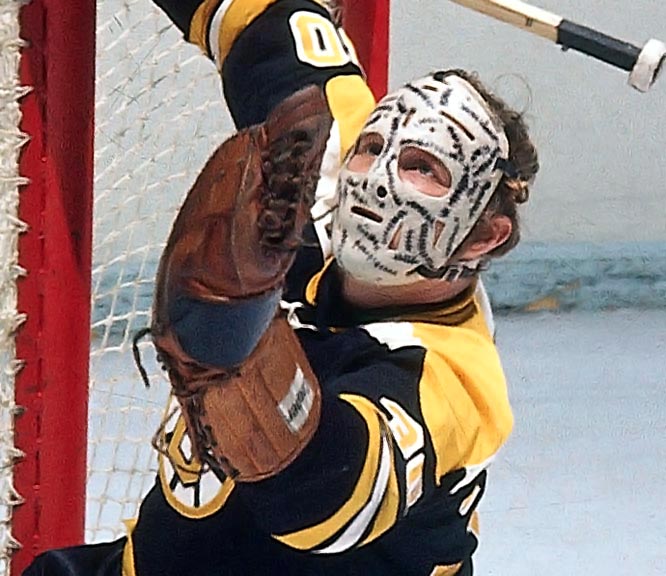
    The Bruins have never retired a goaltender’s jersey number, so why not make the first one count for two of the most prolific Boston netminders in the Expansion Era?

    Boston has a chance to right a few wrongs if there’s any ill will leftover from Cheevers’ departure to the World Hockey Association (WHA) and back or Thomas’ debacle regarding his year-long vacation from the sport that led to being suspended from the team and his trade to the New York Islanders in Feb. 2013, while Thomas was resting at home reconnecting with (in his words) his family, friends and faith.

    Last month, I addressed the pros and cons facing what might be a longshot at this point for No. 30 to ever be raised to the rafters at TD Garden in Cheevers’ and/or Thomas’ honor, but with Rick Middleton having his No. 16 retired last season– years after he hung up the skates and despite being on the outside looking in regarding Hockey Hall of Fame status, then there’s a chance the B’s overlook Cheevers’ sin and Thomas’ short tenure.

    Nevertheless, both are Stanley Cup champion goaltenders and legends in their own right among Bruins fans around the Hub.

    33 Zdeno Chara

    The 2008-09 James Norris Trophy winner has played in 1,023 games in a Bruins uniform and amassed 148-333-481 totals in that span– so far. No, the 43-year-old defender and longest tenured captain in the National Hockey League is not done yet. 

    Chara has indicated he’d like to go out on his own terms, whether that’s with another Cup under his belt or another full season– at least– if there’s ever another “normal” 82-game schedule again in the future.

    In 1,553 career NHL games played for the Bruins (1,023 games), Ottawa Senators (299) and New York Islanders (231), Chara has 205 career goals and 451 career assists (656 points).

    At 6-foot-9, he’s the tallest player in NHL history and though he might be tall in stature and a fierce competitor on the ice, Chara has a big heart off of it– taking charge in the annual pie donation at homeless shelters across Boston on American Thanksgiving, being one of the first You Can Play Project supporters and many other charitable efforts throughout the city, including, most recently, joining Black Lives Matter protests on the streets of Boston.

    He joined the Bruins as a free agent on July 1, 2006, with Marc Savard as two centerpieces tasked with overhauling a floundering Original Six franchise on the ice and transforming the team into not only an annual playoff contender, but more popular than perhaps even the 1970s B’s teams throughout the New England region.

    And even still, there’s some in the Bruins fan base that negate his workhorse effort, team leader mentality and humility.

    Well, there was until he sustained a broken jaw in Game 4 of the 2019 Stanley Cup Final, then played in Game 5 on home ice with a cage and (presumably) in pain.

    He’ll do anything to win another Cup since winning it with Boston nine years ago and ending the city’s 39-year Cup drought between raising Lord Stanley’s mug in 1972 and 2011.

    37 Patrice Bergeron

    Throughout the course of Bruins history there have been several individuals who have exemplified– with the utmost detail in every little thing they do– what it means to be a Bruin in Boston. 

    Their names are Art Ross, Eddie Shore, Milt Schmidt, Bobby Orr and Patrice Bergeron.

    Bergeron has spent his entire 16-year NHL career with Boston since being drafted by the Bruins in the second round (45th overall) in 2003. In 1,089 games, he’s scored 352 goals and amassed 517 assists for 869 career points. 

    He’s also a member of the elusive Quadruple Gold Club, having won a Stanley Cup ring in 2011, two gold medals at the Winter Games for Canada in 2010 and 2014, a gold medal at the World Championship in 2004 and a gold medal at the World Junior Championship in 2005.

    And if the Pentaple Gold Club was a thing, then Bergeron would be in that too– having been a member of the 2016 World Cup of Hockey championship winning Team Canada.

    But enough about what he’s done away from the Bruins, eh.

    If Schmidt was “Mr. Bruin”– or “The Ultimate Bruin” in his later years– then Bergeron is “Mr. Bruin Jr.” as the quintessential (likely) Bruin for life like how Schmidt lived and breathed (despite at one point coaching the Washington Capitals).

    Bergeron recorded back-to-back 70-point seasons in his sophomore season and third NHL season, then suffered an almost career-ending– if not life threatening– concussion at the helm of Philadelphia Flyers defender, Randy Jones’ hit from behind just ten games into the 2007-08 season.

    Bergeron’s season was cut short and his 2008-09 campaign was limited to 64 games when another concussion from a run-in with future teammate, then Carolina Hurricanes defender, Dennis Seidenberg, sidelined Bergeron for a duration of the season.

    In 2011, Bergeron captured the Cup with Chara, Thomas and several other players who will be named in a moment that are possibly also deserving of the highest team honor in Boston– which raises a point about retired numbers in Bruins lore.

    They come in bunches.

    Nos. 2, 3 and 5 were all early pioneers of the franchise with No. 15 serving as a bridge between them and Nos. 4, 7 and 9. Then along came No. 24 before Nos. 8, 16 and 77 defined an era of Bruins hockey.

    The same can be said for Nos. 33, 37, 40, 46 and perhaps 63 one day.

    Anyway, No. 37 will go down in Boston sports history for more than a few reasons aside from his playoff overtime goals and everything else– he got better with age.

    Bergeron turned in a career-high 79 points in 65 games played in 2018-19, and had 31-25–56 totals in 61 games up until the COVID-19 stoppage this season. He was on pace for 75 points had the regular season not met an abrupt end.

    40 Tuukka Rask

    No, Rask has “never won a Cup”. He has a Stanley Cup ring from 2011 and it doesn’t matter in the eyes of the engraver whether or not you were the starter or the backup when your name is etched into Lord Stanley’s mug.

    Also, what hasn’t he done in Boston?

    Rask has been a finalist for the Vezina Trophy twice (which was the same number of times Thomas was a Vezina finalist) in his career, winning in 2013-14 and yet to be determined this season. 

    Oh, plus he ranks 1st in Bruins franchise history in wins (Rask has 291, Tiny Thompson is 2nd with 252), games played (Rask has 536, Thompson is 2nd with 468), saves (Rask has 13,711, Eddie Johnston had 12,375), save percentage (among goalies with a minimum of 100 games played as a Bruin, Rask has a .922, Thomas had a .921) and goals against average (again, among goalies with a minimum of 100 games played, Rask has a 2.26, Byron Dafoe had a 2.30).

    Rask also leads all Bruins goaltenders in franchise history in points with 15 (all assists, as no B’s netminder has ever scored a goal). Cheevers is second to Rask in points by a Boston goaltender with 11 assists.

    Want to talk about the two most important trophies in the league?

    Cheevers and the Bruins made four Stanley Cup Final appearances together, winning in 1970 and 1972, and losing in 1977 and 1978. Boston also finished first in the regular season standings in 1970-71 and 1971-72, which preceded the creation of the Presidents’ Trophy in 1986, but was done with Cheevers in net.

    Thomas won the Cup and the Conn Smythe in his only Stanley Cup Final with the team in 2011, but never backstopped the team to a Presidents’ Trophy season.

    Rask, meanwhile, earned a Cup ring on the 2010-11 roster, dragged his teammates to the 2013 and 2019 Stanley Cup Final and helped them to the franchise’s second and third Presidents’ Trophy seasons in 2013-14 and 2019-20.

    The Bruins have never retired a goaltender’s jersey number, but they’d be crazy not to retire Rask’s when his playing career is over.

    And that’s not even mentioning the fact that both Thomas and Rask won the William M. Jennings Trophy in their careers. Thomas shared the award with his backup, Manny Fernandez, in the 2008-09 season, while Rask won the award with his backup, Jaroslav Halak, this season.

    Crazy, right?

    46 David Krejci

    Imagine for a moment, if you will, a player like Bergeron, but only quieter and better at making everyone around him better because he has a golden stick when it comes to passing. That player is Krejci.

    Krejci has 38 assists fewer than Bergeron in 178 games less in his career so far. Bergeron has 517 assists in 1,089 games, while Krejci has 479 assists in 911 career NHL games. Both players have only ever played for Boston.

    A second-half of the season player, Krejci emerges in peak performance from about February onward and crests his prime in the postseason. As long as the Bruins clinch a playoff berth, Krejci remains a dark horse threat for the Conn Smythe Trophy.

    He had 23 points in 25 games in the 2011 Stanley Cup Playoffs and improved that to 26 points in 22 games in the 2013 Stanley Cup Playoffs. In the run to his third Stanley Cup Final appearance, Krejci had 16 points across 24 games played through the seven-game series loss to the St. Louis Blues in 2019.

    All of this is to say that Krejci is the other constant in the Bergeron-Chara Era (or is it really the Bergeron-Chara-Krejci Era?) and that he’s quietly amassed 207-479–686 totals in 911 career games with Boston from breaking into the league in the 2006-07 season through now.

    Do not sleep on him. He deserves as much praise when all is said and done as some of the surefire players to have their jersey numbers retired when they hang up the skates.

    63 Brad Marchand

    Controversial? You got it.

    But Terry O’Reilly has his jersey number hanging from the rafters of TD Garden, which means the “Little Ball of Hate” can get the same treatment as “Taz”.

    Then there’s the fact that Marchand had 100 points last season in 79 games played– no, he did not miss any time due to any suspensions in 2018-19. He’s also had 85-points or more in the last four seasons dating back to 2016-17.

    Since breaking into the league with a 20-game stint and only one assist in 2009-10, Marchand has gone on to amass 290-355–645 totals in 731 games from 2010-11 through the pandemic shortened 2019-20 season. That means he’s had 646 points in 751 career NHL games from the 2009-10 season through now.

    After reaching 100 points last season in 79 games, Marchand had 87 points in 70 games this season. He was on pace for 102 points had the COVID-19 pandemic not interrupted those plans.

    Instead of extending his four consecutive 30-goal seasons to five, Marchand finished short with 28 goals in 2019-20’s shortened regular season. He had a career-high 39 goals in 2016-17, and a career-high 64 assists last season.

    Like Bergeron, Marchand appears to only be getting better with age and that’s only going to cement his status as an icon in Bruins franchise history. It might just be enough to push him over the edge and encourage Boston to hang his number from the rafters someday.

    88 David Pastrnak

    How did 24 other teams– yes fully acknowledging that some teams traded their picks to other teams that then had multiple picks in the first round before Boston selected 25th overall– pass over Pastrnak in the 2014 NHL Draft? How? 

    In 390 career NHL games thus far, Pastrnak has 379 points. He has 180 goals and 199 assists in that span since breaking into the league in the 2014-15 season and not being sent back down to the Providence Bruins (AHL).

    This season alone, Pastrnak had 48 goals in 70 games– tied for the league lead in goals scored with Washington Capitals forward, Alex Ovechkin– en route to sharing the Maurice “Rocket” Richard Trophy and being the first Bruin in franchise history to have his name etched on that award named after the prolific Montreal Canadiens goal scorer from many years ago.

    In fairness, the Maurice “Rocket” Richard Trophy wasn’t a thing until the 1998-99 season, so B’s legends like Rick Middleton and Cam Neely never got a chance to win it (let alone Bobby Orr).

    But Pastrnak is a star in his own right. He’s a star in the making that was on pace for 56 goals at the time of the stoppage and 111 points before the pandemic put an early end to the 2019-20 regular season.

    Nevertheless, he set career-highs in goals (48), assists (47) and points (95) this season and has scored more goals than the prior season in four-consecutive seasons now (34 goals in 75 games in 2016-17, 35 goals in 82 games in 2017-18, 38 goals in 66 games in 2018-19 and 48 goals in 70 games in 2019-20).

    As long as Pastrnak can stay healthy and maintain and/or elevate his play for the next four or five seasons, then he’ll see his jersey number in Boston’s rafters with their most recent prolific goal scorer with the last name “Neely”.

    Final Thoughts

    Since Chara created the current team culture, it’d be an insult to leave out any of the key core members of the last decade or so of Bruins hockey history. 

    Sure, it might be a bit much to have so many jersey retirement nights upcoming and increasing the amount of jersey numbers taken out of circulation in Boston from 11 to upwards of at least 16, but to reiterate– the Bruins retire numbers in bunches.

    These players define an era in B’s lore. These players are doing so as one unit– the way their current captain and perhaps greatest leader in the history of the team methodically designed, cultivated and produced the close-knit machine that is the Bruins organization on the ice and in the dressing room.

    In a time with rightful public shaming and disgrace for not immediately stepping up and committing to help their employees in the face of the COVID-19 pandemic, these players stepped up out of their own volition to do something their owner wouldn’t do without being provoked.

    The very least that owner can do to keep in good faith standing with the club’s alumni and current players destined for jersey retirement night ceremony glory, would be to honor this extraordinary group of gentlemen with class.

  • Blues win first Cup in franchise history

    In a scene of poetic justice, if you will, the St. Louis Blues raised the 35-pound Stanley Cup high over their heads Wednesday night against the team that beat them the last time they were in the Final 49 years ago– the Boston Bruins.

    The Blues are your 2019 Stanley Cup champions after defeating the Bruins, 4-1, in Game 7 of the 2019 Stanley Cup Final– capturing the series 4-3.

    For the first time in franchise history, a St. Louis captain skated out to meet with NHL Commissioner Gary Bettman, shake Bettman’s hand, take a photo and accept the hardest silverware to win in professional sports.

    Alex Pietrangelo gets to be the first person in league history to say that he lifted the trophy as a member of the Blues.

    They were dead last in the league standings entering 2019.

    For the first time in their 52-year existence (51 seasons), the Blues are Stanley Cup champions thanks to Jordan Binnington’s NHL rookie record 16 wins in the postseason, as well as his 32 saves on 33 shots against en route to the win in Game 7.

    Binnington (16-10 record, 2.46 goals against average, .914 save percentage in 26 games played this postseason) also recorded an 8-2 record on the road in the postseason– tying Nikolai Khabibulin (2004), Miikka Kiprusoff (2004) and Ron Hextall (1987) for the most road wins by a goaltender in a playoff year.

    He made 187 saves on 205 shots against (.913 SV%) and had a 2.76 GAA in the series.

    Ryan O’Reilly took home the Conn Smythe Trophy as this year’s Stanley Cup Playoffs MVP. He finished with a six-game point streak in the Final.

    Boston goaltender, Tuukka Rask (15-9, 2.02 GAA, .934 SV% in 24 GP this postseason) stopped 16 out of 20 shots faced in the loss.

    Rask finished the 2019 Stanley Cup Final with 176 saves on 193 shots against (.912 SV%) and a 2.46 GAA.

    Eight years after winning the Cup in the last Game 7 in a Stanley Cup Final in Vancouver, the Bruins will have to wait until another day to earn their seventh title in franchise history.

    For the first time in their 95-year franchise history, the Bruins hosted a Game 7 in the Stanley Cup Final (though the Final only became a best-of-seven series since 1939).

    Boston joined the Chicago Blackhawks as the only other team to lose the only Game 7 in the Stanley Cup Final that they’ve ever hosted among the first six financially stable franchises from 1942-67– after the league’s inception in 1917 (otherwise referred to as the “Original Six” teams).

    The other “Original Six” teams have hosted at least one such contest with the Detroit Red Wings (3-2 in five Stanley Cup Final Game 7s on home ice) as the most successful team.

    The Toronto Maple Leafs (2-0), Montreal Canadiens (1-0) and New York Rangers (1-0) have all never lost a Game 7 in the Stanley Cup Final on home ice.

    St. Louis finished 10-3 on the road this postseason, while Binnington improved to 14-2 in games after a loss in the regular season and playoffs in his young career.

    The Blues became the fifth road team to win a Game 7 in the Stanley Cup Final– and third in-a-row since the Pittsburgh Penguins in 2009 and Bruins in 2011.

    Home teams are now 12-5 in 17 total Game 7s in the Stanley Cup Final.

    No home team has won the Cup since the 2015 Blackhawks.

    The Bruins fell to 14-9 in Game 7s on home ice (last loss prior to Wednesday night was against Montreal, 3-1, in the Second Round of the 2014 Stanley Cup Playoffs).

    This postseason run wrapped up the longest season (regular and playoffs) in Blues franchise history as St. Louis participated in 108 games total (26 postseason games).

    It was the 2nd longest season in Bruins franchise history as Boston played 106 total games (82 regular season and 24 playoff games)– one game short of their 2010-11 record (107 games, 82 regular season and 25 playoff games).

    Boston is now 2-1 all time in a playoff series against St. Louis, winning the Cup in four games in 1970, sweeping the Blues in four games in the 1972 Semifinals and losing in seven games in the 2019 Stanley Cup Final.

    Bruins head coach, Bruce Cassidy, told reporters ahead of Game 7 that defender, Matt Grzelcyk, would be a game-time decision and was cleared from concussion protocol.

    After warmups, Grzelcyk was good-to-go and placed alongside John Moore on the third defensive pairing in place of Connor Clifton.

    Joining Clifton among the long list of healthy scratches for Boston Wednesday night was Chris Wagner, Lee Stempniak, Zachary Senyshyn, Peter Cehlarik, Zane McIntyre, Paul Carey, Ryan Fitzgerald, David Backes, Steven Kampfer, Jack Studnicka, Urho Vaakanainen, Jakub Zboril, Jeremy Lauzon, Anton Blidh, and Trent Frederic.

    Once again, Kevan Miller (lower body) remained out of the lineup for the final time this season due to injury.

    B’s captain, Zdeno Chara, set an NHL record for the most Game 7 appearances by a player with his 14th Game 7 on Wednesday.

    Meanwhile, Blues interim head coach, Craig Berube had the services of Ivan Barbashev back in the lineup after Barbashev served his one-game suspension in Game 6 for an illegal hit to head of Boston forward, Marcus Johansson, in Game 5.

    Berube also scratched Robert Bortuzzo and re-inserted Joel Edmundson on his blue line for Game 7.

    Nearly halfway through the opening frame, St. Louis defender, Colton Parayko, sent the puck over the glass and out of play for an automatic delay of game minor penalty at 7:57 of the first period.

    Though they moved the puck around with ease on the ensuing power play, Boston couldn’t muster a goal on their first skater advantage of the night.

    The Bruins fired three shots on goal on the power play– including a point-blank attempt by David Krejci to deke and stuff the puck through Binnington’s five-hole.

    Late in the period, after Boston’s fourth line couldn’t clear their own zone, Jay Bouwmeester let go of a shot from the point that O’Reilly (8) redirected through Rask’s five-hole to give St. Louis the fist goal of the game.

    Bouwmeester (7) and Pietrangelo (16) had the assists on O’Reilly’s goal and the Blues led, 1-0, at 16:47 of the first period.

    The goal came on just the third shot on goal for St. Louis after they got the first shot in the game 27 seconds into the action.

    For the first time since Wayne Gretzky did so in 1985, O’Reilly scored a goal in four consecutive Stanley Cup Final games. It was also his 22nd point of the postseason– establishing a Blues franchise record for points in a playoff year.

    With eight seconds left in the first period, Jaden Schwartz evaded an attempt by Brad Marchand to make a check while Marchand was a de facto defenseman on a botched line chance by the Bruins.

    Schwartz skated with the puck deep into the corner and dropped a pass back to Pietrangelo (3) whereby the Blues captain walked right into the slot, pulled the puck to his backhand and flipped it through Rask’s seven-hole to make it, 2-0, St. Louis.

    Pietrangelo’s goal officially came at 19:52 of the first period and was assisted by Schwartz (7).

    After one period of play at TD Garden, the Blues led, 2-0, on the scoreboard, while the Bruins dominated shots on goal, 12-4.

    The B’s also led in takeaways (5-2), giveaways (5-0) and face-off win percentage (61-39), while the Notes led in blocked shots (9-2) and hits (14-11).

    St. Louis had yet to see any action on the skater advantage heading into the first intermission, while Boston was 0/1 on the power play entering the second period.

    Despite being badly outshot in the first period, the Blues emerged as hockey normally has its way swinging games back-and-forth for a full-press middle frame.

    Brayden Schenn had a shot midway in the second period that went off Rask’s stick, off the crossbar and stayed out of the twine thanks to Chara’s stick work keeping the puck out of the goal while chaos befell the rest of the players on the ice all around the crease.

    Through 40 minutes of play, St. Louis still led, 2-0, and trailed Boston in shots on goal, 23-10– including an, 11-6, advantage in shots on goal in the second period alone for the Bruins.

    The B’s led in takeaways (6-5), giveaways (12-4) and face-off win% (51-49), while the Notes led in blocked shots (15-7) and hits (27-21).

    The Blues still hadn’t seen any time on the power play entering the third period and the Bruins were 0/1.

    Midway through the final frame, Vladimir Tarasenko chased a loose puck in the attacking zone and threw a pass to Schenn (5) in the slot for the one-timer to give St. Louis a three-goal lead and all but assure themselves of their first Stanley Cup championship in franchise history.

    Tarasenko (6) and Schwartz (8) tallied the assists on Schenn’s goal at 11:25 of the third period and the Blues led, 3-0.

    St. Louis capitalized on the scoreboard moments after Joakim Nordstrom was denied at the other end by Binnington’s right pad.

    Late in the period, the Blues did it again as David Perron threw the puck through the slot to Zach Sanford (1) for his first career Stanley Cup Playoff and Stanley Cup Final goal.

    The New Hampshire native made it, 4-0, St. Louis with a goal that was assisted by Perron (9) and O’Reilly (15) at 15:22 of the third period.

    With the secondary assist on the goal, O’Reilly boosted his own Blues franchise record for the most points in a single postseason to 23 points (8-15–23 totals).

    Cassidy pulled Rask with 3:54 remaining in regulation out of a desperate attempt to just get on the scoreboard and it worked.

    As the seconds counted down, Grzelcyk (4) sent a shot off the crossbar and into the back of the net over Binnington’s blocker side to cut St. Louis’ lead to three goals.

    Krejci (12) had the only assist on the goal at 17:50 of the third period.

    The Blues were still in command, 4-1, and even after Boston pulled their goaltender for an extra attacker again with about 1:48 left on the clock, that three-goal deficit was all St. Louis needed.

    At the final horn, the Notes had done it.

    They finally won their first Stanley Cup championship in franchise history.

    This, despite trailing in shots on goal, 33-20, in Game 7. The Bruins also finished the night leading in giveaways (13-7) and face-off win% (51-49), while the Blues led in blocked shots (21-7) and hits (36-28).

    There was only one penalty called in the game and thus St. Louis’ power play never saw a second of ice time, while Boston went 0/1 on the skater advantage– way back in the first period after Parayko sent the puck over the glass for an automatic infraction.

    The team that scored first won Games 3, 4, 5, 6 and 7 in the series, while the home team only won two games in the entire seven game series.

    Boston finished 5-1 in elimination games in the 2019 Stanley Cup Playoffs (won Games 6 and 7 in the First Round against Toronto, won Game 6 against Columbus, won Game 4 against Carolina and forced Game 7 against St. Louis by winning Game 6– then lost in the final game).

    Exactly 35 years ago, Wednesday night, the Boston Celtics defeated the Los Angeles Lakers to win the NBA Championship in the last Game 7 hosted in Boston.

    That was at the old Boston Garden (1928-95). Wednesday night’s action was at TD Garden (1995-present) and the opposing team won.

    The Bruins have not won the Cup on home ice since beating St. Louis on May 10, 1970. Bobby Orr scored his iconic– sports photography defining– goal in overtime to clinch the Cup for Boston for the first time since 1941 that night– ending a 29-year drought.

    In 2019, it was the Blues quenching their thirst by winning their first.

  • Bruins force Game 7 after, 5-1, win in St. Louis

    For the first time since 2011, there will be a Game 7 in the Stanley Cup Final as a result of the Boston Bruins’, 5-1, victory over the St. Louis Blues at Enterprise Center on Sunday.

    Boston has never hosted a Game 7 in the Stanley Cup Final since the adoption of the best-of-seven format in the Final in 1939.

    The Bruins last defeated the Vancouver Canucks on the road in Game 7 of the 2011 Stanley Cup Final and have not won the Cup at home since beating the Blues in 1970.

    Tuukka Rask (15-8 record, 1.93 goals against average, .938 save percentage in 23 games played this postseason) made 28 saves on 29 shots against (.966 SV%) in the win for the B’s.

    Rask entered Game 6 with a 5-5 record in 10 career games when facing elimination (2.64 GAA, .899 SV%)– including a 2-0 mark during the 2019 Stanley Cup Playoffs (1.50 GAA, .947 SV%).

    He’s made 145 saves on 149 shots faced in five elimination games this postseason for a .973 SV% and improved to 3-0 with a 1.33 GAA and .953 SV% when facing elimination this spring.

    The Boston goaltender also became the 19th NHL goaltender to record 50 career playoff wins.

    Blues goaltender, Jordan Binnington (15-10, 2.52 GAA, .911 SV% in 25 GP this postseason) stopped 27 out of 31 shots faced (.871 SV%) in the loss.

    He is 13-2 in games after a loss in the regular season and postseaosn this year.

    St. Louis finished 6-7 at home this postseason, while Boston finished 8-3 on the road. The Blues are a league-best 9-3 on the road this postseason as the series heads back to TD Garden.

    Bruins head coach, Bruce Cassidy, inserted rookie winger, Karson Kulhman, on the second line with Jake DeBrusk and David Krejci, while reverting back to 12 forwards and six defenders in the lineup.

    Boston’s long list of healthy scratches included Chris Wagner, Lee Stempniak, Zachary Senyshyn, Peter Cehlarik, Zane McIntyre, Paul Carey, Ryan Fitzgerald, David Backes, Steven Kampfer, Jack Studnicka, Urho Vaakanainen, Jakub Zboril, Jeremy Lauzon, Anton Blidh and Trent Frederic.

    Wagner returned to practice on Saturday for the B’s, but was ruled “doubtful” to return to game action for the first time since blocking a shot in Game 3 of the Eastern Conference Final against the Carolina Hurricanes.

    Matt Grzelcyk was not medically cleared and remains in concussion protocol, while Kevan Miller (lower body) is still out.

    Blues head coach, Craig Berube added Robert Thomas back into his lineup for the first time since Game 1 in the series, while Ivan Barbashev served his one-game suspension for an illegal hit to the head of Bruins forward, Marcus Johansson, in Game 5.

    Sean Kuraly sent the puck over the glass and out of the playing surface 2:42 into the first period and was charged with an automatic delay of game minor penalty.

    St. Louis did not convert on their first power play of the night and followed up with a penalty of their own– Brayden Schenn for boarding Joakim Nordstrom at 7:17 of the first period.

    The Blues held a, 4-1, advantage in shots on goal at the time of their first penalty and killed off five-straight penalties through the last two games in the series.

    A little over a minute later, Ryan O’Reilly sent the puck out of play and received an automatic infraction, yielding a two-skater advantage to the Bruins at 8:19.

    It was Boston’s first 5-on-3 advantage this postseason and the B’s weren’t going to go quietly on the power play for long.

    Almost 20 seconds after the 5-on-3 began, Torey Krug worked the puck over to David Pastrnak at the point, whereby No. 88 in black-and-gold sent a pass across the ice to Brad Marchand (9) for the one-timer over Binnington’s glove– giving Boston the first lead of the night, 1-0.

    Pastrnak (10) and Krug (16) notched the assists on Marchand’s power play goal at 8:40 of the first period.

    The goal was Boston’s 24th power play goal this postseason– tying their franchise record set in 1991. It was also Marchand’s 7th career goal in the Stanley Cup Final (19 games)– tying for 2nd with Wayne Cashman (7 Stanley Cup Final goals in 26 games).

    Only Bobby Orr (16 games) and Johnny Bucyk (24 games) had more goals in the Stanley Cup Final for the Bruins with eight.

    Late in the opening frame, Zdeno Chara was tied up with David Perron in front of the goal and received the only minor penalty from their net front fracas– a two-minute minor for interference at 18:21.

    St. Louis’ ensuing power play would extend into the second period after the Blues failed to capitalize on the skater advantage by the first intermission.

    After one period of play, the Bruins led, 1-0, on the scoreboard and, 12-9, in shots on goal. Boston also held the advantage in blocked shots (8-4) and hits (10-9), while St. Louis led in takeaways (6-1), giveaways (4-1) and face-off win percentage (59-41).

    The Notes were 0/2 on the power play entering the second period and the B’s were 1/2.

    With 21 seconds left to kill on Chara’s minor, Boston began the second period shorthanded. The Bruins successfully killed off the remainder of Chara’s penalty.

    Midway through the middle frame, Marchand tripped Alex Pietrangelo and sent the Blues on the power play at 9:11 of the second period.

    Though St. Louis didn’t capitalize on the ensuing power play, they did send five shots on goal, including one that rang the post and off of Rask’s back as the Bruins goaltender reached around his back to guide the puck with his glove hand while twirling out of the crease.

    Moments later, Charlie McAvoy tripped up Vladimir Tarasenko and was sent to the penalty box with a minor infraction at 13:43 of the second period.

    Once again, Boston killed off the penalty.

    Through 40 minutes of play, the Bruins led, 1-0, on the scoreboard and, 20-19, in shots on goal– despite St. Louis’, 10-8, advantage in shots on goal in the second period alone.

    Boston held the advantage in blocked shots (12-7) heading into the second intermission, while the Blues led in takeaways (9-4), giveaways (9-3), hits (23-19) and face-off win% (56-44).

    Heading into the third period, the Notes were 0/4 on the skater advantage, while the Bruins were still 1/2 on the power play.

    Early in the final frame of regulation, Brandon Carlo (2) let go of a floater from the point that Vesa Toskala’ed Binnington on an odd bounce (the puck bounced off his blocker and into the twine) to make it, 2-0, Bruins.

    DeBrusk (7) had the only assist on Carlo’s goal at 2:31 of the third period.

    The goal would become the eventual game-winner and Carlo’s first career game-winning postseason goal.

    Midway through the third, Kuhlman (1) unloaded a wrist shot from the face-off dot to the left of the Blues goaltender and sent the puck over Binnington’s blocker to give Boston a three-goal lead.

    Krejci (11) had the only assist on Kuhlman’s first career Stanley Cup Playoff and Stanley Cup Final goal at 10:15 of the third period and the Bruins led, 3-0.

    As a result of his goal, Kuhlman became the 21st Bruin to score a goal in the postseason– tying the 1987 Philadelphia Flyers for the most goal scorers by a team in one postseason.

    Less than a couple minutes later, O’Reilly (7) squeaked a one-timer just past the goal line after the puck bounced off of Rask’s leg pad and out.

    Video review determined O’Reilly had indeed scored at 12:01 of the third period and cut Boston’s lead to two-goals with Pietrangelo (15) and Perron (8) tallying the assists on O’Reilly’s goal.

    Rather than backing down, the Bruins pressed forward as Kuraly used the body to free the puck along the end boards and work a short pass to Marchand in the low slot.

    No. 63 in black-and-gold pushed the puck to Pastrnak (9) for the drag and top-shelf goal while Binnington dove to poke-check the puck off of Pastrnak’s stick in desperation.

    Marchand (14) and Kuraly (6) were credited with the assists on Pastrnak’s goal at 14:06 and Boston led, 4-1, after amassing three goals on their last nine shots including Pastrnak’s goal.

    With about 4:12 remaining in the action, Berube pulled his goaltender for an extra attacker, but it was to no avail.

    Shortly thereafter, Chara (2) flipped the puck from his own face-off circle to the left of Rask into the empty twine at 17:41.

    The 42-year-old captain became the 2nd oldest goal scorer in the Stanley Cup Final in Bruins franchise history since Mark Recchi (43 in 2011).

    In the closing seconds of the game, Sammy Blais slashing Connor Clifton and the two engaged in a shoving match resulting in two minor penalties for Blais (slashing and roughing) and a minor penalty for Clifton (roughing) at 19:38.

    Five seconds later, after a face-off in Boston’s attacking zone, Robert Bortuzzo cross checked Noel Acciari and picked up a minor infraction as well as a ten-minute misconduct at 19:43.

    The Bruins finished the action with a 5-on-3 advantage as the final horn sounded on Boston’s, 5-1, victory in Game 6.

    Boston finished the night with the series tied 3-3 and leading in shots on goal (32-29), as well as blocked shots (16-9).

    St. Louis led in giveaways (12-4), hits (29-27) and face-off win% (59-41) in their final home game of the 2019 Stanley Cup Playoffs.

    The Blues went 0/4 on the power play, while the B’s went 1/2 on the skater advantage Sunday night.

    Boston improved to 25-1 all-time in the postseason when Marchand has a goal and 8-0 this postseason when Marchand scores.

    The team that scored first in this series has won Games 3, 4, 5 and 6.

    The Bruins forced a Game 7 in the Stanley Cup Final for the 17th time in league history and first since their Cup-clinching victory in 2011.

    The Bruins have also faced a 3-2 deficit in a best-of-seven series 25 times in franchise history– winning four of their 24 prior instances, including the 1941 Semifinal, 1994 Eastern Conference Quarterfinal, 2011 Stanley Cup Final and 2019 First Round.

    Puck drop for Game 7 of the 2019 Stanley Cup Final is slated for a little after 8 p.m. ET at TD Garden in Boston on Wednesday. Viewers in the United States can tune in on NBC, while those in Canada can choose from CBC, SN or TVAS.

    It’ll be the 2nd Game 7 of the postseason for both clubs and 6th Game 7 of the 2019 Stanley Cup Playoffs– tied for the 2nd most Game 7s in one postseason in league history.

  • 2019 Stanley Cup Final Preview

    After what seems like an eternity has passed (drop the puck already), the 2019 Stanley Cup Final between the Eastern Conference champion, Boston Bruins, and the Western Conference champion, St. Louis Blues, kicks off Monday night at TD Garden.

    Here’s a look at how the best-of-seven series should pan out.

    A2 Boston Bruins (49-24-9, 107 points) vs C3 St. Louis Blues (45-28-9, 99 points)

    Boston is making their third appearance in the Final in the last eight years– winning the Cup against the Vancouver Canucks in seven games in 2011 and losing to the Chicago Blackhawks in six games in 2013.

    St. Louis is making their first Stanley Cup Final appearance in 49 years– losing in four games to the Bruins in 1970.

    Regardless of the series outcome– history will be made.

    The Bruins outlasted the Toronto Maple Leafs in seven games in the First Round, bested the Columbus Blue Jackets in six games in the Second Round and swept the “Bunch of Jerks” known as the Carolina Hurricanes in the Eastern Conference Final.

    The Blues grounded the Winnipeg Jets in six games in the First Round, beat the Dallas Stars in seven games in the Second Round and took a bite out of the San Jose Sharks in six games in the Western Conference Final.

    Both teams have incredible depth scoring, solid defense and out-of-this-world goaltending.

    Only one team can win it all, however.

    Both cities have met in all four major North American professional sports championship games and/or series, with St. Louis last beating Boston in the 1967 World Series as the Cardinals defeated the “Impossible Dream” Red Sox.

    Since then, the B’s beat the Blue Notes in the 1970 Stanley Cup Final as Bobby Orr soared through the air after scoring “The Goal”, the New England Patriots defeated the St. Louis Rams (R.I.P.) in Super Bowl XXXVI and the Red Sox beat the Cardinals twice in 2004 and 2013.

    Brad Marchand led his team in scoring in the regular season with 100 points and his 18 points in 17 games played this postseason lead David Pastrnak (15 points), David Krejci (14), Patrice Bergeron (13), Charlie Coyle (12), Torey Krug (12) and the rest of the Bruins.

    Bergeron leads his roster in goals so far in the 2019 Stanley Cup Playoffs with eight, including a postseason leading six power play goals– the most by a Bruin since Cam Neely scoring nine goals on the power play in 1991.

    Marchand is tied with Pastrnak for the second-most goals for Boston, trailing Bergeron with seven goals each, followed by Coyle (six) and Krejci (four).

    The only Bruins without a goal this postseason are Brandon Carlo (a lineup regular), John Moore (primarily a scratch throughout this postseason) and Karson Kuhlman (appeared in six games in the First and Second Round before David Backes took over in each round on the second line right wing).

    There have been 19 different scorers for Boston in the 2019 Stanley Cup Playoffs.

    General Manager, Don Sweeney, addressed his apparent lack of secondary scoring with the acquisitions on Coyle (6-6–12 totals in 17 games this postseason) and Marcus Johansson (3-6–9 totals in 15 games) leading up to the trade deadline.

    Head coach, Bruce Cassidy, has adjusted his game on-the-fly, mixing up the lines when necessary to rejuvenate the scoring touch of “The Perfection Line” (Marchand-Bergeron-Pastrnak), while lighting a fire under the annual playoff performer in Krejci and his wingers Jake DeBrusk and Backes.

    Marchand and Krug are tied for the lead in assists with 11, while defender and captain, Zdeno Chara, leads his crew in plus/minus with a plus-11 rating in 16 games played this postseason.

    Chara, 42, missed Game 4 of the Eastern Conference Final in Carolina, but is ready and refreshed to try to earn four more wins against St. Louis and join Johnny Bower (42, 1967), Dominik Hasek (43, 2008), Mark Recchi (43, 2011) and Chris Chelios (46, 2008) as the only players to win the Cup at the age of 42 or older.

    The rest of the B’s defenders have played a shutdown style that has led to the Bruins in control of all the important statistical categories at the end of the night– the final score.

    Boston is 11-0 when leading after two periods this postseason and has only trailed in 9.9% of their minutes played since the start of the Second Round.

    They’re also on a seven-game winning streak– their third longest in franchise history in the postseason– behind only runs of 10-0 in 1970 and 9-0 in 1972.

    Both of those years, the Bruins won the Cup.

    Though Chris Wagner (upper body) and Kevan Miller (lower body) are out for the remainder of the playoffs, the next man up mentality has landed Noel Acciari a spot on the fourth line with Joakim Nordstrom and Sean Kuraly in place of Walpole, Massachusetts native Wagner, as well as regular time for Connor Clifton on the blue line in place of Miller.

    Coyle, Wagner and defender, Matt Grzelcyk, are seeking to join Myles Lane as the only Massachusetts-born players to win a Cup with the Bruins. Lane did so in Boston’s first Stanley Cup championship back in 1929.

    Meanwhile, Tuukka Rask (12-5 record, 1.84 goals against average, .942 save percentage in 17 games played this postseason) is having a Conn Smythe worthy performance in the net for the B’s.

    Rask’s stats are better than his 1.88 GAA and .940 SV% in 22 games played in the 2013 Stanley Cup Final and better than Tim Thomas’ 1.98 GAA and .940 SV% in 25 games played en route to the 2011 Stanley Cup championship.

    The B’s have gone ten full days without a game, but that’s not necessarily a bad thing for Rask as his workload was reduced with the help of backup goaltender, Jaroslav Halak, in the regular season.

    Sweeney and Cassidy and wanted a dynamic duo of goaltenders that would let their starter in Rask find his groove and work efficiently.

    There’s no better efficiency than the way he’s playing right now.

    With the shutout in Game 4 against the Hurricanes, Rask improved to 8-0 in eight career appearances in the Conference Finals, as well as franchise record holder for most series-clinching shutouts in Bruins history with three (surpassing Gerry Cheevers and Thomas’ previous mark of two series-clinching shutouts).

    Boston held an intra-squad scrimmage last Thursday to keep the game-flow going and charged fans $20 to attend and see their players in action that they might not otherwise be able to afford to see (with Stanley Cup Final tickets on the secondary market going for $1,000).

    Every dollar went to the Boston Bruins Foundation, which redistributes funds to charities throughout New England that help enrich the lives of children in the region.

    The Bruins are facing the St. Louis Blues for the 3rd time in a playoff series (previous, 1972 Semifinals, BOS W, 4-0). Boston also swept St. Louis in the 1970 SCF.

    St. Louis is well-familiar with “The Hub of the Universe”. They were swept by Boston in the 1970 Stanley Cup Final– the Blues third appearance in their first three years of existence as a franchise in the Final.

    Then the two clubs met again in the 1972 Semifinals. Once more, the Blues were swept by the Bruins.

    The team with a blue music note with wings for a crest has yet to win a game in the Stanley Cup Final. 1968, 1969 and 1970 resulted in 12 straight Stanley Cup Final losses to the Montreal Canadiens and Boston.

    A lot of franchise history has passed for St. Louis and names like Wayne Gretzky have even gone through the club (albeit for 31 games in the regular season and playoffs in 1996).

    49 years later, hometown heroes, like Pat Maroon, and adopted hometown heroes, like David Perron (in his third stint with the organization) have led from the back-end of the top-nine group of forwards out.

    Jaden Schwartz leads St. Louis in scoring with 12 goals– the second most in franchise history in a postseason, trailing Brett Hull’s 13 goals in 12 games played in the 1990 Stanley Cup Playoffs– and 16 points in 19 games in the 2019 Stanley Cup Playoffs.

    Schwartz even has two hat tricks this postseason and is the first NHLer to record two hat tricks in one postseason since Johan Franzen did so with the Detroit Red Wings en route to their 2008 Stanley Cup championship.

    Offseason acquisition, Ryan O’Reilly, has proven General Manager, Doug Armstrong, worthy of being named a finalist for GM of the Year this season, as O’Reilly has 3-11–14 totals in 19 games

    Vladimir Tarasenko– St. Louis’ regular star– has eight goals and five assists (13 points) and is tied for third in scoring on the roster with Perron (6-7–13 totals) and Alex Pietrangelo (2-11–13 totals).

    All of the Blues are in search of their first Stanley Cup championship ring and must face former captain and current Bruin, David Backes. After 10 years with the organization, Backes joined Boston on July 1, 2016. In his 13th career season, he’ll face his former team for the Cup.

    St. Louis has had helping hands on the blue line in Pietrangelo’s 13 points and Colton Parayko’s 11 points this postseason.

    Among their regulars, only Jay Bouwmeester and Carl Gunnarsson have yet to score a goal in this year’s playoffs (Zach Sanford also hasn’t recorded a point in three games played).

    Backes’ storyline isn’t the only familiarity with the Blues, however.

    Rookie goaltender, Jordan Binnington (12-7, 2.37 GAA, .914 SV% in 19 GP) holds the franchise record for most wins in a postseason by a rookie netminder, but spent last season on loan to the Providence Bruins (AHL).

    If there’s team with more internal notes on the goaltender that they’re facing in this year’s Stanley Cup Final– it’s the Boston Bruins.

    But Binnington’s not nervous– he hasn’t been all postseason long, en route to eliminating the Jets, Stars and Sharks.

    He is, however, about to face his biggest challenge yet in the Bruins, unless Craig Berube finds a way to coach his team into taming the bears charging at them down the ice.

    While Robert Thomas is likely good to go in Boston for Game 1, Vince Dun will be out of the lineup and day-to-day.

    That’s no worry for the cool, calm and collected Berube– who’s guided his team from 31st (dead last) in the league on the morning of Jan. 3rd to the Stanley Cup Final after being named interim head coach back in November, replacing Mike Yeo.


    Ten out of the last 13 Cup winners have had the shorter turnaround from the Conference Finals to the Stanley Cup Final, but we’re talking a difference of a few days as opposed to an average of just over a week for the two opponents this year.

    The winner of Game 1– since the best-of-seven series format was adopted for the Final in 1939– has gone on to win the Cup in 61 out of 79 series’ (77.2% success rate).

    Though both teams expect to play sloppy coming out of the gate, it is vital for Cassidy to keep his players on edge at the top of their game.

    Play your game and you control the game. Play the Blues’ game and you’ll fall behind.

    Berube managed to frustrate the Jets and Stars, while St. Louis lucked out against a battered Sharks roster.

    That’s not to say the Blues are any less dangerous this time of year. In fact, they’re quite good. They won the Western Conference.

    However, this time of year is both a sprint and a marathon. How fast can you skate up and down the ice for a full 60-minute (sometimes more) effort and can you maintain that for up to seven games?

    Boston is a team with enough experience to go the distance, but St. Louis is a team with enough history to overcome.

    In the end, the Bruins should be the ones raising the Cup above their heads for what might the be final time in their current core group of players’ careers as Bergeron, Krejci, Chara, Marchand and Rask continue to leave their mark on franchise history– defining careers worthy of recognition in the rafters of TD Garden.

    Time will tell over six games in the series as the events unfold.

    Regular season outcomes:

    2-1 F/SO STL at Enterprise Center on Feb. 23rd, 5-2 BOS at TD Garden on Jan. 17th

    Schedule:

    5/27- Game 1 STL @ BOS 8 PM ET on NBC, CBC, SN, TVAS

    5/29- Game 2 STL @ BOS 8 PM ET on NBCSN, CBC, SN, TVAS

    6/1-Game 3 BOS @ STL 8 PM ET on NBCSN, CBC, SN, TVAS

    6/3- Game 4 BOS @ STL 8 PM ET on NBC, CBC, SN, TVAS

    6/6- Game 5 STL @ BOS 8 PM ET on NBC, CBC, SN, TVAS*

    6/9- Game 6 BOS @ STL 8 PM ET on NBC, CBC, SN, TVAS*

    6/12- Game 7 STL @ BOS 8 PM ET on NBC, CBC, SN, TVAS*

    *If necessary

  • DTFR Podcast #157- Play Gloria, You Jerks

    DTFR Podcast #157- Play Gloria, You Jerks

    Nick, Cap’n and Pete mourn the Columbus Blue Jackets, review the Vegas Golden Knights front office moves, Ken Holland to the Edmonton Oilers and the Philadelphia Flyers new assistant coaches. Finally, the guys preview the 2019 Eastern Conference Final matchup between the Boston Bruins and Carolina Hurricanes, as well as the 2019 Western Conference Final matchup between the San Jose Sharks and St. Louis Blues.

    Subscribe to the podcast on Apple Podcasts (iTunes), Stitcher and/or on Spotify. Support the show on Patreon.

  • Sharks Silence the Blues in Six Games, Reach First Ever Stanley Cup Final.

    The St. Louis Blues will have to wait another season to try and make it to the Stanley Cup Final. The Blues have not made it to the SCF since the 1969-70 season when they lost to the Boston Bruins in 4 games (you might recall that flying goal by Bobby Orr in overtime in Game 4). That is a whopping 44 seasons in a row, which ranks 2nd all-time among teams trailing only the Toronto Maple Leafs who have not made it since 1966-67, which is 47 seasons.

    Unknown

    This is the San Jose Sharks biggest game in their 25 years of being a NHL team. They will try and silence the  St. Louis Blues Stanley Cup run tonight at “The Shark Tank”.

    With a Sharks win in Game 6 on Wednesday night, they would advance to the Stanley Cup Final. It would be their first Stanley Cup Final appearance in franchise history. The Blues will be going back to their “number one” goalie Brian Elliott for Game 6. Elliott was benched for their last two games as he was replaced by Jake Allen.

    After Allen’s horrid Game 5, where he 0nly stopped 21 out of 25 shots for a terrible .840 SV% the Blues made the switch back to Elliott for the next game. Elliott has given up 6 goals on his last 37 shots in his last 2 starts, as well as being 2-0 in elimination games these playoffs. Allen did start Game 4 in San Jose where the Blues looked like a brand new team winning 6-3 and Allen finishing with a strong .912 SV%. St. Louis fans had something to look forward too after his win, but were let down as Allen and the Blues looked like a pee-wee team and squandered a 2-1 lead and a 3-2 lead and ended up losing the game.

    As well as the Blues goalie troubles, they are having scoring troubles from their better players. For example, star winger Vladimir Tarasenko led the Blues in scoring with 40 goals which were the most on the team. Tarasenko has yet to register a POINT let alone a goal in the series. He will definitely have to pick up his play. So the Blues will look to stave off elimination and force another Game 7 back in St. Louis.

    San Jose has played in a total of 31 playoff series. Out of these 31 series, 10 of them have ended in 6 games. The Sharks have been on the losing end of the majority of these matchups with their record being 3-7. The Sharks will look to keep their composure and win in front of their home crowd. While St. Louis will look to do the opposite and get the crowd out of the game early, just as they did the last time they were here.

    The Sharks won the battle of the crowd-pleasing early, although the game’s first shot didn’t happen until almost two minutes in (courtesy of San Jose), they got the crowd pumped and ready to go with a couple chances early. St. Louis got a little life back as they went on a little run, stringing together 3 shots but were all turned away by San Jose’s goalie Martin Jones. The Sharks would keep the crowd loud and proud as they would tally first almost four minutes in.

    Here’s how it went down:

    Sharks goalie Martin Jones would come up huge with a wicked glove save to stone Blues vet Alex Steen in the slot. The rebound would go flying into the left corner. Sharks winger Tomas Hertl found the puck lying in the corner and went back to get it. Hertl basically grabbed the puck, turned around in the corner, and threw the puck out of the zone for what it looked like to be a harmless clear.

    Well, Sharks vet Jumbo Joe Thornton would sneak behind the two St. Louis’ defenders, pick up the loose puck after it was slowed down by a tip, and burst in on a breakaway. Thornton would come in on Blues goalie Brian Elliott and flip a wrister on net in the slot but would miss the net completely going high and get all glass behind the net.

    As both of the Blues defenders would clumsily go behind the net looking for the puck, Sharks captain Joe Pavelski would find the loose puck behind the net. Pavelski sneakily wrapped the puck around the back of the net to Elliott’s left and get stoned by Elliott as he whipped out his left pad. Fortunately for Pavelski, since the defenders were still behind the net, the puck sat on the goal line. Pavelski had another huge whack at the puck and pushed the puck over the goal line to-tally first and put them in the lead at 1-0. This was Pavelski’s league leading 13th goal of the playoffs.

    This early goal got the crowd ROARING early and LOUDLY. This was exactly what the Sharks wanted, to jump out to an early lead and get the crowd going. Sharks fans had something to look up to, because in all 5 previous games in the series, the team to score first would end up winning the game. The Sharks would also shut down the Blues offense early as they held St. Louis shot-less for a long six-minute span in the middle of the first period.

    Surprisingly, there were no more big opportunities, just small ones, and no team took a single penalty in the first frame which happened for the second straight game. Other than that, to sum up the opening period between these two teams… it was ALL Sharks. When I say “ALL Sharks” I really mean it, this doesn’t happen very often, when a team controls the whole period. The Sharks only let 4 shots reach goalie Martin Jones as he had a quiet period after his glove save. San Jose scored early and dominated the rest of the period and kept their 1-0 lead going into the first intermission.

    The “no penalty” part of the first did not carry over into the second period. Just 36 seconds into the middle period, Blues winger Troy Brouwer gets called for interference on Sharks winger Joonas Donskoi. This sent the Sharks to their first power play of the game, where they always dominate even if they don’t score a man up. They always create momentum no matter what. Unfortunately, the Blues were great at getting their sticks in the shooting lane and only let one shot get to Elliott and they killed it off.

    The Sharks would once again lock down on defense and didn’t allow a shot until five minutes into the period. This stellar defense would lead to their second goal of the game. San Jose’s 3rd line would go right to work in the attacking zone looking for a goal. Sharks grinder Chris Tierney would find his way out of a battle in the right corner with the puck. Tierney pushed the puck up to Sharks star D-man Brent Burns at the right side point. Burns flipped a wrister on net that would find the stick of Sharks winger, Joel Ward. The puck would deflect right off Ward’s stick, past Elliott’s blocker, and into the net. This was Ward’s 3rd goal of the playoffs and 19th of his career in the postseason.

    The Sharks would have another glorious chance as they would get their potent power play back onto the ice, and this one was a lengthy one. Blues 4th liner Scottie Upshall would catch Sharks winger Tommy Wingels up high with his stick. It would be a double minor (four minutes) because Wingels was bleeding from the contact with the stick. The Blues were once again up to the task, only giving up two shots, and killed off a huge penalty to keep the score at 2-0 at the midway point of the second period.

    St. Louis would get their best chance to cut into the lead at the 10:48 mark of the period. Blues 1st line center Jori Lehtera would receive a perfect pass from teammate Robby Fabbri right in his wheelhouse in the slot on the right hash marks. Lehtera would unleash a massive one-time clap bomb and was absolutely ROBBED by Jones’ left pad. Jones pushed from his right to his left and kicked out his left pad at the last minute to rob Lehtera to keep his perfect night intact. This save was Jones’ best save of the series by far!

    The second period would end with the score still being 2-0 in favor of the Sharks. The only thing different in the summary of the period was that San Jose had all the momentum early in the period especially with the goal five minutes in. Although, after the Blues killed off the massive four minutes power play, they brought the momentum back to their side. They spent probably 70% of the remainder of the period in the Sharks zone threatening to score. St. Louis outshot the Sharks 7-2 after killing the penalty. San Jose’s Martin Jones was there for every shot and turned them all away. The Sharks are 7-0 when leading after two periods in the playoffs while outscoring the opposition 26-12 in the third periods overall.

    Well, the Sharks third period dominance showed up again early in the final period. San Jose’s 2nd line was in on the prowl looking to extend their lead and they did with beautiful passing. Sharks winger Joel Ward stole the puck in the offensive zone high on the right side boards. Ward looked up and fired a cross-ice pass over to linemate Logan Couture on top of the left side circle. Couture corralled the pass and skated down to the left side hash marks almost right on the boards.

    Couture then whipped a wicked pass over to a streaking Joel Ward, who slipped down past the defense, parked right above the goalie crease to the right and tapped it into the wide-open net to extend their lead to 3-0 just three minutes into period three. It was Ward’s second goal of the game and fourth goal in his past two games.

    The Sharks threatened to score again almost two minutes later. Sharks winger Tomas Hertl found himself with the puck behind the Blues net. Hertl stickhandled three to four times in place and found a wide open Joe Pavelski right below the left side hash marks. Pavelski put a snap shot right on net that had to be headed down into the corner by Elliott to keep the Blues’ little glimmer of hope still alive.

    Unknown-1

    That little glimmer of hope was smashed into pieces just four minutes later when San Jose would score again to go up 4-0. Sharks’ Patrick Marleau seized the puck in the neutral zone and skated into the offensive zone on the right side.

    Marleau stopped on a T at the hash marks near the boards and dumped the puck off to streaking winger Logan Couture at the top of the circle. Couture took the puck, skated a foot, and spotted fellow winger Joonas Donskoi wide open in the slot to his left.

    Donskoi wasted no time with the pass and unloaded a massive one-timer that beat Brian Elliott to his right. This was Donskoi’s 5th goal of the playoffs.

    St. Louis would piece together a little bit of hope that was previously smashed by Donskoi’s goal. Blue’s D-man Colton Parayko would get the puck on the top of the right circle. Parayko would rip a wrister on net that was saved by Jones’ pad, but Jones would trip himself up and fall over. Blues’ Jori Lehtera would get the rebound and take the puck behind the net to set back up. Lehtera would find Russian star Vladimir Tarasenko high left side in the slot. Tarasenko would find the puck in his feet, kick the puck to his stick, and shoot a wrister on net that beat the out of position Jones high blocker side. This was finally Tarasenko’s first point and goal of the series to make the score 4-1.

    Then with 4:25 left in the game a scrum would ensue between the benches. After everything settled down, both teams would get a penalty with a player from each side going to the box. Sharks’ Tommy Wingels would get caught for slashing Blues D-man Kevin Shattenkirk while Shattenkirk would get caught for cross-checking Wingels right back. We would have played 4 on 4 hockey with the penalties offsetting each other. St. Louis wasn’t going to take any chances and needed to score badly so they pulled Brian Elliott to make it 5 on 4 in favor of St. Louis.

    This worked right in favor for the Blues as the scored 50 seconds later to cut the Sharks lead in half at 4-2. Blues center Paul Stastny would get the bouncing puck above the hash marks on the left side. Stastny would pass the puck down to recent goal scorer Vladimir Tarasenko right on the goal line in the left corner. Tarasenko would see that the Sharks were giving him a lot of room and drove right to the net on the goal line. Tara would simply try his luck on goal with a little wrist shot. Somehow the seeing-eye shot would find a way into the net after Tara banked the puck right in off Jones’ hip as he was hugging the right post. This was Tarasenko’s second goal of the game and gave the team a little more hope then before.

    St. Louis would then pull Brian Elliott and replace him with Jake Allen. The main reason for the replacement was that Allen is a much better puck handler in case he had to handle a loose puck. They move did not make much sense because they pulled him for the rest of the game to get the extra attacker to play 6 on 5 hockey for the last three minutes of the game.

    The extra attacker did not pay off as they only managed four more shots that were stopped by Jones to keep their two goal lead. Then with 20 seconds left in the game, after a nice blocked shot from defender Marc-Edouard Vlasic, the Sharks would put the icing on the cake with Logan Couture’s empty net goal to make it 5-2.

    This would end up being the final score as the Sharks ended the Blues season earlier then they hoped. San Jose will now play in the Stanley Cup Finals for the first time in franchise history. The most experienced players on the team, them being Joe Thornton and Patrick Marleau, will also play in their first SCF after a combined 3,093 games! The Sharks were then presented with the Clarence S. Campbell Bowl, which is awarded to the Western Conference Playoff Champion.

    There is a superstition about touching or not touching the trophy when it is presented to you. Some say if you touch it, you will lose the SCF. Well captain, Joe Pavelski did not touch the trophy, as most players choose not to so we will see what happens! This is also Sharks coach Peter DeBoer 2nd career time reaching the Stanley Cup Final. His first time was with the New Jersey Devils in 2012, his first time coaching in the NHL. The 2012 Devils, like the 2016 Sharks, missed the playoffs entirely the year before.

    Sharks goalie Martin Jones stopped 23 out of 25 shots for a solid .920 SV% and Blues’ Brian Elliott stopped 22 out of 26 shots for a disastrous .856 SV%. St. Louis led in faceoffs (32-27), penalty minutes (8-2), and hits (42-31) while San Jose led in shots (27-25),  blocked shots (18-14), and giveaways (19-12). San Jose was 0/3 on the PP and St. Louis was 0/1.

    San Jose’s final stats for their Conference Final are as followed: Teams leading goal scorer were Joe Pavelski and Joel Ward both with four, leading apple (assist) getter was Joe Thornton with seven, leading total point getter was Joe Pavelski with nine points (4G, 5A), the time on ice leader was Brent Burns averaging 23:39 per game. Goalie Stats: Martin Jones appeared in 6 games going 4-2 with a .920 SV% and 2.02 GAA and James Reimer appeared in 1 game (a relief effort) saving 6 out of 7 shots for a .857 and 2.06 GAA.

    St. Louis’ final stats for their CF are: Teams leading goal scorer was surprisingly Troy Brouwer with three, leading apple getter was Paul Stastny with four, total point getter was Paul Stastny with four points (0G, 4A), time on ice leader was Alex Pietrangelo averaging 26:44 per game. Goalie Stats: Brian Elliott in 4 games going 1-3 with a .884 SV% and 3.02 GAA and Jake Allen also in 4 games going 1-1 with a .885 SV% and a 3.29 GAA%.

    San Jose will have a nice little break as they wait to find out their opponent— either the Pittsburgh Penguins or Tampa Bay Lightning— for the Stanley Cup. Pittsburgh and Tampa battle in Game 7 of the 2016 Eastern Conference Final on Thursday night at CONSOL Energy Center. The first game of the Stanley Cup Final will be on Monday, May 30th.

  • Numbers Game: Look to the Rafters- Boston Bruins

    Numbers Game: Look to the Rafters- Boston Bruins

    By: Nick Lanciani

    I continue to explore an important element of the game and what retired numbers around the league may look like in the future. While there’s only a finite set of numbers to utilize on the back of a jersey, many teams choose to retire (or honor) some numbers based on extraordinary circumstances, dedication to the organization, or legendary status.

    Many thoughts went through my head in each and every consideration. Feel free to agree or disagree- I want to know what you, the fans, consider worthy when evaluating a player, their career, and whether or not their number should be retired by a franchise. I am interested in seeing what you have to say, assuming you are actually a fan of the team and/or player that you argue for or against. Drop us a line in the comments or tweet to @DtFrozenRiver using #DTFRNumbersGame.

    For each team, I thought of former and current players that should have their numbers retired now or once they hang up the skates.

    UnknownBoston Bruins

    Current Retired Numbers- 2 Eddie Shore, 3 Lionel Hitchman, 4 Bobby Orr, 5 Dit Clapper, 7 Phil Esposito, 8 Cam Neely, 9 John Bucyk, 15 Milt Schmidt, 24 Terry O’Reilly, 77 Ray Bourque

    Recommended Numbers to Retire-

    16 Derek Sanderson

    Honestly, there’s got to be somebody out there wondering why the Bruins haven’t retired Sanderson’s number 16 yet, despite his short tenure with the Bruins (and overall short NHL career). If anything, his off the ice story is the ultimate combination of tragic and inspirational- and the work he does now is remarkable. Wouldn’t it be great to say one day to your kids at the TD Garden “and there’s number 16, which was worn by Derek Sanderson, a man who overcame many things, just like how you can overcome anything and make your dreams come true if you work hard enough and never give up hope.”

    Sanderson was sensational on the ice, having won two Stanley Cups with the Bruins in 1970 and 1972. He won the Calder Memorial Trophy in 1968 and had a career high 146 penalty minutes in his 2nd season with Boston in the 1968-1969 season as the ultimate definition of tough in the spoked-B.

    His fast track to success was marred by his equally fast track to nearly destroying his life. If it weren’t for his new found faith and good friend Bobby Orr, Sanderson would be a distant memory in a tragic loss of superstar talent.

    Since he turned his life around, Sanderson has become a financial advisor and a mentor to many young athletes in the sport as well as an immortal legend in Boston for his time spent with NESN alongside Fred Cusick in the mid ’80s to the mid ’90s.

    It’s time the Bruins truly honored Sanderson for the remarkable man that he’s become off the ice. Sanderson and Orr defined not only a decade in hockey, but an entire era and playing style. It’s only fitting that they are equally honored by Boston.

    37 Patrice Bergeron

    Bergeron just turned 30- hard to believe- and has already spent a little over a decade in the league. It’s looking like Bergeron will be another legendary player in the category of “spent all of his time with one organization,” so it will be deserving of the current definition of what it means to be a Bruin.

    Patrice Bergeron is the current definition of what it means to be a Bruin and what it means to be part of Boston sports lore. (Getty Images)
    Patrice Bergeron is the current definition of what it means to be a Bruin and what it means to be part of Boston sports lore. (Getty Images)

    While he’s not Milt Schmidt, Bergeron could share the “Mr. Bruin” nickname with Schmidt by the end of his career.

    Bergeron became the 25th member of the Triple Gold Club, having completed the trifecta in 2011 after having won the Stanley Cup with the Bruins. He’s won three Selke Trophies, a King Clancy Memorial Trophy, and the NHL Foundation Player Award in his career thus far.

    The two-time member of Team Canada in the Winter Olympics has also won two gold medals in 2010 and 2014. The only question for Bergeron someday will be, what hasn’t he done or been a part of?

    Bergeron is adored by Boston fans for every little thing he does in what could otherwise be best summed up as perfection.

    The perfect leader, the perfect teammate, the perfect two-way center, and even the perfect well respected rival- when it comes to facing the Montreal Canadiens. His impact on the franchise is insurmountable, considering he was barely penciled in on the roster, at 18 years old, for the 2003-2004 season.

    33 Zdeno Chara

    Zdeno Chara should see his number 33 raised to the rafters of the TD Garden as one of the best defensemen and leaders in the locker room in franchise history. (AP Photo/Julie Jacobson)
    Zdeno Chara should see his number 33 raised to the rafters of the TD Garden as one of the best defensemen and leaders in Boston’s locker room in franchise history. (AP Photo/Julie Jacobson)

    Chara often gets a bad rap for no reason from some Boston fans. The fact of the matter is that Chara is one of the best defensemen in the league. He’s a six-time Norris Trophy Finalist (2004, 2008, 2009, 2011, 2012, 2014) having won in 2009.

    If it weren’t for Niklas Lidstrom’s swan song season, Chara would have at least another Norris Trophy. Do I need to mention he’s the current record holder of the Hardest Shot competition with a blistering 108.8 mph slap shot?

    Aside from being able to speak seven languages and sell real estate in the State of Massachusetts, Chara was the first player born inside the Iron Curtain to captain his team to a Stanley Cup championship in 2011.

    Without a doubt, there is no question surrounding his leadership off the ice and in the locker room. On the ice he’s well respected by league officials, perhaps supplemented by his 6’9” (7’0” on skates), 255-pound, stature.

    He’s aging, yes, but what player doesn’t age after every season? He’s still insanely fit and athletic and capable of holding his own as a top-2 defenseman for the Boston Bruins. While it might take some convincing of Boston fans currently, Zdeno Chara absolutely deserves to have his number retired by the Bruins someday. He remains an influential piece to their turnaround and run to the Cup from 2006 to 2011 and leadership in their current roster and front office transition.

    Tim Thomas will be best remembered for chasing a dream and reaching its mountaintop. (Photo by Elsa/Getty Images)
    Tim Thomas will be best remembered for chasing a dream and reaching its mountaintop. (Photo by Elsa/Getty Images)

    Gerry Cheevers backstopped some legendary teams in Boston and had the mask to match their toughness. Photo: Denis Brodeur/NHLI via Getty Images
    Gerry Cheevers backstopped some legendary teams in Boston and had the mask to match their toughness. (Photo: Denis Brodeur/NHLI via Getty Images)

    Honorable Mention

    30 Gerry Cheevers/Tim Thomas

    By this point, it’s probably a long shot for the Bruins to retire number 30 out of respect for Gerry Cheevers. He played remarkably well for a dominate Boston team in the 1970s and if it weren’t for the World Hockey Association having diluted the NHL’s talent pool, probably would’ve led the Bruins to some more greatness.

    Likewise, Tim Thomas overcame a lot of doubt to be at the top of the NHL mountain as the Conn Smythe Trophy winner and 2011 Stanley Cup champion. It would certainly be a classy move by the organization, but one that likely will never happen for either (or both) former sensational Boston goaltenders.

    Other Notes

    Personally, I wouldn’t be opposed to setting aside Mark Recchi’s number 28. Not necessarily retiring it, but only using it for special players, which I guess is kind of the reason why nobody has been assigned number 28 on the Bruins since Recchi retired. Same goes with Marc Savard’s number 91.

    It’s a shame that good players don’t always get to have extravagant careers. Players like Savard or Norm Léveillé will always be remembered for how they played on the ice by diehard Boston fans.