
Blog

  • San Jose at St. Louis – Game 2 – Martin and the Sharks level the series with a 4-0 victory

    UnknownUnknown-1


    With the combined efforts of Second Star of the Game Martin Jones and Paul Martin’s three blocks, the Sharks shutout the Blues 4-0 in St. Louis to level the Western Conference Finals at a game apiece.

    The Sharks struck quickly, as Tommy Wingels scored a wrister only 2:07 into the contest, assisted by Dainius Zubrus and Justin Braun (his fourth helper of the playoffs).  Heading back towards the blue line along the far boards, Wingels pass to Braun, who dumped back into the zone to Zubrus.  Zubrus advanced to the far face-off dot and found the attacking center, who scored on Brian Elliott’s stick side.  Elliott made the initial save on Wingels’ attempt, but was unable completely contain the trickling puck that proved to be the winning tally.

    It was only the second shot faced by Elliott, but it foretold the way the night would go for the Notes.

    With 8:34 remaining in the frame, David Backes was charged and found guilty of tripping Tomas Hertl in the Sharks‘ attacking zone.  His sentence: two minutes in the sin bin.  The Blues continued the trend they set in the first game with their fourth straight penalty kill against the Sharks, allowing only three shots against.

    Almost immediately after Backes returned to the ice (12 seconds later, to be exact), Chris Tierney returned the favor by tripping Kevin Shattenkirk, but the Notes‘ power play was equally successful as San Jose‘s, failing to score on three shots on goal.  Due in part to that, the contest entered the first intermission with San Jose leading 1-0.

    The game certainly began favoring the Sharks, made evident by their tally, but the Blues started getting their skates under them to get the game to be more of back-and-forth, even affair.  The Sharks led the frame’s shot totals (10 to nine), but the Blues actually led in face-off wins (60%), blocks (seven to two), takeaways (seven to three) and hits (14 to 11).

    After resuming the back-and-forth nature in the second, Third Star Logan Couture was caught holding Jori Lehtera at the 4:45 mark.  Fortunately for him and his squad, San Jose earned their second straight penalty kill of the night to keep the Notes off the board.

    A second after completing the kill, the Sharks went to the power play on a Troy Brouwer slashing penalty against First Star Brent Burns.  Burns took offense to that and made him pay only 18 seconds later with a wicked snap shot, assisted by Joe Pavelski (his sixth helper of the playoffs) and Couture. This play was especially lopsided, as Alexander Steen was in the process of returning from the bench with a replacement stick.  Just before receiving a hit from Steen (on his way to the bench) at the blue line, Burns passed across ice to Patrick Marleau, who dumped into the zone to Couture.  Couture centered into the center of the zone for Pavelski, who found the crashing Burns at the left face-off dot to set up his snapper that set the score at 2-0.

    The Sharks got their third attempt at the power play at the 8:03 mark when the wily Steve Ott interfered with Pavelski along the far boards.  Luckily for the Blues, they were able to complete this kill to maintain the score differential at two tallies.

    Patric Berglund took a rough hit into the open door jam at the completion of that kill that forced him to the dressing room.  He did return to the ice with a little over four minutes remaining in the frame.

    Once again, only one goal was struck in the period, and this frame was decidedly more in San Jose‘s favor even though Brouwer had a great opportunity stopped by the goal post.  They led the period in shots (nine to six) and giveaways (one to three), while the Blues had face-offs (52%), blocks (14 to six), takeaways (eight to five) and hits (30 to 20) to their credit.

    Off a face-off only 32 seconds into the third period, Marleau hi-sticked Carl Gunnarsson and drew blood, earning him a double minor.  San Jose was once again up to the challenge, making their fourth kill of the night.  They were further rewarded at the five minute mark when Jay Bouwmeester slashed Joe Thornton, but were unable to take advantage.

    As would be expected, the Blues certainly increased their offensive pressure in the third period.  With 8:24 remaining in the frame, the Notes had already notched eight shots on goal to San Jose‘s three.

    Those attempts came to a grinding halt at that mark though, as Brouwer took his second seat in the penalty box of the night for hi-sticking Martin.  Just like the first time, Burns made him pay, this time with a slap shot assisted by Marleau and Couture (his 12th helper of the postseason).  The play looked like a basketball “extra pass” motion wrapping around the three-point arc.  Couture collected a pass along the near boards and passed to Marleau at the point, who found Burns waiting outside the far face-off circle, scoring over Elliott’s glove hand.

    Ex-Blue Roman Polak gave the Blues some life with 6:41 remaining when he interfered with Backes, made even worse for San Jose when Martin slashed Brouwer, giving St. Louis 24 seconds of 5-on-3.  After Polak served his complete time, Ken Hitchcock summoned Elliott to the bench for an extra attacker for a 6-on-4 advantage, but it wasn’t enough to get the Notes on the board.

    Elliott remained on the bench to give the Blues a 6-on-5, but it was not the Notes that took advantage.  With 19 seconds remaining, Zubrus scored his first goal of the postseason setting the score at the 4-0 final.

    Jones earns the shutout victory after saving all 26 shots he faced, while Elliott takes the loss, saving 20 of 23 (87%).

    The series now leveled at a game apiece, the action relocates to the SAP Center.  Game 3 takes place Thursday at 9 p.m. eastern and may be viewed on CBC, NBCSN or TVAS.

  • Crosby’s overtime goal lifts Penguins over Lightning in Game 2

    By: Nick Lanciani 

    Pittsburgh Penguins LogoSidney Crosby scored just 40 seconds into overtime to help the Pittsburgh Penguins defeat the Tampa Bay Lightning 3-2 on home ice at CONSOL Energy Center in Game 2 of the 2016 Eastern Conference Final.

    The goal was Crosby’s first career Stanley Cup Playoff overtime winner and the Penguins improved to 3-1 in games past regulation this postseason. Matt Murray made 19 saves on 21 shots faced for a .905 SV% in the win.

    Despite a tremendous 38 save effort on 41 shots face, Andrei Vasilevskiy’s .927 SV% wasn’t enough for the Lightning to pull off their second straight victory on road ice in the series. Tampa fell to 2-1 in games that have lasted longer than 60 minutes this postseason. With Ben Bishop out of the lineup with a lower body injury, Vasilevskiy was called upon to start in goal. Including Monday night’s effort, Vasilevskiy has never won a playoff game in which he has started through seven career playoff appearances. He’s won twice in relief efforts, however.

    Pittsburgh tied a franchise record, per Elias Sports Bureau, with their third overtime playoff win this year (a team record they’ve recorded in 2001 and most recently in 2009— which was also the year they won their third Stanley Cup).

    Monday night saw the return of Anton Stralman to the lineup for Tampa Bay. Stralman had been out since March 25th with a fractured tibia. Bishop was out of the lineup as expected for the Bolts, but Ryan Callahan was a late scratch due to the flu. Game time decision, Justin Schultz, was in the lineup for the Penguins in Game 2.

    Matt Cullen kicked off a tumultuous first period of scoring with his 4th goal of the 2016 Stanley Cup Playoffs at 4:32 of the first period. Cullen fired a snap shot past Vasilevskiy on the rebound to give the Penguins a 1-0 lead. Eric Fehr (1) and Tom Kuhnhackl (4) picked up the primary and secondary assists on Cullen’s goal.

    Phil Kessel followed up with a goal of his own a little over five minutes later to give Pittsburgh a 2-0 lead, just 9:37 into the game. The goal was Kessel’s 6th of the postseason and was assisted by Nick Bonino (9) and Carl Hagelin (5).

    Fans inside CONSOL Energy Center seemed quite pleased with an early two-goal lead, less than half a period into the game, despite the news that the Lightning sent out earlier on Monday that Penguins fans would be asked to remove their Pittsburgh garb if they are seated in certain sections for Games 3 and 4 at Amalie Arena.

    Penalties only seemed to motivate the Tampa Bay Lightning, as they seemed to lead to goals for the Bolts almost three minutes after each penalty kill.

    Alex Killorn took a minor penalty for holding Crosby at 13:23 of the first period and gave Pittsburgh their first power play of the night. Unfortunately (or fortunately, depending on who you ask), the Penguins were unable to convert on the man advantage.

    Anton Stralman led a breakout for Tampa and fired a wrist shot on Murray that beat him and cut Pittsburgh’s lead in half to make it 2-1. Stralman scored his first goal in his first game back since being injured. Jonathan Marchessault (1) and Victor Hedman (7) were awarded the assists on Stralman’s goal.

    Unknown-1At 16:53 of the first period, Jonathan Drouin hooked Kessel and was sent to the penalty box. Shortly after being freed from the sin bin, Drouin capitalized on the Lightning’s momentum after a successful penalty kill.



    Drouin received the puck from J.T. Brown and fired a wrist shot past Murray to tie the game at 2 with about 50 seconds left in the period before the first intermission. Matt Carle was given the secondary assist.

    After twenty minutes of play, the Penguins were outshooting the Lightning 14-8 and leading in hits (18-13) and faceoff wins (10-8). Tampa Bay, on the other hand, led in takeaways (2-1) and blocked shots (5-3) after one. Neither team committed an official giveaway, nor had converted on the man advantage, with the Lightning yet to even having seen a power play and the Penguins failing to score on two power play opportunities.

    Ondrej Palat had an excellent scoring chance broken up by Murray as the Pittsburgh netminder tripped up Palat. Kessel served the tripping minor charged to Murray and Tampa went on their first power play of the night at 7:02 of the second period. Tampa was unable to convert on what would be their one and only man advantage on Monday night.

    At one point Vasilevskiy made an unbelievable glove save, flashing the leather and keeping the score tied.

    With forty minutes in the books, the score was still 2-2 and the Lightning had begun to swing some of the game stats in their direction, despite still being outshot (22-15) and outhit (32-25). Tampa was leading in faceoff wins (22-19), takeaways (5-4) and blocked shots (12-7) heading into the third period.

    Despite swapping countless scoring chances and save after save being made and matched at each end by the spectacular effort of the goalies, there were no goals in the third period. There weren’t any penalties either, which led to plenty of action packed transition hockey and breakout opportunities.

    Pittsburgh regained a dominant lead in shots on goal (38-21) after regulation and led in hits (47-36), giveaways (9-3), as well as takeaways (7-5) heading into overtime. The Lightning barely led in faceoff wins (33-32) and held a 17-13 advantage in blocked shots after sixty minutes of play.

    From the puck drop in overtime the Pens entered the offensive zone and fired off two quick shots on Vasilevskiy. Tampa’s defense had struggled to defend in the first half of the first period and showed signs of sluggish play in the first 30 seconds of overtime. But all it took was 40 seconds for the game to be over when Bryan Rust flipped the puck over to Crosby, who in turn riffled a wrist shot by the blocker side of Vasilevskiy for the game-winning overtime goal.

    The goal was Crosby’s 4th of the playoffs and was assisted by Rust (2) and Brian Dumoulin (5).

    The Penguins had won Game 2 by a score of 3-2 and tied the series 1-1 less than a minute into sudden death overtime as they regained some momentum on home ice after dropping Game 1 in the series. The Lightning were grateful to have tied the game— and kept it close— in the manner they did, but yearned for a 2-0 series lead heading home for Game 3, but it wasn’t meant to be.

    And with that, the series shifts to Tampa, Florida for Game 3 at Amalie Arena on Wednesday. Puck drop is scheduled for 8:00 PM ET and the game can be seen on NBCSN for American viewers and on CBC and TVA Sports in Canada.

  • San Jose at St. Louis – Game 1 – Elliott saves 32, earns Game 1 victory

    UnknownUnknown-1


    First Star of the Game Brian Elliott allowed only one goal to earn the St. Louis Blues a 2-1 home win over the San Jose Sharks in Game 1 of the Western Conference Finals.

    The first penalty of the game was at the 5:36 mark, a holding penalty against Melker Karlsson, courtesy of Third Star Jori Lehtera.  The Sharks‘ ensuing power play was unsuccessful, as the Blues and Elliott made three saves.

    With 8:25 remaining in the first period, the Blues almost struck with their first tally of the night with a Patric Berguland deflection off his chest, but he was ruled to have interfered with goaltender Martin Jones.  The call was challenged by the Notes, but upheld.

    Logan Couture was charged with tripping with 6:04 remaining in the period.  St. Louis made him pay 1:08 and one shot later when Second Star David Backes redirected a shot past Jones with his head and stick, giving the Blues the one-goal lead.  Kevin Shattenkirk takes responsibility for the initial shot, assisted by Jaden Schwartz.

    Only 34 later, the Sharks leveled when Thomas Hertl (his third tally of the playoffs) and Joe Pavelski redirected Brent Burns’ initial slap shot from the blue line (his 12th helper of the playoffs).

    Steve Ott headed to the box with 2:42 remaining for slashing Justin Braun, but once again the Blues‘ penalty kill was up to the task, holding the score at one-all going into the first intermission.

    Although the score was tied St. Louis overall dominated play during the first frame, with a solid five scoring chances to San Jose‘s lone chance.  The Blues notched 11 shots on goal to the Sharks‘ eight, six hits to San Jose‘s five, no giveaways to San Jose‘s one and four takeaways to the Sharks‘ one.

    With 9:15 gone in the second period, the Sharks committed a turnover in the neutral zone, collected by Lehtera.  Lehtera advanced the puck into the offensive zone before firing his slap shot from the far face-off zone past Jones’ glove elbow (his second of the postseason), giving them another one-goal lead.

    Elliott was very fortunate with 1:13 remaining in the second period when he attempted to freeze the puck, but it trickled under his glove and pads.  Before the Joel Ward and the Sharks could capitalize, the referee blew the play dead, leaving the score at 2-1, which held to the second intermission.

    Although they had nothing to show for it on the scoreboard, the Sharks dominated the second period.  The frame started very back-and-forth, but San Jose ended up firing 16 shots in the period to St. Louis‘ five in addition to extending their game total leads in face-offs (29-23), giveaways (two to four) and blocks (10 to eight).

    Paul Stastny was sent to the box at the 8:44 mark for hooking Pavelski.  The Blues had not one, but two shorthanded scoring opportunities, but the score remained 2-1 with 9:16 remaining in regulation.

    St. Louis earned their third period shot at the power play 20 seconds after Stastny returned to the ice when Hertl was caught tripping Colton Parayko.  Just like San Jose, the Notes were not able to produce with the man-advantage, so the score remained a one-goal differential.

    Jones left the ice for the extra attacker with 2:30 remaining in regulation, but Elliot and the St. Louis defense was up to the task to secure the 2-1 victory.

    Elliott earns the win afters saving 32 of 33 shots faced (97%), while Jones takes the loss, saving 21 of 23 (91.3%).

    Game 2 between these squads will occur Tuesday night at 8 p.m. eastern at Scottrade Center.  It may be viewed on NBCSN, SN and TVAS.

  • Lightning Win Game 1, Lead Eastern Conference Final 1-0

    By: Nick Lanciani

    Unknown-1The Tampa Bay Lightning were victorious on road ice in Game 1 of the 2016 Eastern Conference Final, beating the Pittsburgh Penguins 3-1 at CONSOL Energy Center on Friday night.

    Andrei Vasilevskiy made 25 saves on 26 shots faced for a .962 SV% in 46:55 TOI in the win, while Matt Murray made just 17 saves for the Penguins on 20 shots faced for a .850 SV% in the loss. Ben Bishop played just 12:25, made 9 saves on 9 shots against and left the game with an injury in the first period.

    Ryan Callahan took a five-minute major penalty for boarding Penguins defenseman, Kris Letang, almost three minutes into the first period. Letang remained down on the ice briefly, before being helped up by the Penguins training staff and skating off on his own power and walking to the locker room. He would return later in the first period.

    Ben Bishop went down with a lower body injury a little over twelve minutes into the first period after trying to handle the puck in the trapezoid. Bishop skated to reach the puck, mishandled it and quickly tried to get back into position in the crease. He awkwardly extended his left leg and fell backward as the puck skipped by and the refs blew the whistle for the Lightning athletic training staff to tend to his injury. Bishop suffered a similar lower body injury in last year’s Stanley Cup Final.

    Bishop was stretchered off the ice and transported to a local hospital for further evaluation. Anredi Vasilevskiy replaced Bishop in goal and Kristers Gudlevskis soon worked his way to the Tampa bench in the second period to serve as the Lightning’s backup in case Vasilevskiy went down.

    Alex Killorn kicked off the scoring for the Lightning when he sent a backhand past Matt Murray on a breakaway for the 1-0 lead. Killorn’s goal was his 4th of the 2016 Stanley Cup Playoffs and was assisted by Victor Hedman (6) at 18:46 of the first period.

    Tyler Johnson was injured on a hit along the boards late in the first period and appeared to have suffered a lower body injury, if not at least a leg or knee injury. He returned to Tampa’s bench in the second period.

    After twenty minutes of play the Bolts led 1-0 on the scoreboard. Pittsburgh led in shots on goal (10-6) and faceoff wins (9-7) after the first period and Tampa led in hits (16-14) and blocked shots (6-4), while both teams recorded two giveaways and three takeaways each. The Lightning had yet to see the man advantage after one and the Penguins were 0/1 on the power play through twenty minutes of play.

    Pittsburgh Penguins LogoEvgeni Malkin hooked Victor Hedman just 1:46 into the second period and was sent to the penalty box for a minor infraction, giving Tampa their first power play opportunity of the night. The Lightning went right to work on the man advantage and peppered Murray with a couple of decent chances.

    Valtteri Filppula found Ondrej Palat as he was crashing the net on a rebound. Palat backhanded the puck while he was falling past an out of position Murray for his 3rd goal of the postseason. Filppula (4) and Jason Garrison (5) picked up the assists on the power play goal that was scored at 2:33 of the second period.

    With a 2-0 lead the Lightning set into a rhythm.

    Nikita Nesterov gave Pittsburgh a power play after hooking Conor Sheary at 7:50 of the second period. The Penguins were unable to convert on the man advantage. Likewise the Bolts were unable to convert on their man advantage three minutes later when Matt Cullen tripped Hedman.

    At 18:25 of the second period, Jonathan Drouin potted his 2nd goal of the playoffs on a one timer from Palat as the Lightning entered the offensive zone on a 3-on-1 rush. Palat (3) and Filppula (5) notched the assists on Drouin’s goal that made it 3-0 Tampa Bay.

    A mere 24 seconds later, Hedman tripped Sheary and set the Penguins up with another power play. This time, Patric Hornqvist fired a shot past Vasilevskiy and Pittsburgh scored six seconds into the power play, thus ending the shutout bid for Vasilevskiy and cutting the Lightning’s lead to two. The goal read as Hornqvist’s 6th of the postseason, assisted by Sidney Crosby (8) and Phil Kessel (8) at 19:05 of the 2nd.

    Tampa Bay still went into the second intermission with a 3-1 lead on the scoreboard. Pittsburgh continued to lead in shots on goal (19-15) and faceoff wins (26-10), while the Lightning led in hits (28-24) and blocked shots (15-9). Both teams had three giveaways and three takeaways each. The Bolts were 1/2 on the power play and the Pens were 1/3 on the man advantage after forty minutes of play.

    With the exception of shots on goal and lots of saves, not much happened in the third period. There was no more scoring in the game and only a couple more penalties distributed.

    Ondrej Palat drilled Brian Dumoulin into the boards face first 15:14 into the third period and received a two-minute minor penalty for boarding, as Dumoulin took some time to gather himself and be helped off the ice by his teammates, Nick Bonino and Kris Letang. Penguins fans were not pleased and it was the fourth time in the night that a player required extra time to recover from a potential injury on a play in the game.

    With less than three minutes to go, Penguins head coach, Mike Sullivan, called for Murray to vacate the goal in exchange for an extra attacker in a last ditch effort for Pittsburgh to try to tie the game and at least force overtime, if not score three goals to win it before the end of regulation.

    But the extra skater was to no avail as the Penguins iced the puck a couple of times, forcing Matt Murray back into the goal, and the Lightning held off the Pittsburgh offense.

    Hornqvist took one last penalty as time expired for cross checking Matt Carle at 20:00 of the third.

    The Penguins finished the night leading in shots on goal (35-20), faceoff wins (35-23) and giveaways (9-4). The Lightning had not only won the game 3-1, but had also ended the night with an advantage in hits (40-31), takeaways (6-4) and blocked shots (20-10). Tampa finished the night 1/2 on the power play and Pittsburgh finished the night 1/4.

    This is the Penguins first visit back to the Eastern Conference Final since 2013 when they were swept by the Boston Bruins. The Lightning are making their second appearance in a row in the Eastern Conference Final, having defeated the New York Rangers last year in the 2015 Eastern Conference Final en route to an unsuccessful Stanley Cup Final run against the Chicago Blackhawks.

    In other news and notes…

    Heading into Game 1 the Tampa Bay Lightning had not lost to the Pittsburgh Penguins in the regular season in all three occasions. The Lightning had scored at least four or more goals in each of their wins against Pittsburgh, with their most recent victory having been a 4-2 win at CONSOL Energy Center on February 20th.

    Game 1 marked the fourth time in the past 35 years in which both goalies were 21 years old or younger, as noted by Elias Sports. A 20-year-old, Tom Barrasso, of the Buffalo Sabres faced a 21-year-old, Mario Gosselin, of the Québec Nordiques in the 1985 Division Semifinals, while Bill Ranford of the Boston Bruins and Patrick Roy of the Montréal Canadiens squared off as 19 and 20 year olds and then 20 and 21 year olds, respectively in the 1986 and the 1987 Division Semifinals prior to last night’s 21-year-old matchup of Matt Murray and Andrei Vasilevskiy.

    Sidney Crosby’s assist was his 83rd career playoff assist and moved him past Jaromir Jagr (82 assists) for sole possession of the second most playoff assists in Penguins franchise history.

    Tampa Bay now has a 1-0 series lead heading into Game 2 on Monday night in Pittsburgh. Puck drop is scheduled for 8:00 PM ET and the game will be televised on NBCSN in the United States and CBC and TVA Sports in Canada.

  • 2016 Mock Draft: Picks 1-14

    By: Nick Lanciani

    Unknown-1.jpeg

    In the (dis)interest of the offseason for some teams and fans, I’ve completed my mock draft for the first fourteen picks of the first round of the 2016 NHL Entry Draft that will be held in Buffalo, New York on June 24th. Rounds 2-7 will be held on June 25th. As we near the end of the Stanley Cup Final, I’ll be adding picks 15-30 and adjusting the rest of my mock draft accordingly. So take a look, tell me I’m on the right track or that I’m an idiot for thinking that [SOME TEAM] is going to pick [SOME PLAYER] over [SOME DIFFERENT PLAYER]. Let us know your thoughts–> tweet to @DTFrozenRiver or drop us a line on our Facebook page.

    Unknown.png

    1) Toronto Maple Leafs–> C Auston Matthews, Zurich (SUI)

    Aside from the Raptors— finally! There’s hope in Toronto and its name is Auston Matthews. The 6’1”, 210-pound center is a two-way player reminiscent of the likes of Anze Kopitar in Los Angeles or Patrice Bergeron in Boston. His 24-22-46 totals in 36 games with Zurich this season earned him the Rising Star Award and 2nd in voting for the MVP of the National League A in Switzerland. Matthews is the franchise center that the Maple Leafs have been waiting for since the days of Mats Sundin. He led the United States to the bronze with 7-4-11 totals at the 2016 IIHF World Junior Championship.

    Unknown-4.png

    2) Winnipeg Jets–> RW Patrik Laine, Tappara (FIN)

    Everyone keeps saying that Patrik Laine is one of the next best things and they might be right. The 6’4”, 206-pound right-winger, could easily fill the hole left behind by Andrew Ladd’s departure around the trade deadline. His size and skill combined with his maturity provide much strength for the increasingly young and talented Jets lineup. Laine had 10 goals in 18 playoff games with Tappara en route to being named postseason MVP and winning the championship in Liiga (Finland’s top professional league).

    He had 17-16-33 totals in 46 games during the regular season and led all Liiga rookies in scoring. As well, Laine tied Auston Matthews in goals at the 2016 IIHF World Junior Championship while helping Finland win gold.

    Columbus Blue Jackets Logo

    3) Columbus Blue Jackets–> RW Jesse Puljujarvi, Karpat (FIN)

    With the 3rd overall pick the Columbus Blue Jackets select the next best overall skater at the 2016 NHL Entry Draft behind Auston Matthews and Patrik Laine. Puljujarvi is talented and has enough hockey sense to drive an offense. He’s best on the wing and would help continue the youth movement in Columbus as the Blue Jackets look to get back into competitive form and out of the basement of the NHL.

    The 6’3”, 203-pound forward had 13-15-28 totals in 50 games played for Karpat in Liiga as a 17-year-old. In addition, Puljujarvi was one point shy of Jaromir Jagr’s record for U-18 players at the World Junior Championship level, having scored 17 points in seven games en route to winning gold with Finland this year at the 2016 IIHF World Juniors.

    Unknown-5.png

    4) Edmonton Oilers–> D Jakob Chychrun, Sarnia (OHL)

    If the Edmonton Oilers keep the 4th overall pick, Chychrun is a no brainer. If Edmonton trades the 4th overall pick, Chychrun is a no brainer. Any questions? Good. The 6’2”, 214-pound, Boca Raton, Florida native is a two-way NHL ready defenseman and a surefire top-5 draft pick. While some may argue there is no clear cut number one defenseman in the draft (there’s three or four top defensemen), Chychrun is a cut above the rest based on his size and familiarity with the North American style of the game.

    His physicality and awareness combined with his skating, should help any team strengthen their blue line. He had 11 goals and 49 points in 62 games, while amassing a plus-23 plus/minus, this season with the Sarnia Sting.

    Unknown.jpeg

    5) Vancouver Canucks–> LW Matthew Tkachuk, London (OHL)

    Tkachuk is a skillful forward with grit at 6’1”, 195-pounds. He tied Auston Matthews in scoring for the United States at the 2016 IIHF World Junior Championship with 11 points and had 30-77-107 totals in 57 games with the London Knights this season. Of note, 42 of those points came on the power play.

    The way the Canucks have been heading in the last few seasons, finding someone who can play alongside Bo Horvat or Jared McCann is a priority. Offense can be groomed and defense can be brought in through trades and free agency. GM Jim Benning should keep that in mind as Vancouver heads into the offseason.

    Unknown-4

    6) Calgary Flames–> LW Pierre-Luc Dubois, Cape Breton (QMJHL)

    The Flames have done a solid job with building youth from the ground up in recent years, despite making draft selections that have surprised just about every analyst. While Calgary is yet another team that needs to replace some parts on the blue line, taking a defenseman at the Draft is not an option for them this year. Instead, Pierre-Luc Dubois is a smart and versatile forward that can add some flexibility to their lineup.

    At 6’2”, 201-pounds, Dubois packs a punch with a playing style that’s on edge and includes great hands. He led the Cape Breton Screaming Eagles with 57 assists and 99 points in 62 games this season and was a plus-40 rating. Dubois also finished the season in the top-six in the QMJHL in goals and points.

    Unknown-3.png

    7) Arizona Coyotes–> D Olli Juolevi, London (OHL)  

    It’s always hard to predict where a defenseman will go in the Draft, let alone where anyone will go after about the first five picks usually. Juolevi is arguably as good as, if not better than, Chychrun depending on who you ask. Given how some teams are leary on taking a blue liner so high up, Juolevi slides to the seventh spot where the Arizona Coyotes see no problem in calling him one of their own.

    While the Keith Yandle deal from the spring of 2015 paid in dividends for the Coyotes with the addition of Anthony Duclair, they still lost a defenseman that they put a lot of time and effort into forging. Juolevi comes ready made at 6’2”, 182-pounds and provides some solidarity should the Coyotes part with Oliver Ekman-Larsson in any fashion in the coming years. Juolevi had nine goals and 42 points for the London Knights this season with a plus-38 rating. He also won gold with Finland at the 2016 World Juniors and transitioned from Finland to the OHL with ease.

    Unknown-2.png

    8) Buffalo Sabres–> D Charles McAvoy, Boston University (Hockey East)

    This one might be a stretch, but then again, maybe I’ll be right and prove anyone that’s doubting me wrong. The logic of the Sabres’ 8th overall selection is that they’re quite familiar with Boston University over the last couple of seasons, having taken Jack Eichel 2nd overall last year and signed Eichel’s BU linemate, Evan Rodrigues, in free agency. While Buffalo is set on offense, GM Tim Murray needs to set his sights on patching up their defense in the next couple of seasons.

    McAvoy might not be NHL ready immediately, but he is an excellent 6’0”, 208-pound right shot defenseman that should turn into an NHL regular. He had three goals and 25 points in his freshman season with BU this season. In 37 games played, he had 39 blocked shots and was a plus-10. McAvoy also had a plus-5 rating with the bronze medal-winning United States at the 2016 IIHF World Junior Championship.

    Unknown-1.png

    9) Montreal Canadiens–> RW Alexander Nylander, Mississauga (OHL)

    Nylander had four goals, five assists and nine points for the Swedes at the 2016 World Junior Championship. The 6’0”, 180-poung brother of Maple Leafs forward,William Nylander, Alexander Nylander is built for NHL stardom one day having led the Mississauga Steelheads with 28 goals and 75 points in 57 games in his first OHL season. The dynamic skater also had nine power play goals and can separate himself from other skaters on the ice with ease.

    He’s going to be picked by a rival of the Toronto Maple Leafs. The question is which one?

    Unknown-1

    10) Colorado Avalanche–> C Logan Brown, Windsor (OHL)

    Brown is a big— 6’6”, 222-pound— skilled center with speed and puck handling skills that will definitely come in handy for a team looking for a playmaker that could become like some of the best two-way players in the NHL. It’s hard to find someone like him with his size at his position (a la Joe Thornton), but the Avalanche could utilize his strengths given the uncertainty of their relationship with Matt Duchene.

    Brown had 21 goals and 74 points in 59 games with the Windsor Spitfires this season. He also had 29 points on the power play and won 53% of his faceoffs, which is a big plus for a team like Colorado that is looking for their next Joe Sakic or Peter Forsberg.

    New Jersey Devils Logo

    11) New Jersey Devils–> D Jake Bean, Calgary (WHL)

    The Devils could use a young defenseman to pair with their existing protégé, Adam Larsson, especially considering the offensive upside of Jake Bean. The 6’0”, 173-pound offensive defenseman is an excellent skater that makes smart passes and carries his own weight. Given some time to strengthen up a bit, Bean could use his stick, body and talent to be a force on the blue line in New Jersey alongside the likes of Larsson. The Devils need to improve their offense, but they also need a more immediate plan for their defense to take some of the load off of the often-underrated Cory Schneider in goal.

    Unknown-6.png

    12) Ottawa Senators–> D Mikhail Sergachev, Windsor (OHL)

    Sergachev is a big 6’2”, 208-pound defenseman that brings an offensive side to his game as the best defenseman in the OHL in his first season in North America. His two-way presence along the blue line should be enough to make the Senators happy to see the likes of another potential Erik Karlsson on their team. Sergachev plays with confidence and speed and had 17 goals and 57 points in 67 games with the Windsor Spitfires in his rookie season.

    He also had 31 points on the power play this season. In the wake of the Dion Phaneuf trade, one would think that the last thing Ottawa needs is another temporarily unreliable defenseman, however, Sergachev brings the total package that Phaneuf may not be able to produce on the regular and adds some much needed balance to their youthful blue line.

    Carolina Hurricanes Logo

    13) Carolina Hurricanes–> C Clayton Keller, USA U-18 (USHL)

    Keller is a smart, skilled and speedy 5’9”, 168-pound center with a left-shot that could lead him to the NHL. He led the USA’s U-18 program with 70 assists and 107 points in 62 games and had four goals and 10 points in seven games at the 2016 IIHF World U-18 Championship en route to a bronze medal.

    In the post-Eric Staal era (unless they bring him back in free agency), the Hurricanes need to rebuild down the middle. Keller is committed to Boston University in 2016-2017 and was also selected in the second round (40th overall) of the 2014 OHL Draft by the Windsor Spitfires. In either case, he’s got a chance of developing quite nicely as Carolina doesn’t need to rush things, despite lacking immediate depth at center.

    Unknown-7.png

    14) Boston Bruins–> RW Julien Gauthier, Val-d’Or (QMJHL)

    The Bruins are trying to find their next Milan Lucic. Either that or they’re picking someone who will give Jimmy Hayes a run for his money. Gauthier is a 6’3”, 225-pound power forward that can skate and score. His 41-11-57 totals in 54 games for Val-d’Or are impressive enough to make him a tactical selection by Boston. Of note, he was the only 2016 NHL Draft-eligible player to play for Canada at the 2016 IIHF World Junior Championship where he had two assists in five games played.

  • Couture’s 3-Point Night Leads Sharks to 2016 Western Conference Final

    By: Nick Lanciani

    UnknownThe San Jose Sharks thumped the Nashville Predators 5-0 in Game 7 of their 2016 Stanley Cup Playoffs Second Round matchup.

    Logan Couture had a three point night and Joe Pavelski scored the game winning goal while Martin Jones made 20 saves on 20 shots faced en route to the shutout victory on Thursday night at SAP Center in San Jose.

    Jones became the fourth Sharks goaltender in franchise history to record a playoff shutout and became the first San Jose goalie to do so in a Game 7. Not only that, but it was the first Game 7 of Jones’s career.

    Pekka Rinne made 21 saves on 26 shots against for a .808 SV% in the loss and was pulled in the third period after the Sharks scored their fifth goal of the evening. Rinne’s replacement, Carter Hutton, notched one save on one shot on goal in 16:06 TOI.

    With the win, San Jose advanced to the Western Conference Final and will face the St. Louis Blues in the next round of the playoffs. It is the Sharks first appearance in the Western Conference Final since 2011 and their fourth overall (2004, 2010, 2011 and 2016).

    Entering Thursday night it was the 13th playoff game in 25 days for the Nashville Predators, who were 3-0 when facing elimination this postseason until Thursday’s outcome. It was just the second Game 7 in Predators franchise history, with their first Game 7 having been a 2-1 victory over the Anaheim Ducks on road ice in Round One of this year’s playoffs.

    Sharks forward, Matt Nieto, was out of the lineup for Game 7 due to an undisclosed injury. As a result, Tommy Wingels was inserted into the lineup for the first time in two games after being a healthy scratch. San Jose entered the night 3-0 at home in the series and finished 4-0 at home in the series, while Nashville fell to 0-8 in all-time playoff games at SAP Center. Peter Laviolette’s five straight Game 7 winning streak was snapped and his record as a head coach in Game 7s fell to 5-2 (1-1 with Nashville) with the 5-0 outcome.

    Viktor Arvidsson took the game’s first penalty at 8:22 of the first period for sending the puck over the glass. Arvidsson’s delay of game minor gave San Jose their first power play of the night and it didn’t take them long to capitalize on the man advantage. Joe Pavelski wristed one past Rinne for his 9th goal of the 2016 Stanley Cup Playoffs and gave the Sharks a 1-0 lead at 9:02 of the first period. Patrick Marleau (5) and Joe Thornton (8) picked up the primary and secondary assists on Pavelski’s goal.

    The goal was just Pavelski’s 2nd career Game 7 goal and tied a Sharks postseason record for most goals in a playoff year with nine.

    It was apparent in the first eight minutes that the Sharks were grabbing momentum of Game 7 when they had already fired numerous shots on goal before Nashville got their first shot on Jones.

    In keeping with the home ice, home crowd fueled momentum; Joel Ward received a pass from Melker Karlsson that sent him in on a breakaway towards Rinne. Ward deked and slid the puck underneath Rinne’s five-hole to give San Jose a 2-0 lead at 16:51 of the period. Karlsson (1) and Marc-Edouard Vlasic (7) assisted on Ward’s goal— his 3rd in five-career Game 7s.

    To finish off the first period, Shea Weber took an interference minor that would extend into the second period for 38 seconds.

    UnknownAfter twenty minutes of play the Sharks led 2-0 on the scoreboard and outshot the Predators 17-3. San Jose also lead in faceoff wins (15-7) and takeaways (5-0), while Nashville led in hits (16-14) and giveaways (8-5).

    Both teams blocked seven shots in the first period and Nashville has yet to see time on the man advantage, while the Sharks were 1/2 on the power play.

    Logan Couture extended his two-game point streak to three games with a quick goal 36 seconds into the second period that put San Jose on top 3-0. Couture capitalized on a Shea Weber mishap (that seemed to be a theme of the night) and put his seventh goal of the playoffs through Rinne’s five-hole. With two assists in the third period, Couture not only extended his point streak, but added to his already five goals and three assists (now make that six goals and five assists) in the series.

    His 11 points in the series passed Igor Larionov’s 1994 Sharks franchise record of ten points in a single postseason series.

    Fed up with his own play and Nashville’s general lack of effort, Mattias Ekholm went undisciplined at the end of the second period and cross checked Tommy Wingels. Ekholm received a minor penalty that would be served in its entirety to start the third period.

    But it didn’t take long for San Jose to capitalize on their third chance on the power play as Joe Thornton sent a backhanded puck in the twine 32 seconds into the third period. Thornton’s 3rd goal of the playoffs was assisted by Couture (9) and made it 4-0 Sharks.

    In keeping with the hometown momentum, San Jose pressured the Predators early in the third, resulting in another goal at 3:54 of the period. Joonas Donskoi sent the puck to Couture who then found Patrick Marleau for a snap shot that beat Rinne and made it 5-0 Sharks in the third period. Marleau’s 4th goal of the playoffs was enough to chase Rinne from the net, but not before Rinne swung his stick twice at the net to break it and a third time as he threw it behind him, before skating off the ice to be replaced by Hutton.

    Marleau’s goal was assisted by Couture (10) and Donskoi (5).

    At 14:34 of the third, Justin Braun took the Sharks first penalty of the night for interfering with Colin Wilson. Nashville was unable to amount anything on their only power play of the night and Jones and the Sharks went on to hold the 5-0 lead through the end of the game.

    With the shutout, Wilson’s seven-game point streak had been snapped, along with his 4-5-9 totals in that span and James Neal’s four-game point streak came to an end as well for the Preds.

    San Jose finished the night leading in shots on goal (27-20), takeaways (10-4) and blocked shots (22-12). Nashville ended the night leading in hits (46-31), faceoff wins (32-31) and giveaways (21-12). The Sharks went 2/3 on the power play, while the Predators went 0/1.

    While Couture had a three-point night and Marleau, Thornton and Vlasic each had two-point nights, top Nashville defensive pair, Weber and Roman Josi finished the night as minus-3’s.

    Despite trailing in shots on goal in periods one and two (17-3 and 6-5, respectively), Nashville outshot San Jose 12-4 in the third period.

    With the series outcome, the team that scores first in Game 7s improved to 123-42 (.745) all-time in the Stanley Cup Playoffs (4-0 this postseason). San Jose improved to 8-0 when Pavelski records at least a point and the home team won all seven games in the series, which was just the fourth such occurrence in the last 20 years (with the other times being the 2013 Conference Semifinals between Los Angeles and San Jose, the 2003 Stanley Cup Final between New Jersey and Anaheim and the 2002 Eastern Conference Quarterfinals between Toronto and the New York Islanders).

    For the seventh straight season, a team from California will be playing in the Western Conference Final. San Jose played in the WCF in 2010 and 2011 against the Chicago Blackhawks and the Vancouver Canucks, respectively, while Los Angeles took on the then Phoenix Coyotes in 2012 and the Blackhawks in 2013 and 2014. The Anaheim Ducks played the Blackhawks in 2015 and San Jose is once again back in the Western Conference Final in 2016.

    Game 1 of the 2016 Western Conference Final is scheduled for Sunday night at 8:00 PM EST in St. Louis at Scottrade Center and will be televised on NBCSN in the United States and CBC and TVA Sports in Canada. The St. Louis Blues have home ice advantage and play host to San Jose in Games 1 and 2, as well as 5 and 7 if necessary. The Sharks will host the Blues at SAP Center in Games 3 and 4, and Game 6 if necessary.

  • Call Off the Cover Vote, the Sharks Have Already Won (at least on Twitter)

    By: Nick Lanciani

    Look, I know that 1) this is not like one of our usual posts, 2) we have a huge Vladimir Tarasenko fan at DTFR, 3) we try to stay impartial (but I’m going to campaign anyway for Joe Pavelski) and 4) some of you hate cover votes for any sports related video game, but I’m going to tell you why this is awesome and the San Jose Sharks are the best team on Twitter right now.

    As you all know, the Sharks have these inner-state rivals known as the Los Angeles Kings that normally own the Twitter game when it comes to any and all professional sports organizations on the social media platform. One doesn’t have to look to far to see that the Kings are sometimes the kings of Twitter (and it’s not just because they’re usually a nice organization).

    And they’ve had their fair share of memorable #NHL17CoverVote moments this season…

    But let’s be honest, short of updating their profile picture and tweeting some GIFs and Photoshopped images of Anze Kopitar, the Kings didn’t go all in on owning everyone else.

    Now that it’s down to the Cover Vote Final between St. Louis’ Vladimir Tarasenko and San Jose’s Joe Pavelski we’re sure to see even more annoying, timeline clogging, feed filling monstrosities created in an attempt to generate enough of a PR stunt to get more than like, four people, to tweet, retweet and keep tweeting for their favorite player to be on the cover of NHL 17.

    Sometimes I wonder whether any of their efforts are effective. How could any of this possibly work? How in the world do they think they’ll be able to attract more than just those four crazy fans that all think they have a shot at becoming best friends with Pavelski or Tarasenko instantaneously, the moment they tweet #NHL17Pavelski or #NHL17Tarasenko and keep tweeting it a million different times in a million different ways for each and every one of their votes to count? (That was long winded).

    I’ll admit, I was once a heavy #NHL15Bergeron abuser, but in my defense let me clear the air and acknowledge my bias towards one of my favorite players of all time, next to Joe Sakic and Bobby Orr. So there.

    Folks, we’re in the midst of one of the greatest, underdog-led, Stanley Cup Playoffs where the St. Louis Blues have already made the Western Conference Finals and the San Jose Sharks are playing in a Game 7 with the Nashville Predators tonight to see if they can further combat the #NHL17Tarasenko front, as the other team in the Western Conference Final.

    If the Sharks win, the stage will be set for one of the greatest battles of all-time both on the ice and off the ice. Captain America (Joe Pavelski) against Vladimir Tarasenko. Surely it sets up a stage of Rocky proportions? Oh wait, San Jose already has you covered there.

    If the Sharks make the Western Conference Final, I fully expect them to include this photo on every tweet announcing a Pavelski goal or a Tarasenko penalty.

    They’re already in the midst of one of their best seasons ever, off the ice, with their vintage teal all season long bringing back memories and fans across every rink in the NHL and San Jose already dethroned the Kings in the First Round of the 2016 Stanley Cup Playoffs. But now, they’ve won the most important thing of them all (okay, maybe not as important as the Cup)— they’ve won Twitter.

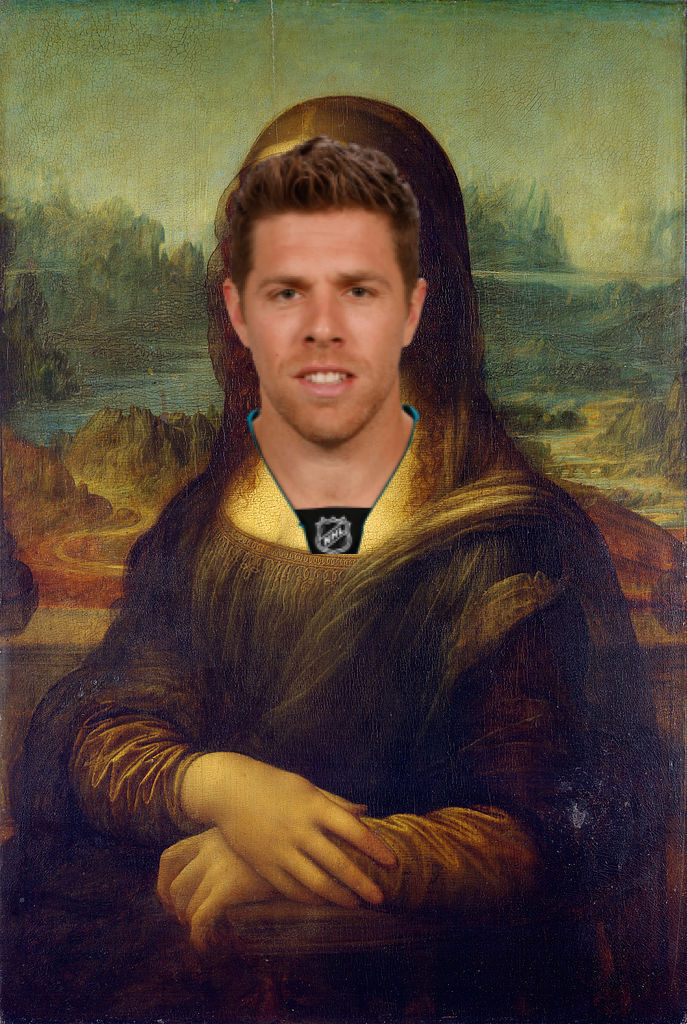
    It’s not just because of their numerous cover photo mockups that rival the Mona Lisa.

    Joe Pavelski-Lisa.jpg

    Actually, come to think of it…

    The Sharks won Twitter with this video.

    This video beats everything. This video is hilarious.

    Nothing— not even an autographed Tarasenko jersey giveaway— could top the genuine, fine-American, comedic genius that is Joe Pavelski and the San Jose Sharks social media team.

    And besides, I’m sure they’ll be giving away plenty of autographed memorabilia, when Pavelski leads the Sharks (and America) to glory on the cover on NHL 17.

  • St. Louis at Dallas – Game 7 – Blues score six en route to Western Finals

    Unknown-1CJhyiLmK


    Led by the Troy Brouwer, Second Star of the Game Robby Fabbri and Third Star Paul Stastny line scoring three goals, the St. Louis Blues beat the Dallas Stars 6-1 to advance to the Western Conference Finals.

    The first power play of the night was caused by Alex Goligoski at the 4:31 mark for hooking Vladimir Tarasenko in front of Kari Lehtonen’s net.  Fabbri made him pay 52 seconds later when he forced the puck across the goal line through a scrum in the crease, assisted by Brouwer and Stastny (his fifth helper of the playoffs).

    Jori Lehtera returned the favor at the 9:38 mark, as a cross check against John Klingberg earned him a seat in the sin bin.  Klingberg seemed to be injured on the play after taking a David Backes clear off an ankle, but returned to the ice for his next shift.  First Star Brian Elliott only needed to make one save on the Stars‘ man-advantage, catching the puck right when Lehtera exited the box, ending the power play.

    The Blues headed to their second power play with 5:01 remaining in the frame when Radek Faksa cross checked Steve Ott following another of his violent, but legal hits.  This time, the Stars‘ penalty kill was up to the task, allowing only one shot to reach net that was saved by Lehtonen.

    The Blues thought they had scored 40 seconds after Dallas returned to even-strength, but would-be goalscorer Tarasenko was ruled to be offside after taking his skate off the ice an instant too soon.

    They obviously weren’t phased though, as Stastny scored on a wrister with 1:38 remaining in the frame, assisted by Brouwer and Fabbri (his ninth helper of the playoffs).  Stastny collected a pass along the near boards from Fabbri and advanced to the goal line before dumping behind the goal to Fabbri again.  The rookie rounded the net and passed to a waiting Brouwer in front of the crease, who dumped to Stastny along the goal line ready to fire over Lehtonen’s stick shoulder.

    With four seconds remaining, Patrik Berglund scored again for the Notes on a wrist shot, assisted by Lehtera and Backes (his sixth helper of the postseason).  Berglund received a pass at the point and quickly rifled his shot past Lehtonen’s stick side.

    Through one period, St. Louis led not only on the scoreboard, but also at the face-off dots (57%), shots (eight to seven), blocks (10 to two) and giveaways (one to two).

    An always important statistic for the Blues is their hits (even though they trailed the first period 11 to 10), and Ott threw quite a few of them.  Somehow, the official stat sheet only gave him credit for one, but he was flying across the ice and making his presence known.

    After giving up three goals in the opening 20 minutes, Lehtonen was replaced by Antti Niemi.  He waited 3:50 before giving up a goal, a Backes wrister (his sixth tally of the playoffs) assisted by Berglund and Colton Parayko.  Bergluned received Parayko’s at center ice and flipped into the offensive zone for his captain, who collected and advanced on Niemi’s net from the near face-off dot to set the score at 4-0.

    Five seconds before the halfway point of the contest, Ott’s aggressive plays caught up with him, as he earned a seat after being called for interference against Jamie Benn, but the Blues held strong to keep them scoreless.

    St. Louis scored yet again with 4:54 remaining in the period on a quick transition attack.  Brouwer gets credit for the tally, assisted by Fabbri and Stastny.  Stastny collected a listing puck at center ice and attacked the offensive zone along the far boards.  He dumped a pass back to Fabbri, who crossed the puck in front of the crease for Brouwer, beating Niemi glove side to set the score at 5-0.

    The Stars headed back to the power play with 3:49 remaining in the frame when Jaden Schwartz was charged with hooking Cody Eakin, but St. Louis made it three for three in successful penalty kills.

    After two periods, it was actually Dallas playing the more aggressive game, firing 18 shots to set their game total at 25 in addition to winning the face-off dot (63%), takeaways (nine to eight) and hits (17 to 16).

    Dallas finally got on the board after 45:15 of play when Patrick Eaves connected on a wrister, assisted by Goligoski and Johnny Oduya.  After a save rebound, Oduya received the puck along the blue line and passed to Goligoski across the point.  Goligoski fired a slap shot at Elliott, who made another save, but this rebound was collected by Eaves on the far side of the crease, who easily buried the puck in a virtually empty net.

    With 4:40 to go and an empty net ahead of him, Tarasenko set the score at 6-1 with an wrister, assisted by Schwartz and Lehtera.  Schwartz flipped the puck into the neutral zone for a streaking Tarasenko, who had only one Star to beat before reaching the empty net to easily score.

    Elliott earns the victory after saving 31 of the 32 shots he faced (96.9%), while Lehtonen takes the loss, saving five of eight (62.5%).  For no decision, Niemi saved eight of 10 (80%) in the remaining 40 minutes.

    The Blues have advanced to the Western Finals, but don’t yet know who they’ll be playing.  That side will be determined tomorrow night at 9 p.m. eastern when Nashville makes their final visit of the year to San Jose for another Western Game 7.  That game may be viewed on NBCSN, SN or TVAS.

  • Washington at Pittsburgh – Game 6 – Bonino’s goal sends the Pens to the Eastern Finals

    Washington Capitals LogoPittsburgh Penguins LogoIt’s been since December 30 that Matt Murray last lost in CONSOL Energy Center, as he bested the Washington Capitals 4-3 in overtime to set up a date with the Tampa Bay Lightning in the Eastern Finals.

    Second Star of the Game Phil Kessel opened the scoring for the Pens at the 5:41 mark, assisted by Brian Dumoulin and Carl Hagelin.  Kris Letang caused a turnover in the defensive zone while the Caps were entering that was collected by Hagelin.  Once he reached the blue line, he passed to Dumoulin, who immediately shoved the puck along to Phil the Thrill.  Kessel advanced into the offensive zone along the near boards and fired once he reached the top side of the face-off circle, beating Braden Holtby’s right pad.

    Pittsburgh not only led Washington on the scoreboard, but they also had more shots on goal (11 to 10), face-offs (57%), takeaways (two to none) and hits (24 to 12).

    In his first game back since being suspended, Brooks Orpik committed a double minor hi sticking penalty against Patric Hornqvist at the 6:25 mark of the second period.  Pittsburgh quickly made him pay when Kessel connected on a wrister 40 seconds later, assisted by Letang (his seventh helper of the playoffs) and Chris Kunitz.  Kunitz fought off Matt Niskanen until he got to the blue line, where he barely managed to keep the puck in the zone before passing to Letang.  The defenseman quickly dished to Kessel near the far face-off dot, who traveled across the crease before beating sprawling Holtby’s left skate.

    The second half of the penalty was equally as successful for Pittsburgh, as Hagelin tipped-in Olli Maatta’s initial shot, with another assist from Trevor Daley (his fifth helper of the postseason), 33 seconds later.  First Star Nick Bonino had the puck along the far boards, but dumped back to the blue line for Daley, who shoved the puck across the zone for Hagelin.  He fired a slap shot from almost the same spot he received his pass, and Hagelin, who had already been acting as a screen in front of the crease, redirected the puck under Holtby’s stick.

    Ex-Capital Eric Fehr committed a penalty with 6:02 remaining in the frame for interference against T.J. Oshie, but the Penguins‘ penalty kill stood tall to keep the Capitals scoreless.

    The next penalty also belonged to the Penguins, as Kunitz was caught tripping Marcus Johansson with 2:23 remaining in the frame.  This power play was much more successful for the Capitals, as Oshie connected on a snap shot after an assist from Nicklas Backstrom and Alex Ovechkin only 53 seconds after Kunitz took his seat.  Ovi had the puck near the near boards at the blue line, and dumped it further into the zone along the wall where Backstrom corralled it along the far boards at the goal line.  He centered a pass for Oshie, who scored over Murray’s stick shoulder.

    After 40 minutes, the Penguins still led the scoreboard 3-1, but also shots (23 to 18), hits (36 to 25) and face-offs (57%).

    The first penalty of the third period belonged to Ovechkin for slashing Tom Kuhnhackl 3:54 into the period, but Washington would not yield their third power play goal so easily, leaving the goal differential at two tallies.

    Washington cut the lead to only a goal at the 7:23 mark when Justin Williams connected on a wrister over Murray’s glove hand, assisted by Backstrom (his ninth helper of the postseason).  Backstrom collected the puck along the near boards and dumped behind Murray’s net to Williams, who approached around the goaltender’s stick side before scoring over his glove shoulder.

    Kunitz earned his second seat in the sin bin with 9:28 remaining in regulation when he sent the puck over the glass.  Bonino did the exact same thing in attempts to clear the puck out of the crease 1:06 later, resulting in 54 seconds of five-on-three and 3:06 total of the man-advantage.  Pittsburgh withstood the five-on-three, but only two seconds later Ian Cole sent a puck over the glass, sending the Penguins back to the five-on-three for 1:04.

    The Capitals leveled on this opportunity when Third Star John Carlson connected on slap shot with 6:59 remaining in regulation, assisted by Ovechkin (his seventh helper of the playoffs) and Williams.  Carlson had the puck at the point, but passed to Ovechkin towards the near boards along the blue line.  Ovi returned the favor to the defensemen near the far face-off circle, who fired a slap shot to beat Murray stick side.

    1:32 remained on Cole’s penalty, but Pittsburgh finally returned to even-strength without another Capitals score.

    Washington returned to the power play with 2:46 remaining in regulation when Letang was charged with interference against Oshie.  During the man advantage, Oshie took a questionable uncalled slash from a Penguins defender strong enough to send him to the dressing room.  It might be argued that it had a negative effect on the Capitals‘ power play, as the score remained the same to the end of regulation, forcing overtime.  Oshie did return to the ice for the overtime period.

    Just as the scoreboard was tied, so were the combined totals of some important statistics.  Washington led the first 60 minutes in shots (36 to 35), blocks (19 to 13) and giveaways (five to eight), while Pittsburgh owned the face-off dot (59%), takeaways (seven to three) and hits (42 to 34).

    The Penguins had thought they’d won the game 2:44 into the overtime period, but neither Daley nor Hornqvist’s attempts could find the back of Holtby’s net, thanks in part to Jay Beagle’s diving block into the goal.

    Overtime, and the Eastern Semifinals, lasted only 6:32 minutes more after regulation ended before Bonino scored a series-clinching wrister, assisted by Hagelin and Kessel.  Bonino collected the puck at the offensive blue line and advanced into the zone.  He attempted a wrister from the top of the near face-off circle that was blocked by Taylor Chorney towards the boards, but collected by Hagelin and shoved behind Holtby’s net.  Kessel collected in the corner and centered a pass for Hagelin that was saved by Holtby’s right pad, but the rebound was collected by Bonino and backhanded into net to avoid the Game 7.

    Murray saved 36 of 39 shots faced to earn the victory (92.3%), while Holtby takes the overtime loss, saving 38 of 42 (90.5%).

    The Penguins advance to the Eastern Conference Finals for the first time since 2013 (a four-game sweep against the Boston Bruins) and will face the Tampa Bay Lightning.  Dates and times for that series have yet to be determined.

  • Arvidsson and the Predators force Game 7

    By: Nick Lanciani

    UnknownViktor Arvidsson scored the game-winning goal a little over two minutes into overtime on Monday night to give the Nashville Predators the 4-3 win over the San Jose Sharks in Game 6 at Bridgestone Arena.

    Arvidsson’s goal was his first career NHL Stanley Cup Playoff goal and tied the series at 3-3, forcing a Game 7 to be played on Thursday night at SAP Center in San Jose, California.

    Pekka Rinne turned aside 15 of the 18 shots he faced for a .833 SV% en route to the victory while Martin Jones made 28 saves on 32 shots against for a .875 SV% in the loss.

    Entering Monday night Nashville had not lost a game in regulation at Bridgestone Arena versus San Jose since February 25, 2012— having gone 8-0-1 in regular season and postseason games since then. Predators head coach, Peter Laviolette, improved to 13-6 when facing elimination (3-0 this postseason), while Sharks head coach, Peter DeBoer fell to 4-1 when San Jose had a chance to clinch and move on to the next round this postseason.

    Chris Tierney kicked off the game’s goal scoring almost ten minutes into the first period with his 2nd goal of the 2016 Stanley Cup Playoffs that he tipped past Rinne on a shot from Marc-Edouard Vlasic. Tierney’s goal made it 1-0 Sharks and was assisted by Vlasic (6) and Tomas Hertl (3) after a brief review to determine if Tierney deflected the puck with a high stick.

    Despite ultimately outshooting San Jose by the end of the night, Nashville recorded their first shot on goal of the game at 10:02 of the 1st period in between Tierney’s first goal (at 9:55 of the 1st) and his second goal (at 11:51 of the period).

    Tierney made it 2-0 San Jose with a backhand that beat a flailing Rinne. The goal was Tierney’s second goal of the game (3rd of the postseason) and gave him his first career NHL multi-goal game. Matt Nieto (2) and Brent Burns (10) picked up the helpers.

    But it was Roman Josi who kicked things off for the Predators, having scored on a backhand that beat Jones in an odd pinball-fashion and cut the Sharks lead in half at 15:27 of the first period. The goal was Josi’s first of the playoffs and his first goal since the regular season— back on April 7th– ending a 12 game goalless drought.

    With the score at 2-1 and the intensity picking up, Nashville was in clear control of momentum and peppered Jones with shots on goal by the end of the period. Craig Smith and Vlasic picked up matching roughing minors at 19:48 of the first period. As a result, 4-on-4 hockey ensued and carried over to the 2nd period.

    After twenty minutes of play the San Jose Sharks led on the scoreboard 2-1 and in shots on goal (8-5), but the Nashville Predators led in everything else— hits (12-9), faceoff wins (14-3), giveaways (3-1), takeaways (2-1) and blocked shots (8-5).

    Ryan Johansen scored at 1:25 of the second period to tie the game, 2-2. Johansen’s goal was his 4th of the postseason and was assisted by Ryan Ellis (6). In keeping with a theme for the night, his goal came on a backhanded shot.

    Both teams settled into a rhythm of defense and shot blocking as they continued through the second period and entered the second intermission with a 2-2 hockey game.

    UnknownJoe Pavelski hooked Craig Smith just over two minutes into the third period and gave Nashville the first power play of the night.

    The Predators were unable to convert on the man advantage and took a penalty of their own when Miikka Salomaki caught Martin Jones with a high stick in the crease at 8:59 of the 3rd.

    With time winding down on their power play, Logan Couture sent a wrist shot past Pekka Rinne to put the Sharks ahead 3-2 with 9:56 left to play in the third period. The goal was Couture’s 6th of the playoffs and was assisted by Burns (11) and Joe Thornton (7).

    Yet the Predators just wouldn’t go away as the third period went on.

    Colin Wilson continued his six-game point streak— the longest in postseason franchise history for Nashville— with his fifth goal of the playoffs at 12:44 of the third. James Neal (4) and Mike Ribeiro (2) were credited with the primary and secondary assists on the goal that tied the game, 3-3.

    At the end of regulation the score was tied 3-3 and the Predators were leading in nearly every category imaginable, including shots on goal (30-17), hits (38-22), faceoff wins (28-20), giveaways (11-10) and takeaways (4-2). The Sharks led in blocked shots (23-13) after sixty minutes of play. San Jose went 1/1 on the power play while Nashville went 0/1 on the man advantage.

    A little after two minutes into overtime (2:03 to be exact) Arvidsson found the back of the net with precision on a backhand that floated top-shelf past Jones for the game winner. Miikka Salomaki (1) and Pekka Rinne (1) were credited with the assists and Predators fans in attendance went home happy. Nashville had won Game 6 on home ice by a score of 4-3 and set a new franchise record for playoff victories with seven of them so far in this year’s playoffs.

    Monday night was the 8th overtime game of the 2016 Second Round (through 22 games played), which is the most in the second round since 2001 (when 8 of the 25 games played reached overtime in round two).

    The Sharks fell to 3-8 all-time and 3-6 on the road in Game 6s when leading the series 3-2 and San Jose fell to 20-20 in all-time Stanley Cup Playoff overtime appearances (11-11 on the road). Nashville, meanwhile, improved to 4-7 (2-3 at home) in all-time postseason overtime games.

    Game 7 is scheduled for Thursday night at SAP Center in San Jose and the time of puck drop and broadcast information is yet to be announced by the NHL.